
Free tools Windows power users keep installed
One-click scans. No signup required.
Not yet. The UK has tested several quantum-enabled navigation technologies at sea, but official reports describe research and trials—not a single operational “quantum compass” that has replaced GPS. These approaches may help when satellite navigation is disrupted or unavailable; the Ministry of Defence’s stated goal is to deploy quantum navigation systems, including atomic clocks, on an aircraft by 2030.
What does “quantum compass” mean?
It is a headline shorthand for several different technologies being explored for positioning, navigation and timing (PNT), rather than the name of one integrated UK system. The work includes sensors that track movement, precise clocks that support timing, and magnetic sensors that look for location clues in Earth’s magnetic field.

Quantum inertial navigation
Inertial sensors measure movement so a system can estimate how it has travelled without continually receiving satellite signals. Imperial College London’s quantum inertial navigation sensor is described as a prototype under development and trial, not a fielded GPS replacement. Royal Navy report on the Arctic trial.
Cold-atom clocks
Accurate timing helps navigation systems calculate position. Aquark’s AQlock is a cold-atom clock tested aboard a Royal Navy vessel. The Navy says cooled atoms are transferred to a conventional oscillator to reduce long-term drift; a clock trial alone is not a complete standalone compass. Royal Navy report on AQlock.
Quantum magnetic sensing
Optically pumped magnetometers measure small variations in Earth’s magnetic field. A Royal Navy and University of Sussex trial explored whether magnetic signatures could help determine location without satellite navigation. Royal Navy report on the magnetometer trial.
What has the UK tested?
| Technology | Reported trial or goal | What it establishes |
|---|---|---|
| AQlock cold-atom clock | On 17 June 2025, the Royal Navy reported continuous operation aboard P2000 HMS Puncher in the Solent and called it the first AQlock stability test in open waters. Source. | A sea-trial milestone for a clock; not proof of GPS replacement. |
| Optically pumped magnetometer | The Royal Navy reported a University of Sussex trial from Portsmouth on a naval survey craft, measuring variations in Earth’s magnetic field and mapping surrounding magnetic signatures. Source. | An investigation into magnetic sensing for navigation; not an operational system. |
| Quantum inertial navigation sensor | The Royal Navy reported Imperial College London’s revised sensor aboard MV Anvil Point during an Arctic field trial. The project lead said shock resistance and surviving life at sea still needed work. Source. | A test in a demanding maritime environment, with engineering challenges still identified. |
| Quantum navigation for aircraft | On 18 February 2026, Dstl described a trial supporting next-generation defence atomic clocks and gave 2030 as the goal for deploying quantum navigation systems, including atomic clocks, on an aircraft. Source. | A stated future goal, not confirmation of current deployment. |
Separately, a Ministry of Defence answer to Parliament said AUKUS partners were developing alternative PNT capabilities, including participation in quantum clock trials in June 2025, for GPS-degraded environments and undersea use. Parliamentary answer.
How could quantum navigation help when GPS is disrupted?
Satellite navigation signals can be disrupted, denied or spoofed. Inertial sensors can estimate movement without relying on a satellite update at every moment, while precise clocks support timing and magnetic sensors may provide location clues from local field variations. A combination of methods could make navigation more resilient, but the cited UK sources do not say these trials have been integrated into one operational product.
That distinction matters: a system that can continue estimating motion or timing without GPS is not automatically as accurate as GPS indefinitely. To assess a navigation system, the relevant questions include whether it needs satellite signals, how quickly its position estimate drifts without updates, its accuracy over the intended time and distance, and its performance in the intended environment. Resistance to interference, plus size, weight, power, cost and integration requirements, also matter.
PC Slower Than It Used to Be?
A free scan shows the junk files, broken settings and background clutter dragging Windows down - then fixes them in one click.Free scan · Windows 10 & 11Outdated Drivers Are Slowing You Down
One free scan finds every outdated or missing driver and matches the right update for your exact hardware.Free scan · exact hardware matchRank #3

- NAVA F30 is an ideal rugged GPS and GLONASS receiver for a large range of applications from agriculture, For Outdoor Camping hiking Agriculture Forest Surveying Land Survey Meter mining and more outdoor works
- 4 GB internal memory,Supports up to 32GB TF card memory expansion,Power with two AA batteries for up to 20 hours of use
- 2.2" QVGA, 240X320 pixels, transflective color display readable under sunlight Supports GPS,GLONASS and BEODOU
- Worldwide basemap preloaded, and also supports paperless geocaching ,Vector map (city detail map), DEM map and Raster map(Download all maps for free)
- NAVA GPS office software,between NAVA GPS and your PC, Multiple GPS data formats to share,including GPX, SHP, MIF, CSV, KML, DXF, and TXNAVA GPS office software,between NAVA GPS and your PC, Multiple GPS data formats to share,including GPX, SHP, MIF, CSV, KML, DXF, and TX
Can the quantum systems replace GPS now?
The official reports do not establish that any of these UK quantum systems currently matches or outperforms GPS in routine use. They do not publish comparable numerical figures for accuracy, drift over time, cost, size, weight or power consumption across the trials. The Arctic trial report specifically identifies shock resistance and durability at sea as work still to be done. A successful trial shows that a technology was tested in a particular setting; it does not by itself show operational readiness.
Independent reader supportYour contribution helps us test, update, and keep practical guides available for everyone.How is this different from the UK’s “Urgent Compass”?
The Ministry of Defence’s Urgent Compass programme is for enhanced Long-Range Navigation (eLoran), not quantum navigation. Announced on 6 May 2026, the £6 million, two-year contract is led by QinetiQ’s Team Elaris and uses ground-based, low-frequency radio signals. The programme was in an assessment phase, with a stated aim of producing a deployable system by April 2028. Those figures are programme terms and a target, not evidence of a quantum device or an already deployed system. Ministry of Defence announcement.
Another distinct effort is the Robust Global Navigation System (R-GNS), which uses a multi-constellation GNSS receiver with anti-jam and anti-spoof techniques. The government says its Q40 receiver is available on the market as a component that must be integrated into a platform or system; it is not a quantum system. Defence Equipment and Support guidance.
A parliamentary answer dated 8 September 2026 describes the Alternative Navigation Project as investigating multiple alternatives to GPS and maturing technologies for possible future development and investment. That broader effort is not an announcement of a single successor device. Parliamentary answer.
The Tool Desk
Outbyte PC Repair FREEClear out junk files and repair common Windows errorsFree Scan →Outbyte Driver Updater FREEFix the driver behind crashes, sound loss and screen glitchesFind Drivers →Quick Recap
Best Value
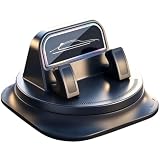
- 【Dedicated Fitment】: Precision engineered for Lucid Air Quantum Grey 2022-2026 to ensure a clean integration without obstructing driving view
- 【Rotational Viewing】: Features a 360 degree rotating cradle allowing seamless switching between landscape and portrait navigation modes
- 【Skid Resistant Design】: Equipped with a firm non slip base that keeps your smartphone steady over road bumps without sticky residue
- 【Direct Operation】: Quick placement design allows effortless single hand docking and uncoupling while keeping charging ports fully accessible
- 【Dedicated Support】: Includes dependable customer service with swift assistance for all product questions and replacement inquiries
Product prices and availability are accurate as of the date/time indicated and are subject to change. Any price and availability information displayed on Amazon at the time of purchase will apply.

