
Quick wins for a faster PC:
Scan for outdated or missing drivers - takes under a minuteDriver Scan →Clear out junk files and repair common Windows errorsFree Scan →Fix the driver behind crashes, sound loss and screen glitchesFind Drivers →Schools can introduce more climate-friendly meals without increasing food waste by measuring current waste first, testing menu changes with students, and comparing both participation and discarded food after each change. Start with a small pilot, involve cafeteria staff, and prevent surplus before turning to food sharing, donation, or composting.
Start by measuring what students actually discard
A menu change can look successful on paper while increasing uneaten food. Before changing recipes or portions, establish how much food is prepared, served, left unserved, and discarded—and which items are being wasted. Use the same categories and method throughout the pilot so the before-and-after comparison is meaningful.
The EPA’s Guide to Conducting Student Food Waste Audits is designed for schools. It explains how students and school personnel can audit cafeteria waste, interpret the findings, and identify prevention opportunities. Choose a representative period, and record waste by menu item and point of waste, such as preparation, food left in serving areas, or students’ plates.
- Record quantities prepared and served, as well as what remains or is discarded.
- Keep categories consistent between the baseline and follow-up audits.
- Note unusual conditions—such as menu substitutions or schedule changes—that might affect participation or waste.
Measurement consistency matters more than buying new equipment. A school that needs a way to weigh food can use an appropriate scale it already has; the EPA guide does not endorse a particular product.
#1 Best Overall

- HOT FOOD ON HAND: Our warming lunch box is ideal for cooking healthy dishes, heating frozen boxed meals, and warming comfort food anywhere you need it. Enjoy delicious meals at home, in the office, at parties, potlucks, or gatherings.
- YOUR FOOD, PERFECTLY COOKED: Better than an insulated lunchbox, this easy-to-use electric lunch box heater can reheat or even cook your meals at a low-slow conduction heat. It can bring foods to the ideal temperature and hold them there without overcooking or drying.
- HEAT YOUR WAY: This heating lunch box is compatible with most flat-bottom, sealable containers, including glass, plastic, Tupperware, metal, aluminum foil, and cardboard. Accommodates containers up to 8.75” W x 6.75” L x 2.5 H“ or 1.5 quarts of food.
- SET IT AND FORGET IT: Our portable food warmer for travel takes the work out of meal prep. It requires no monitoring - just place your meal inside, plug it in, and go about your day. No buttons, no venting, no stirring, It's just that easy.
- HOTLOGIC: We help simplify your meals so you can get the most out of your day. HotLogic takes the hassle out of food on the go with a simple, set-it-and-forget-it solution perfect for quick lunch breaks, effortless dinners, and crowd-pleasing potlucks. We stand behind our products, so if you are unsatisfied within the first 90 days of your purchase, please contact us so we can make it right; your satisfaction is important to us.
Ask students and cafeteria staff what will work
Student input helps schools distinguish between a food that is unfamiliar and one students reject because of its recipe, appearance, portion size, or how much time they have to eat. Ask cafeteria staff about ingredient availability, preparation time, equipment, and service-line constraints before selecting a pilot.
USDA recommends involving students in meal decisions and building interest through approaches such as taste tests, recipe competitions, advisory input, and meal promotion. Give students a way to comment on specific foods, then compare their feedback with what they actually choose and eat. The EPA’s guidance on educating youth about wasted food also offers school-oriented resources for engaging students.
Rank #2

- Portable – Commercial food pan warmer can be moved ideal for catering, buffet service, hotels and restaurants
- Sizing – 20” x 12” opening fits most full-size steam table pans up to 6” deep
- Heavy-Duty – Stainless steel body and specially engineered components ensure this food pan warmer can withstand daily use in commercial foodservice environments
- Energy-Efficient – Quickly and evenly heats while the heavy-duty body provides insulation for energy efficient warming
- 3 Heat Settings – Low heat is 140°F, Medium is 170°F and High is 200°F
Test a small menu change before scaling it
Start with one or a few plant-forward recipes rather than assuming a broad menu shift will work equally well across age groups and school communities. Offer a taste test or gather recipe feedback, revise based on the response, and track participation when the item becomes part of a meal. A popular tasting is a useful signal, but it does not replace measuring uptake and waste during regular service.
Review each candidate meal against practical criteria:
Rank #3

- Upgraded Adjust Temperature Digital Display Portable Oven: the Heated Lunch Box supports Intelligent Adjustable Temperature and Digital Display, you can directly to notice the temperature in the box, it adopts advanced conduction heat technology to ensure that your meals are cooked evenly, without drying them out, the heated lunch box retain their moisture and freshness. to adjust the temperature to satisfied difference food heating Temperature Requirements, also can avoid burn.
- 4-IN-1 MULTI-USE PORTABLE FOOD WARMER: Heat your food evenly without drying out and preserve moisture and nutrition. A mini portable oven with 12 volt & 24 volt (2 in 1), and 110 volt connectors, works in the lighter port of a car, truck & more vehicles, wall outlet in work, travel, bedroom, camping, home, and more. Enjoy less hassle with hot tasty food anytime and anywhere you can plug it in.
- Advanced Conduction Heat Technology Health & Sciences Cooking/ Heating Food: 110v mini portable oven heated hunch box use advanced conduction heat technology to ensure your meals are cooked evenly, retain their moisture and freshness. The heated lunchbox for adults Cooking Food (1-1.5 hours). Cooking Steak, chicken fillet, curry rice, prawns,chicken fillet steak is juicy and tender. Heating frozen meals (1-1.5hours), Heating room temperature, about 40-60 minutes,the food is as fresh as ever.
- No Monitoring Required, Automatic Temperature Control:You can use the min heated lunch box cooking and reheating food in office, travel, potlucks. Enjoy warm food anytime, anywhere. The electric heating lunch box adoption of advanced heat transfer technology, use the heated lunchbox for adults can cook meals and reheat food, keep food warm for hours without overcooking. Just put meal in electric heating lunch box and plug it, can enjoy food whether hours later, the food is as fresh as ever.
- FIT MOST CONTAINERS: the Food Warmer Electric Heated Lunch Box compatible with most microwavable flat-bottom, sealable containers including glass, stainless steel, plastic, tupperware, metal, aluminum foil, and cardboard. The heated lunchbox for adults food heater lunch box accommodates containers up to 10.11” L:7.08” W:4.96”H. If you wrap food in foil, just set it directly in heated lunch box.
- Acceptance: Do students choose the meal, and how much do they eat?
- Operations: Can staff prepare and serve it with available skills, equipment, time, and ingredients?
- Cost and procurement: Does it fit the budget, purchasing contract, and seasonal availability?
- Nutrition and program requirements: Does it comply with the meal-pattern rules that apply to the school’s program?
USDA’s April 24, 2024 announcement described updated school-meal standards and additional flexibility, including an option related to requiring locally grown, raised, or caught unprocessed agricultural products. Because requirements and implementation can change, check current federal, state, and local rules for the school and program before planning a menu or procurement change. Do not assume that local sourcing automatically means lower emissions; that depends on the food and the evidence used.
Make the meal practical to choose and eat
Menu design is only part of the result. Consider how the meal is named and promoted, where it appears in the serving line, whether students can choose among components under applicable rules, and whether they have enough time to eat. USDA identifies longer lunch periods as one potential way to reduce waste, although school schedules and facilities may limit that option.
Rank #4

- ON-THE-GO CONVENIENCE: Chic, compact, and perfect for hot meals on the move. This 2.5-Cup (20 ounce) electric lunch warmer adds glam to your grind.
- WARMING SYSTEM: Warms pre-cooked meals to the perfect temp—no cooking, just cozy reheating. A glam way to revive your lunch with no microwave in sight.
- SIMPLE TO USE: Features a removable stainless steel bowl, inner lid with steam vent and cool-touch exterior with snap-closure lid to prevent spills. Plug it in, warm it up, and enjoy the sliving life.
- LUNCH WITH A HANDLE (AND A WINK): Carry it upright with the fold-down handle. From kitchen to desk to dressing room, this warmer brings style and function together.
- EASY CLEANUP, EVERY TIME: The inner dish and inner lid are top-rack dishwasher safe. Just wipe the outer shell clean and store it away—until your next hot-meal moment.
USDA describes offer-versus-serve as a way for students to decline some meal components. Its school guidance says the practice is mandatory in high schools and optional in elementary and middle schools; schools should verify current program requirements before relying on that description. The same USDA page reports that 81 percent of elementary and middle schools used offer-versus-serve at lunch, but the page does not state a publication year for that figure, so it should not be treated as a current rate.
Independent reader supportYour contribution helps us test, update, and keep practical guides available for everyone.Repeat the audit and assess waste separately from climate impact
After introducing a menu change, repeat the audit using the same approach as the baseline. Compare participation and discarded food by item and point of waste. Include relevant operational changes in the record so a change in waste is not automatically attributed to the recipe alone.
Recommended Free Tools
Best Value
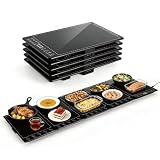
- 【Expandable Modular Buffet Warming System】This electric warming tray for food features a 1–5 panel modular design, allowing flexible use as a buffet warming tray for parties, family dinners, and catering events. It creates a complete buffet food warmer system while saving storage space for easy kitchen organization
- 【Premium Tempered Glass Food Warmer Tray】Made with durable tempered glass, this food warming mat / warming tray for food resists scratches, stains, and wear. The seamless surface ensures easy cleaning and long-term durability, perfect for daily kitchen use or large gatherings
- 【Precise Temperature Control & 24H Timer】Equipped with 10-level adjustable temperature (86°F–248°F) and a 1–24 hour timer, this electric food warmer tray with temperature control keeps meals at the perfect serving temperature for meats, soups, sauces, and desserts
- 【 Multi-Purpose Electric Food Warmer for Every Occasion】More than a buffet warming tray, it can be used as a food warmer for buffet party, dough fermentation mat, beverage heating surface, or gentle warming for cookware like glass, ceramic, and stainless steel—perfect for home entertaining and holiday hosting
- 【 Safe, Stable & Holiday Gift Ready】Built-in overheat protection and thermostat system ensure safe long-term use. Non-slip feet keep the electric warming tray for party use stable while protecting countertops. Perfect for holidays, housewarmings, Thanksgiving, and Christmas, it’s a thoughtful, practical gift for mom or wife that brings warmth and convenience to any home or gathering
Waste and climate impact are separate outcomes. A school can report whether students selected and consumed a meal and how much food was discarded. If it also makes an emissions claim, it should explain the data and calculation method used. The sources cited here do not establish one universal school-level carbon-accounting method or a school-specific emissions-saving percentage, so avoid presenting a climate benefit as a measured result without a transparent, appropriate calculation.
For broader context, the OECD’s 2023 report, Food for thought: School meals for sustainable societies, discusses school meals in relation to sustainable societies and food procurement.
Prevent surplus before sharing or composting leftovers
Prevention comes first: producing, processing, distributing, and preparing food uses resources, so wasted food also means those resources have been spent without feeding students. The EPA’s Wasted Food Scale guidance on source reduction places preventing wasted food at the highest priority.
Once a school has taken steps to avoid overproduction and plate waste, it can consider appropriate ways to handle remaining food. Share tables, donation, and composting may be useful, but they are not interchangeable or automatically available. Any sharing or donation must follow applicable food-safety rules and school policies, and composting depends on local infrastructure and capacity. USDA’s school food-loss-and-waste guidance emphasizes that the best way to tackle food waste is to help students consume what they take.
Quick Recap
A practical sequence for a school pilot
- Set a baseline: Choose a representative period and record what is prepared, served, left unserved, and discarded by a consistent method.
- Get input: Ask students what affects their choices and ask cafeteria staff what is feasible to prepare and serve.
- Test a limited change: Pilot one or a few plant-forward recipes, gather feedback, and make adjustments before expanding.
- Check service conditions: Review choice options, promotion, serving-line flow, and available time to eat.
- Measure again: Repeat the baseline method and compare meal uptake and waste, noting substitutions or other changes that could affect results.
- Manage remaining food responsibly: Prevent avoidable surplus first, then use sharing, donation, or composting only where school policy, food safety, and local capacity allow.
Product prices and availability are accurate as of the date/time indicated and are subject to change. Any price and availability information displayed on Amazon at the time of purchase will apply.

