
At its August 2025 launch, GPT-5 in ChatGPT was designed to combine quick responses for routine questions with deeper reasoning for harder ones. That echoed a longstanding hope for general-purpose language models: one assistant that can adjust its effort to the task. But GPT-5 did not fulfill that hope outright, and at launch it was a routed system of multiple models—not one model doing everything.
What is GPT-5?
GPT-5 launched on August 7, 2025. In ChatGPT, OpenAI described it as a system that paired a fast model for most questions with a deeper reasoning model for harder problems, alongside a real-time router to choose between them. OpenAI’s GPT-5 System Card said the router considered conversation type, complexity, tool needs and explicit user intent—for example, a request to “think hard about this.” Its training signals included model switching, user preferences and measured correctness.
This design is why GPT-5 can be read as an answer to an old aspiration for LLMs: a broadly useful assistant that does not spend the same amount of effort on every question. That is an interpretation of the design, not proof that everyone in the field shared one original expectation or that GPT-5 fully achieved it.
Was GPT-5 one model or several?
At launch, ChatGPT’s GPT-5 experience was not one underlying model. OpenAI called it a “unified system,” but its system card described separate fast and reasoning models connected by a router. If usage limits were reached, mini versions could handle remaining queries. OpenAI said it planned to integrate the capabilities into one model in the future; that stated intention should not be confused with the launch architecture.
#1 Best Overall

- ENHANCED CONTEXT WITH MULTIMODAL INPUT: Capture audio, type notes, add images, and press to highlight key moments for richer context. During recording, instantly mark key moments with a single button press. Simultaneously enrich your audio by snapping photos of important documents or typing in ideas
- CHAT WITH YOUR RECORDINGS USING "ASK Plaud": Unlock deeper insights with this interactive AI. Ask questions, extract key points, draft emails, and get next-step suggestions—all grounded in your original audio for reliable, ready-to-use answers
- INTELLIGENT RECORDING WITH AI DIRECTIONAL AUDIO: Enjoy seamless, intelligent recording with Plaud Note Pro. Its AI automatically switches between call and meeting modes while recording, while directional audio and real-time spatial awareness minimize noise to capture voices with crystal clarity
- Everything Included: Includes Plaud Note Pro, magnetic case, magnetic ring, charging cable, and a free Starter Plan with 300 transcription minutes per month. Upgrade anytime in the Plaud app to Pro Plan (1,200 min/mo) or Unlimited Plan(Up to 24 hours of transcription per user per day)
- PREMIUM ULTRA-SLIM DESIGN WITH INSTANTVIEW DISPLAY: Meticulously designed, the AI Note Taker is just 0.12 inches thin and 1.06 oz —about the size of a credit card. Its sleek aluminum body with a textured wave finish features a vivid AMOLED display, letting you check battery and recording status at a glance, while it seamlessly works with Apple Find My to ensure you never misplace it
The system card used these launch-era names for the ChatGPT components:
- Fast models:
gpt-5-mainandgpt-5-main-mini. - Reasoning models:
gpt-5-thinkingandgpt-5-thinking-mini.
OpenAI mapped these variants as successors to GPT-4o, GPT-4o-mini, o3 and o4-mini, respectively. It also described direct API access to reasoning variants, including a nano version, and said the ChatGPT “GPT-5 Thinking” setting used parallel test-time compute called gpt-5-thinking-pro, positioned as the successor to o3 Pro. These names and mappings describe the August 2025 launch, not guaranteed present-day availability.
How was GPT-5 different in ChatGPT and the API?
“GPT-5” did not refer to the same product arrangement in ChatGPT and the API at launch. In ChatGPT, it meant a system of reasoning and non-reasoning models plus a router. OpenAI’s August 7, 2025 developer announcement said the API’s GPT-5 was the reasoning model powering maximum performance in ChatGPT.
Rank #2
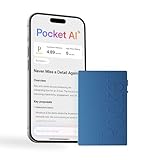
- YOUR AI PERSONAL ASSISTANT FOR EVERYDAY PRODUCTIVITY: More than a voice recorder, Pocket works as your AI personal assistant to capture, transcribe, and summarize meetings, calls, and ideas instantly. Core features are included out of the box, with optional advanced tools available for power users.
- ONE-TAP RECORDING FOR REAL-LIFE MOMENTS: Capture meetings, phone calls, and in-person conversations instantly with a simple tap, no typing, no interruptions, just effortless note-taking anywhere you go.
- SMART AI INSIGHTS & ORGANIZATION: Pocket automatically turns recordings into clear summaries, key action items and structured conversation maps so you can quickly review what matters without digging through audio.
- TURN CONVERSATIONS INTO ACTION WITH “ASK POCKET”: Don’t just record, understand. Instantly ask questions across your meetings, extract key insights and generate next steps in seconds. All grounded in your recordings, so answers stay accurate and reliable.
- MAGSAFE COMPATIBLE FOR SEAMLESS USE: Easily attach Pocket to your iPhone or other MagSafe compatible devices for convenient, hands-free recording on the go. Perfect for capturing meetings, calls, and ideas without needing to hold your device.
| At launch | What OpenAI described |
|---|---|
| ChatGPT | A routed system of reasoning and non-reasoning models; the router selected which to use. |
| API | Reasoning-model options named gpt-5, gpt-5-mini and gpt-5-nano; the non-reasoning ChatGPT model was separately available as gpt-5-chat-latest. |
For developers, launch documentation also described verbosity settings of low, medium and high, and reasoning_effort settings including minimal, low, medium and high. It also introduced custom tools using plaintext rather than JSON. Those are dated launch details; check current API documentation before relying on them in a project.
What did OpenAI’s launch evaluations show?
OpenAI reported improvements across coding, factuality and long-context tasks. These are company-published launch results, not independent confirmation, and each applies to a particular benchmark and setup. The company’s GPT-5 announcement and developer announcement provide the results and methodology context.
| Task or evaluation | OpenAI-reported launch result | Important context |
|---|---|---|
| SWE-bench Verified coding benchmark | GPT-5 scored 74.9%, versus 69.1% for o3. | OpenAI said it excluded 23 of 500 problems that did not reliably pass on its infrastructure. Its GPT-5 prompt emphasized thorough verification; the same prompt did not benefit o3. |
| Aider Polyglot code-editing benchmark | GPT-5 scored 88%. | OpenAI characterized this as a record at announcement. |
| SWE-bench Verified efficiency comparison | GPT-5 used 45% fewer output tokens and 22% fewer tool calls than o3. | The comparison was against o3 at high reasoning effort. |
| Frontend side-by-side comparisons | Testers preferred GPT-5 in 70% of comparisons against o3. | This was tester preference, not a general measure of code quality. |
| Factuality with web search enabled | GPT-5 was about 45% less likely than GPT-4o to contain a factual error. | OpenAI tested anonymized prompts representative of ChatGPT production traffic. |
| Factuality when thinking | GPT-5 was about 80% less likely than o3 to contain a factual error. | This is a separate OpenAI-reported comparison from the GPT-4o result. |
| CharXiv prompts with images removed | o3 answered confidently about nonexistent images 86.7% of the time; GPT-5 did so 9% of the time. | This tests missing-image behavior, not overall hallucination rates. |
| Deception evaluation on production-representative conversations | OpenAI reported deception rates of 4.8% for o3 and 2.1% for GPT-5 reasoning responses. | The figures apply to OpenAI’s evaluation set and definition. |
| BrowseComp Long Context, inputs of 128K–256K tokens | GPT-5 scored 89% correct. | The developer announcement described the task as answering from a long list of relevant search results. |
These figures support a narrower conclusion than “GPT-5 solved reliability.” They indicate progress on named evaluations under OpenAI’s stated conditions. Results can vary with model versions, prompts and evaluation setups, and none guarantees that a response in a real task is correct.
Rank #3
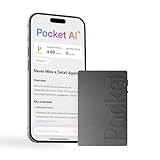
- YOUR AI PERSONAL ASSISTANT FOR EVERYDAY PRODUCTIVITY: More than a voice recorder, Pocket works as your AI personal assistant to capture, transcribe, and summarize meetings, calls, and ideas instantly. Core features are included out of the box, with optional advanced tools available for power users.
- ONE-TAP RECORDING FOR REAL-LIFE MOMENTS: Capture meetings, phone calls, and in-person conversations instantly with a simple tap, no typing, no interruptions, just effortless note-taking anywhere you go.
- SMART AI INSIGHTS & ORGANIZATION: Pocket automatically turns recordings into clear summaries, key action items and structured conversation maps so you can quickly review what matters without digging through audio.
- TURN CONVERSATIONS INTO ACTION WITH “ASK POCKET”: Don’t just record, understand. Instantly ask questions across your meetings, extract key insights and generate next steps in seconds. All grounded in your recordings, so answers stay accurate and reliable.
- MAGSAFE COMPATIBLE FOR SEAMLESS USE: Easily attach Pocket to your iPhone or other MagSafe compatible devices for convenient, hands-free recording on the go. Perfect for capturing meetings, calls, and ideas without needing to hold your device.
What does GPT-5 Thinking do?
At launch, “Thinking” referred to GPT-5’s deeper-reasoning path for more demanding questions, rather than simply a different response style. OpenAI said ChatGPT’s GPT-5 Thinking setting used parallel test-time compute, allowing more computation for reasoning. The router could also take explicit intent into account, so a user asking it to think hard could influence model selection. The precise launch names and routing behavior should not be assumed to describe current ChatGPT controls.
Independent reader supportYour contribution helps us test, update, and keep practical guides available for everyone.Did GPT-5 become safer or more honest?
OpenAI said GPT-5 added “safe completions”: for some risky requests, it could provide a bounded or high-level answer instead of fully complying or refusing outright. The company also said it trained the model to explain refusals and offer safer alternatives, and reported improvements in factuality and honesty. These are design goals and relative evaluation results, not guarantees that every answer is safe or true.
For consequential decisions, verify the answer against authoritative sources or a qualified professional. OpenAI’s developer announcement says: “As with all language models, we recommend you verify GPT-5’s work when the stakes are high.”
Rank #4

- AI-POWERED TRANSCRIPTION & SUMMARIES: Plaud Note Pro is your professional voice transcriber, delivering high-accuracy transcription in 112 languages with auto speaker labels. Powered by top AI models and thousands of templates, Note Pro instantly creates structured summaries, mind maps, To-Do lists, and proposals tailored to your role and industry
- ENHANCED CONTEXT WITH MULTIMODAL INPUT: Capture audio, type notes, add images, and press to highlight key moments for richer context. During recording, instantly mark key moments with a single button press. Simultaneously enrich your audio by snapping photos of important documents or typing in ideas
- CHAT WITH YOUR RECORDINGS USING "ASK Plaud": Unlock deeper insights with this interactive AI. Ask questions, extract key points, draft emails, and get next-step suggestions—all grounded in your original audio for reliable, ready-to-use answers
- INTELLIGENT RECORDING WITH AI DIRECTIONAL AUDIO: Enjoy seamless, intelligent recording with Plaud Note Pro. Its AI automatically switches between call and meeting modes while recording, while directional audio and real-time spatial awareness minimize noise to capture voices with crystal clarity
- Everything Included: Includes Plaud Note Pro, magnetic case, magnetic ring, charging cable, and a free Starter Plan with 300 transcription minutes per month. Upgrade anytime in the Plaud app to Pro Plan (1,200 min/mo) or Unlimited Plan(Up to 24 hours of transcription per user per day)
Is GPT-5 still the current ChatGPT model?
GPT-5’s launch availability is historical, not a reliable guide to what a reader can select today. OpenAI’s ChatGPT Release Notes described a gradual worldwide rollout beginning August 7, 2025, to Free, Plus, Pro and Team users, with Enterprise and Edu to follow; paid plans had model-picker options at launch.
Later releases changed the product landscape. OpenAI’s Model Release Notes include an entry dated July 9, 2026 saying GPT-5.6 Sol was beginning rollout to eligible paid ChatGPT plans, subject to plan, rollout and workspace settings. OpenAI’s GPT-5 page labels GPT-5 as introduced in August 2025 and directs visitors toward newer models. Check the current model picker and release notes for your plan and workspace rather than assuming GPT-5 remains the default.
Quick Recap
Product prices and availability are accurate as of the date/time indicated and are subject to change. Any price and availability information displayed on Amazon at the time of purchase will apply.

