
Do these 3 things before closing this tab:
1Scan for outdated or missing drivers - takes under a minute2Clear out junk files and repair common Windows errors3Fix the driver behind crashes, sound loss and screen glitchesiTechGuides is reader-supported. When you buy through links on our site, we may earn an affiliate commission. As an Amazon Associate I earn from qualifying purchases. Learn more
Ambiq’s August 2025 announcement described two ways to run edge-AI models on its Apollo microcontrollers: HeliosRT, an interpreter-style runtime derived from TensorFlow Lite for Microcontrollers (TFLM), and HeliosAOT, which compiles a model into C code for inclusion in firmware. The choice is a trade-off between a familiar model workflow and generated code with less interpreter overhead—not a proven universal win for either option. Separately, Ambiq completed an upsized IPO in July 2025, raising $110.4 million in gross proceeds before expenses.
What are HeliosRT and HeliosAOT?
In an August 1, 2025 Embedded article, Ambiq presented HeliosRT and HeliosAOT as software approaches for deploying AI models on resource-constrained embedded hardware, particularly its Apollo family. They differ mainly in when model operations are resolved: while the firmware runs, or before the firmware is built.
HeliosRT: an interpreter derived from TFLM
HeliosRT is described as an Apollo-optimized fork of TensorFlow Lite for Microcontrollers. It keeps an interpreter-style workflow, with Ambiq-optimized kernels for operations commonly used in edge-AI models. That approach may suit a team seeking to retain a familiar TFLM-oriented model workflow rather than compile each model into generated C code.
The Tool Desk
Outbyte Driver Updater FREEFix the driver behind crashes, sound loss and screen glitchesFind Drivers →Outbyte PC Repair FREEClear out junk files and repair common Windows errorsFree Scan →Ambiq vice president of AI Carlos Morales told Embedded, “We’ve developed a range of optimized kernels to handle operations commonly found in edge AI models.” The article also says specialized lookup-table optimizations can improve model performance by 10–30%. Both the range and the kernel-coverage description are Ambiq claims reported in the article; it does not supply an independent audit of operator coverage or a complete benchmark methodology.
#1 Best Overall

- 【ESP32-C3 RISC-V Development Board】 Built with the ESP32-C3 32-bit RISC-V chip (160MHz), featuring Arduino/CircuitPython support and multiple development ports. Ideal for IoT and edge AI projects.
- 【Outstanding RF & Long-Range Connectivity】 Equipped with U.FL antenna for stable Wi-Fi/BLE5.0 communication over 100m. Complete RF performance ensures reliable IoT connectivity.
- 【Ultra-Low Power & Battery-Friendly】 4 working modes, including deep sleep at 44μA. Onboard battery charge IC supports Li-ion/LiPo, perfect for wearables and wireless IoT.
- 【Thumb-Sized & Production-Ready】 Compact 21x17.5mm design with SMD/Breadboard-friendly layout. Single-sided component mounting ensures sleek integration into wearables.
- 【Rich I/O & Edge Computing】 11 digital I/O (PWM) + 4 analog I/O (ADC), plus UART/IIC/SPI/IIS ports. Optimized for TinyML and edge AI applications.
HeliosAOT: model operations compiled into firmware
HeliosAOT takes a different route: it converts a model ahead of time into C code that can be built into firmware. According to the article, resolving operators and metadata at compile time removes interpreter scheduling and lookup work during inference, and lets the build include only the kernels the model needs. In exchange, the generated code must be integrated into the firmware build.
Ambiq says this approach can reduce memory footprint by 15–50% compared with interpreter-based deployment. Morales also described a HeartKit example in which changing only the runtime delivered “almost 5x better performance without modifying the model.” These are reported company figures, not independently established results in the article; the source does not provide a complete side-by-side test matrix or enough test conditions to generalize the figures to other models and devices.
Rank #2

- Dual-core processor: The ESP32 module is based on the powerful ESP32-S3-WROOM N16R8 module and is equipped with a dual-core 32-bit LX7 processor. Its excellent AI computing performance, real-time processing capabilities, and low power consumption make it ideal for image recognition, edge AI, and complex IoT applications
- Integrated 2-megapixel OV3660 camera: Built-in OV3660 camera to capture clear images and stream video in real time. Perfect for smart surveillance, face recognition, and AI-based computer vision projects. It is the preferred solution for DIY makers and professionals to build camera-enabled IoT systems
- Dual Type-C ports for OTG and serial debugging: Designed with two USB Type-C interfaces - one supports USB OTG for host/device functions, and the other provides TTL serial for easy programming and debugging
- Shared antenna: Supports IEEE 802.11b/g/n Wi-Fi (2.4GHz) and Bluetooth 5 (LE and Mesh), using shared antennas to optimize wireless performance. Enhanced 2 Mbps PHY and long-distance communication (Coded PHY) ensure stable multitasking in harsh environments
- Multi-scenario applications: The ESP32 S3 development board maintains high stability even at high temperatures, making it ideal for industrial environments, educational purposes, and AI-driven projects. It is a versatile choice for robots, smart devices, and machine vision in lab or field applications
How should developers choose between the runtimes?
The article offers design descriptions and company-reported figures, not a universal ranking. A useful decision should be based on the target Apollo device and the actual model, conversion workflow, and firmware constraints.
| Consideration | HeliosRT | HeliosAOT |
|---|---|---|
| Execution | Interpreter-style model execution; described as a TFLM fork. | Model compiled ahead of time to C code and incorporated into firmware. |
| Workflow | Retains a familiar TensorFlow/TFLM-oriented approach while using Apollo-optimized kernels. | Resolves operators and metadata at compile time; includes the kernels required by the model. |
| Potential fit | Teams that value the interpreter workflow or are not ready to deploy generated model code. | Teams prepared to integrate compiled model code and configure memory use. |
| Trade-off | Retains interpreter execution; the article does not provide an independent audit of kernel coverage. | Requires compilation and firmware integration; layer placement and memory planning may need configuration. |
Before choosing, compare both routes on the intended device and model. Measure inference latency, peak RAM and firmware size; confirm that the needed operators are supported; and check how each route fits the existing model-conversion and build process. If the application has specific memory-placement requirements, evaluate those as well. The article does not establish that either runtime is always faster or smaller.
Rank #3
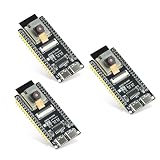
- Dual-core processor: The ESP32 module is based on the powerful ESP32-S3-WROOM N16R8 module and is equipped with a dual-core 32-bit LX7 processor. Its excellent AI computing performance, real-time processing capabilities, and low power consumption make it ideal for image recognition, edge AI, and complex IoT applications
- Integrated 2-megapixel OV3660 camera: Built-in OV3660 camera to capture clear images and stream video in real time. Perfect for smart surveillance, face recognition, and AI-based computer vision projects. It is the preferred solution for DIY makers and professionals to build camera-enabled IoT systems
- Dual Type-C ports for OTG and serial debugging: Designed with two USB Type-C interfaces - one supports USB OTG for host/device functions, and the other provides TTL serial for easy programming and debugging
- Shared antenna: Supports IEEE 802.11b/g/n Wi-Fi (2.4GHz) and Bluetooth 5 (LE and Mesh), using shared antennas to optimize wireless performance. Enhanced 2 Mbps PHY and long-distance communication (Coded PHY) ensure stable multitasking in harsh environments
- Multi-scenario applications: The ESP32 S3 development board maintains high stability even at high temperatures, making it ideal for industrial environments, educational purposes, and AI-driven projects. It is a versatile choice for robots, smart devices, and machine vision in lab or field applications
What memory controls does HeliosAOT describe?
Ambiq principal AI engineer Dr. Adam Page described planned scratch-buffer reuse and configurable allocation across TCM, SRAM, and MRAM. Developers can use a YAML file to specify where layers go; Page said the generated code mirrors the network structure. These are implementation options described for HeliosAOT in the Embedded article, not evidence that every Apollo device exposes all three memory types or provides identical capacity and performance.
What did “goes public” mean for Ambiq?
Ambiq’s IPO was a separate corporate event from the runtime announcement. The company’s July 31, 2025 closing announcement says it sold 4.6 million shares at $24 each, for $110.4 million in gross proceeds before expenses. The shares began trading on the New York Stock Exchange under the ticker AMBQ on July 30, 2025.
Rank #4
![Arduino Giga R1 WiFi [ABX00063] - High-Performance Microcontroller with Dual-Core ARM Cortex-M7 & M4, Wi-Fi, Bluetooth, and Advanced I/O for IoT & Edge Computing](https://m.media-amazon.com/images/I/51huzdomj0L._SL160_.jpg)
- Dual-Core Power for High-Performance Projects: The Arduino Giga R1 WiFi is equipped with a dual-core ARM Cortex-M7 (480 MHz) and ARM Cortex-M4 (240 MHz) microcontroller, providing impressive processing power for complex applications like edge computing, real-time data analysis, and AI tasks. This high-performance architecture is perfect for demanding projects in robotics, automation, and IoT.
- Built-in Wi-Fi & Bluetooth Connectivity: With integrated Wi-Fi and Bluetooth 5.0 capabilities, the Giga R1 WiFi enables seamless wireless communication for IoT and smart home projects. Whether you’re connecting to the cloud, other devices, or remote sensors, the board offers reliable connectivity for real-time data exchange and control.
- Ample Memory & Storage: The Giga R1 WiFi offers 16MB of Flash memory and 512KB of SRAM, providing ample space for running large applications, storing sensor data, or implementing complex algorithms. This makes it suitable for resource-intensive projects, such as real-time video processing, machine learning, and edge AI.
- Flexible I/O & Expansion: With digital/analog I/O, PWM, SPI, I2C, and UART interfaces, the Giga R1 WiFi provides flexible and easy integration with external components, sensors, and actuators. It also features a high-speed USB-C interface for fast programming and power delivery, along with compatibility with Arduino shields for further expansion.
- Ideal for Professional IoT & Edge Computing Applications: Designed for both prototyping and production, the Arduino Giga R1 WiFi is an excellent choice for advanced IoT applications, smart devices, robotics, and industrial automation. Fully compatible with the Arduino IDE, the board offers powerful tools and a large community to help you bring your project ideas to life quickly.
The $110.4 million amount is the closed, upsized offering figure. Ambiq’s earlier July 29, 2025 pricing announcement gave expected gross proceeds of $96 million. These figures refer to different stages of the offering, so the earlier estimate should not be confused with the final proceeds at closing. Ambiq’s annual report filed with the SEC also identifies the IPO closing date and ticker.
What’s actually slowing this PC down?
Pick the symptom - the matching free tool is one click away.
What is established about availability today?
A later Ambiq announcement dated September 23, 2025 described HeliaRT beta integration for Apollo510 and Apollo510B in neuralSPOT SDK V1.2.0, and an ahead-of-time HeliaAOT integration as experimental. It is useful as historical product context, but does not establish the October 2026 release status, licensing, supported-chip matrix, or benchmark performance of the HeliosRT and HeliosAOT solutions discussed in the August article. Ambiq’s announcement is available at neuralSPOT SDK V1.2.0 with Helia integration.
Quick Recap
Best Value
![Arduino UNO R4 WiFi [ABX00087] - Renesas RA4M1 + ESP32-S3, Wi-Fi, Bluetooth, USB-C, CAN, 12-bit DAC, OP AMP, Qwiic Connector, 12x8 LED Matrix for Advanced IoT & Embedded Projects](https://m.media-amazon.com/images/I/416S910MpBL._SL160_.jpg)
- Dual-Core Processing with Renesas RA4M1 and ESP32-S3: The Arduino UNO R4 WiFi combines the Renesas RA4M1 microcontroller (ARM Cortex-M4) and the ESP32-S3 Wi-Fi/Bluetooth chip, delivering powerful dual-core processing capabilities. This combination offers flexibility for a wide range of projects, from high-speed communications and wireless control to real-time data processing and edge AI applications.
- Comprehensive Wireless Connectivity: Equipped with Wi-Fi and Bluetooth 5.0, the UNO R4 WiFi ensures robust wireless communication for IoT projects, remote sensors, smart devices, and wireless control applications. Whether connecting to the cloud, other devices, or local networks, the board offers stable and high-speed wireless connectivity for seamless operation.
- Modern USB-C, CAN, & Qwiic Connector: The USB-C port enables efficient power delivery and fast programming, improving ease of use compared to traditional USB connections. The Controller Area Network (CAN) support allows for reliable, real-time communication in industrial, automotive, or robotic systems. Additionally, the Qwiic Connector makes it easy to add I2C sensors and peripherals, simplifying the connection process and reducing the need for complex wiring.
- High-Precision 12-bit DAC & OP-AMP: For projects that require high-quality analog output, the 12-bit DAC (Digital-to-Analog Converter) and integrated operational amplifier (OP-AMP) provide precise analog signal generation and amplification. This feature is ideal for audio projects, sensor interfacing, or applications where analog signal control and processing are necessary.
- Integrated 12x8 LED Matrix: The UNO R4 WiFi includes a built-in 12x8 LED Matrix, enabling users to display dynamic visuals, messages, or real-time data on the board itself. This makes it perfect for projects that require immediate visual feedback, such as status indicators, event displays, or interactive user interfaces.
Product prices and availability are accurate as of the date/time indicated and are subject to change. Any price and availability information displayed on Amazon at the time of purchase will apply.

