
iTechGuides is reader-supported. When you buy through links on our site, we may earn an affiliate commission. As an Amazon Associate I earn from qualifying purchases. Learn more
To align Formula 1 timing records with a photo archive, convert both sources to comparable UTC instants, keep the meeting and session identifiers with every match, and preserve the original camera metadata. A timestamp alone is not proof that a photo belongs to a particular session—or that the camera clock was accurate.
What needs to match
A reliable join uses two kinds of information: when an image was captured and which event and session it belongs to. Keep both dimensions. Otherwise, two records with similar times could be paired across different meetings or sessions.
OpenF1 provides session data with meeting_key and session_key, and its date fields are UTC date and time in ISO 8601 format. The service describes itself as unofficial and unaffiliated with Formula 1 companies. Its documentation, accessed in 2026, says historical data from 2023 onward is freely accessible without authentication and real-time access requires a paid subscription; access terms can change. See the OpenF1 documentation.
Quick wins for a faster PC:
Repair Windows errors before they cause bigger problemsFix Now →Scan for outdated or missing drivers - takes under a minuteDriver Scan →Understand the timestamp in each source
F1 timing records
An API date expressed in UTC identifies an instant. A display showing elapsed or remaining session time is different: it is a duration or session-relative value, not a UTC timestamp. If your feed gives only elapsed time, establish a reference mapping to the session start before attempting to join it to camera capture times. No universal mapping is established for every feed, app, or camera.
#1 Best Overall

- [NO MONTHLY FEE — 4G SIM & DATA INCLUDED] Pay once and track without a recurring subscription or activation fee. The built-in 4G SIM and data are included, so you can view vehicle location and activity in the TrackEase app or web dashboard. Coverage depends on local cellular availability.
- [PLUG-AND-PLAY OBD POWER — NO CHARGING] Plug the tracker into a compatible vehicle’s OBD-II port—no wiring, tools, or battery charging required. It draws power from the vehicle and enters sleep mode after the engine is turned off for simple, set-it-and-forget-it tracking.
- [REAL-TIME LOCATION & 180-DAY TRIP HISTORY] See live vehicle location with updates every 5 seconds while moving, then review up to 180 days of routes, stops, mileage, and driving activity in the iOS, Android, or web app.
- [CUSTOM SAFETY & SECURITY ALERTS] Receive push notifications for speeding, vehicle movement, geofence entry or exit, and device disconnection. Use configurable alerts to monitor teen drivers, family vehicles, company cars, or potential theft.
- [MULTI-VEHICLE MANAGEMENT & GLOBAL COVERAGE] Manage multiple VITALGLOW trackers from one account and keep each vehicle’s map, alerts, and trip history organized in one dashboard. Supported 4G service is available in 170+ countries and regions, including the U.S., Canada, and Mexico.
Photo metadata
The IPTC Photo Metadata Standard 2023.1 defines Date Created as: “Designates the date and optionally the time the content of the image was created rather than the date of the creation of the digital representation.” In other words, it refers to image content capture, not when a digital file was created. The standard’s implementation note recommends surfacing EXIF DateTimeOriginal and OffsetTimeOriginal when helping users enter this value. Date Created and Event Identifier can also help describe the photo. Read the IPTC Photo Metadata Standard 2023.1.
A capture-time field records what the camera or software says; it does not establish that the camera clock was correct. Do not substitute a filesystem modification or creation date for the moment of exposure. Apple documents AVCapturePhoto.timestamp as the time an image was captured, synchronized to the masterClock of its connected AVCaptureSession. That describes Apple’s capture API clock domain; it does not prove that every camera’s stored EXIF time is synchronized to UTC or to F1 timing. See Apple’s AVFoundation documentation.
Rank #2
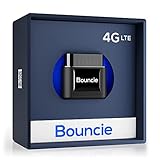
- Real-Time GPS Tracker Device for Vehicles — Ideal for personal use or fleet management, this car GPS tracker provides up-to-the-minute location updates. Our car tracking device also provides unlimited trip history, including a detailed route history
- Driving Insights — Our OBD tracker for cars monitors speed, acceleration, hard braking, idle time, and more. This versatile family and fleet GPS tracker for cars also helps improve road safety by sending alerts in response to unsafe driving practices
- Vehicle Health — Unlike other vehicle tracking devices, our car tracker device continuously monitors diagnostic engine data, alerting you to potential maintenance issues, so you can avoid downtime and keep fleet and family vehicles in peak condition
- Geo-Fencing & Accident Detection — Set up geo-fences to receive notifications when your vehicle enters or exits designated areas; Equipped with advanced sensors and software, this vehicle tracker device instantly detects impacts and sends SMS alerts
- Easy To Install & Low Monthly Subscription — Our OBD GPS tracker for vehicles plugs directly into OBD2 ports and works on most vehicles 1996 and newer; $9.65 monthly subscription required - no hidden activation or return fees - cancel anytime
A practical workflow for aligning the records
- Record the timing source and session identity. For OpenF1, retain
meeting_key,session_key, and the UTCdatevalue where available. Keep the original record or a traceable reference to it. - Read the image’s capture-time fields. Prefer the original capture value, such as EXIF
DateTimeOriginal, and its offset where present. Keep IPTC Date Created and Event Identifier if your archive uses them. A file’s modification date is not a substitute for capture time. - Normalize known instants to UTC. Parse ISO 8601 offsets correctly, then compare instants—not their display strings or local wall-clock values. If a photo timestamp has no offset, treat its timezone as unknown until you can establish it; do not silently assume the event’s local timezone or your computer’s current timezone.
- Estimate camera clock error from a reference. Use a known reference event or clearly identifiable moment to determine any difference between the camera clock and the timing source. Apply only a documented correction. If the reference is uncertain, flag the image for review instead of claiming frame-level precision.
- Join with event identity and a stated tolerance. Match within the same meeting and session, using a tolerance that reflects the timing source’s granularity and the camera clock’s known uncertainty. There is no universal threshold supported for all feeds and cameras.
- Keep the correction auditable. Retain original EXIF/IPTC values alongside the interpreted timezone or offset, normalized timestamp, correction method, reason, and reference. If you edit embedded metadata, preserve an untouched original or maintain a documented sidecar or version history. This is a provenance-conscious workflow; no particular product is guaranteed to preserve provenance automatically.
- Validate across the session. Check sample matches near the beginning, middle, and end, especially if the camera clock may have drifted or been reset. Treat this as a check, not as evidence of a particular drift rate.
Choose the right matching method
The method depends on what your records actually contain. Compare sources using their timestamp semantics and offset handling, whether they carry session and event identity, how corrections can be traced, and the granularity and uncertainty of each timestamp.
Do these 3 things before closing this tab:
1Clear out junk files and repair common Windows errors2Scan for outdated or missing drivers - takes under a minute3Repair Windows errors before they cause bigger problems| Available time value | What it represents | What to do before joining |
|---|---|---|
| UTC ISO 8601 date in a timing record | An instant, with UTC specified by OpenF1 | Parse the date and retain the meeting and session keys. |
| Photo capture time with a known offset | A recorded capture time that can be converted to an instant | Apply the recorded offset, normalize to UTC, and preserve the original fields. |
| Photo capture time with no known offset | A recorded wall-clock value whose timezone is unknown | Establish the zone or offset from a defensible reference before comparing. |
| Elapsed or remaining session time | A session-relative value rather than a UTC instant | Map it to a session start or another established reference before joining. |
Keep reuse rights separate from timestamp accuracy
A technically sound timestamp match does not grant permission to republish timing data or photographs. Check the terms for the specific feed and images, the publication context, and the relevant jurisdiction. For example, a 2024 FIA-hosted Austrian Grand Prix race-history chart says its timing/results data may not be reproduced, stored in a retrieval system, or transmitted without prior permission, subject to specified press-use exceptions. That notice applies to that document; it is not a blanket statement about every timing source or image. See the 2024 FIA race-history chart.
Quick Recap
Rank #3

- Connects wirelessly to your mobile device: iPad, iPhone and other Bluetooth enabled smartphones, tablets and laptops to provide precise position information
- Combines GPS and GLONASS satellite receivers for precise location data with Bluetooth Wireless Technology
- It has up to 13 hours of battery life to keep your position on long trips
- Suitable for pilots, mariners, hiking, cycling and the automotive industry
- Charge Garmin Glo 2 easily with the included USB cable or optional 12/24 V vehicle power cable
Product prices and availability are accurate as of the date/time indicated and are subject to change. Any price and availability information displayed on Amazon at the time of purchase will apply.

