
Intel and Micron introduced 3D XPoint in 2015 as a new type of non-volatile memory. Its distinguishing design, as the companies described it, used a transistor-less cross-point array with individually addressable cells and stacked layers. Intel later sold products using the media under the Optane brand, including SSDs and server persistent-memory modules—but those products had different access models and requirements.
What Intel and Micron announced
On July 28, 2015, Intel and Micron announced 3D XPoint as a new category of non-volatile memory: a medium designed to retain data without power while offering a different balance of access, endurance, and density from existing memory and storage. The announcement described the initial technology as 128 gigabits per die across two memory layers. Those figures and the architecture description are the companies’ published account of the launch, not a complete independent explanation of the material’s microscopic switching mechanism. Intel and Micron’s 2015 announcement.

How the cross-point design worked
The companies described perpendicular conductors crossing over an array of memory cells. A cell at an intersection could be selected individually, without a transistor at every cell, and additional cell layers could be stacked. In the joint release, Intel and Micron summarized the layout this way: “The innovative, transistor-less cross point architecture creates a three-dimensional checkerboard where memory cells sit at the intersection of word lines and bit lines, allowing the cells to be addressed individually.”
The key idea was to place many selectable cells at conductor intersections and build the array upward in layers. This is the design change behind the “3D” in 3D XPoint; it should not be confused with a claim that every later product exposed memory cells to software in the same way.
Free tools Windows power users keep installed
One-click scans. No signup required.
#1 Best Overall
What the launch performance figures do—and do not—mean
Intel and Micron’s 2015 release said 3D XPoint could be “up to” 1,000 times faster and have “up to” 1,000 times greater endurance than NAND, and called it ten times denser than conventional memory. These were company launch comparisons, not independent, workload-neutral guarantees for every chip or product. The announcement did not establish that all 3D XPoint devices would deliver those maxima in real systems, or define a universal present-day comparison across products. The joint announcement.
Later product claims had their own scope. In 2019, Micron announced its X100 data-center SSD with claims of up to 2.5 million IOPS, more than 9 GB/s bandwidth, and latency it described as 11 times better than NAND SSDs. Those were launch claims for that named SSD, not independent results or directly comparable measurements to the broad 2015 technology claims. Micron said the X100 used a standard NVMe interface and required no software changes to receive its benefits; it also said the product was being sampled with select customers that quarter. Micron’s 2019 X100 announcement.
Rank #2
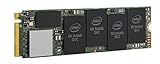
- 1B Storage Capacity
- M2. 2280 Form Factor
- PCIe NVMe 3.0 x4 Interface
- 1800 MB/s Sequential Read Speeds. 1800 Sequential Write Speeds. Intel QLC 3D NAND
What Intel Optane was
Intel marketed products using 3D XPoint media under the Optane brand. Optane was a system technology, not merely a synonym for the memory material: Intel described it as combining 3D XPoint media with controllers, interface hardware, and software IP. The product family included high-endurance, high-performance SSDs as well as persistent-memory DIMMs for supported servers. Intel’s Optane press kit.
Optane SSDs
An Optane SSD was a storage device: the operating system and applications generally accessed it through a storage interface as block data. This made it a more familiar product form than a persistent-memory DIMM. Micron’s X100 was another 3D XPoint SSD, announced for data-center storage- and memory-intensive work rather than as an ordinary consumer drive. Its stated NVMe compatibility applied to that product announcement and should not be taken as evidence of current availability or compatibility with any particular computer.
Recommended Free Tools
Rank #3
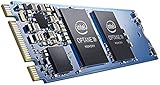
- Snappy PC experience with short boot times, fast application launches, extraordinary gaming experience and responsive browsing
- Pair Intel Optane memory with storage media (HDD, SSD), to get amazing performance and responsiveness without compromising storage capacities
- Supported on 7th Gen Intel Corei3 processor and above
- Requires Optane Ready Motherboard and storage drive such as HDD and/or SSD
- A computer with Intel Optane memory adapts to your everyday computing activities to make your repetitive tasks increasingly faster, smoother and easier to accomplish
Optane persistent-memory DIMMs
Intel Optane persistent-memory modules plugged into supported server memory platforms alongside DDR4 DRAM. They offered two distinct operating modes. In Memory Mode, Optane capacity appeared as volatile system memory and DRAM served as a cache; applications did not treat the Optane capacity as persistent storage. In App Direct Mode, software could address the capacity as persistent memory, allowing data to remain available across power loss. Intel also documented mixed configurations. Intel’s persistent-memory architecture overview.
These modes explain why a persistent-memory DIMM was not simply a large SSD or a drop-in DRAM replacement. App Direct use depended on platform and software support. Intel’s documentation describes requirements including a supported BIOS, CPU and platform, operating-system support, and relevant drivers or persistent-memory-aware software. A server could therefore have the modules physically installed yet be unable to use them in the intended mode if its platform or software stack did not support that configuration. Intel’s architecture overview.
Rank #4

- OEM PRODUCT, NO PACKAGING.
How 3D XPoint products differed from DRAM and NAND SSDs
| Technology or product form | Persistence | Access model | Important qualification |
|---|---|---|---|
| DRAM | Volatile; contents are lost when power is removed. | System memory accessed by the processor. | In Optane Memory Mode, DRAM acted as cache for Optane capacity. Intel. |
| NAND SSD | Non-volatile storage. | Block storage accessed through a storage interface. | Intel and Micron’s 2015 speed and endurance comparisons were launch claims; Micron’s X100 figures were specific to its 2019 data-center SSD announcement. Intel and Micron; Micron. |
| Optane persistent-memory DIMM | Could retain data in App Direct configurations; Memory Mode behaved as volatile system memory. | Memory Mode presented capacity as system memory with DRAM cache; App Direct exposed persistent capacity to supported software. | Required a compatible server platform and, for direct persistent-memory use, suitable operating-system and software support. Intel. |
| 3D XPoint media | Non-volatile by design. | Its access model depended on the product built around it. | The initial 2015 announcement specified 128 gigabits per die across two memory layers; the companies’ broad speed, endurance, and density figures were launch claims. Intel and Micron. |
How the joint development arrangement changed
In July 2018, Intel and Micron said they expected to complete second-generation joint development of 3D XPoint in the first half of 2019. They said that beyond that generation each company would pursue development independently, optimizing the technology for its own products and business needs. The companies also said manufacturing would continue at their Lehi, Utah facility. This records the plan they announced at the time; it does not by itself establish the later lifecycle, availability, or support status of every 3D XPoint or Optane product. Micron’s 2018 development update.
Quick Recap
Product prices and availability are accurate as of the date/time indicated and are subject to change. Any price and availability information displayed on Amazon at the time of purchase will apply.
Do these 3 things before closing this tab:
1Clear out junk files and repair common Windows errors2Fix the driver behind crashes, sound loss and screen glitches3Repair Windows errors before they cause bigger problems
