
The 2016 Pascal NVIDIA TITAN X was a powerful GP102 flagship, but its speed came at a steep launch price and with more heat, noise, and power use than the GTX 1080. In Tom’s Hardware’s 2016 test suite, it averaged nearly 29% higher performance than the GTX 1080 at 3840×2160; the card launched at $1,200, more than a 70% premium over the $700 GTX 1080 Founders Edition. That made it compelling for some demanding workloads, but poor value for most gamers chasing frame rates per dollar.
Which NVIDIA TITAN X does this review cover?
This is a historical review of the 2016 Pascal TITAN X, based on NVIDIA’s GP102 GPU. It is not the earlier Maxwell-generation GeForce GTX TITAN X, nor the separate 2017 TITAN Xp refresh. GamersNexus identifies the Pascal card’s release date as August 2, 2016 and lists 3,584 CUDA cores; NVIDIA’s surfaced support result gives TITAN Xp 3,840 CUDA cores. The shared TITAN X name makes checking the exact model important when evaluating a used card. GamersNexus’s 2016 review covers the Pascal model; NVIDIA’s legacy GeForce GTX TITAN X page describes the Maxwell-era card, not this review’s subject.
| # | Preview | Product | Price | |
|---|---|---|---|---|
| 1 |

|
Nvidia GTX TITAN X 12GB GDDR5 PCI-e x16 3 x DisplayPort | DVI | HDMI Graphics Video Card | $398.00 | Buy on Amazon |
| 2 |
|
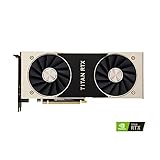
NVIDIA Titan RTX Graphics Card (Renewed) | $1,149.97 | Buy on Amazon |
| 3 |

|
NVIDIA Titan RTX Graphics Card | $1,395.00 | Buy on Amazon |
| 4 |

|
NVIDIA TITAN V VOLTA 12GB HBM2 VIDEO CARD | $556.00 | Buy on Amazon |
What were the Pascal TITAN X’s specifications?
These are historical specifications listed in GamersNexus’s 2016 comparison table, not measurements of every board or a statement about current software compatibility.
| Specification | 2016 Pascal TITAN X |
|---|---|
| GPU | GP102, Pascal |
| CUDA cores | 3,584 |
| Memory | 12GB GDDR5X |
| Memory interface | 384-bit |
| Memory bandwidth | 480GB/s |
| Base clock | 1,417MHz |
| Boost clock | 1,530MHz |
| TDP | 250W |
| PCIe power connectors | One 6-pin and one 8-pin |
| Launch price | $1,200 |
Specifications and launch pricing in this table are from GamersNexus’s October 2016 comparison review. The $1,200 figure is launch-era context, not a current used-market price.
#1 Best Overall
- [Engine Specs] CUDA Cores: 3072 | Base Clock (MHz): 1000 | Boost Clock (MHz): 1075 | Texture Fill Rate (GigaTexels/sec): 192
- [Memory Specs] Memory Clock: 7.0 Gbps | Standard Memory Config: 12 GB | Interface: GDDR5 | Interface Width: 384-bit | Bandwidth (GB/Sec): 336.5
- [Display Support] Max Digital Resolution: 5120x3200 | Max VGA Resolution: 2048x1536 | Standard Display Connectors: Dual Link DVI-I, HDMI 2.0, 3x DisplayPort 1.2 | Multi Monitors: 4 Displays | HDCP: Yes | Audio Input for HDMI: Internal
- [Graphic Card Dimensions] Height: 4.376 Inches | Length: 10.5 inches | Width: Dual-Width
- [Thermal & Power Specs] Max GPU Temperature (in C): 91 C | Graphics Card Power (W): 250 W | Recommended System Power (W)**: 600 W | Supplementary Power Connectors: 6-pin + 8-pin
How much faster was it than a GTX 1080 at 4K?
In Tom’s Hardware’s 2016 review suite, the TITAN X averaged nearly 29% higher performance than the GTX 1080 at 3840×2160. This is a result from that outlet’s games, settings, and test conditions at the time; it is not a prediction for current games or a direct comparison with today’s graphics cards. The 12GB of GDDR5X also exceeded the GTX 1080’s 8GB in that comparison, which could matter for some large render workloads, but memory capacity alone does not guarantee faster performance in a particular application.
The lead did not come cheaply. Tom’s Hardware compared the TITAN X’s $1,200 launch price with the GTX 1080 Founders Edition’s $700 price and concluded buyers paid a premium of more than 70% for the extra speed. As Tom’s Hardware editor emeritus Chris Angelini put it in the 2016 conclusion, “Whereas GeForce GTX 1080 Founders Edition hit the scene for $700, or just above the 980 Ti’s launch price, you’ll pay a 70%+ premium for Titan X’s extra speed.” See Tom’s Hardware’s 2016 TITAN X review for its test results and conclusion.
Rank #2
- OS Certification-Windows 7 64-bit, Windows 10 64-bit (April 2018 Update or later),Linux 64-bit
- 4608 NVIDIA CUDA cores running at 1770 MHz boost clock. NVIDIA Turing architecture
- New 72 RT cores for acceleration of ray-tracing
- 576 Tensor Cores for AI acceleration
Was the TITAN X Pascal worth it for 4K gaming?
For a buyer in 2016 who wanted the fastest single-GPU gaming performance in this comparison and could absorb the cost, its 4K lead was real. For most high-end gaming buyers, the GTX 1080 was the more sensible choice: it delivered lower performance, but the TITAN X’s premium was much larger than its average frame-rate advantage. Tom’s Hardware characterized the TITAN X as fast at 4K but poor value against the GTX 1080 for people focused on frame rate per dollar; GamersNexus likewise favored the GTX 1080 for most gaming buyers in its review context.
That verdict is about 2016 products and prices. No contemporary benchmark or current used-market price comparison is established here, so it should not be read as a recommendation against or for buying one today.
Recommended Free Tools
Rank #3
- OS Certification : Windows 7 (64 bit), Windows 10 (64 bit) (April 2018 Update or later), Linux 64 bit
- 4609 NVIDIA CUDA cores running at 1770 MegaHertZ boost clock; NVIDIA Turing architecture
- New 72 RT cores for acceleration of ray tracing
- 577 Tensor Cores for AI acceleration; Recommended power supply 650 watts
How did the reference cooler affect power, heat, and noise?
The reference card’s cooling was a meaningful tradeoff. Tom’s Hardware found the TITAN X used more power, ran hotter, and was noisier than the GTX 1080 with the shared cooler design. It also observed clock-rate reductions as the GPU warmed. GamersNexus described cooling as a limit on stock behavior in its own testing.
GamersNexus reported that its liquid-cooled modification raised average frame rates by roughly 3.5% to 5%, depending on the game, without an overclock. That result belongs to that specific modified card and test setup; it is not a general gain to expect from installing any liquid cooler or buying any used TITAN X.
Rank #4
- Original box, manual, adapter, and static shield bag included
What workloads suited its 12GB of memory?
GamersNexus noted that the 12GB capacity could be useful in animation and CUDA-accelerated rendering, where a workload may benefit from fitting more data in GPU memory. NVIDIA also positioned the card toward deep learning at launch. Those historical uses do not establish compatibility or performance with present-day AI frameworks, renderers, or CUDA software; check the requirements of the specific application and operating environment before relying on a Pascal card.
What should you check before installing or buying one?
The review-era specification lists a 250W TDP and one 6-pin plus one 8-pin PCIe power connector. TDP alone does not determine the right power supply for a whole computer. Confirm that the PSU has the required native cabling and suitable capacity for the complete system, and check the exact board’s dimensions against the case. For installation guidance, consult NVIDIA’s TITAN X user guide; the material available here does not establish a verified minimum PSU wattage from that manual.
If considering a second-hand card, verify that the listing is specifically for the 2016 Pascal TITAN X rather than Maxwell TITAN X or TITAN Xp, inspect the board and cooler condition, and review seller return terms. Current inventory, prices, driver support, and application compatibility have not been established here; verify each for the particular card and intended system.
Quick Recap
Product prices and availability are accurate as of the date/time indicated and are subject to change. Any price and availability information displayed on Amazon at the time of purchase will apply.

