
For a claw anchor, calculate rode using scope = rode length ÷ vertical distance from the bow roller or chock to the seabed. Add the water depth to the bow’s height above the water, then multiply by your chosen scope ratio. A general target in normal conditions is 7:1: in 10 feet of water with the bow roller 4 feet above the water, that is 14 feet × 7, or 98 feet of rode. The claw anchor does not require a different scope formula.
How to calculate the rode length
- Find the vertical distance. Add the water depth to the height of the point where the rode leaves the boat—the bow roller or chock—above the water.
- Choose a scope ratio. Scope is the length of rode deployed compared with that vertical distance. A 7:1 ratio means seven feet of rode for each foot from the bow roller to the seabed.
- Multiply. Vertical distance × scope ratio = rode to deploy.
For example, if the water is 10 feet deep and the bow roller is 4 feet above the water, the vertical distance is 14 feet. At 7:1, deploy 14 × 7 = 98 feet. Do not calculate from water depth alone; the bow height is part of the measurement. West Marine explains the scope calculation in its guide to anchoring a boat and anchor-rode selection guide.
Choose a scope for the conditions
Seven-to-one is a general recommendation for normal conditions, not a guarantee that an anchor will hold. The right amount also depends on wind, current, waves, bottom conditions, boat characteristics, rode setup, and room to swing.
| Situation | Illustrative scope | What to consider |
|---|---|---|
| Normal conditions | 7:1 | West Marine gives this as general guidance. |
| Calm conditions or a crowded anchorage | 5:1; sometimes 3:1 | A compromise some boaters make when space is limited. Shorter scope increases the rode’s pull angle and can reduce holding reliability, particularly if wind or current changes. |
| Rough conditions or an exposed overnight anchorage | 10:1 | West Marine’s rode guide describes this as providing better holding. Confirm there is enough room and rode for the longer scope. |
| All-chain rode in calm to moderate conditions | 4:1 may be workable | A rode-specific guideline, not a universal replacement for assessing conditions and the anchorage. |
These are general recommendations, not guarantees. Longer scope needs more swing room; reducing scope to fit a crowded spot is a holding tradeoff, not an equivalent substitute.
#1 Best Overall

- TOP-PERFORMING ANCHOR— Our claw anchors have a one-piece design and easily sets in a variety of seabeds. This claw anchor also resets quickly giving boaters the confidence they need for a reliable, dependable and anchor
- BUILT TO LAST — This Lewmar claw anchor is made from a high-grade steel and galvanized for durability. They hold well in most bottom types and varying conditions, and perform best in rock, weed and coral
- QUALITY DESIGN — The Lewmar galvanized claw anchor replicates the same design of the anchors used by the oil rigs in the North Sea. You can depend on the performance and reliability of how well this anchor sets and resets-a premium anchor
- SIZED RIGHT —The galvanized claw anchor measures 13" W x 10- 1/4" H x 19- 1/2" L The anchor weighs 16.5 lbs. (7.5 kg). It is ideal for boats 24-30''.
- TRUSTED BRAND — Our Lewmar 16.5 lb. claw anchor is made from the premiere equipment supplier- designing, manufacturing and distributing innovative, high-quality control solutions worldwide since 1946. Lewmar offers the highest levels of quality in the industry
Worked examples
Assuming the bow roller is 4 feet above the water, the following examples show how the arithmetic changes with depth and scope:
| Water depth | Vertical distance to seabed | Rode at 7:1 | Rode at 10:1 |
|---|---|---|---|
| 10 feet | 10 + 4 = 14 feet | 98 feet | not stated (West Marine provides no 10:1 example for this depth) |
| 20 feet | 20 + 4 = 24 feet | 168 feet | not stated (West Marine provides no 10:1 example for this depth) |
| 30 feet | 30 + 4 = 34 feet | 238 feet | 340 feet |
The 10:1 values not supplied above are marked “not stated” rather than treated as source-provided examples; the arithmetic itself follows the scope formula. These figures illustrate calculation, not a vessel-specific anchoring plan. Account for the greatest relevant depth, actual bow height, conditions, seabed, and available swing room.
Rank #2

- Durable, dependable Claw Anchor is ideal for anchoring wide variety of boats
- Versatile anchor is designed for use in various sea beds, and performs reliably amid tides and windy conditions
- Durable, corrosion-resistant hot-dipped galvanized steel construction
- Stows easily on bow roller
- Reliable 11-pound Claw Anchor is intended for use with a 23-foot boat
Does a claw anchor change the calculation?
No separate scope formula is specified for claw anchors in the cited guidance. Scope is determined by rode length relative to the vertical distance from where the rode leaves the bow to the seabed. Anchor design can affect performance, but no ratio by itself guarantees a claw anchor will hold. Seabed composition, wind, current, waves, boat weight, rode setup, and whether the anchor sets all matter.
After lowering the anchor, apply steady tension to set it; West Marine describes doing this by slowly applying reverse power. If the boat continues moving backward, the anchor may not have set and should be reset. See its anchoring guidance for the setting advice.
Outdated Drivers Are Slowing You Down
One free scan finds every outdated or missing driver and matches the right update for your exact hardware.Free scan · exact hardware matchWindows Errors? Fix Them Before They Spread
Repair common Windows errors and clear accumulated junk for a smoother, more stable PC - no reinstall needed.Free scan · no reinstallRank #3

- ROCK SOLID - To deliver reliability on the open water, this claw anchor is built from high-strength steel. Not only that, but the steel is one-piece, high-tensile and heat-treated for exceptional strength and a rock-solid hold
- MARINE-RESISTANT - Marine environments can be some of the most rigorous, and as such, we’ve made this anchor to last, applying a galvanized finish that stands up to moisture, weather and more
- QUICK-SETTING - This Lewmar anchor offers a sophisticated solution for your vessel with its bruce-style claw. The claw sets quickly in a variety of seabeds and resets as needed after veering
- EASY STORAGE - This claw anchor can be used with a variety of bow roller styles to make dropping, weighing and storing easy
- ANY BOAT - Choose from a range of sizes and weights of our Lewmar claw anchor to find the right fit for your boat style and length
How rode material affects the choice
Rope-and-chain rode
A rope-and-chain rode combines line, commonly nylon, with chain at the anchor end. Chain helps protect the line from bottom chafe and its weight helps keep the pull more parallel to the seabed. West Marine describes chain equal to the boat’s length as a classic arrangement for some rope setups, while noting that a shorter chain can also help. That is context, not a universal sizing prescription; the appropriate rode depends on the boat and use.
All-chain rode
All-chain rode is heavier and has little elasticity. For an all-chain setup, West Marine describes a nylon snubber as the shock-absorbing connection. The chain’s weight helps explain why its guide says 4:1 may be workable in calm to moderate conditions, but conditions and available swing remain important.
Rank #4

- ROCK SOLID - To deliver reliability on the open water, this claw anchor is built from high-strength steel. Not only that, but the steel is one-piece, high-tensile and heat-treated for exceptional strength and a rock-solid hold
- MARINE-RESISTANT - Marine environments can be some of the most rigorous, and as such, we’ve made this anchor to last, applying a galvanized finish that stands up to moisture, weather and more
- QUICK-SETTING - This Lewmar anchor offers a sophisticated solution for your vessel with its bruce-style claw. The claw sets quickly in a variety of seabeds and resets as needed after veering
- EASY STORAGE - This claw anchor can be used with a variety of bow roller styles to make dropping, weighing and storing easy
- ANY BOAT - Choose from a range of sizes and weights of our Lewmar claw anchor to find the right fit for your boat style and length
If selecting chain or replacement rode, match chain type, grade, and diameter to the windlass gypsy. A chain marker can help show how much chain is deployed, but it does not determine the correct scope. For more on rode selection and compatibility, see West Marine’s anchor-rode guide.
Quick Recap
Best Value
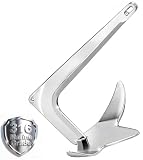
- Premium 316 Stainless Steel for Saltwater Use: Made from marine-grade 316 stainless steel to resist rust, corrosion, and pitting in harsh saltwater environments. The mirror-polished finish gives your boat a clean, premium look while making the anchor easier to rinse after use
- Bruce Style Claw Design for Reliable Holding: Classic claw anchor shape is designed to set quickly and hold securely in common seabeds such as sand, mud, gravel, and mixed bottoms. A dependable choice for coastal cruising, fishing trips, and everyday anchoring
- Fast Setting & Easy Resetting: Balanced claw geometry helps the anchor dig in quickly and reset when wind or current changes direction, reducing drag and helping your boat stay positioned more securely
- Choose the Right Size for Your Boat: Available in 3 sizes: 11 lb / 5 kg for boats up to 25 ft, 16.5 lb / 7.5 kg for boats up to 32 ft, and 22 lb / 10 kg for boats up to 35 ft. Anchor selection may vary based on boat weight, wind, current, seabed, and rode setup
- Ideal for Bow Roller & On-Deck Display: The polished stainless steel construction looks great on sailboats, cruisers, sport boats, and coastal fishing boats. A strong upgrade from standard galvanized anchors for boaters who want both dependable performance and a premium marine look
Product prices and availability are accurate as of the date/time indicated and are subject to change. Any price and availability information displayed on Amazon at the time of purchase will apply.

