
Smart factories combine sensors, industrial control, local computing, networks and analytics; physical AI adds systems that sense and act in changing environments. This Embedded Week roundup connects those ideas to processor choices for manufacturing and to a concrete motion-sensing example: Xsens’ Heave feature for its Sirius and Avior inertial measurement units (IMUs).
How the smart-factory stories fit together
A smart factory is not a single device or processor. It is a system in which sensors observe equipment and processes, embedded controllers carry out time-sensitive actions, networks coordinate machines, and software uses operational data to monitor or improve production. Some processing can happen near the equipment; cloud connections can support wider analysis and optimization.
The roundup also covers Qualcomm’s strategic expansion, NVIDIA technologies associated with physical AI, and an Infineon tri-radio system-on-chip. Those topics point to the breadth of embedded technology reaching manufacturing, but the available coverage details here do not establish the specific product capabilities or configurations for those announcements. A product name or “tri-radio” label alone is not enough to choose a component for a particular factory.
Which processor belongs in which factory job?
Processor categories serve different workloads rather than forming a simple performance ranking. A design may combine several of them: for example, a controller can manage deterministic motion while a separate processor handles vision or analytics.
#1 Best Overall

- Product Name MPU-6050 MPU6050 6-Axis Accelerometer Gyro Sensor, which is a key component for motion sensing applications.
- Communication Protocol Utilizes the standard IIC communication protocol, enabling reliable data transfer between the sensor and other connected devices.
- AD Converter and Data Output Incorporates a built-in 16-bit AD converter, providing precise 16-bit data output for accurate measurement and analysis.
- Gyroscope Range Offers a gyroscope range of +/- 250, 500, 1000, and 2000 degrees per second, allowing for the detection of various rotational speeds and movements.
- Acceleration Range The acceleration range spans ±2, ±4, ±8, and ±16 grams, facilitating the measurement of different levels of linear acceleration in various applications such as inertial navigation and motion tracking.
| Processor or component | Typical role in the coverage | Example workloads |
|---|---|---|
| MCU or PLC | Precise, low-latency control | Motor synchronization; valve actuation |
| MPU or CPU | Operating systems, data management and higher-level application work | Human-machine interfaces (HMIs); high-speed network communication |
| DSP and ADC | Acquiring, filtering and synchronizing sensor streams | Vibration, pressure and temperature processing |
| NPU | Acceleration for local machine-learning tasks | Predictive maintenance; machine inference and autonomous decisions |
Examples named in Embedded.com’s smart-manufacturing processor coverage include Infineon PSOC Edge and XMC, Microchip dsPIC, NXP i.MX 8M Plus and i.MX 95, Renesas RZ, STMicroelectronics STM32V8, and NVIDIA Jetson modules. The cited applications range from motor control and factory automation to machine vision, robotics and mobile-robot navigation. These are starting points for evaluation, not evidence that every named family is available, supported or suitable for a given design today. Check the manufacturer’s current documentation for exact part status, performance, software support, safety status and availability.
Compare requirements before comparing chips
- Workload and timing: Define what must be sensed or computed, how quickly the system must respond, and whether the response must be deterministic.
- Interfaces: Match sensor, actuator and industrial-network interfaces to the actual installation.
- AI needs: Determine whether inference must run locally and whether a CPU, DSP or dedicated NPU can meet the workload.
- Power and thermal limits: Estimate sustained—not just peak—performance within the enclosure and operating environment.
- Lifecycle and software: Check toolchain maturity, operating-system support, security-update plans, long-term supply and integration effort.
- Safety integration: Define how the design separates or supervises AI functions where a failure could affect people or equipment.
There is no universal best smart-factory processor in the coverage. Selection depends on the task, control timing, interfaces, operating conditions and the product’s verified support status.
What physical AI means in an industrial setting
In this coverage, physical AI describes systems that interpret information from the physical world, adapt to changing conditions and take action. Synaptics marketing executive Neeta Shenoy frames industrial examples around multimodal input, precise timing and coordinated action, including robotics and tactile sensing. That is a vendor executive’s perspective, not a neutral safety standard.
Rank #2
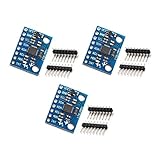
- MPU-6050 MPU6050 6-axis Accelerometer Gyroscope Sensor
- Communication mode: standard IIC communication protocol
- Chip built-in 16bit AD converter, 16bit data output
- Gyroscopes range: +/- 250 500 1000 2000 degree/sec
- Acceleration range: ±2 ±4 ±8 ±16g
Unlike a purely digital task, a physical-AI system interacts with equipment, materials or people. A model’s output may need to arrive on time, sensor inputs must remain useful in real operating conditions, and the system must respond appropriately when conditions differ from its training or validation data.
Why put computation at the edge?
Local processing can reduce dependence on a cloud round trip when latency, connectivity or control of operational data matters. It can also let a device continue some functions when a network link is unavailable. Edge computing does not remove engineering constraints: compute, power and thermal budgets are limited, and local systems still need reliability, secure updates, monitoring and a plan for model drift.
EE Times’ report on Automation World 2026 describes a system-level arrangement in which edge AI computes at devices, industrial networks coordinate devices and move data, and digital-twin platforms support simulation and optimization. The event report cites 500 companies from 24 countries, 2,300 booths and around 80,000 visitors. Those figures describe the event’s scale, not factory adoption or the maturity of generally autonomous factories.
Rank #3
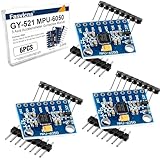
- 6-Axis Motion Tracking Sensor: The MPU-6050 IMU module integrates a 3-axis accelerometer and 3-axis gyroscope, enabling precise motion tracking, orientation detection, and angle measurement for a wide range of applications.
- I2C Interface for Easy Connection: Built with a standard I2C communication interface, requiring only SDA and SCL pins, making it simple to connect with microcontrollers and ideal for beginners and fast prototyping.
- High Sensitivity & Stable Performance: Provides reliable and accurate data output with high sensitivity, suitable for applications such as self-balancing robots, drones, gesture control, and motion sensing systems.
- Complete Kit with Jumper Wires: Comes with male-to-female and female-to-female jumper wires, allowing quick setup without additional purchases—perfect for breadboard experiments and DIY electronics projects.
- Wide Compatibility for DIY & Development: Fully compatible with Arduino, Raspberry Pi, ESP32, STM32 and other microcontrollers, widely used in robotics, IoT projects, education, and embedded system development.
Keep learning systems separate from safety-critical control
AI can support monitoring or recommendations without becoming the sole authority over a safety-critical action. The smart-factory coverage discusses isolating AI components from safety-critical control, validating behavior, and using runtime monitoring and fallback mechanisms. The practical design question is what happens when sensors are unreliable, a model behaves unexpectedly, or a network or compute component fails—and which established control function can place equipment in a safe state.
Other challenges include maintaining performance per watt, supporting heterogeneous workloads, keeping silicon and software viable over a factory’s lifecycle, and monitoring changing conditions that can cause model drift. Adding an AI accelerator alone does not solve integration, validation or update management.
PC Slower Than It Used to Be?
A free scan shows the junk files, broken settings and background clutter dragging Windows down - then fixes them in one click.Free scan · Windows 10 & 11Crashes, No Sound, or Screen Glitches?
Random freezes, missing sound and display glitches usually trace back to one bad driver. Find and replace yours safely.Free scan · under a minuteXsens IMUs: measuring a vessel’s vertical motion
The roundup’s concrete IMU example is Xsens’ upgrade of its industrial-grade Sirius and Avior inertial measurement units with Heave capability. Heave is a vessel’s vertical motion due to waves. Xsens says one unit can provide roll, pitch, yaw and Heave, with the Heave result computed on the device. Embedded.com reports the following figures as Xsens claims, not independent test results:
Rank #4

- IIC and SPI Interfaces** provide flexible communication options for the BMI160 6-Axis IMU Sensor Module, making it easy to integrate into a wide range of applications, from robotics to VR/AR systems
- 16-bit Data Output** ensures the BMI160 6-Axis IMU Sensor Module delivers highly accurate and reliable data, essential for precise motion tracking and control in advanced applications
- High Precision 6-Axis IMU Sensor Module** with a 3-Axis Accelerometer and 3-Axis Gyroscope, offering ±2 to ±16g and ±125 to ±2000 °/s ranges for unparalleled accuracy in motion sensing
- Compact 13x18mm Design** makes the BMI160 6-Axis IMU Sensor Module ideal for small form factor projects, ensuring high precision without sacrificing space
- Low Power Consumption** and a 3-5V power supply make the BMI160 6-Axis IMU Sensor Module perfect for battery-powered devices, extending operational life in wearables and drones
| Reported Heave figure | Qualification |
|---|---|
| Better than 5 cm real-time accuracy | Xsens announcement as reported by Embedded.com; for wave periods up to 29 seconds. |
| Approximately 6 cm accuracy | Xsens announcement as reported by Embedded.com; for wave periods up to 40 seconds. |
| Up to 100 Hz output | Xsens announcement as reported by Embedded.com; Heave output rate. |
The publication year of the Embedded.com story was not stated in the available coverage, so these specifications should be treated as reported claims rather than assumed current performance guarantees.
Firmware, connections and development
The story reports that the Heave update is available as firmware for existing Sirius and Avior units without hardware changes, and is included in new units. It lists RS-422, CAN and UART interfaces, configuration through MT Manager or the Xsens SDK, and development kits for prototyping. It also reports free SDKs for C/C++, Python, ROS1, ROS2 and MATLAB. Confirm current firmware, unit compatibility, kit contents and distribution with Xsens or an authorized distributor before specifying or buying a system.
A development-board IMU and an industrial or marine-qualified motion reference unit are not interchangeable categories. A prototype can help evaluate software or integration, but suitability for marine motion compensation depends on the specific unit, its verified performance and the requirements of the installation.
What the roundup does—and does not—establish
The stories collectively show why embedded computing, sensing and networking are converging in manufacturing: control must remain timely, while additional processing can interpret more data close to where it is generated. Qualcomm executive Nakul Duggal described the company’s approach as helping organizations use AI and edge compute for efficiency and new opportunities. That is Qualcomm’s positioning statement, not an independent assessment of results.
TechTarget reports that a 2026 Capgemini Research Institute survey of 1,678 senior executives found nearly 80% of organizations engaging with physical AI and 60% believing it could enable robotic applications previously impossible or impractical. These are survey findings as reported by TechTarget, not direct measurements of deployment or proof that such applications are already widespread. They should not be confused with the Automation World attendance and exhibitor figures, which measure event scale.
Quick Recap
Product prices and availability are accurate as of the date/time indicated and are subject to change. Any price and availability information displayed on Amazon at the time of purchase will apply.

