
Modular embedded systems divide industrial computing and control into components that work together through defined interfaces. They can make process equipment easier to combine, adapt, or replace—but only when the modules and the receiving control system support compatible functions, communications, and engineering workflows. In process automation, NAMUR’s Module Type Package (MTP) approach describes a process module’s automation in a vendor-neutral format that can be imported into process-control engineering. That is a structured integration path, not a promise that any equipment will plug in and work.
What are modular embedded systems in industrial automation?
An embedded system is computing built into equipment to perform a dedicated task. In industrial automation, that computing may run control logic, handle communications, read inputs from sensors, or command outputs such as actuators. A modular design separates some of these responsibilities into components with defined interfaces, so a system can be assembled or changed without treating every function as part of one indivisible controller.
The word “modular” can describe different layers. A controller may use replaceable hardware modules for processing or I/O; software may package reusable control functions; or a process unit may expose its automation functions to the plant control system as a module. These layers can coexist, but they are not interchangeable concepts. A compatible I/O card does not by itself define how a process unit behaves, and a software description does not guarantee that hardware or safety functions are compatible.
How PLCs, embedded controllers, and modular I/O work together
A PLC is one common type of industrial controller: it executes control logic and exchanges signals with I/O and other devices. An embedded controller may serve a dedicated machine or package unit, while modular I/O can bring input and output connections closer to equipment or organize them as replaceable components. The exact arrangement depends on the system design and verified compatibility between the controller, I/O, communications, and engineering tools.
Do these 3 things before closing this tab:
1Scan for outdated or missing drivers - takes under a minute2Repair Windows errors before they cause bigger problems3Fix the driver behind crashes, sound loss and screen glitches#1 Best Overall

- 【All-in-One Industrial Panel PC with Windows 11 Pro】Powered by an Intel Celeron N5095 processor and Windows 11 Pro, this rugged 15.6-inch industrial touch panel PC combines high reliability with fanless operation, making it ideal for demanding industrial environments. 8GB RAM and 128GB ROM memory ensure smooth multitasking and efficient data processing.
- 【15.6-inch Touchscreen Industrial Tablet PC】With a Full HD 1920×1080 resolution that ensures crisp images even in bright light conditions, this industrial 16:9 wide format display ensures maximum compatibility with specialized software. Equipped with a high-sensitivity 10-point G+G capacitive touch, this Windows PC panel provides precise and smooth interaction with fast response, supporting wet hands and gloves operation, ideal for versatile use in a variety of industries.
- 【Industrial All-in-One Touchscreen Panel PC】This all-in-one industrial computer boasts a compact and robust design, reliable performance over a wide temperature range (-10°C to 55°C) and support for 12V power, meeting the demands of industrial applications that require maximum reliability, durability and durability even in harsh environments.
- 【Fanless Industrial Panel PC with Sealed Design】This Windows 11 industrial tablet features a fanless design for virtually silent operation. The waterproof front face, fully sealed moisture-resistant back coating and lightweight aluminum alloy construction offer protection against vibration and shock, making it the ideal solution for extreme industrial environments.
- 【Industrial PC with High Speed Wireless Connection】This industrial touchscreen PC is equipped with high-speed Wi-Fi 5 for greatly improved signal reception. With built-in Bluetooth 5.0 technology, it ensures low latency, stable transmission and extended range, while the 1000M LAN port ensures a seamless connection in any environment.
Modularity is therefore best understood as an architecture choice, not as a single product category. A small machine controller, a distributed I/O arrangement, and a process skid that exports an MTP description can all be modular in different ways.
How does MTP help integrate process modules?
In process automation, a process module might be a package unit or other bounded piece of equipment with its own automation. NAMUR describes MTP as a vendor-neutral functional description of that module’s automation. The module’s engineering tool can generate an MTP for import into process-control engineering, helping the plant team integrate the module’s functions into the wider control environment. NAMUR also identifies automatic generation of a module HMI and service-based control among MTP capabilities. NAMUR’s MTP overview explains the approach.
In practical terms, MTP aims to reduce the need to recreate a module’s automation description from scratch in the plant-control engineering environment. The result still depends on what the module describes and what the receiving system implements. Teams need to confirm supported functions, states, interfaces, and engineering-tool behavior; an MTP file alone does not make arbitrary devices interoperable.
Rank #2

- 【Flexible Mounting with VESA and Cabinet Hooks】HIGOLEPC industrial touch panel PC includes standard PPC mounting hooks for seamless cabinet integration and VESA mounting holes on the back for wall or desktop installation, adapting to diverse usage scenarios
- 【Reliable Android 12 Performance with Fanless Cooling】This 15.6-inch industrial Panel PC is powered by the RK3399 processor running Android 12. Its fanless design ensures silent, reliable operation in tough conditions, while the 4GB RAM and 64GB ROM deliver smooth multitasking and data processing
- 【Full HD Touchscreen with Multi-Touch Sensitivity】With a 15.6-inch Full HD (1920x1080) display, this Android tablet PC delivers sharp visuals in a 16:9 format, perfect for specialized software. The 10-point capacitive touch (G+G) ensures smooth, accurate interaction, even with wet or gloved hands
- 【Rugged Design for Extreme Temperatures】This industrial-grade all-in-one panel PC features a compact yet robust structure, operating reliably from -10°C to 55°C with 12V/2A input. It is built to withstand harsh environments, ensuring durability and high reliability for demanding applications
- 【High-Speed Wi-Fi 5 and Bluetooth 4.2 Connectivity】This touchscreen industrial PC is equipped with Wi-Fi 5 for enhanced signal reception, Bluetooth 4.2 for low-latency stable transmission, and a 1000M LAN port, ensuring seamless connectivity in any environment
Process modularity is not the same as factory modularity
MTP is specifically discussed in the context of modular process automation. A process plant may combine package units or process modules whose functions need to appear in a plant-level control system. Broader factory automation also uses modular controllers, machine cells, and configurable I/O, but the MTP description should not be treated as a universal integration standard for every factory device or production line.
NAMUR’s work on modules and “plug and produce” frames interface harmonization and practical modularization as engineering concerns. Flexible modules are a design goal; the amount of standardization and integration effort required varies with the application.
Which standards and architectures address which layer?
Standards and initiatives in this area solve different problems. Some concern how control logic is expressed; others define communication or information models, describe process modules, or specify a hardware architecture. Support for one layer does not prove interoperability across the entire system.
Rank #3

- ALL IN ONE ---15 inch LCD industrial grade front panel IP65 touch panel PC with 10-point capacitive G+G touch screen. Compact and fully functional, it provides all the power and performance of a desktop computer in an all-in-one design, ideal for various industrial and commercial applications.
- SILENCE & EFFICIENT HEAT DISSIPATION DESIGN --- This industrial touchscreen panel PC adopts fanless design for quiet and stable running. High-strength aluminum alloy back cover ensures excellent heat dissipation. It also features strong anti-interference, high & low temperature resistance, dustproof and anti-vibration for harsh industrial environments.
- POWERFUL PROCESSOR --- This industrial touch panel PC is equipped with I5-1235U processor, providing high performance and low power consumption. It comes with rich interfaces: 2×LAN, HDMI, 4×USB3.0, 2×USB2.0, 4×RS232, 2×RS485, 8×GPIO. Wi‑Fi and Bluetooth modules are integrated. It supports configurable power‑on auto‑start function, which can be enabled or disabled according to actual application needs.
- STABLE PERFORMANCE --- This industrial touchscreen panel PC adopts strict industrial-grade design, testing and manufacturing standards to ensure outstanding reliability and stability. It supports 7×24 hours of uninterrupted operation and maintains consistent performance even under long-term continuous working conditions.
- MULTIPLE APPLICATIONS --- This embedded touch panel PC is widely used in various scenarios, including production line management, industrial workshops, equipment control systems, security management systems, intelligent manufacturing, advertising information display, catering ordering and cashiering, network monitoring management, and more.
| Standard or initiative | What it addresses | What it does not establish on its own |
|---|---|---|
| IEC 61131-3 and PLCopen | PLCopen identifies IEC 61131, especially Part 3, as the basis for its work on programmable-controller logic. It also describes reusable, hardware-independent motion-control applications using IEC 61131-3 and PLCopen function blocks. PLCopen’s standards overview. | Using IEC 61131-3 does not by itself make different controllers, I/O, or application functions interchangeable. |
| OPC UA with PLCopen | PLCopen and the OPC Foundation describe specifications connecting the IEC 61131-3 software model with OPC UA communication mechanisms and information models. PLCopen’s communication overview. | OPC UA alone does not guarantee that devices expose the same application semantics, profiles, or functions. |
| IEC 61499 and PICMG InterEdge | PICMG describes InterEdge as a modular process-control architecture for compute, switching, and I/O, and says it is compatible with IEC 61499 and IEC 61131. PICMG’s InterEdge announcement. | This specific initiative is not evidence that all vendors implement the same interfaces or that the architecture is universally adopted. |
| MTP | A process-module description and integration approach: module automation engineering can describe functionality for import into process-control engineering. NAMUR’s MTP overview. | It does not remove the need to check the module’s supported functions and the receiving system’s implementation. |
| NAMUR Open Architecture (NOA) | An approach to make production data available for monitoring and optimization through an additional communication channel while preserving the traditional automation structure. NAMUR describes use in brownfield systems and compatibility with MTP in new installations. NAMUR’s NOA overview. | It is not a replacement for the control architecture or a guarantee that every installed system can expose every desired data point. |
IEC 61131-3 versus IEC 61499
For a practical comparison, distinguish the standards by the way they enter the architecture discussion rather than assuming one automatically replaces the other. PLCopen identifies IEC 61131-3 as the foundation for its work on programmable-controller logic. PICMG’s description of InterEdge references compatibility with both IEC 61131 and IEC 61499 in a particular modular process-control initiative. These descriptions do not provide a universal product-selection rule or establish that a device supporting either standard will work with every other implementation.
Check the status of standards documents
Standards editions and status can change. The VDI page for VDI/VDE/NAMUR 2658 Part 1 displayed “Withdrawal announced” and an objection deadline of 2026-09-30. That deadline has passed; the page information cited here does not establish the final disposition. Verify the status with the publisher before treating the document as current. VDI’s Part 1 page is the relevant reference. NAMUR’s explanatory pages describe approaches and are not a substitute for the normative standards documents.
Recommended Free Tools
What benefits can modularity offer—and what does it cost?
Modular systems can make it easier to configure production around process units, bring a module’s functions into plant-level control, or reuse and replace modules. Those are potential benefits and design goals, not guaranteed savings. NAMUR’s materials also emphasize the effort involved in interface harmonization and the need to consider how much modularization is practical.
Rank #4
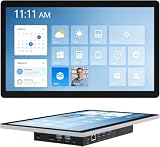
- 【Robust Industrial Core】This robust 13.3-inch panel PC delivers unwavering reliability for industrial applications. Featuring a fanless Intel Celeron N5095 platform running Win11 Pro, along with 8GB memory and 128GB storage, it ensures efficient and stable operation where it matters most.
- 【HD Precision Touch】Equipped with a 13.3-inch 1920x1080 FHD display in a 16:9 format, this industrial tablet PC offers clear, detailed visuals. Its high-sensitivity 10-point G+G capacitive touchscreen provides precise and responsive control for intuitive operation.
- 【Fully Sealed Rugged Design】The fully sealed enclosure of this fanless 13.3-inch industrial computer ensures durability and resistance to contaminants. Its compact, rugged build houses a Win11 Pro system, making it an ideal embedded solution for harsh environments.
- 【Full-Spectrum High-Speed Connectivity】Stay connected with robust wireless and wired options. This industrial panel PC supports Wi-Fi 5 and Bluetooth 5.0 for fast, stable wireless communication, alongside a Gigabit LAN port for maximum network reliability in any operational setting.
- 【Flexible Mounting Solutions】Achieve flexible deployment quickly. The included PPC mounting hooks and standard VESA interface allow for seamless integration into cabinet systems, wall mounting, or desktop setups, catering to a wide range of application scenarios.
Modularity shifts some work toward defining boundaries and responsibilities. Teams must agree on module functions and states, communication behavior, engineering ownership, and expectations for security and availability. NAMUR’s work on automation architectures treats networking, IT/automation interfaces, security, and availability as design topics.
Siemens markets MTP-related reductions of “up to 50%” in time-to-market and “up to 70%” in engineering effort. These are Siemens vendor claims; the page does not state a year for them. They should not be read as independent measurements or a forecast for a particular project. Siemens’ modular production page.
Independent reader supportYour contribution helps us test, update, and keep practical guides available for everyone.What should you compare when choosing a modular automation architecture?
There is no universally preferable choice between centralized control and distributed or modular control. Compare the architecture against the process or machine requirements, and verify compatibility with the actual products and tools under consideration. The following checklist synthesizes the decision areas raised in NAMUR and PLCopen materials; it is not a published universal scorecard.
Free tools Windows power users keep installed
One-click scans. No signup required.
Best Value
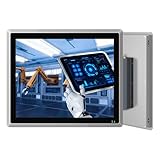
- ALL IN ONE ---17 inch LCD industrial grade front panel IP65 touch panel PC with 10-point capacitive G+G touch screen. Compact and fully functional, it provides all the power and performance of a desktop computer in an all-in-one design, ideal for various industrial and commercial applications.
- SILENCE & EFFICIENT HEAT DISSIPATION DESIGN --- This industrial touchscreen panel PC adopts fanless design for quiet and stable running. High-strength aluminum alloy back cover ensures excellent heat dissipation. It also features strong anti-interference, high & low temperature resistance, dustproof and anti-vibration for harsh industrial environments.
- POWERFUL PROCESSOR --- This industrial touch panel PC is equipped with J6412 processor, providing high performance and low power consumption. It comes with rich interfaces: 2×LAN, HDMI, 4×USB3.0, 2×USB2.0, 4×RS232, 2×RS485, 8×GPIO. Wi‑Fi and Bluetooth modules are integrated. It supports configurable power‑on auto‑start function, which can be enabled or disabled according to actual application needs.
- STABLE PERFORMANCE --- This industrial touchscreen panel PC adopts strict industrial-grade design, testing and manufacturing standards to ensure outstanding reliability and stability. It supports 7×24 hours of uninterrupted operation and maintains consistent performance even under long-term continuous working conditions.
- MULTIPLE APPLICATIONS --- This embedded touch panel PC is widely used in various scenarios, including production line management, industrial workshops, equipment control systems, security management systems, intelligent manufacturing, advertising information display, catering ordering and cashiering, network monitoring management, and more.
- Control and safety: Define the control functions, safety requirements, response needs, and availability expectations. Verify that the proposed architecture and components meet them.
- I/O and physical interfaces: List required signal types and module organization. Confirm compatibility with the controller, wiring approach, and engineering tools rather than relying on a general claim of modularity.
- Communications and information models: Identify required protocols, profiles, and data semantics. Check that the specific devices and systems implement the needed functions.
- Engineering and commissioning: Estimate the work to configure, integrate, test, document, and manage changes across module and plant engineering.
- Installed-system integration: For brownfield sites, map the connection to existing controllers and control systems, along with any constraints on available interfaces and data.
- Security and availability: Define network boundaries, responsibilities for IT/automation interfaces, and the availability expectations for each part of the system.
- Lifecycle support: Check replaceability, spare-parts plans, engineering-tool support, and vendor support over the expected service life.
Can modular automation work with an existing plant control system?
It can, if the installed system and the proposed modules support an integration path that meets the project’s needs. MTP is intended to support importing process-module descriptions into process-control engineering, while NOA addresses an additional route for production data used in monitoring and optimization. NAMUR describes NOA as suitable for brownfield use and compatible with MTP in new installations. Neither approach removes the need to check the installed control system’s capabilities, supported interfaces, security constraints, and engineering requirements.
For an existing plant, start by identifying whether the objective is to integrate control functions, expose data for monitoring, or both. Then verify the relevant system implementations and define the commissioning and change-management work before selecting modules. This avoids treating a new interface or architecture description as a substitute for site-specific integration planning.
Quick Recap
Product prices and availability are accurate as of the date/time indicated and are subject to change. Any price and availability information displayed on Amazon at the time of purchase will apply.

