
Quick wins for a faster PC:
Clear out junk files and repair common Windows errorsFree Scan →Scan for outdated or missing drivers - takes under a minuteDriver Scan →Giovanni De Micheli’s view of future computing is not a forecast that one new chip technology will replace CMOS. In remarks at HiPEAC 2025, he argued that computing will need a wider mix of technologies, architectures and design methods—and that energy limits, manufacturing economics and human creativity will help determine what succeeds. These are his perspective, not a measured industry consensus or a timetable for when CMOS scaling will end.
What does De Micheli think will shape future computing?
At the HiPEAC conference in Barcelona in January 2025, De Micheli connected the future of computing systems to more than advances in chip design. His argument spans devices and architectures, the tools used to design them, the economics of manufacturing, energy use, talent and international cooperation. EE Times reported his keynote on 21 January 2025.
CMOS will remain important, but it is not the only possible path
De Micheli pointed to CMOS’s economies of scale while arguing that scaling CMOS alone cannot be the long-term answer to every computing and communications need. As he put it at the keynote: “I don’t think CMOS scaling alone will last forever, but there is a plurality of technologies that will be needed to achieve acceleration of computation and communications.”
That is an argument for technological plurality, not a claim that CMOS is obsolete or that a particular alternative has won. Any alternative materials or processes would need to make commercial and manufacturing sense alongside the established CMOS ecosystem.
The Tool Desk
Outbyte Driver Updater FREEFix the driver behind crashes, sound loss and screen glitchesFind Drivers →Outbyte PC Repair FREERepair Windows errors before they cause bigger problemsFix Now →#1 Best Overall

- Ultimate Heat Conductivity To provide the best thermal interface and to achieve ultra-efficient heat transfer from you CPU, GP and Chipset in mission critical applications.
- Ultra-Durable & Non-Curing Stable performance under a wide range of temperatures, ranging from -30 to 150 C
- Ensure ultimate conductivity GC-4 comes with the enhanced micron-particle synthetic thermal filler and polyer matrix to endure ultimate conductivity. perfect gap filling and optimal viscosity.
Different devices call for different ways of designing systems
A more varied hardware landscape would also change the work of system designers. De Micheli connected diverse architectures and devices with new computational models and with electronic design automation (EDA) tools and flows adapted to those technologies. In other words, adding a new device is not just a matter of fabricating it: designers need suitable ways to describe, synthesize and optimize systems that use it.
His research interests at EPFL provide context for this breadth. The university’s research page lists logic synthesis for digital-design security, synthesis for established and emerging technologies, and quantum electronics and logic synthesis for superconducting circuits. Those interests span both design methods and the devices to which they may be applied.
Rank #2
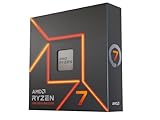
- This dominant gaming processor can deliver fast 100+ FPS performance in the world's most popular games
- 8 Cores and 16 processing threads, based on AMD "Zen 4" architecture
- 5.4 GHz Max Boost, unlocked for overclocking, 80 MB cache, DDR5-5200 support
- For the state-of-the-art Socket AM5 platform, can support PCIe 5.0 on select 600 Series motherboards
- Cooler not included
How does energy constrain the future of computing?
Energy is a design constraint, not an afterthought in De Micheli’s account. His presentation describes heat dissipation and energy cost as limits on computing. It identifies reversible logic in quantum computing and adiabatic computation in some superconducting families as research directions for addressing energy use. These are directions under investigation, not evidence that either approach is commercially ready or certain to displace conventional systems.
The system-level energy picture matters too. In a March 2025 interview hosted by EcoCloud and HiPEAC, De Micheli noted that AI tools and the large data repositories they use require computation and energy themselves. The useful question is therefore not only whether AI can help design a chip, but whether the resulting gains justify the resources consumed across design, deployment and operation.
PC Slower Than It Used to Be?
A free scan shows the junk files, broken settings and background clutter dragging Windows down - then fixes them in one click.Free scan · Windows 10 & 11Outdated Drivers Are Slowing You Down
One free scan finds every outdated or missing driver and matches the right update for your exact hardware.Free scan · exact hardware matchRank #3

- Features: High temperature resistance, non deformation, non sticking tin, able to quickly separate tin points
- Soft and lightweight, not easily deformed. The blade has a thinness of 0.1mm and high elasticity, making it easy to disassemble, weld, and layer the baseband CPU.
- Flexible and lightweight, not easily deformed. High temperature resistance, non deformation, non sticking tin, able to quickly separate tin points
- Integrated design, blade and handle connected, saving time by avoiding disassembly and assembly of blades.
- Suitable for tablets, phones, laptops, etc
Will AI design the best chips?
De Micheli expects AI to assist chip design, but not to replace human ingenuity. In the EE Times report of his January 2025 keynote, he said: “I don’t think the best possible chips will be designed by AI.”
The March interview adds nuance: automation may let engineers work at a higher level of abstraction, but improvements in power, performance and area still depend on human designers finding ways past established design habits. AI can be part of the toolkit; his view is that creativity remains essential to making better chips.
Rank #4

- 6 Cores/ 6 Threads
- 2. 90 GHz up to 4. 10 GHz Max Turbo Frequency/ 9 MB Cache
- Compatible only with Motherboards based on Intel 300 Series Chipsets
- Discrete GPU required - No integrated graphics
- Intel Optane Memory Supported
How should emerging computing technologies be compared?
The cited interviews do not provide head-to-head benchmark results, quantitative performance forecasts or a ranking of technologies. A useful comparison should instead ask what a proposed approach offers and what it requires in return.
| Decision factor | Question to ask | Why it matters in De Micheli’s account |
|---|---|---|
| Performance and energy | What computation or communication does the approach accelerate, and what energy and heat costs accompany it? | His keynote discussion treats acceleration, dissipation and energy cost as connected concerns. |
| Manufacturing economics | Are the materials and processes mature enough to compete with CMOS’s economies of scale? | A technically promising alternative also needs a workable commercial path. |
| Design ecosystem | What computational models, EDA flows and specialist expertise are needed? | Different architectures and devices can require adapted design methods and tools. |
| Environmental and system context | How do energy demand, heat, circularity and deployment in data centers or at the edge affect the choice? | Computing technologies operate within larger systems whose resource needs and deployment conditions matter. |
What else could determine which technologies succeed?
De Micheli’s keynote coverage links technical choices to manufacturing capability, geopolitics, research funding, engineering talent and international collaboration. These conditions can influence which technologies are developed and produced, as well as where expertise and manufacturing capacity are available. EcoCloud’s summary of the keynote also emphasizes circularity, broadening the question beyond a chip’s performance to the resources and systems involved over time.
Best Value
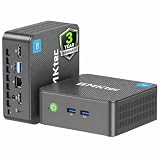
- 12th INTEL ALDER LAKE N95 PROCESSOR - The G3S mini pc uses the 12th Intel N95 CPU 4 Core 4 Threads 6MB cache, burst speed up to 3.4GHz. Compared with (N100/N5105/N5100/N5095), the N95 offers an overall performance improvement of 36%. Ideal for routine tasks, office work and home entertainment,which is more convenient than traditional desktop pc
- 8GB RAM MEMORY & 256GB SSD STORAGE - GMKtec Nucbox G3S mini pc is prebuilt with 8GB DDR4 RAM, you will enjoy a speedier experience with Built-in 256GB M.2 2242 SSD Hard Drive. Our mini desktop pc boots up in seconds, work on multiple browser tabs, software applications and quickly transfers files
- RICH INTERFACE - Nucbox G3 Plus mini computer is equipped with USB 3.2, up to 10Gbps/S, HDMI(4K@60Hz)×2, 3.5mm Audio Jack. Supports WiFi 5, and Gigabit Ethernet RJ45 1000MbE network connectivity, Bluetooth 5.0. This Mini PC supports multiple device connection and can be used with servers, monitoring equipment, office equipment, displays, projectors, televisions, etc
- 4K DUAL SCREEN DISPLAY - Mini desktop computer is equipped with upgraded Intel Graphics(max 1000MHz), supports 4K video playback and AV1 decoding, connect the pc with a projector as a home theatre, enjoy a variety of entertainments. Two HDMI 2.0 ports allows you to multi-task efficiently on two 4K@60Hz displays
- WiFi5 & BT5.0 - Built-in Bluetooth 5.0 enables you to connect multiple wireless devices such as mice, keyboard, monitoring equipment, printer and monitor. High-speed wireless connection technology, reliable and efficient transmission speed, providing a faster internet experience for browsing and streaming. Small pc supports Wake On LAN, PXE Boot, RTC Wake and Auto Power On, ideal to use as a server
His institutional roles and research setting help explain that wider lens. EPFL’s profile, accessed on 4 October 2026, describes his expertise in integrated-system design technologies, synthesis, hardware/software codesign, low-power design and heterogeneous platforms that include electrical and biological components. The profile identifies him as EcoCloud’s Chief Scientific Officer and a Professor Emeritus; it describes EcoCloud’s work as including sustainable computation, energy-aware data centers and edge devices. These roles are as stated on that profile as of the access date.
A research program connecting computing and healthcare
In the 18 March 2025 EcoCloud-hosted interview, De Micheli recounted a ten-year Swiss national research program that funded groups at Swiss universities and hospitals. He mentioned biosensors, telemedicine chains for chronic conditions and remote ultrasound diagnosis among its outcomes. The example illustrates how work on computing systems can connect to applications and research communities beyond conventional chip design.
What is the practical takeaway?
De Micheli’s position is that computing’s future will be shaped by a portfolio of technologies and by the design practices needed to use them—not by scaling alone. Whether any alternative succeeds depends on more than a device’s theoretical capabilities: energy, heat, manufacturing economics, EDA support, expertise and the wider environmental and geopolitical setting all matter. His comments offer a framework for assessing those choices, not a prediction of which technology will dominate or when.
Quick Recap
Product prices and availability are accurate as of the date/time indicated and are subject to change. Any price and availability information displayed on Amazon at the time of purchase will apply.

