
After launch, a rocket sheds stages when they have finished their work. Some boosters return for recovery and reuse; others fall back or reenter. Upper stages may make a final burn to guide them toward reentry, decay from orbit over time, or move to a disposal orbit. Reentry breaks hardware apart, but it does not guarantee every fragment burns up.
Why rockets separate into stages
A rocket carries fuel, engines and structure needed for different parts of a mission. Once a stage has used its propellant, carrying that empty hardware onward would add mass without helping the vehicle accelerate. Staging releases it so the remaining vehicle can continue.
The sequence varies by rocket. NASA’s Space Launch System (SLS), for example, jettisons its solid rocket boosters after burnout while its core stage continues firing. The core stage later separates, allowing the upper stage to fire and carry the payload onward. NASA’s SLS overview describes this sequence as an example, not a universal pattern.
What happens to boosters and lower stages?
A booster or first stage can have several fates, depending on its design and mission. Some vehicles are built to recover a stage; others do not attempt recovery, and the discarded hardware falls back or reenters. A stage’s separation does not by itself tell you whether it will be reused.
PC Slower Than It Used to Be?
A free scan shows the junk files, broken settings and background clutter dragging Windows down - then fixes them in one click.Free scan · Windows 10 & 11Outdated Drivers Are Slowing You Down
One free scan finds every outdated or missing driver and matches the right update for your exact hardware.Free scan · exact hardware match#1 Best Overall

- BEGINNER MODEL-ROCKET LAUNCH SET: The Tandem-X rocket-model launch set offers adults and kids ages 10+ hours of fun during the holidays as they complete and launch our Amazon and Crossfire ISX rocket models. This set includes the easy-to-assemble Amazon model parts, the Crossfire ISX model parts, parachutes, and the launch pad system. It requires rocket engines, Starters, Recovery Wadding, and 4 high-quality 1.5-volt AA alkaline batteries for launch use (sold separately).
- 2 SOARING ALTITUDE HEIGHTS: Our Tandem X set offers a high-performing power duo with our giant 30-inch Amazon model (600-foot projected altitude with a C6-5 rocket engine) and our streamlined 15.6-inch Crossfire ISX model (1,150-foot projected altitude with a C6-7 rocket engine). Other compatible Estes model-rocket engines for Amazon model: B4-2, B4-4, B6-2, B6-4, C5-3, and C6-3. Other compatible engines for Crossfire ISX: A8-3, B4-4, B6-4, and C6-5. All engines sold separately.
- READY TO ASSEMBLE: Our beginner model-rocket launch set comes with 2 build options. The precolored Amazon model features plastic fins and self-stick graphics and can be built in an hour. The Crossfire ISX model comes with laser-cut wood fins, self-stick decals, and aerodynamic parts. Pair the rockets with the included Porta Pad II Launch Pad and Electron Beam Launch Controller for a hands-on educational activity or a unique Christmas gift for a budding scientist or a space aficionado.
- SAFETY FIRST, FUN ALWAYS: Our rockets and rocket launch accessories are designed to be used with the NAR (National Association of Rocketry) model-rocket safety code. Always ensure you have an appropriate launch site, stand back at least 15 ft., insert the safety key, issue a countdown, and then you can let your rocket fly!
- WE IGNITE IMAGINATIONS: Since 1958, Estes has created educational rocket kits and displays designed for an unforgettable aerospace experience. As a family-owned company, we have grown to offer exciting STEM products that engage aspiring rocketeers and the future minds of aerospace.
- Designed for recovery: The stage may be guided back for a planned recovery and potential reuse.
- Not recovered: It may descend and reenter, with its remains reaching Earth or breaking up during descent.
- Still in orbit: A stage or part of one may remain aloft for a time before its orbit decays or it is deliberately disposed of.
Recovery technology is also being developed. The European Space Agency describes Themis as a reusable first-stage prototype intended to demonstrate recovery and reuse technologies; that development effort is not evidence that Themis is in operational service. ESA’s sustainable space transport overview discusses the project and the importance of managing rocket-stage disposal.
Where do upper stages go after separation?
An upper stage often completes the work of placing a payload on its intended trajectory. What happens next depends on the stage’s capabilities and its planned post-mission trajectory:
Rank #2

- BEGINNER MODEL ROCKET LAUNCH SET: The Estes Alpha III launch set lets kids ages 10+ and hobbyists easily build and launch this iconic model rocket. The model rocket kit includes rocket parts, engine mount, decals, a parachute, a launch pad system, and instructions. For blastoff, you’ll need Estes rocket engines, Starters, Recovery Wadding, and 4 high-quality 1.5-volt AA alkaline batteries (not included).
- SOARS UP TO 1,150 FT.: Our Alpha III model rocket is designed for first-time STEM kit builders and climbs up to a projected altitude of 1,150 ft. (351 m). It’s compatible with 1/2A6-2, A8-3, A8-5, B4-4, B6-4, B6-6, C6-5, or C6-7 Estes rocket engines (sold separately).
- READY TO ASSEMBLE: Rocket building sparks creativity and a love for science and outer space! This beginner Alpha III model kit is easily put together with 1 hour of preparation and includes decals. It comes with a Porta-Pad II Launch Pad and Electron Beam Launch Controller for an unforgettable blastoff for first-time rocketeers.
- SAFETY FIRST, FUN ALWAYS: Our rockets are designed to be used with the NAR (National Association of Rocketry) model-rocket safety code. Always ensure you have an appropriate launch site, stand back at least 15 ft., insert the safety key, issue a countdown, and then you can let your rocket fly!
- ESTES EDUCATION: Since 1958, Estes has created educational rocket kits designed for an unforgettable launch experience. As a family-owned, US-based company, we offer exciting and engaging STEM products for all interests, skills, and power levels.
- Disposal burn: A restartable stage may fire its engine again to guide itself toward reentry or move to a disposal, or “graveyard,” orbit.
- Natural orbital decay: A stage left in low Earth orbit may gradually lose altitude and reenter, but the wait can be long and depends heavily on its orbit.
- Disposal orbit: A stage may be moved to an orbit intended to reduce the risk it poses to operating spacecraft. This does not mean it has returned to Earth.
NASA describes both natural orbital decay and controlled reentry, while ESA notes that some restartable upper stages can perform disposal burns. A spent stage left circling Earth is orbital debris while it remains in orbit.
Altitude makes a major difference to how long an object can remain in orbit. NASA’s Orbital Debris Program Office gives broad estimates: debris below 600 km normally falls back within several years; around 800 km, decay is often measured in centuries; above 1,000 km, debris normally continues circling for a thousand years or more. These are generalized times, not forecasts for a specific rocket stage. NASA’s orbital debris FAQ provides the estimates.
Rank #3
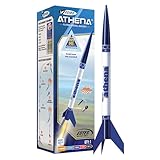
- BEGINNER MODEL ROCKET SET: The Estes Athena model rocket gives kids ages 10+ and beginners an easy way to experience real rocket launches with no building required! This ready-to-fly model rocket kit includes a fully prepared rocket with a parachute. This rocket requires Estes rocket engines, a launch pad system, Starters, Recovery Wadding, and 4 high-quality 1.5-volt AA alkaline batteries (sold separately) for launch use.
- SOARS UP TO 1,125 FT.: Our high-flying Athena rocket features a bright 12-inch parachute for safe recovery and soars up to a projected altitude of 1,125 ft. (343 m) with a C6-7 engine (sold separately). It is also compatible with the A8-3, B4-4, B6-4, and C6-5 rocket engines.
- READY TO FLY: Rocket-building kits are creative, educational gift ideas for Christmas or special-occasion surprises! This beginner-friendly Athena rocket comes fully assembled and just takes 15 minutes of preparation time. This model pairs with the Porta Pad II Launch Pad and Electron Beam Launch Controller (sold separately) for blastoff.SAFETY FIRST, FUN ALWAYS: Our rockets are designed to be used with the NAR (National Association of Rocketry) model-rocket safety code. Always ensure you have an appropriate launch site, stand back at least 15 ft., insert the safety key, issue a countdown, and then you can let your rocket fly!
- SAFETY FIRST, FUN ALWAYS: Our rockets are designed to be used with the NAR (National Association of Rocketry) model-rocket safety code. Always ensure you have an appropriate launch site, stand back at least 15 ft., insert the safety key, issue a countdown, and then you can let your rocket fly!
- ESTES EDUCATION: Since 1958, Estes has created educational rocket kits designed for an unforgettable launch experience. As a family-owned, US-based company, we offer exciting and engaging STEM products for all interests, skills, and power levels.
What happens when a rocket stage reenters?
As a stage descends through the atmosphere, heating and forces break it apart. NASA says spacecraft or parent bodies usually break up in the altitude band of 84–72 km (52–45 miles); that is a general description, not a precise breakup altitude for every rocket stage.
Breakup is not the same as complete incineration. Fragments continue losing altitude and receiving heat; some demise, while others may survive to impact Earth. A controlled entry can guide the debris footprint more precisely, generally toward an uninhabited region. NASA’s reentry explanation describes the breakup and fragment process.
Rank #4

- BUILD IT. COUNT DOWN. LAUNCH IT 10 FEET: Kids build their own realistic rocket and durable launcher from precision-cut wooden parts — then press the red launch button and watch it blast up to 10 feet into the air. No batteries, no electricity — pure mechanical action. Winner of the 2025 Parents Choice Award. Designed for kids ages 6 to 12.
- REAL ROCKET SCIENCE — SERIOUSLY: Every launch teaches Newton's Third Law of Motion — action and reaction — in the most tangible way possible. Kids also discover how rocket propulsion works, what forces keep a rocket on course, and why aerodynamic design matters. These are the same principles behind actual space missions, learned through building and launching.
- SAFE FOR INDOOR LAUNCHING: The rocket's soft foam tip makes it safe to launch indoors — no need for a backyard or outdoor space. Kids can blast off in the living room, bedroom, or classroom without any risk to people or furniture. The launcher is stable, the rocket is lightweight, and the thrill is completely real.
- STEM SKILLS BUILT INTO EVERY STEP: Assembling the rocket and launcher teaches structural engineering, spatial reasoning, and mechanical thinking before a single launch takes place. Kids follow illustrated step-by-step instructions to complete the build independently — developing patience, precision, and confidence in their own ability to make things work.
- RELAUNCHABLE, REPLAYABLE, ENDLESSLY FUN: This isn't a one-shot toy. Kids reload, relaunch, and experiment — adjusting angle, force, and technique to see how high and how far the rocket goes each time. Every launch is a new experiment. Every tweak teaches something new about physics, force, and flight.
A mission example: Artemis II’s upper stage
NASA’s Artemis II press kit describes the Interim Cryogenic Propulsion Stage (ICPS) separating from Orion and later conducting a disposal burn intended to send it toward reentry over the Pacific. This is the plan documented for that mission, not a procedure used by every rocket or upper stage. NASA’s Artemis II press kit gives the mission-specific details.
Is there a rule requiring every stage to leave orbit?
There is no single worldwide rule established here that applies to every operator and every rocket stage. As one U.S. example, NASA’s Small Spacecraft Technology State of the Art page describes a maximum post-mission orbital lifetime guideline of 25 years for U.S. spacecraft. That figure is not a universal global requirement and should not be assumed to apply identically to every launch stage. NASA’s deorbit systems guidance discusses the guideline.
The Tool Desk
Outbyte PC Repair FREERepair Windows errors before they cause bigger problemsFix Now →Outbyte Driver Updater FREEScan for outdated or missing drivers - takes under a minuteDriver Scan →Quick Recap
Product prices and availability are accurate as of the date/time indicated and are subject to change. Any price and availability information displayed on Amazon at the time of purchase will apply.

