
Edge AI runs machine-learning inference on or near the device that collects or uses the data, instead of sending every task to a remote cloud service. Fraunhofer IIS’s approach pairs specialized hardware with software optimization so small devices can meet an application’s requirements for accuracy, speed, memory, energy and heat. The tradeoff is application-specific: a smaller model is useful only if it still does the job.
What edge AI changes
In cloud-based AI, a device typically sends data to a remote server for processing and receives a result. With edge AI, the model runs on the device or nearby hardware. Fraunhofer IIS describes this as bringing intelligence directly to end devices.
Local inference can avoid transmitting raw data to the cloud and waiting for a response. That can reduce bandwidth use and latency, and may keep data from being shared externally. It is not, by itself, a guarantee of privacy or security: the device, its software, stored data and any network connections still need appropriate protections.
The tradeoff is that small devices have limited compute capacity, memory and power, and may struggle to dissipate heat. Fraunhofer IIS’s work addresses both sides of that problem: specialized accelerators to run models efficiently, and software techniques to adapt models to constrained hardware. The institute’s approach does not mean a cloud model can simply be copied onto a microcontroller without redesign and testing.
The Tool Desk
Outbyte Driver Updater FREEFix the driver behind crashes, sound loss and screen glitchesFind Drivers →Outbyte PC Repair FREERepair Windows errors before they cause bigger problemsFix Now →#1 Best Overall
![Arduino® UNO™ Q 4GB [ABX00173]- Hybrid Board, Qualcomm Dragonwing QRB2210 microprocessor (MPU) & STM32U585 Microcontroller(MCU), AI Vision, Voice, IoT, Robotics, Linux Debian OS, Wi-Fi 5, USB-C](https://m.media-amazon.com/images/I/51cl4xygwGL._SL160_.jpg)
- Dual-Brain Hybrid Power: Combines the Qualcomm Dragonwing QRB2210 MPU (Quad-core Arm Cortex-A53 @ 2.0 GHz CPU, Adreno GPU, AI acceleration) and the real-time, low-power STM32U585 MCU for advanced applications like object recognition, voice commands, and motion detection.
- AI & Linux Capabilities: Unlocks AI-powered vision and sound solutions; runs Linux Debian OS for coding in Python and supports the Arduino ecosystem with libraries and Sketches; quick start with Arduino App Lab.
- Advanced Features: Equipped with 4 GB LPDDR4 RAM, 32 GB eMMC built-in storage, ideal for single-board computer (SBC) mode, running multiple simultaneous high-level processes, more complex AI or ML models, extensive logs. Dual-band Wi-Fi 5 (2.4/5 GHz), Bluetooth 5.1, and high-speed headers for vision, audio, and display peripherals.
- Seamless Expansion & Connectivity: Features the classic UNO form factor for shields compatibility, an 8x13 LED matrix, and a Qwiic connector for easy expansion with Modulino nodes; power and connect via the USB-C connector.
- Intended Use & Development: The perfect platform for prototyping robotics or IoT projects, empowering innovators with a unified development experience to mix Arduino Sketches, Python scripts, and containerized AI models in a single interface.
How Fraunhofer IIS balances hardware and software
A February 2025 EE Times Europe feature describes two hardware directions at Fraunhofer IIS: Adelia, an analog neural-network accelerator based on in-memory computation, and specialized accelerators for spiking neural networks. The institute also optimizes models to fit the capabilities and limits of particular devices.
Adelia and analog in-memory computing
Adelia performs neural-network computation using analog electrical signals in memory. Nicolas Witt, Fraunhofer IIS machine intelligence department lead and leader of its edge-AI special-interest group, told EE Times Europe that Adelia accelerates neural networks with low energy use. He claimed it needs “up to 1,000× less energy than what’s required by microcontrollers,” because it uses power only when it computes. The article passage does not specify a benchmark method or workload for that comparison, so the figure is an attributed claim, not a general or independently verified guarantee.
Specialized hardware for spiking neural networks
Fraunhofer IIS also develops accelerators for spiking neural networks, a model approach that the feature says can benefit from dedicated hardware. Witt said this specialization can enable smaller devices and lower energy consumption. The practical benefit depends on matching the hardware and model to the application.
Model optimization for constrained devices
Model optimization is a multi-objective problem: engineers seek the required accuracy and functionality while reducing computation, memory use and latency. Two techniques described in the feature are:
Rank #2
- Dual-Brain Hybrid Power: Combines the Qualcomm Dragonwing QRB2210 MPU (Quad-core Arm Cortex-A53 @ 2.0 GHz CPU, Adreno GPU, AI acceleration) and the real-time, low-power STM32U585 MCU for advanced applications like object recognition, voice commands, and motion detection.
- AI & Linux Capabilities: Unlocks AI-powered vision and sound solutions; runs Linux Debian OS for coding in Python and supports the Arduino ecosystem with libraries and Sketches; quick start with Arduino App Lab.
- Advanced Features: Equipped with 2 GB LPDDR4 RAM, 16 GB eMMC built-in storage, ideal to develop in PC-connected mode, running the OS, Python scripts, and basic network services (SSH) without a demanding GUI or heavy multitasking; great for lightweight AI and memory-optimized TinyML applications, needing local storage for basic OS and core libraries. Dual-band Wi-Fi 5 (2.4/5 GHz), Bluetooth 5.1, and high-speed headers for vision, audio, and display peripherals.
- Seamless Expansion & Connectivity: Features the classic UNO form factor for shields compatibility, an 8x13 LED matrix, and a Qwiic connector for easy expansion with Modulino nodes; power and connect via the USB-C connector.
- Intended Use & Development: The perfect platform for prototyping robotics or IoT projects, empowering innovators with a unified development experience to mix Arduino Sketches, Python scripts, and containerized AI models in a single interface.
- Pruning: Removing redundant computation paths can shrink a model, but may also remove functionality. The effect must be tested against the actual task.
- Quantization: Restricting the numerical precision used by a model can reduce its resource requirements. The feature discusses common targets such as 16-bit or 8-bit precision, and notes that 1-bit networks are possible with additional computation techniques. These are options, not universal recommendations.
Witt summarizes the design question this way: “What is the minimal AI model that delivers the functionality and accuracy my application needs?” He says teams may begin with an oversized network, compress it for smaller hardware, and then test carefully for lost functionality using tests specific to the application. Accuracy scores alone may not reveal whether the device still performs all the functions the user needs.
Why application-specific testing matters
The device and its use case define what counts as a successful optimization. A model that fits in memory but misses important events is not a useful edge-AI solution; neither is a model that meets an accuracy target but exceeds the device’s latency, power or thermal limits. Witt warns that heat from processing can become a “heat wall,” particularly relevant to compact devices with limited ways to dissipate it.
Fraunhofer IIS says target hardware is often selected before the model is built. That makes early matching important: developers need to understand the application’s functionality and the device’s compute, memory, power and physical constraints before settling on a model and optimization strategy. The feature also points to a skills challenge: successful work often requires AI and model specialists to collaborate with hardware and firmware developers.
For a fair comparison of edge-AI approaches, evaluate them on the same representative workload and record:
Free tools Windows power users keep installed
One-click scans. No signup required.
Rank #3
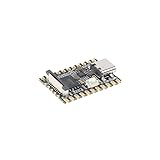
- Single core ARM Cortex-A7 32-bit core, integrated with NEON and FPU
- Built in Micro's self-developed 4th generation NPU, with high computational accuracy and support for mixed quantization of int4, int8, and int16. Among them, int8 has a computing power of 0.5 TOPS and int4 has a computing power of up to 1.0 TOPS
- Built in self-developed 3rd generation ISP3.2, supports 4 million pixels, and supports various image enhancement and correction algorithms such as HDR, WDR, and multi-level denoisin
- It has powerful encoding performance, supports intelligent encoding, adapts to save bit rates according to the scene, and saves more than 50% of the bit rate compared to conventional CBR mode, making the captured images high-definition, smaller in size, and doubling the storage space
- The design with built-in RISC-V MCU supports low-power fast startup, 250ms fast capture, and simultaneous loading of AI model library, enabling facial recognition to be completed within 1 second
- Accuracy and retained functionality after optimization.
- Inference latency and throughput.
- Model size, working memory and compute requirements.
- Energy per task or power draw under a defined workload and measurement setup.
- Thermal behavior and device form factor.
- Connectivity and data handling, including whether data actually remains local.
- Engineering effort and cost to port, validate, train and maintain the solution.
These are evaluation criteria, not a published ranking of products. Neither the EE Times Europe feature nor the institute’s overview provides a cross-vendor comparison with common, methodologically specified measurements.
Applications Fraunhofer IIS reports
The 2025 feature describes specific projects and demonstrations; Fraunhofer IIS’s current Efficient AI overview lists broader application areas. They should not be read as evidence that every example is a widely deployed commercial product.
Audio on wireless headsets
The feature reports audio compression, transmission and processing for wireless headsets. The institute’s overview also says embedded sensor modules can recognize audio commands without a cloud connection.
Positioning from 5G data
The feature describes processing 5G data on small devices to determine position, illustrating a case where local processing can support a location task without requiring all inference to happen in a remote service.
Recommended Free Tools
Rank #4

- 【POWERFUL ESP32‑S3 CONTROLLER】Built‑in Xtensa 32‑bit LX7 dual‑core processor, 512KB SRAM, 8MB PSRAM, 16MB Flash for stable AI voice computing and multitask processing.
- 【Preloaded Dual AI Platforms】Comespre-installed with complete Deepseek and OpenAI voice dialogue projects.Experience intelligent voice interaction instantly. (Note: OpenAI functionality requires your own API key.)
- 【STABLE WIRELESS & CLEAR AUDIO】Integrated 2.4GHz Wi‑Fi + Bluetooth 5 (LE); dedicated audio decoding module for natural, responsive voice interaction.
- 【USER‑FRIENDLY VISUAL & PLUG‑AND‑PLAY】2” TFT‑SPI color screen shows real‑time chat; modular design, no extra wiring, ready to use after setup.
- 【FULL LEARNING SUPPORT】45 programmable GPIOs, rich interfaces, online web tutorials, free technical support for beginners & developers.
Camera-based people counting
A reported camera demonstration counts people on the camera itself rather than sending images to another device. The institute’s overview also lists vision applications in agriculture, biodiversity and people counting, with analysis near the camera sensor.
Wildlife monitoring
The feature describes a project concept involving cameras mounted on vultures near carcasses. Video is processed locally, while a swarm of devices shares vision tasks that might otherwise require larger neural networks. This is a reported concept, not evidence of a generally deployed wildlife-monitoring product.
Industry, retail and inspection
The institute’s overview lists condition monitoring, retail and seamless shopping, embedded cognitive tools for recognizing assembly processes, and anomaly detection for component inspection. It does not provide deployment metrics for those categories on the overview page.
Independent reader supportYour contribution helps us test, update, and keep practical guides available for everyone.What support Fraunhofer IIS offers
As checked on 4 October 2026, Fraunhofer IIS describes an Edge AI Platform for data collection, training and execution on edge devices, and an Edge AI Store offering models optimized for small hardware. The institute also advertises research and development, model optimization, mentoring, consultation, hardware recommendations, potential analyses, licensing and specialist training on its Efficient AI page. These are institute-described services; availability and terms may change.
For further reading, the institute’s Data Analytics publications list names Unlocking Artificial Intelligence: From Theory to Applications (Springer, 2024), including the chapter “Energy-Efficient AI on the Edge” by Witt, Deutel, Schubert, Sobel and Woller.
Quick Recap
Sources
- Pat Brans, “Fraunhofer IIS Walks the Line for Edge AI,” EE Times Europe, 4 February 2025: https://www.eetimes.com/fraunhofer-iis-walks-the-line-for-edge-ai/.
- Fraunhofer IIS, “Efficient AI,” official research and service overview, checked 4 October 2026: https://www.iis.fraunhofer.de/en/ff/lv/dataanalytics/tinyml.html.
- Fraunhofer IIS, “Publications — Data Analytics,” official bibliography, checked 4 October 2026: https://www.iis.fraunhofer.de/en/ff/lv/dataanalytics/publications.html.
Product prices and availability are accurate as of the date/time indicated and are subject to change. Any price and availability information displayed on Amazon at the time of purchase will apply.

