
What’s actually slowing this PC down?
Pick the symptom - the matching free tool is one click away.
“New memory chips” is an umbrella phrase, not one technology. It can mean newer generations of working memory or flash storage, stacked DRAM such as HBM, systems that connect or pool memory through CXL, or emerging cell technologies such as MRAM and ReRAM. These approaches solve different problems; none is a universal replacement for today’s RAM or storage.
What does “memory chip” mean?
In everyday use, “memory” can mean either a computer’s working memory or its storage. For precision, distinguish DRAM, which holds active data temporarily, from NAND flash, which retains data without power. DRAM is volatile; NAND is nonvolatile. Both are memory technologies, but they do different jobs.
New memory designs can change the chip generation, the way dies are packaged, the way memory connects to a processor or server, or the material and structure used to store each bit. A claim that a chip is “new” therefore says little by itself about its purpose, performance, availability, or compatibility.
What kinds of new memory chips are appearing?
| Category | What changes | Typical role | What it does not mean |
|---|---|---|---|
| New DRAM generations and families | Data rates, power use, density, or form factor within working memory. Examples include DDR, LPDDR, graphics DRAM, and HBM. | Holding data that CPUs, GPUs, and other processors are actively using. | It is not persistent storage; ordinary DRAM loses its contents when power is removed. |
| New NAND flash generations | Cell density, layer count, or other storage scaling approaches, including 3D NAND. | Persistent storage in devices such as SSDs. | It is not a faster version of system RAM in the sense of serving the same role. |
| HBM | Multiple DRAM dies are stacked and interconnected in a high-bandwidth package near a processor. | High-bandwidth memory for demanding processors, including AI accelerators. | It is not NAND storage or a general-purpose RAM upgrade for a consumer PC. |
| CXL | A connectivity and system-organization approach for compatible systems to expand or share memory resources. | Memory expansion and pooling in server architectures. | It is not a new memory-cell material or a memory chip type by itself. |
| MRAM and ReRAM | Alternative nonvolatile memory-cell approaches, supported in some embedded contexts. | Specialized or embedded uses where characteristics such as persistence may be useful. | Their existence does not mean they have broadly replaced commodity DRAM or NAND. |
How are newer DRAM and NAND different from HBM?
DRAM: working memory in familiar and specialized forms
DRAM stores active data for processors and is volatile. DDR is familiar in desktop and server systems; LPDDR is designed for low-power mobile and compact systems; GDDR is used for graphics; and HBM is a stacked DRAM family aimed at high bandwidth. These are related product families, but their modules, packages, power characteristics, and system compatibility are not interchangeable.
Recommended Free Tools
#1 Best Overall
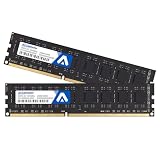
- System Upgrade: Designed for desktop PCs upgrading to DDR3-1600 (PC3-12800) memory, this upgrade maximizes memory performance through dual-channel configuration. Please check if your motherboard is DDR3 compatible before purchasing.
- Specifications: CL=11, Pin Count = 240, Dual Voltage = 1.5V, ECC Type = Non-ECC, Form Factor = Unbuffered UDIMM
- Stable Performance: High-performance memory chips, dual-in-line memory architecture, using a 512MB*16 high-performance memory chip architecture to ensure optimal performance at all times. More compatible with older motherboards/CPUs.
- DDR3 memory uses original IC chips. Compliant with RoHS and JEDEC standards, highly compatible with some desktop computers.
- Aclamator DDR3 memory modules come with a lifetime warranty and comprehensive service and technical support.
NAND: denser persistent storage
NAND flash retains data without power. Manufacturers continue to increase capacity through approaches such as stacking cells in 3D NAND and increasing layer counts or cell density. SK hynix reported mass production of 321-layer QLC NAND in 2025. Samsung later described a 400-plus-layer V10 bonding V-NAND architecture in an August 5, 2026 announcement. Those are separate company-reported developments, not directly comparable performance results.
HBM: stacked DRAM for bandwidth-intensive processors
HBM vertically stacks and interconnects DRAM dies, placing high-bandwidth memory close to a processor. It is useful when a processor needs data to move rapidly, but it is a specialized architecture integrated into accelerator and other high-performance systems rather than a normal consumer RAM stick.
At a March 2026 event, SK hynix said its HBM4 has 2,048 I/Os, delivers 2.54 times the bandwidth of its prior generation, and improves power efficiency by more than 40%. These are the manufacturer’s claims about its product, not independent comparative test results. The company also said 12-layer HBM3E was in use in customer AI GPU modules.
Rank #2
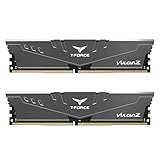
- Simple design to perfectly protect the cooling module
- High thermal conductive adhesive
- Supports Intel & AMD motherboards
- Selected high-quality IC, Supports XMP2.0
- Lifetime warranty
What does CXL do?
Compute Express Link (CXL) describes an interconnect ecosystem and ways to organize memory resources; it does not specify a new material that stores bits. With compatible systems, CXL can support memory expansion or pooling, allowing system designers to share or allocate capacity differently from a design where memory is attached only near a processor.
Free tools Windows power users keep installed
One-click scans. No signup required.
Microchip distinguishes near memory, directly attached to a processor, from far memory organized in pools. SNIA describes CXL as a source of architectural flexibility and gives an example of reusing DDR4 RDIMMs behind a CXL controller in DDR5 servers. This kind of arrangement depends on compatible hardware and system design; the CXL label alone does not establish what memory a particular server can use.
Are MRAM and ReRAM replacing DRAM or NAND?
Not broadly, based on the cited evidence. MRAM and ReRAM are nonvolatile memory-cell approaches that are supported in some embedded contexts. SNIA’s January 2026 expert Q&A notes that foundries support embedded MRAM and ReRAM, while emphasizing that a technology’s commercial success depends on manufacturability, yield, and production volume. It does not identify a guaranteed winner or establish that either technology has displaced commodity DRAM or NAND.
Rank #3
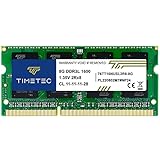
- [Specs] DDR3L / DDR3 1600MHz PC3L-12800 / PC3-12800 204-Pin Unbuffered Non ECC 1.35V CL11 Dual Rank 2Rx8 based 512x8
- [Size] Module Size: 8GB Package: 1x8GB
- [Voltage] JEDEC standard 1.35V, this is a dual voltage piece and can operate at 1.35V or 1.5V
- [Compatibility] Compatible with DDR3 Laptop / Notebook PC, Mini PC, All in one Device
- [Color] PCB Color is Green
A promising cell concept and a widely available replacement are different stages. A technology may be useful in a particular embedded product without being ready to replace the large-scale manufacturing ecosystems and product roles of mainstream RAM or flash storage.
What recent announcements are products, and what remains a concept?
Memory announcements use status terms that matter. A display, concept model, sample shipment, and mass-production statement are not equivalent evidence of availability. The following milestones were reported by the named companies or organizations on the dates shown:
- March 5, 2026 — SK hynix MWC showcase: The company displayed HBM4, HBM3E, DDR5 server modules, SOCAMM2, eSSDs, LPDDR6, UFS 4.1, and automotive memory. A showcase identifies what was presented, but does not by itself establish broad retail availability.
- August 5, 2026 — Samsung FMS announcement: Samsung reported zHBM and zNAND-O as concept models, an HBM5 model, LPDDR5X-PIM, and HBM4E samples. The company said it began HBM4 mass production in February 2026 and began HBM4E sample shipments in May 2026. It also described a 400-plus-layer V10 BV-NAND architecture.
- Processing-in-memory (PIM): Samsung presented LPDDR5X-PIM as a showcased product in 2026. PIM places some computation capability in or near memory to reduce data movement for suitable tasks. Treat reduced data movement as the design goal, not proof of a particular workload’s measured speedup.
These status descriptions are specific to the announcements and dates cited; they should not be collapsed into a general claim that every announced item is commercially available.
Rank #4

- [Color] PCB color may vary (black or green) depending on production batch. Quality and performance remain consistent across all Timetec products.
- DDR3L / DDR3 1600MHz PC3L-12800 / PC3-12800 240-Pin Unbuffered Non-ECC 1.35V / 1.5V CL11 Dual Rank 2Rx8 based 512x8
- Module Size: 16GB KIT(2x8GB Modules) Package: 2x8GB ; JEDEC standard 1.35V, this is a dual voltage piece and can operate at 1.35V or 1.5V
- For DDR3 Desktop Compatible with Intel and AMD CPU, Not for Laptop
- Guaranteed Lifetime warranty from Purchase Date and Free technical support based on United States
How should you compare memory technologies?
Start with the system and workload, then compare the properties that affect that use. “Fastest” or “best” is incomplete without specifying what is being measured and under what conditions.
- Persistence: Does the memory need to retain data without power, as storage does, or hold active working data?
- Bandwidth and latency: Bandwidth describes how much data can move over time; latency describes how long a particular access takes. They are related performance concerns, not synonyms.
- Capacity and density: How much data fits in the relevant chip, package, module, or system?
- Energy and heat: What are the power and thermal constraints in the target device or server?
- Cost and form factor: Compare total system cost and whether the memory is integrated into a package, installed as a module, or attached another way.
- Compatibility and support: Check the processor, platform, module or package design, and software support rather than assuming that a newer generation will fit an existing system.
- Manufacturing maturity: Identify whether the cited item is a research concept, demonstration, sample, product launch, or volume-production product.
For an accelerator that is limited by data movement, HBM’s bandwidth may be relevant. For datasets and checkpoints that must persist, NAND storage capacity may matter more. An embedded design might consider emerging nonvolatile cells for a specific reason. The workload determines which trade-offs matter.
What do investment forecasts say about the memory market?
SEMI’s June 29, 2026 2Q26 outlook projected worldwide 300mm memory-sector fab-equipment investment of $52 billion for 2026 and $57 billion for 2027. For 2026, it projected $37 billion in DRAM equipment spending and $14 billion in 3D NAND equipment spending. These are forecasts, not final measured expenditures. SEMI President and CEO Ajit Manocha said, “Strong demand for high bandwidth memory and other advanced memory technologies is reshaping investment priorities across the semiconductor supply chain.” The forecast signals investment expectations; it does not establish the performance or availability of any individual chip.
Do these 3 things before closing this tab:
1Scan for outdated or missing drivers - takes under a minute2Clear out junk files and repair common Windows errors3Fix the driver behind crashes, sound loss and screen glitchesAre new memory chips a consumer upgrade?
Usually, this phrase describes developments in semiconductor products or system architecture, not a component an individual can simply install. HBM and LPDDR are generally integrated into specialist accelerators, servers, or devices, while CXL depends on system-level compatibility. A DDR5 RAM kit is a separate upgrade category for a compatible desktop or laptop, and buyers need to confirm the memory generation, form factor, capacity limits, and platform support. The term “new memory chips” alone is not enough to identify an upgrade that will work in a given computer.
Quick Recap
Product prices and availability are accurate as of the date/time indicated and are subject to change. Any price and availability information displayed on Amazon at the time of purchase will apply.

