
An audio signal chain is the route sound takes from its source to where it is recorded or heard. For a simple recording, that route might be microphone → audio interface → computer; for live sound, it may pass through a mixer before reaching speakers. There is no single chain for every setup: identify each stage and destination in the system you have.
What is an audio signal chain?
Think of the chain as a series of connected blocks. Sound begins at a source, becomes an electrical signal, passes through the equipment and routing needed for the job, and reaches a recording destination or listening output. Berklee Online defines signal flow as “the path that an audio signal takes from its source to the output” in its Basic Signal Flow Overview.
At each block, ask three questions: What comes in? What does this stage do? Where does its output go next? That approach is more useful than memorizing one supposedly universal order, because recording and live systems have different destinations and optional stages.
What is a typical recording signal chain?
For a single microphone recording into a computer, a common path is:
Quick wins for a faster PC:
Repair Windows errors before they cause bigger problemsFix Now →Scan for outdated or missing drivers - takes under a minuteDriver Scan →#1 Best Overall

- IN THE BOX: (1) 4 foot 2-Male to 2-Male RCA audio stereo subwoofer cable
- CRYSTAL CLEAR AUDIO: Enhances audio connections; ideal for home-entertainment and high-fidelity (HiFi) systems
- RCA INPUT/OUTPUT: 2 RCA output (connect to either L or R input) and 2 RCA input; input can be high frequency (digital audio) or low frequency (subwoofer)
- GOLD PLATED CONNECTORS: Corrosion-resistant 24K gold-plated full-metal connectors
- RELIABLE PERFORMANCE: Eliminates unwanted noise/feedback for pure, clear audio; minimal signal loss for reliably consistent audio
Voice or instrument → microphone → cable → microphone preamp → analog-to-digital converter → digital audio workstation (DAW)
The preamp and converter are often built into an audio interface, so the practical equipment path may be microphone → interface → computer. The interface may also provide a headphone output for monitoring. The exact inputs and outputs depend on the equipment; an external interface is not automatically required for every recording setup.
What each recording block does
- Source: A voice or instrument produces sound.
- Microphone: Converts sound into a weak analog electrical signal.
- Cable: Carries that signal to the next device.
- Microphone preamp: Raises the weak mic-level signal toward line level so following stages can use it.
- Analog-to-digital converter (A/D): Converts the analog electrical signal into digital data the DAW can record.
- DAW: Records and routes the digital signal. For playback, the route reverses through digital-to-analog conversion before reaching speakers, headphones, or another output.
Some systems combine several blocks in one device. A USB audio interface, for example, may include microphone preamps, conversion, and monitoring outputs; its feature set varies. Treat the blocks as functions to trace, not necessarily as separate boxes you must buy.
Rank #2

- Optical digital audio cable: Perfect for equipment with a TOSLINK interface (OPT In / OPT Out or S/PDIF In / S/PDIF Out). TOSLINK connector to TOSLINK connector (F05 connector)
- Versatile: Ideal for transmitting crystal-clear digital audio from your TV, video game console (PS3/PS4/Xbox One), DVD/Blu-ray player, or TV streaming box to a soundbar, amplifier/amp, stereo/Hi-Fi system, D/A converter, and more
- High-End: This metal-free fiber optic audio cable, featuring a fully flexible PVC jacket, is entirely immune to electrical interference. Each cable undergoes multi-stage testing during manufacturing to ensure maximum product quality and durability
- 24K gold-plated connectors: Corrosion resistant gold plating keeps connectors clean. And because these cables are fiber optic, they provide 100 % signal transmission with 0 % loss
- No risk: 36 months manufacturer warranty
How does signal flow work in a live-sound setup?
A common live path is:
Microphone or instrument → mixer channel input → preamp → optional channel processing → pan and fader → mix bus → output → amplifier and speaker
Free tools Windows power users keep installed
One-click scans. No signup required.
A powered speaker combines amplification and the speaker in one unit; another system may use a separate amplifier. A mixer can also route a signal to a dedicated headphone output or send it to stage monitors or effects through auxiliary sends. Those sends may tap the channel at different points, so check the console’s actual routing rather than assuming a fixed position.
Yamaha’s Understanding Basic Audio, by Brett Armstrong, introduces the simplest sound system as “a mic plugged into a speaker.” A mixer adds control and routing between those endpoints, but the same tracing idea still applies: follow the source through each connected stage to its destination.
Rank #3
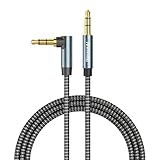
- ELIMINATE CABLE BENDING IN TIGHT SPACES: Our 90-degree right-angle design prevents stress and damage. Perfect for cramped car AUX connections or resting a gaming controller comfortably against your body without bulky, annoying interference.
- PRISTINE HI-FI STEREO SOUND WITHOUT STATIC: Engineered with pure copper cores and triple shielding for lossless audio. Enjoy your music or immersive gaming without lag, distortion, or the frustrating crackling background noise of standard cords.
- HEAVY-DUTY NYLON BRAIDING FOR MAXIMUM LIFESPAN: Built to withstand heavy daily use. This robust, tangle-free 3.5mm auxiliary cable features reinforced connectors tested for 20000+ bends, completely preventing fraying and unexpected breaks.
- FAILSAFE UNIVERSAL 3.5MM PLUG & PLAY: Seamlessly links to standard audio jacks. Instant, zero-driver setup for Car Stereos, PS5/PS4/Xbox Controllers, Home Speakers, Headphones, PCs, and Tablets. Upgrade your current audio setup effortlessly.
- CRUCIAL COMPATIBILITY NOTE & 24-MONTH SUPPORT: Designed for native 3.5mm ports. Modern devices without a jack require a separate adapter (not included). Nanxudyj stands by your purchase with 24-month dedicated support for a flawless experience.
Are mic, instrument, and line inputs interchangeable?
No. A plug fitting the jack does not prove that the input is electrically appropriate. Microphone, instrument, and line-level signals differ in strength and requirements; the wrong input can produce excessive noise, poor gain structure, distortion, or overload. Match the source to an input intended for it, using the device’s labels and documentation.
- Microphone: Usually needs a mic input and preamp because its signal is weak.
- Instrument: An electric guitar or bass may need an instrument/Hi-Z input rather than a standard line input.
- Line-level device: A keyboard or playback device commonly connects to a line input.
These are common cases, not a substitute for checking a particular device’s supported inputs. Berklee Online’s gain-staging guide explains how input choice and level setting affect the signal through a recording path.
Do these 3 things before closing this tab:
1Fix the driver behind crashes, sound loss and screen glitches2Clear out junk files and repair common Windows errors3Scan for outdated or missing drivers - takes under a minuteWhat is the right order for EQ, compression, and effects?
There is no universal correct order. EQ changes frequency balance; compression reduces dynamic range by attenuating louder portions; gates and limiters are other possible dynamics tools. They are optional stages, not requirements for every source. A console or DAW may place processing in a channel path, while effects may be inserted directly or reached through sends and returns.
Rank #4
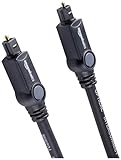
- Please REMOVE the end protective caps before using the cable.
- IN THE BOX: 6-foot digital optical audio Toslink cable.
- CLEAR AUDIO: Multi-channel, fiber-optic digital audio output; corrosion resistant gold-plated connectors and buffer tubing for optimal signal transfer.
- DURABLE: Lightweight, flexible cable with a rugged PVC exterior and removable rubber tips that protect the cable when not plugged in; remove before using.
- CONNECTS DEVICES: Quickly connects a sound bar, CD player, Blu-Ray player, game console, or other device to an audio system or TV.
Use the route available in the console or DAW in front of you. For example, Roland documents a typical path for its VM-7000 mixer series in its VM-7000 owner’s manuals; that is an example of a specific console family, not a rule for all mixers. If an effect or processor changes loudness, check its output and restore the intended balance. EQ boosts can increase level, compression may use make-up gain, and effects returns also need level control.
Independent reader supportYour contribution helps us test, update, and keep practical guides available for everyone.How should you set levels and leave headroom?
Gain staging means keeping the signal at a workable level through the entire route. A signal that is too weak may force you to raise noise later; one that is too hot can clip or distort. Check levels not only at the input but also after processing and at the output. Leave room for peaks rather than aiming to make every meter as loud as possible.
Published figures are context-specific examples, not interchangeable universal targets:
What’s actually slowing this PC down?
Pick the symptom - the matching free tool is one click away.
Best Value

- PREMIUM SPEAKER WIRE [ Frosted Red/Black | 30-feet (9.1m) | 16 Gauge ] - Featuring a double conductor, this stranded wire is constructed from high-grade copper and aluminum. It is perfect for achieving outstanding audio performance, exceptional flexibility, easy stripping and great polarity identification.
- COPPER-CLAD ALUMINUM (CCA) - Made with an aluminum core and coated with a layer of copper, this cost effective speaker wire provides great conductivity with minimal signal loss.
- PERFECT FOR - Designed to provide adequate performance for any home theater system, car audio speakers or professional studio. It's a great choice for both DIY enthusiasts and professionals.
- SIMPLE INSTALLATION - Use this wire to easily connect your home theater or car audio speakers to any A/V receiver or amplifier.
- SOFTFLEX JACKET - Our wire is shielded with a soft and flexible jacket, which not only provides a great appearance, but also ensures maximum durability and easy installation.
| Context | Published example | How to interpret it |
|---|---|---|
| Basic digital recording | Berklee Online recommends -12 dBFS as a useful recording level in its 2024 introductory guide. | A headroom-oriented guide for its basic recording context, not a required level for every device or workflow. |
| Static DAW mix | Avid suggests -18 dBFS to -12 dBFS for individual tracks and -6 dBFS to -3 dBFS for the master peak in its approximately 2024 advice. | Example ranges from Avid’s static-mix guide, not mandatory targets. |
| Live mixer setup | Yamaha’s live-sound guide gives an example reading roughly -6 for its described setup. | A live-mixer example; do not treat it as equivalent to the digital dBFS recording figures above. |
Meter scales, equipment, and workflows differ. Use the guidance for the context it describes, and consult the relevant device or software documentation for its meters and operating levels. The cited examples are in Berklee Online’s gain-staging guide, Avid’s Mixing 101, and Yamaha’s live-sound guide.
How do you troubleshoot a missing signal?
Follow the signal from the source toward the destination. Find the last point where you can confirm signal—such as a meter or monitor—and inspect the next connection or routing step. This narrows the search instead of changing several controls at once.
Quick Recap
- Confirm the source: Check that the microphone or instrument is producing signal and is connected to the intended input.
- Check the input stage: Look for activity on the mixer or interface input meter. If there is none, inspect the cable, input selection, source output, and any required preamp settings.
- Trace channel processing and routing: Check channel mute, fader, pan, bus assignment, and any processor or send that lies in the route.
- Verify the destination: Confirm that the correct output, amplifier, powered speaker, headphones, or DAW input is selected and connected.
- Check playback separately: If a DAW input meter moves but you hear nothing, inspect the output device, track mute, and output or bus routing. Yamaha’s basic audio guide also emphasizes checking mixer meters and retaining headroom in live setups.
A quick signal-chain checklist
- Identify where the sound starts and where it needs to end.
- Trace every connected stage in order, including optional processing and routing.
- Match the source type to a compatible input.
- Check usable level and headroom at the input, after processors, and at the output.
- If sound is missing, locate the last confirmed signal and test the next connection or routing point.
Product prices and availability are accurate as of the date/time indicated and are subject to change. Any price and availability information displayed on Amazon at the time of purchase will apply.

