
What’s actually slowing this PC down?
Pick the symptom - the matching free tool is one click away.
A good speed-test result does not guarantee a responsive game. Speed tests measure how quickly data moves to a test server at one moment; lag can come from the separate route to a game server, Wi-Fi problems, packet loss, congestion, or a PC or console struggling to render the game. Check the game’s own network and performance indicators first, then troubleshoot the likely bottleneck before upgrading your plan or equipment.
What “good internet” does—and does not—tell you
Download speed is throughput: how much data a connection can transfer over time. A speed test measures that transfer between your device or router and a particular test server, at a particular time. The result depends on the server, timing, and network load; it does not measure every part of the route to the game server. Upload capacity can matter too, especially for interactive activities such as gaming and voice chat. See Google’s guidance on testing internet speed.
In its troubleshooting article, Steam defines lag as “high network latency interfering with gameplay.” That is a network-specific definition, not a description of every kind of stutter: a game can also hitch because the computer or console cannot maintain smooth performance. Steam Support: Troubleshooting Lag.
Why a fast connection can still feel laggy
The game server is distant or the route is slow
Packets must travel between your device and the game server. Geographic distance and the route they take affect how long that trip takes. A fast connection to a nearby speed-test server cannot eliminate delay on a longer or less direct route. Check the game’s selected region, data center, or displayed match ping when those options are available. EA and Bungie both identify server selection and connection conditions as relevant troubleshooting factors: EA’s Battlefield 6 ping guidance and Bungie’s connection guidance.
#1 Best Overall

- DUAL-BAND WIFI 6 ROUTER: Wi-Fi 6(802.11ax) technology achieves faster speeds, greater capacity and reduced network congestion compared to the previous gen. All WiFi routers require a separate modem. Dual-Band WiFi routers do not support the 6 GHz band.
- AX1800: Enjoy smoother and more stable streaming, gaming, downloading with 1.8 Gbps total bandwidth (up to 1200 Mbps on 5 GHz and up to 574 Mbps on 2.4 GHz). Performance varies by conditions, distance to devices, and obstacles such as walls.
- CONNECT MORE DEVICES: Wi-Fi 6 technology communicates more data to more devices simultaneously using revolutionary OFDMA technology
- EXTENSIVE COVERAGE: Achieve the strong, reliable WiFi coverage with Archer AX1800 as it focuses signal strength to your devices far away using Beamforming technology, 4 high-gain antennas and an advanced front-end module (FEM) chipset
- OUR CYBERSECURITY COMMITMENT: TP-Link is a signatory of the U.S. Cybersecurity and Infrastructure Security Agency’s (CISA) Secure-by-Design pledge. This device is designed, built, and maintained, with advanced security as a core requirement.
Wi-Fi is weakening the link inside your home
Your internet plan may be fast while the connection between your device and router is not. Distance, walls and other barriers, interference, Wi-Fi band, device capabilities, and competing devices can all affect that local link. Moving closer to the router or testing with Ethernet helps determine whether Wi-Fi contributes to the problem. Google’s troubleshooting guidance covers checks for a slow or unreliable home Wi-Fi connection: Troubleshoot slow internet on Google Nest Wifi or Google Wifi.
Packets are lost or arrive inconsistently
High ping is only one possible network symptom. Packet loss or inconsistent delivery can cause visible pauses, rubber-banding, or other hitches even when a speed test reports strong throughput. Look for an in-game packet-loss warning, network graph, or connection-quality display if the game provides one. Bungie’s guidance discusses latency and packet loss as distinct connection concerns: Optimizing Connections: Improving Latency and Packet Loss.
Rank #2

- OneMesh Compatible Router - Form a seamless WiFi when work with TP-Link OneMesh WiFi Extenders
- Next-Gen Wi-Fi 6 Technology – The Archer AX10 leverages advanced Wi-Fi 6 features like OFDMA and 1024-QAM to deliver improved efficiency across your entire network. Perfect for high-bandwidth activities like streaming, gaming, and smart home connectivity.
- Next-gen Dual Band router - 300 Mbps on 2. 4 GHz (802. 11n) plus 1201 Mbps on 5 GHz (802. 11ax)
- Connect more devices than ever before - Wi-Fi 6 technology simultaneously communicates more data to more devices using OFDMA and MU-MIMO while reducing lag dramatically
- Powerful Dual-Core 900MHz Processor – Handles multiple data streams simultaneously for reliable performance across your devices. Ensures smooth streaming, online gaming, and video conferencing without buffering or lag.
Other devices or peak-time congestion are competing for the connection
Large downloads and streams on your home network can compete with interactive game traffic. If lag appears mainly when several devices are active, pause unnecessary downloads and streams and see whether the game improves. If performance varies by time of day or affects multiple devices, the issue may extend beyond one device’s Wi-Fi link; a speed test taken at another time may not reflect the conditions during a match.
The game is stuttering, not suffering network lag
If the game’s network indicators look normal while frames drop or the whole image hitches, investigate local performance instead: the game, computer or console may be struggling to render smoothly. Steam’s Source2 Telemetry HUD can help distinguish network conditions from machine-performance problems in supported games. It is not a universal diagnostic for every title. Steam Support: Source2 Telemetry HUD.
Recommended Free Tools
Rank #3

- NIGHTHAWK WIFI 6 ROUTER FOR YOUR WHOLE HOME: Delivers fast, reliable WiFi across every room of your apartment or small home for streaming, gaming, video calls, and smart home devices, all running at the same time without slowing each other down.
- WORKS WITH YOUR EXISTING INTERNET SERVICE: Pairs with your existing modem or gateway via ethernet. Compatible with most cable, fiber, DSL, and satellite providers. Some gateways and modem router combos may require bridge mode. No coax needed.
- SET UP AND MANAGE YOUR NETWORK WITH THE NIGHTHAWK APP: Download the free Nighthawk app on iOS or Android for guided setup. Manage WiFi, run speed tests, pause devices, and set up guest networks from anywhere. Active internet required.
- READY FOR THE DEVICES YOU ALREADY OWN: Your phones, laptops, and TVs work right out of the box. WiFi 6 delivers speeds up to 1.8 Gbps across 2.4 GHz and 5 GHz bands. Backward compatible with WiFi 5 and earlier.
- COVERAGE IN EVERY ROOM: Covers up to 1,500 sq. ft. for up to 20 connected devices. Walls, floors, and interference can reduce range. Larger or multi-story homes may benefit from a NETGEAR Orbi mesh WiFi system.
Diagnose the cause in a practical order
- Observe the symptoms during a match. Note whether the problem is constant or limited to certain games, servers, times, or matches. Check the game’s own ping, packet-loss, connection-quality, and frame-rate displays if available. These indicators describe the experience you are troubleshooting more directly than an unrelated speed-test result.
- Check the server or region. Review the selected region, data center, or match ping. If only one game or server is affected, consult that game’s service-status information and support guidance.
- Compare Wi-Fi with Ethernet. If your PC or console supports it, connect it to the router with an Ethernet cable and test again. Also try Wi-Fi nearer the router and in a more open location. For a wired test, check whether your device has an Ethernet port or needs an adapter, and use a cable long enough to reach. The test helps isolate Wi-Fi; it does not guarantee a lower ping to a distant server.
- Reduce household network activity. Pause large downloads and unnecessary streams, then check whether the lag changes. A clear improvement when other activity stops points toward competition or congestion on the home connection.
- Compare across devices and games. If multiple devices or games are affected, note when it happens and check with your internet service provider for an outage or service issue. If the problem is limited to one game or server, use that game’s status and support channels.
- Follow the symptom that remains. Persistent trouble across games on a wired connection is a reason to share the timing and available network indicators with your ISP or game support. Normal network indicators paired with frame-rate drops point instead toward device or game performance.
Choose a fix only after identifying the bottleneck
- If Wi-Fi is the problem: Improve the device’s connection to the router first—try a closer or more open location, or use Ethernet where practical. A router change may be relevant if diagnosis points to poor coverage, interference, congestion, or outdated hardware; compare coverage, supported Wi-Fi standards, and Ethernet ports against your home and devices.
- If household activity is the problem: Reduce competing downloads or streams during play. A higher-speed plan is not a guaranteed fix for delay on the game-server route.
- If one game or region is the problem: Check the game’s server selection and service status, then contact its support if the issue persists. Replacing a router cannot shorten the physical distance to a remote server or repair every problem along the route.
- If the device is the problem: Troubleshoot game and system performance rather than buying networking equipment.
Changing DNS or enabling a generic “gaming” setting is not a universal remedy either. Match the fix to the symptom: use a wired comparison to test local Wi-Fi, game telemetry to assess the game connection where available, and frame-rate indicators to identify local rendering trouble.
Quick Recap
Best Value
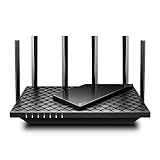
- 𝐆𝐢𝐠𝐚𝐛𝐢𝐭 𝐖𝐢𝐅𝐢 𝐟𝐨𝐫 𝟖𝐊 𝐒𝐭𝐫𝐞𝐚𝐦𝐢𝐧𝐠 – Up to 5400 Mbps WiFi for faster browsing, streaming, gaming and downloading, all at the same time. Performance varies by conditions, distance to devices, & obstacles such as walls.
- 𝐅𝐮𝐥𝐥 𝐅𝐞𝐚𝐭𝐮𝐫𝐞𝐝 𝐖𝐢𝐅𝐢 𝟔 𝐑𝐨𝐮𝐭𝐞𝐫 – Equipped with 4T4R and HE160 technologies on the 5 GHz band to enable max 4.8 Gbps ultra-fast connections.Power:12 V 2.5 A
- 𝐂𝐨𝐧𝐧𝐞𝐜𝐭 𝐌𝐨𝐫𝐞 𝐃𝐞𝐯𝐢𝐜𝐞𝐬 – Supports MU-MIMO and OFDMA to reduce congestion and 4X the average throughput
- 𝐄𝐱𝐭𝐞𝐧𝐬𝐢𝐯𝐞 𝐂𝐨𝐯𝐞𝐫𝐚𝐠𝐞 - Covers up to 2,000 sq. ft. High-Power FEM, 6× Antennas, Beamforming, and 4T4R structures combine to adapt WiFi coverage to perfectly fit your home and concentrate signal strength towards your devices.
- 𝐌𝐨𝐫𝐞 𝐕𝐞𝐧𝐭𝐬, 𝐋𝐞𝐬𝐬 𝐇𝐞𝐚𝐭 – Improved vented areas help unleash the full power of the router
Rank #4

- Next-Gen Gigabit Wi-Fi 6 Speeds: 2402 Mbps on 5 GHz and 574 Mbps on 2.4 GHz bands ensure smoother streaming and faster downloads; support VPN server and VPN client¹
- A More Responsive Experience: Enjoy smooth gaming, video streaming, and live feeds simultaneously. OFDMA makes your Wi-Fi stronger by allowing multiple clients to share one band at the same time, cutting latency and jitter.²
- Expanded Wi-Fi Coverage: 4 high-gain external antennas and Beamforming technology combine to extend strong, reliable, Wi-Fi throughout your home.
- Improved Battery Life: Target Wake Time helps your devices to communicate efficiently while consuming less power.
- Improved Cooling Design: No heat ups, no throttles. A larger heat sink and redefined case design cools the WiFi 6 system and enables your network to stay at top speeds in more versatile environments.
Product prices and availability are accurate as of the date/time indicated and are subject to change. Any price and availability information displayed on Amazon at the time of purchase will apply.

