
The Tool Desk
Outbyte Driver Updater FREEFix the driver behind crashes, sound loss and screen glitchesFind Drivers →Outbyte PC Repair FREEClear out junk files and repair common Windows errorsFree Scan →Harris announced on July 16, 1999, that its semiconductor operation would take the Intersil name as it moved to new ownership. The transaction was completed on August 13, 1999, when Harris sold substantially all of the business to Intersil Corporation, a subsidiary of Sterling Holding Company, LLC. Although the contemporary headline called it a “spin-off,” Harris’s later filing describes a sale—not a distribution of Intersil shares to Harris shareholders.
What happened to Harris Semiconductor?
Harris said its semiconductor operation would become Intersil Corporation once ownership transferred to Sterling Holding LLC, an investment company owned by Citicorp Venture Capital. The announcement was reported by EE Times on July 16, 1999. At that point, the report said the deal was expected to close by early August; that was a forecast, not the closing date.
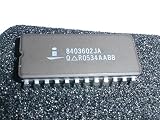
Harris’s fiscal 2000 Form 10-K later recorded that the sale of substantially all of its semiconductor business to Intersil Corporation, a Sterling subsidiary, was completed on August 13, 1999. Intersil’s fiscal 2014 Form 10-K likewise says the company was formed in August 1999 when it acquired Harris’s semiconductor business and began operating as Intersil Corporation.
Was the transaction a spin-off or a sale?
For this semiconductor transaction, Harris’s filing uses the term “sale.” That distinction matters because “spin-off” can imply that a parent distributes shares of a newly independent company to its shareholders. The filing does not describe Harris shareholders receiving Intersil shares. Harris separately called a November 1999 transaction involving Lanier a spin-off to shareholders, which helps clarify that its semiconductor deal was structured differently.
#1 Best Overall
What did Harris receive in the transaction?
The sources describe the consideration differently, and the later filing does not explain the difference between its account and the earlier news report. These figures should be read as separate descriptions from different sources and stages of the deal, not combined into a single total.
| Source and timing | Transaction description |
|---|---|
| EE Times, July 16, 1999, before the expected closing | Reported that Harris had agreed to sell a 90% stake for $700 million. |
| Harris Corporation, fiscal 2000 Form 10-K, filed in 2000, reporting the completed transaction | Reported that Harris received $520 million in cash, $90 million in subordinated notes, and a 10% equity interest in Intersil Holding Corporation. The filing also said Intersil assumed most liabilities associated with the semiconductor business. |
Harris’s filing also says Harris retained receivables and patent rights. Separately, during fiscal 2000, Harris sold its suppression semiconductor business to Littelfuse; that was not the Intersil transaction.
Rank #2

- 5pcs ISL95520HRZ ISL95520 95520 95520HRZ 20HRZ QFN-32
Why did Harris bring back the Intersil name?
Intersil was not a new name in the semiconductor industry. EE Times reported that an earlier Intersil had operated as a power and interface chip company before General Electric acquired it in 1986. GE Microelectronics also acquired RCA’s semiconductor business that year. Harris acquired GE Microelectronics in 1998, thereby gaining rights to the Intersil name, which had been inactive within Harris Semiconductor.
Harris Semiconductor president Gregory Williams presented the name and new ownership as part of a strategy for operating independently. He said, “As a standalone company, Intersil will have the speed and agility to grow market share in highly competitive markets.” Williams also described the business as focused on competitive, high-growth segments of communications, power, and space and defense, and said the name was intended to signal interest in Internet-related opportunities as well as other messages about the company.
What’s actually slowing this PC down?
Pick the symptom - the matching free tool is one click away.
Rank #3

- 5pcs/lot ISL24835 IRZ ISL24835IRZ QFN Chipset
Those statements explain management’s rationale in 1999; they do not establish whether the strategy succeeded. The available historical accounts do not assess that outcome.
Independent reader supportYour contribution helps us test, update, and keep practical guides available for everyone.What did Intersil become known for?
In its fiscal 2014 Form 10-K, Intersil described its business as power-management and precision-analog integrated circuits. That later description provides context for the company’s identity, but it should not be treated as a complete inventory of the products Harris’s semiconductor business made in 1999.
Quick Recap
Best Value
- 10pcs/lot ISL95831AHRTZ ISL95831A 95831A QFN-48 Chipset
Sources
- EE Times, “Harris revives Intersil name for chip sector spin-off,” July 16, 1999.
- Intersil Corporation, fiscal 2014 Annual Report on Form 10-K, filed 2015.
- Harris Corporation, fiscal 2000 Annual Report on Form 10-K, filed 2000.
Product prices and availability are accurate as of the date/time indicated and are subject to change. Any price and availability information displayed on Amazon at the time of purchase will apply.

