
Do these 3 things before closing this tab:
1Fix the driver behind crashes, sound loss and screen glitches2Clear out junk files and repair common Windows errors3Scan for outdated or missing drivers - takes under a minuteTo find out whether a USB device is disrupting your Wi-Fi, compare the connection with that device disconnected and connected again while keeping your location and other conditions as steady as possible. Repeat the comparison with one device at a time. A symptom that reliably appears and disappears with the same device is a stronger clue than a one-time slowdown—but it is not proof until other causes are considered.
Why a USB device can affect Wi-Fi
Some USB 3.0 equipment can emit broadband radio noise that overlaps the 2.4 GHz band. The noise may radiate from a computer’s USB connector, the connected device, or its cable. If a nearby Wi-Fi receiver picks it up, the added noise can lower the signal-to-noise ratio and reduce wireless performance. Intel describes this mechanism in its 2012 technical paper on USB 3.0 radio-frequency interference.
This is a possibility, not a diagnosis: not every USB 3.x product causes a noticeable problem, and slow or unreliable Wi-Fi has many other potential causes. Proximity is a useful clue because the potential emitter and the wireless receiver may be close together.
Test one USB device at a time
- Choose a repeatable symptom. Note what is happening—such as slow downloads, dropped calls, or lag—and where you are using the device. Keep the Wi-Fi task, location, router, and other conditions as consistent as practical during comparisons.
- Disconnect one suspect USB device. Retest the same task under comparable conditions. If the symptom improves, reconnect that device and test again.
- Repeat the comparison. Look for the symptom to return when the device is reconnected and improve when it is disconnected. A repeatable change tied to the same device is more informative than a single before-and-after result.
- Check other devices individually. Give particular attention to USB 3.x storage devices, flash drives, hubs, and cables near the computer’s wireless antenna or receiver. Intel’s paper directly tests an external USB 3.0 hard drive and discusses a flash drive; its explanation also identifies connectors and cables as possible noise sources. That does not establish that any particular device in your setup is responsible.
A device may be worth testing even if it is connected but idle. In Intel’s tested setup, the mouse-performance effect was similar when the external USB 3.0 drive was connected and when data was being written. That result applies to the tested equipment, not to all USB hardware.
Recommended Free Tools
#1 Best Overall
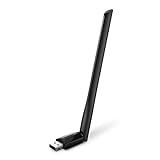
- 𝐋𝐨𝐧𝐠 𝐑𝐚𝐧𝐠𝐞 𝐀𝐝𝐚𝐩𝐭𝐞𝐫 – This compact USB Wi-Fi adapter provides long-range and lag-free connections wherever you are. Upgrade your PCs or laptops to 802.11ac standards which are three times faster than wireless N speeds.
- 𝐒𝐦𝐨𝐨𝐭𝐡 𝐋𝐚𝐠 𝐅𝐫𝐞𝐞 𝐂𝐨𝐧𝐧𝐞𝐜𝐭𝐢𝐨𝐧𝐬 – Get Wi-Fi speeds up to 200 Mbps on the 2.4 GHz band and up to 433 Mbps on the 5 GHz band for upgraded web surfing, gaming, and streaming. Performance varies by conditions, distance to devices, and obstacles such as walls.
- 𝐃𝐮𝐚𝐥-𝐛𝐚𝐧𝐝 𝟐.𝟒 𝐆𝐇𝐳 𝐚𝐧𝐝 𝟓 𝐆𝐇𝐳 𝐁𝐚𝐧𝐝𝐬 – Dual-bands provide flexible connectivity, giving your devices access to the latest routers for faster speeds and extended range. Wireless Security - WEP, WPA/WPA2, WPA-PSK/WPA2-PSK
- 𝟓𝐝𝐁𝐢 𝐇𝐢𝐠𝐡 𝐆𝐚𝐢𝐧 𝐀𝐧𝐭𝐞𝐧𝐧𝐚 – The high gain antenna of the Archer T2U Plus greatly enhances the reception and transmission of WiFi signal strengths.
- 𝐀𝐝𝐣𝐮𝐬𝐭𝐚𝐛𝐥𝐞, 𝐌𝐮𝐥𝐭𝐢-𝐃𝐢𝐫𝐞𝐜𝐭𝐢𝐨𝐧𝐚𝐥 𝐀𝐧𝐭𝐞𝐧𝐧𝐚: Rotate the multi-directional antenna to face your router to improve your experience and performance
Check whether distance and placement change the result
If a device appears to be involved, change the spacing between it and the Wi-Fi receiver or antenna, then repeat the same test. Move an external wireless adapter or antenna away from the USB port, cable, and peripheral; try a different port location if one is available. Change one placement variable at a time so you can tell what mattered.
Intel’s 2012 mouse test illustrates why placement can matter, but should not be treated as a Wi-Fi performance guarantee. In that notebook setup, a USB 2.0 extension cable moved the mouse dongle to the opposite side of the computer, where response was rated OK at 2, 3, and 5 feet. With the dongle stacked directly above the USB 3.0 port, the same test reported no response at those distances.
Rank #2
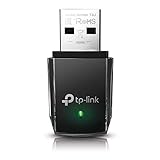
- AC1300 Dual Band Wi-Fi Adapter for PC, Desktop and Laptop. Archer T3U provides 2.4G/5G strong high speed connection throughout your house.
- Archer T3U also provides MU-MIMO, which delivers Beamforming connection for lag-free Wi-Fi experience.
- Usb 3.0 provides 10x faster speed than USB 2.0, along with mini and portable size that allows the user to carry the device everywhere.
- World's 1 provider of consumer Wi-Fi for 7 consecutive years - according to IDC Q2 2018 report
- Supports Windows 11, 10, 8.1, 8, 7, XP/ Mac OS X 10.9-10.14
If moving a wireless receiver helps, a USB 2.0 extension cable is one optional way to keep it farther from a nearby USB 3.x device or port. You can first test with any suitable relocation method available; buying a cable is not a required diagnostic step, and the Intel result does not guarantee a fix for Wi-Fi or other equipment.
Put the measurements in context
Intel’s April 2012 paper reports a nearly 20 dB rise in the measured 2.4 GHz noise floor when an external USB 3.0 hard drive was connected in its test setup. It also reports about 25 dB attributed to the tested notebook’s USB 3.0 receptacle connector. These are measurements from specific lab equipment and conditions, not thresholds for diagnosing a home network.
Rank #3

- AC600 Nano size wireless Dual band USB Wi-Fi adapter for fast and high speed Wi-Fi connection.
- Strong 2.4G/5G connection allows the user to use the Internet with lag-free experience.
- Sleek and miniature sized design allows the user to plug and leave the device in it's place.
- Industry leading support: 2-year and free 24/7 technical support
- This network transceiver supports Windows 11, 10, 8.1, 8, 7, XP/ Mac OS X 10.9-10.14
The paper also measured about 12 dB less radiated noise when its tested hard drive was fully shielded than when it was unshielded, and at least 10 dB less noise after specified shielding improvements to the tested notebook connector. These are experimental results, not instructions to modify or shield consumer hardware.
Independent reader supportYour contribution helps us test, update, and keep practical guides available for everyone.If the symptom does not track a USB device
If disconnecting, reconnecting, or relocating devices does not produce a repeatable change, investigate other possible causes rather than attributing the problem to USB. Check whether other devices on the network are affected and whether the issue occurs on a 2.4 GHz connection. Intel’s Wi-Fi troubleshooting guidance, last reviewed February 7, 2025, lists possibilities including outdated or incorrect drivers, network configuration, adapter settings, access point or router configuration, and interference. Its general guidance can help broaden troubleshooting, but it cannot identify a specific USB device as the cause.
Quick Recap
Best Value

- Wifi 6 High-speed Transmission: The WiFi adapter supports the new generation of WiFi6 technology with transmission speeds of up to 600 Mbps on 5 GHz + 287 Mbps on 2.4 GHz, enabling lightning-fast transmission of video at ultra-high speed and low latency
- Dual-band Connection: The AX900 USB WiFi adapter under the AX standard, the 5G band rate can reach 600Mbps, and the 2.4G band can reach 286Mbps. Note: Use WiFi 6 Router to achieve AX900 speed
- Built-in Drivers for Windows 10/11: The WiFi Adapter for Desktop PC just supports Windows 10/11 which CPU architecture is X86/X64, supports CD-free installation, no need to download drivers, saving time and worry. Please note this Adapter doesn't support MacOS/Linux/Win 8, 8.1, 7, XP
- Receive & Transmit Two in One: A desktop computer can connect to the WiFi wireless Internet by connecting it to a wireless network card. A networked computer can connect to the network card to transmit WiFi and share it with other devices
- Stay Safe Online: The wifi dongle supports WPA-PSK, WPA2-PSK, WPA/WPA2 mixed encryption modes. Note: Make sure that the distance between the adapter and router should be within 30ft
Rank #4

- Fast 1300Mbps USB WiFi Adapter - Nineplus wifi adapter provides long-range and stable wifi connections,Upgrade your desktop or laptop wifi Technology with our AC1300Mbps usb wireless Adapter. Whether your desktop pc's wifi usb is malfunctioning or you’re looking to upgrade to faster dual-band 5GHz and 2.4GHz speeds, this pc wifi adapter is the ideal choice. It’s a budget-friendly way to extend your device’s life and experience the benefits of modern WiFi technology
- Dual-band 5.8GHz and 2.4GHz Bands - 5.8Ghz wifi Connection speed up to 867Mbps,2.4GHz 400Mbps,With these upgraded speeds, web surfing, gaming, and streaming online meeting is much more enjoyable without buffering or interruptions,Experience the High Wi-Fi speed of our AC1300Mbps wifi dongle delivers faster internet speeds and stronger, more reliable signal penetration over long distances. It's a high-speed dual-band wifi usb adapter for pc and easy for the modern user.
- Two 5dBi High Gain Wifi Antenna – The high gain antenna of the desktop wifi adapter greatly enhances the reception and transmission of WiFi signal strengths.Equipped with dual high-gain pc wifi antenna, our wifi dongle for desktop pc ensures accurate capture of WiFi signals, providing a stable and strong connection even at greater distances, ideal for overcoming poor signal issues in bedrooms. This computer wifi adapter, wifi card, and usb wifi antenna extend your coverage.
- Super Speed USB 3.0 - wifi adapter for desktop pc Connect speeds Up to 10x faster than USB 2.0 USB, Super USB3.0 delivers faster data transfer, a more reliable network connection, and improved compatibility for wifi adapter for pc. It fully supports the high-speed demands of AC1300 wireless adapter, ensuring peak performance. Plus, it's backward compatible with standard USB 2.0 ports for added flexibility.usb wifi adapter for desktop pc 3.0
- Compatibility Systems: This Wi-Fi usb adapter is compatible with Windows11/10/8.1/8/7/XP,not supports Mac OS or Chromebook or Linux. Most Windows 11/10 systems will automatically detect and install the drivers. If the system does not detect the driver, you will need to download it from our website. For Windows 7, you will need to manually install the driver for this wifi card.or you go to the website online-setup support,we do online-setup for you.
Product prices and availability are accurate as of the date/time indicated and are subject to change. Any price and availability information displayed on Amazon at the time of purchase will apply.

