
SMS customer service is customer support delivered through text messages: customers can text a business with a question, and a business can send service messages when the customer has agreed to receive them. It is useful for brief, time-sensitive exchanges because people can respond from a mobile phone without opening a support portal. But SMS is not proof of identity: telecom systems cannot reliably show recipients who originated a text, so clear consent, recognizable messages, careful content and a workable opt-out process are essential.
What SMS customer service means
SMS customer service uses standard text messaging to communicate about customer support and service needs. It can be inbound, when a customer texts a business, or outbound, when a business sends a message the customer has agreed to receive. A conversation may involve both.
Typical uses include answering a short question, confirming an appointment, sending a service-status update, or asking a customer to contact support. These are examples of possible uses, not permission to send any kind of message to any number. The message should match the purpose and type of communication the person agreed to receive.
SMS is different from in-app chat and social messaging: it uses the phone-number-based text channel rather than a conversation inside a particular website, app or social network. Depending on the provider and local sender-ID rules, a business may be able to receive replies—or may only be able to send one-way messages.
Free tools Windows power users keep installed
One-click scans. No signup required.
#1 Best Overall

- YOUR CONTENT, SUPER SMOOTH: The ultra-clear 6.7" FHD+ Super AMOLED display of Galaxy A17 5G helps bring your content to life, whether you're scrolling through recipes or video chatting with loved ones.¹
- LIVE FAST. CHARGE FASTER: Focus more on the moment and less on your battery percentage with Galaxy A17 5G. Super Fast Charging powers up your battery so you can get back to life sooner.²
- MEMORIES MADE PICTURE PERFECT: Capture every angle in stunning clarity, from wide family photos to close-ups of friends, with the triple-lens camera on Galaxy A17 5G.
- NEED MORE STORAGE? WE HAVE YOU COVERED: With an improved 2TB of expandable storage, Galaxy A17 5G makes it easy to keep cherished photos, videos and important files readily accessible whenever you need them.³
- BUILT TO LAST: With an improved IP54 rating, Galaxy A17 5G is even more durable than before.⁴ It’s built to resist splashes and dust and comes with a stronger yet slimmer Gorilla Glass Victus front and Glass Fiber Reinforced Polymer back.
Benefits and trade-offs of SMS support
Why it can be useful
- It is familiar and widely supported. The UK National Cyber Security Centre (NCSC) describes SMS as widely supported by mobile phones, familiar to people, generally timely and relatively inexpensive to build services around.
- It can make short service exchanges convenient. Customers can read and reply to a text without signing in to a support portal or staying on a phone call. This is a practical channel fit, not evidence that SMS consistently beats other channels.
- It can reach customers outside a support session. A service update or reminder can be delivered as a message the recipient can read when available. Whether a particular message is appropriate depends on its purpose and the consent the recipient gave.
- It can support two-way conversations where available. When the number and provider support replies, a customer may be able to ask a follow-up question rather than switch immediately to another channel.
What SMS does not solve
- It does not authenticate the sender. The NCSC warns that telecom systems cannot reliably tell a recipient who originated a phone call or SMS. Criminals may impersonate organisations, so a familiar-looking sender name or message should not be treated as proof of legitimacy.
- It is constrained by message length and context. Text is best for concise updates or straightforward exchanges. Complex explanations, sensitive details or issues that need substantial back-and-forth may be better handled in a channel designed for that conversation.
- Two-way messaging is not universal. A sender ID does not support two-way SMS, and sender-ID availability varies by country, according to the NCSC.
- It is not a proven performance shortcut. No named, independently published comparative statistic establishes that SMS support delivers better response times, satisfaction, resolution or cost than other support channels. Do not assume those outcomes; measure your own service.
Choose SMS for the right customer-service job
Before setting up a number or choosing a platform, decide what customers need to do through text. The table distinguishes common message patterns and the operational questions each raises; it does not imply that every provider or market supports every pattern.
| SMS use | Direction | Good fit | Decision to make |
|---|---|---|---|
| Customer question or support conversation | Inbound and, where supported, two-way | A concise question that can be handled in short replies | Can customers reply to the selected number or sender identity in the countries you serve? |
| Appointment or service reminder | Business to customer | A practical update tied to a service the customer expects | Did the customer agree to receive this type of informational message, and can they opt out? |
| Operational status update | Business to customer | A brief update about an existing request or service event | Does the message identify the business and provide a safe, useful next step? |
| Promotional offer | Business to customer | Marketing, rather than support or service communication | Is promotional consent in place under the rules that apply to the recipient and message? |
Microsoft’s messaging policy distinguishes informational messages from promotional ones, and promotional consent requirements can differ. The legal and operational requirements depend on where recipients live and what the message says; use applicable local rules rather than assuming a single global standard.
Best practices for SMS customer service
1. Obtain clear, purpose-specific consent
Get consent before sending proactive messages. Tell people who will text them and what kinds of messages they are agreeing to receive. Do not treat permission for a service update as permission for a promotion, or assume that a phone number supplied for one purpose automatically authorizes another. Microsoft guidance distinguishes informational from promotional messages; the requirements for promotional consent can differ.
Rank #2
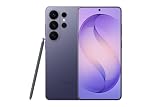
- PRIVACY DISPLAY: Automatically hide your screen from those beside you. The built-in privacy display can be preset¹ to turn on when receiving notifications, typing passwords, or using specific apps
- TYPE IT IN. TRANSFORM IT FAST: Enhance any shot in seconds on your smartphone by using Photo Assist² with Galaxy AI.³ Add objects, restore details, or apply new styles by simply typing or tapping
- NIGHTS, CAPTURED CLEARLY: From gigs to city lights, record and capture moments after dark with clarity using Nightography so your photos and videos stay crisp and clear on your Samsung Galaxy
- MAKE IT. EDIT IT. SHARE IT: Turn everyday moments into something personal with creative tools built right into your mobile phone, whether it’s a special contact photo, custom wallpaper, an invitation or more⁴
- HELP THAT KEEPS UP: Stay in the moment while Now Nudge with Galaxy AI helps you respond faster and stay organized with smart suggestions⁵ that appear exactly when you need them on your phone
2. Make opting out straightforward—and honor it
Explain how recipients can stop messages, and make the instructions practical to use. Microsoft says recipients may revoke consent through reasonable means; after an opt-out, businesses should not send further messages unless consent is renewed. Apply the opt-out to the relevant messaging program and ensure the people or systems sending messages can see that the recipient has opted out.
3. Keep consent and number records current
Retain records of consent and messages sent, as AWS advises. Do not assume an old phone-number list is still safe to use for a new program: numbers can change hands, so a new subscriber may receive texts intended for someone else. Keep records sufficient to establish what the person agreed to receive and when, and maintain a process for updating or suppressing numbers as circumstances change.
4. Identify the business consistently
Make the organisation recognizable in the message, especially when the recipient may not have saved the sending number. Keep sender identities and contact details consistent across the places customers are told to use. Consistency helps customers assess whether a message is expected, although it cannot prove that a text is genuine.
Rank #3

- Please note, this device does not support E-SIM; This 4G model is compatible with all GSM networks worldwide outside of the U.S. In the US, ONLY compatible with T-Mobile and their MVNO's (Metro and Standup). It will NOT work with Verizon, Spectrum, AT&T, Total Wireless, other CDMA carriers, it is also not compatible with their MVNO (Visible, Xfinity Mobile, US Mobile, Cricket Wireless, etc).
- Compatibility with certain third-party devices and accessibility accessories, including some hearing aids, may vary depending on manufacturer support, Bluetooth protocols, software compatibility, and regional firmware limitations. For additional hearing aid compatibility information, please refer to Samsung’s official support documentation.
- 4G LTE Bands: B1/B3/B5/B7/B8/B20/B28/B38/B40/B41
- Display: Super AMOLED, 90Hz, 800 nits (HBM) | 6.7 inches, 110.2 cm2 (~86.0% screen-to-body ratio) | 1080 x 2340 pixels, 19.5:9 ratio (~385 ppi density)
- Camera: 50 MP, f/1.8, (wide), 1/2.76", 0.64µm, AF | 50 MP, f/1.8, (wide), 1/2.76", 0.64µm, AF | 2 MP, f/2.4, (macro)
5. Keep message content trustworthy
The NCSC advises avoiding requests for personal details, avoiding links where possible and avoiding panic-inducing language. If a link is necessary, use a human-readable address so the destination is easier to assess. Give customers a safe alternative—such as contacting the organisation through a known channel—rather than pressuring them to click or disclose information.
6. Decide whether the channel should be two-way
If customers need to reply, confirm that the sender configuration and provider support inbound messages in each target market. A sender ID is not a two-way option, and sender-ID availability is not universal. If the implementation is one-way, say how the customer can continue the conversation through another known route.
What’s actually slowing this PC down?
Pick the symptom - the matching free tool is one click away.
7. Ask how messages are routed
When evaluating a supplier, ask whether it uses downstream providers and how transparently it explains message routing. Understand what sender identity customers see, which destinations are supported, whether replies are handled, and how consent and opt-out records are managed. These answers determine whether a service fits your use case; availability and capabilities vary by provider and country.
Rank #4
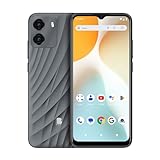
- GSM Unlocked: Enjoy seamless connectivity with your preferred GSM carrier. Compatible with T-Mobile, Metro PCS, AT&T, Cricket, Mint Mobile and other GSM networks. SIM card not included. For network compatibility, please check with your carrier. Note: Not compatible with CDMA networks like Verizon (Visible, Spectrum Mobile, US Mobile, Total Wireless, Straight Talk Wireless)
- Boundless Views: Enjoy immersive viewing on the spacious 6.5” HD+ display. Whether you're watching videos, browsing, or gaming, every detail comes through with stunning clarity.
- Smooth Performance, All Day: Powered by an efficient octa-core processor, the G35 ensures smooth performance for your everyday tasks. Enjoy faster app launches, seamless multitasking, and reliable speed.
- Snap, Share, Repeat: The G35 features a dual rear camera setup for sharp, detailed shots, and a front-facing camera that’s perfect for selfies and video calls. Capture every moment with ease and clarity.
- Effortless Access: Keep your phone secure with A.I. Face ID technology. Instantly unlock your G35 with just a glance. It's fast, easy, and secure.
How to put an SMS support process in place
- Define the job. Write down the specific customer need SMS will handle, such as a short incoming question or an update about an existing service request. Separate support and informational messages from promotional communication.
- Set the consent and opt-out rules. Decide how consent will be obtained and recorded for each message purpose, how the sender will be identified, how customers can opt out, and how opt-outs will be honored. Check the requirements that apply where recipients live.
- Confirm country and sender capabilities. Identify the countries you plan to serve and check whether your intended sender identity is available there. Confirm explicitly whether the setup supports replies; do not infer two-way service from the presence of a sender name or number.
- Choose a supplier against the actual workflow. Ask about inbound and outbound coverage, sender-ID limitations, downstream providers and routing transparency, consent and suppression handling, and the customer-facing identity. Select a setup that supports the promised customer journey rather than one that merely sends texts.
- Write safe message templates. Identify the business, state the service purpose plainly and keep the text concise. Avoid requests for personal information, unnecessary links and alarming language. Where a link is needed, use a human-readable address and provide a known alternative contact route.
- Test the customer journey. Before inviting customers into the channel, check what a recipient sees, whether a reply reaches the right team, how an opt-out is processed and whether staff know what to do when a text needs a different channel. Test the countries and sender identities you intend to use.
- Review records and outcomes. Maintain consent and message records, keep phone-number lists current, and periodically review whether the channel is serving the intended use without unwanted messages or confusing identity.
How to evaluate an SMS provider
Supplier selection is a fit question, not a contest based on a single feature. Compare the points below against your specific use case and markets.
| Area | What to establish | Why it matters |
|---|---|---|
| Two-way capability | Whether customers can reply in each target country and where replies are delivered | A sender ID does not support two-way SMS; a one-way setup cannot serve a reply-based support workflow. |
| Sender identity | What name or number the recipient sees and where that identity is supported | Sender-ID support differs by country, and consistent identity helps customers recognize expected communications. |
| Consent and opt-out handling | How the service records permissions, exposes opt-out status and prevents further messages after an opt-out | These controls need to match the purpose the person agreed to and the applicable local requirements. |
| Routing transparency | Which downstream providers may handle delivery and what the supplier discloses about message routing | It clarifies how the service works across markets and who may be involved in message delivery. |
| Message content and links | Whether templates can clearly identify the business and direct customers to human-readable links or known contact routes | Clear, restrained content reduces opportunities for confusion or impersonation. |
| Purpose and audience fit | Whether the service is for inbound support, service updates, promotions or a defined combination | Different message purposes call for distinct consent and handling practices; one permission should not be assumed to cover all. |
What to measure in an SMS support program
No universal SMS benchmark is established here for customer-service response time, satisfaction, resolution or cost. Instead, choose measures that match the job you designed the channel to do, and compare them with your own baseline or other channels only when the comparison uses equivalent issue types and operating conditions.
- Demand: number of inbound support conversations and their distribution by issue type.
- Responsiveness: time from an incoming customer text to the first human or automated response, reported with a clearly defined measurement window.
- Resolution: proportion of SMS conversations resolved in that channel versus handed off, plus the reasons for handoff.
- Customer experience: feedback collected through a clearly identified, appropriately consented process, with response rates and collection method considered when interpreting results.
- Message health: delivery failures, opt-outs and complaints, reviewed by sender identity and destination market where possible.
Use these measures to find operational problems, not to claim SMS is inherently superior. A high response count, for example, does not by itself show that customers received the right help or that the channel is suitable for every issue.
The Tool Desk
Outbyte Driver Updater FREEScan for outdated or missing drivers - takes under a minuteDriver Scan →Outbyte PC Repair FREERepair Windows errors before they cause bigger problemsFix Now →Best Value

- No app or device requirement: Share your dot.Profile with anyone, as others don't need an app or a dot.device to receive your information.
- Hassle-free sharing: Easily share your dot.Profile with unlimited free shares of your digital business card.
- Simple sharing process: Tap your dot.device to a compatible phone or scan the dot.Profile QR code to share your profile. Compatible with a wide range of phones.
- Update information on the go: Keep your dot.Profile up to date by easily modifying and updating your information as it changes, ensuring you always have the most accurate details.
- Privacy and security: Protect your information with dot, as no passwords are ever needed to link your social accounts. Dot uses only usernames and links to create your digital business card.
Frequently Asked Questions
Is SMS customer service the same as SMS marketing?
No. A support conversation or service update is different in purpose from a promotional offer. Microsoft distinguishes informational and promotional messages, and consent requirements for promotions can differ. A customer agreeing to receive one type of text should not be assumed to have agreed to another.
Can a text message prove it came from the business named in it?
No. The NCSC says telecom systems cannot reliably tell recipients who originated a text. A business name, familiar number or convincing wording is not authentication. Customers should be given a safe way to contact the organisation through a channel they already know.
Which metrics show whether SMS support is performing well?
Track measures that correspond to the service goal: inbound volume by issue, time to first response, resolution in-channel versus handoff, customer feedback, delivery failures, opt-outs and complaints. Define the measurement window and collection method, and do not treat an unqualified comparison with another channel as proof of better performance.