
Customer service can generate revenue without turning support into a sales pitch: resolve the customer’s problem first, then build loyalty, adoption, and relevant growth opportunities around what the customer actually needs. The seven levers below connect service work to retention, renewals, expansion, and referrals while keeping customer outcomes and service quality in view.
How service can contribute to revenue
Support creates commercial value in more ways than making a sale during a conversation. A resolved problem can help protect a customer relationship; effective onboarding and ongoing guidance can help customers realize value and renew; a well-timed recommendation can meet a need; and a consistently good experience can earn recommendations.
The operating principle is simple: solve the stated issue before considering any commercial offer. Revenue measures should sit alongside measures of service quality and cost-to-serve, so that a short-term sales gain does not come at the expense of trust or the support experience.
Seven practical ways to turn customer service into revenue
1. Protect retention by resolving problems reliably
Start by making it easy for customers to get the problem they contacted you about resolved. An upsell cannot substitute for a fix, and pressing an offer while the original issue remains open risks worsening the relationship instead of protecting it.
What’s actually slowing this PC down?
Pick the symptom - the matching free tool is one click away.
#1 Best Overall
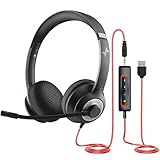
- ✅【Outstanding Noise cancelling Microphone】 The headphones with unidirectional boom 270°microphone that only picks up your voice and block out unwanted background noises. Also, you can wear it on the left or right ear as you like.
- ✅【All-Day Comfort for All Head Shape】 Eaglend always designed for all-day comfort using, there will be no restraint pressure, with the adjustable headbend fit adult and kids easily.The soft protein memory foam earpads is made of high-level breathable materials,ROHS certified materials prevent your ears from heat and sweat.
- ✅【Enhanced sound performance & 40mm audio driver】:Corded phone headset with built-in audio sound card, Eaglend sound lab tested thousands of times for your daily conversation/music/movie/gaming, bringing you extra clear and bass for pleasant experience.
- ✅【USB/3.5mm Connection】 The headphone is designed for multiple use, 3.5mm audio cable with USB In-line audio volume control (cord length 5+4 feet),with mic mute &indicators /speaker mute.Compatible with PC/Tablet/Mac/iOS/laptop /Android phone and other devices."
- ✅【Global warranty &multi-purpose】24 months warranty by eaglend. Great ideal for online courses, Skype chat, call center, Webinars Presentations, Office, Business, Rosetta Stone, Dragon Speaking, Conference Calls and more.
Track retention, renewal, or repeat purchase among customers who have had service interactions. Compare outcomes over a defined period and, where possible, distinguish resolved from unresolved cases. This makes retention a service outcome the team can examine rather than an assumption that every pleasant interaction produces loyalty.
McKinsey & Company reports customer research involving 25,000 people across sectors including tourism, insurance, and banking. Its article says that delight among customers who were already satisfied was associated with stronger retention and reuse intentions; delight did not fully recover the loss when customers were dissatisfied. The reviewed page does not state the research year or provide the full study design, so these findings should be read as reported associations, not a forecast for an individual business. Read McKinsey’s discussion of customer delight.
2. Recommend relevant upgrades or complementary products
When a customer’s needs make an additional product, bundle, or upgrade useful, agents can explain the fit and let the customer decide. Train agents to ask targeted questions before recommending anything, rather than defaulting to the package they know best. Firstsource describes coaching that covered needs discovery, relevant bundles, competitor knowledge, and objection handling after call analysis found agents tended to offer familiar packages without first understanding customer needs.
Measure whether these conversations lead to appropriate conversion, repeat use, or retention, not just how many offers agents make. Also review customer feedback, cancellations, and complaints to spot recommendations that create friction or fail to meet the need.
3. Make service-to-sales timely and optional
A service conversation may reveal a natural moment for an offer—for example, when a customer asks for a capability that a different plan includes. Make the offer relevant to that stated need, brief, and optional. If the customer declines, return to resolving the service request without pressure.
Concentrix describes training agents in upselling and cross-selling and mapping customer journeys to embed offers across service channels. It reports that a “Service to Sales” upsell strategy added $300,000 in monthly revenue for a specific financial-services client in Indonesia. This is a vendor-reported result for that client, not a typical or guaranteed outcome for another business. See Concentrix’s service-to-sales description.
Rank #2

- Digital Stereo Sound: Fine-tuned drivers provide enhanced digital audio for music, calls, meetings and more
- Rotating Noise Canceling Mic: Minimizes unwanted background noise for clear conversations; the rotating boom arm can be tucked out of the way when you’re not using it
- Handy In-line Controls: Simple in-line controls on the headset cable let you adjust the volume or mute calls without disruption
- Plug-and-Play USB Computer Headset: Simply plug the USB-A connector into your computer and you’re ready to talk or listen without the need to install software
- Padded Comfort: Comfortable headphones with adjustable headband features swivel-mounted, leatherette ear cushions for hours of comfort and is easy to clean
4. Help customers adopt the product and realize value
In subscription and business-to-business relationships, service can contribute to revenue well after the initial sale. Onboarding, education, troubleshooting, and proactive guidance can help customers use what they bought and make progress toward their goals. That can support renewal and, when additional needs emerge, expansion.
Deloitte describes customer success as work across the customer lifecycle to help customers achieve their goals, lower churn, and increase renewals. Its definition is: “Customer success is the proactive orchestration of a customer’s journey that maximizes the value for the end customer across the life cycle.” Read Deloitte’s customer-success discussion.
Free tools Windows power users keep installed
One-click scans. No signup required.
Useful measures include product adoption milestones, time to reach a customer’s intended outcome, renewal rate, and net revenue retention. These measures help distinguish successful adoption from simply sending more support messages.
5. Use service recovery to rebuild trust
When the company falls short, respond directly: acknowledge what went wrong, explain the next step, and resolve the underlying issue. If an apology, credit, replacement, or other recovery is appropriate, make it proportionate to the failure and the customer’s circumstances. A recovery gesture should support a real resolution, not be used to gloss over an unresolved problem.
McKinsey writes, “Proactive service recovery is also a strong driver of surprise.” Its article links delight among already satisfied customers with greater recommendation intent, but it does not establish that recovery will turn every unhappy customer into an advocate. Treat trust and future behavior as outcomes to monitor, not promises an agent can make. Read McKinsey’s discussion of customer delight and service recovery.
6. Earn referrals through advocacy
Customers who feel well served may choose to recommend a business. Make it easy to share feedback or refer someone when appropriate, but do not pressure customers—especially while they are still seeking help. Advocacy is an outcome of a relationship, not a substitute for a good resolution.
Rank #3

- Digital Stereo Sound: Fine-tuned drivers provide enhanced digital audio for calls, meetings, music, and more
- Rotating Noise-Canceling Mic: Minimizes unwanted background noise for clear conversations; the rotating boom arm can be tucked out of the way when not in use
- Handy Inline Controls: Simple inline controls on the headset cable let you adjust the volume or mute calls without disruption
- USB-C Plug-and-Play: Simply plug the USB-C cable into your computer, including MacBook Neo laptops, and you're ready to talk or listen without installing software.
- Padded Comfort: Comfortable USB C headphones with adjustable headband feature swivel-mounted, leatherette ear cushions for hours of comfort
McKinsey reports that delight amplified recommendation intent among customers who were already satisfied. This supports an earned-advocacy approach: deliver a dependable experience, then observe whether customers recommend or refer. It does not support assuming that every satisfied customer will do so.
7. Redesign journeys and measure business outcomes
Look across the full customer journey for recurring obstacles that drive avoidable contacts, abandonment, or churn. Improving a confusing step can both make service easier and support business outcomes. McKinsey describes connecting journey redesign and organizational capabilities to measurable results. Read McKinsey’s discussion of experience-led growth.
Choose a baseline before changing a journey, then monitor customer and commercial results together. Useful measures include:
- Retention: renewal, repeat purchase, or churn for customers who used service.
- Expansion: cross-sell, share of wallet, or net revenue retention.
- Advocacy: recommendations or referrals, interpreted as customer behavior rather than an entitlement.
- Service quality: issue resolution, repeat contacts, complaints, and customer feedback.
- Operating impact: cost-to-serve and the volume of contacts avoided through effective digital support.
Firstsource reports that a specific subscription-media client achieved $55 million in incremental revenue and $51 million in cost savings over three years, as well as a 24% increase in sales conversions. The vendor also describes combining service-value measures with digital deflection and sales through service. These are vendor-reported, client-specific outcomes; they are not typical-result estimates. Read Firstsource’s subscription-media case study.
Do these 3 things before closing this tab:
1Repair Windows errors before they cause bigger problems2Fix the driver behind crashes, sound loss and screen glitches3Clear out junk files and repair common Windows errorsWhat the reported figures do—and do not—show
The figures below come from sources with different methods and scopes. McKinsey’s article reports customer-research findings and potential benefits; Concentrix and Firstsource report outcomes for named client situations. The reviewed pages do not state publication years for these figures. None should be treated as a forecast for a different company.
| Source and evidence type | Reported figure | How to interpret it |
|---|---|---|
| McKinsey & Company customer research; 25,000 customers surveyed, year not stated on the reviewed page | Estimated 8–12% additional insurance revenue under the stated condition of delighting a significant portion of customers who were already satisfied | A conditional opportunity, not an expected lift for every insurer or service program. |
| McKinsey & Company customer research; year not stated on the reviewed page | Reported cross-sell differences of 30 percentage points in banking, 11 percentage points in insurance, and 15 percentage points in electric power and natural gas | Differences reported in the article’s customer research, not guaranteed gains a business can reproduce. |
| McKinsey & Company; experience-led growth strategies, year not stated on the reviewed page | Potential 15–25% increase in cross-sell rates and 5–10% increase in share of wallet for strategies that increase customer satisfaction by at least 20% | Reported potential benefits under the stated condition, not a promise of impact from any one service change. |
| Concentrix vendor case report; financial-services client in Indonesia, year not stated | $300,000 in monthly revenue added through a “Service to Sales” upsell strategy | A result reported for that particular client and program. |
| Firstsource vendor case report; subscription-media client, year not stated | $55 million incremental revenue and $51 million cost savings over three years; 24% increase in sales conversions | Outcomes reported by the vendor for one client, not typical benchmarks. |
How to choose the right levers for your business
Not every lever fits every customer or revenue model. A subscription company may prioritize adoption and renewal; a retailer may focus on repeat purchase and suitable complementary products; a service provider may need to improve resolution and recovery first. Use these questions to set priorities:
Rank #4

- Digital Stereo Sound: Fine-tuned drivers provide enhanced digital audio for music, calls, meetings and more
- Rotating Noise Canceling Mic: Minimizes unwanted background noise for clear conversations; the rotating boom arm can be tucked out of the way when you’re not using it
- Handy In-line Controls: Simple in-line controls on the headset cable let you adjust the volume or mute calls without disruption
- Plug-and-Play USB Computer Headset: Simply plug the USB-A connector into your computer and you’re ready to talk or listen without the need to install software
- Padded Comfort: Comfortable headphones with adjustable headband features swivel-mounted, leatherette ear cushions for hours of comfort and is easy to clean
- Does the tactic answer a real customer need? If the offer or intervention does not help with the customer’s goal, it is unlikely to strengthen the relationship.
- Which customer outcome should improve? Name the intended outcome—such as successful adoption, resolved service failure, or easier repeat purchase—before choosing a revenue metric.
- What is the plausible revenue mechanism? Connect the work to retention, renewal, expansion, or earned referral rather than treating every service interaction as a sales opportunity.
- What service risk could it create? Watch for unresolved issues, unnecessary contacts, pressure to buy, complaints, or higher cost-to-serve.
- What baseline will show whether it helped? Record relevant service and business measures before a change, then compare results over a period appropriate to the customer journey.
For any test, define who is included, what changed, and which customer and business outcomes will be observed. A rise in sales conversions alone does not show that the change improved customer value if complaints, churn, or repeat contacts also rise.
Frequently Asked Questions
Can customer service generate revenue without selling during support calls?
Yes. Service can contribute through retention, renewals, customer adoption, repeat purchases, and earned referrals. Direct offers are only one of the seven levers.
Crashes, No Sound, or Screen Glitches?
Random freezes, missing sound and display glitches usually trace back to one bad driver. Find and replace yours safely.Free scan · under a minutePC Slower Than It Used to Be?
A free scan shows the junk files, broken settings and background clutter dragging Windows down - then fixes them in one click.Free scan · Windows 10 & 11Should agents upsell while a customer has an unresolved issue?
No. Resolve the customer’s stated problem first. Consider an offer only when it is relevant to a need the customer has expressed, and make declining it easy.
Which metrics connect customer service to revenue?
Use measures tied to your model, such as retention, renewal, repeat purchase, cross-sell, share of wallet, or net revenue retention. Pair them with service quality and cost-to-serve measures so commercial outcomes are not viewed in isolation.
Are the revenue figures in the examples typical results?
No. The Concentrix and Firstsource figures are vendor-reported outcomes for specific clients. McKinsey’s figures are reported research findings or conditional potential benefits, not guarantees for another business.
What is customer success, and how is it different from reactive support?
Reactive support responds to problems customers raise. Customer success takes a proactive, lifecycle view, helping customers achieve value from a product or service in ways that can support adoption and renewal.
Quick Recap
Product prices and availability are accurate as of the date/time indicated and are subject to change. Any price and availability information displayed on Amazon at the time of purchase will apply.

