
There is no evidence-backed universal winner for conversational AI in customer support and sales. The documented options here are Zendesk and Salesforce, which take different approaches: Zendesk describes a support platform with AI for customers, agents, and administrators; Salesforce connects service AI to its CRM and service workflows. Compare what each can do in your channels, with your knowledge and systems, and at its actual total cost—not by the “AI agent” label alone.
This guide is limited to products and details documented by Zendesk and Salesforce. It is not a comprehensive market ranking or a controlled performance comparison. Prices and availability below reflect official vendor information accessed October 4, 2026, and can change.
What conversational AI for customer service and sales actually does
Conversational AI is software that interprets natural-language input and responds or takes a related step. Salesforce describes the category as using natural-language processing and machine learning to understand human language and respond in understandable ways. It includes chatbots, AI agents, and voice assistants. Generative AI is a subset that uses large language models to generate content.
Those labels can overlap in product descriptions, so identify the function a system performs in the actual customer journey:
PC Slower Than It Used to Be?
A free scan shows the junk files, broken settings and background clutter dragging Windows down - then fixes them in one click.Free scan · Windows 10 & 11Crashes, No Sound, or Screen Glitches?
Random freezes, missing sound and display glitches usually trace back to one bad driver. Find and replace yours safely.Free scan · under a minute#1 Best Overall
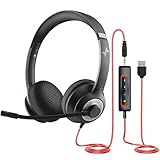
- ✅【Outstanding Noise cancelling Microphone】 The headphones with unidirectional boom 270°microphone that only picks up your voice and block out unwanted background noises. Also, you can wear it on the left or right ear as you like.
- ✅【All-Day Comfort for All Head Shape】 Eaglend always designed for all-day comfort using, there will be no restraint pressure, with the adjustable headbend fit adult and kids easily.The soft protein memory foam earpads is made of high-level breathable materials,ROHS certified materials prevent your ears from heat and sweat.
- ✅【Enhanced sound performance & 40mm audio driver】:Corded phone headset with built-in audio sound card, Eaglend sound lab tested thousands of times for your daily conversation/music/movie/gaming, bringing you extra clear and bass for pleasant experience.
- ✅【USB/3.5mm Connection】 The headphone is designed for multiple use, 3.5mm audio cable with USB In-line audio volume control (cord length 5+4 feet),with mic mute &indicators /speaker mute.Compatible with PC/Tablet/Mac/iOS/laptop /Android phone and other devices."
- ✅【Global warranty &multi-purpose】24 months warranty by eaglend. Great ideal for online courses, Skype chat, call center, Webinars Presentations, Office, Business, Rosetta Stone, Dragon Speaking, Conference Calls and more.
- Retrieve or generate an answer: It finds a relevant response in approved knowledge, generates one from a model, or combines both. Ask how the system grounds answers and what it does when it cannot find support.
- Take an action: It may use an integration to look up or change information in a CRM, help desk, or another connected system. Confirm the precise permissions and actions available.
- Assist a human agent: It can draft replies, summarize conversations, suggest next steps, or help classify and prioritize cases without speaking directly to the customer.
- Route or escalate: It can send an interaction to the appropriate team or a person. The important test is whether relevant conversation context travels with the handoff.
- Handle voice interactions: Some offerings extend beyond text messaging. Voice capability and its availability should be checked separately from web chat or email coverage.
A product can perform one of these tasks without performing the others. Feature lists are therefore less useful than mapping the platform to the specific support and sales interactions you want it to handle.
How the documented platforms compare
The table summarizes what Zendesk and Salesforce describe in their official materials. “Not stated” means the cited vendor information does not establish the detail; it is not a claim that the product lacks the capability.
| Platform | Documented strengths | Customer-facing channels and actions | Agent assistance | Published commercial details | Important qualification |
|---|---|---|---|---|---|
| Zendesk | Suite AI features for agents and administrators, plus AI agents for customer interactions. | Zendesk describes AI agents for messaging, email (including API and web forms), and voice, with actions in authorized systems. | Generative search, quick answers, ticket translations, suggested macros, writing assistance, article and ticket summaries, intelligent triage, and merge suggestions are described in Zendesk documentation. | Exact prices and usage allowances: not stated in the Zendesk documentation cited here. Basic AI tools and AI agent functionality are described as included in Suite; Copilot is an add-on. | Zendesk’s May 19, 2026 announcement describes a wider autonomous-service vision; it marks some features as early access or announced rather than generally available. |
| Salesforce | Service AI connected to Service Cloud, Agentforce, self-service, and contact-center capabilities. | Salesforce describes multilingual support, personalization, intent analysis, and possible handoff to human representatives. Specific channel-by-channel availability is not stated in the cited material. | Agentforce for Service pricing includes generative replies, summaries, answers, knowledge articles, and an unmetered employee agent. | Agentforce for Service: USD $125 per user per month, billed annually. Max: USD $550 per user per month, billed annually. Salesforce Help documents a separate Einstein Bots conversation allowance and an additional subscription; see the Salesforce section. | Salesforce labels its pricing subject to change and advises contacting sales for detailed pricing. Bot allowance details apply to the documented setup and should be confirmed for the buyer’s edition and current terms. |
1. Zendesk: a support-focused platform with customer and agent AI
Zendesk’s documented offering spans customer-facing automation and AI tools for support teams. For a business already managing service work in Zendesk, that breadth may make it a natural candidate to evaluate: customer interactions and agent workflows sit within the same support-platform context. The documentation describes AI agents across messaging, email—including API and web-form interactions—and voice. It also describes those agents taking actions in authorized systems, so buyers should establish exactly what each connected system permits the agent to read or change.
What stands out
- Customer-facing and staff-facing functions: Zendesk describes AI agents for customer interactions alongside tools for agents and administrators. These are distinct use cases; an organization may want to automate some conversations while using AI only as an assistant for others.
- A broad set of agent tools: Documented Suite AI features include generative search, quick answers, translation of tickets, suggested macros, writing assistance, summaries of articles and tickets, intelligent triage, and suggestions for merging tickets.
- Authorized-system actions: AI agents can act in systems for which they have authorization. This is more consequential than simply producing a reply: set boundaries around access, actions, approvals, and escalation before enabling it.
- Standalone possibility through Forethought: Zendesk documentation says Forethought AI agents by Zendesk are an independent suite of omnichannel support tools that can serve organizations that do not use the Zendesk platform. The cited information does not establish its price or provide enough detail for a fuller comparison here.
Plans, limits, and rollout
Zendesk says basic AI tools and AI agent functionality are included in Suite, while Copilot is a paid add-on for more robust AI-powered tools. The cited Zendesk materials do not state an exact price for Suite or Copilot, so no dollar comparison is established here.
Quick wins for a faster PC:
Clear out junk files and repair common Windows errorsFree Scan →Fix the driver behind crashes, sound loss and screen glitchesFind Drivers →In a May 19, 2026 announcement, Zendesk presented an “Autonomous Service Workforce” direction that included Agent Builder, agents across messaging, email, and voice, use through external AI platforms, and additional workflow and MCP capabilities. The announcement identifies some items as early access or announced capabilities. Treat them as roadmap or limited-availability items unless Zendesk confirms they are currently available for your plan, location, and use case.
Zendesk also said its Resolution Platform was trained on roughly 20 billion ticket interactions. That is a Zendesk-published figure, not an independent evaluation of accuracy or service quality. It should not be used as a substitute for testing the product on your own cases.
Rank #2

- Digital Stereo Sound: Fine-tuned drivers provide enhanced digital audio for music, calls, meetings and more
- Rotating Noise Canceling Mic: Minimizes unwanted background noise for clear conversations; the rotating boom arm can be tucked out of the way when you’re not using it
- Handy In-line Controls: Simple in-line controls on the headset cable let you adjust the volume or mute calls without disruption
- Plug-and-Play USB Computer Headset: Simply plug the USB-A connector into your computer and you’re ready to talk or listen without the need to install software
- Padded Comfort: Comfortable headphones with adjustable headband features swivel-mounted, leatherette ear cushions for hours of comfort and is easy to clean
Who should evaluate it
Zendesk merits evaluation by support teams that want customer automation and staff-facing AI in a support-platform setting, particularly when messaging, email, or voice interactions and authorized actions matter. A business that needs precise commercial estimates should request the applicable Suite and Copilot terms, including usage definitions and any charges not covered by a base subscription.
2. Salesforce: service AI connected to CRM and service workflows
Salesforce positions Service Cloud, Agentforce, self-service, and contact-center capabilities as parts of an AI customer-service solution. Its conversational-AI guide describes multilingual support, personalization, intent analysis, and possible handoff to a human representative. These are vendor descriptions of capabilities and intended uses, not independently established outcome results.
What stands out
- Service and CRM context: The offering is positioned within Salesforce’s service and CRM environment. Buyers should map the records and workflows an AI feature needs, then confirm access controls and which actions are permitted in their own configuration.
- Customer and employee use: The Salesforce pricing page lists generative replies, summaries, answers, knowledge articles, and an unmetered employee agent for Agentforce for Service. That mix makes it important to separate customer-facing automation from employee assistance when estimating value and cost.
- Multilingual and handoff claims: Salesforce describes multilingual support and escalation to human representatives. Verify the languages available for each channel and whether the full interaction context transfers in the configuration you plan to use.
- Einstein Bots for straightforward questions: Salesforce Help describes Einstein Bots as a way to automate straightforward customer questions. This is a specific bot use case; do not assume that every bot setup has the same channel coverage or commercial terms.
Published prices and bot allowance
The Salesforce pricing page accessed October 4, 2026 lists Agentforce for Service at USD $125 per user per month, billed annually, and Max at USD $550 per user per month, billed annually. The listed Agentforce for Service features include generative replies, summaries, answers, knowledge articles, and an unmetered employee agent; Max is described as a broader service, contact-center, and AI bundle. Salesforce says prices are subject to change and directs buyers to contact sales for detailed pricing. Confirm which plan, usage, and other commercial terms apply to your organization before comparing total cost.
Salesforce Help, accessed October 4, 2026, documents an allowance of 25 Einstein Bots conversations per month for each active Digital Engagement user in the described configuration. It also describes an available additional subscription for 100 conversations per month for use in one org. These details are tied to the documented setup, so confirm current applicability, edition eligibility, and billing terms with Salesforce.
Migration detail to check
Salesforce Help stated that Legacy Chat was scheduled for retirement on February 14, 2026, and advised customers to switch to enhanced Chat to avoid service interruptions. Because that date has passed, an organization still using the legacy setup should confirm its present status and migration requirements directly with Salesforce rather than treating the notice as a future deadline.
Who should evaluate it
Salesforce is a candidate for organizations assessing service AI alongside Salesforce CRM, service workflows, or contact-center capabilities. Its published prices offer a starting point for comparing listed plans, but they do not by themselves establish a complete implementation or usage cost.
Recommended Free Tools
Rank #3

- Digital Stereo Sound: Fine-tuned drivers provide enhanced digital audio for calls, meetings, music, and more
- Rotating Noise-Canceling Mic: Minimizes unwanted background noise for clear conversations; the rotating boom arm can be tucked out of the way when not in use
- Handy Inline Controls: Simple inline controls on the headset cable let you adjust the volume or mute calls without disruption
- USB-C Plug-and-Play: Simply plug the USB-C cable into your computer, including MacBook Neo laptops, and you're ready to talk or listen without installing software.
- Padded Comfort: Comfortable USB C headphones with adjustable headband feature swivel-mounted, leatherette ear cushions for hours of comfort
How to choose a conversational AI platform
Start with real customer journeys and work through the same criteria for each candidate. A platform that answers common questions but cannot safely complete the actions your customers need—or hand off a difficult case cleanly—may not fit even if its feature list is extensive.
1. Map channels and languages by journey
List where each interaction begins and where it may continue: website messaging, email, mobile, voice, or other channels your customers actually use. Check languages channel by channel rather than assuming a multilingual claim covers every experience. The cited materials do not establish specific Instagram, Messenger, or WhatsApp support for these products; do not infer social-channel coverage from general omnichannel wording.
2. Decide what sources can support answers
Identify the knowledge bases and other content the AI may use. Ask how often each source refreshes, whether answers can be restricted to approved material, and what the system does when information is incomplete or conflicting. Test outdated instructions and questions that have no supported answer, not only clean examples.
3. Define integrations, permissions, and actions
List the records the system needs to read and the changes it might make—for example, looking up an account or updating a case. Confirm the required CRM or help-desk integration, API access, workflow actions, role permissions, and approval rules. Separate low-risk lookups from actions with financial, privacy, or account consequences.
The Tool Desk
Outbyte Driver Updater FREEFix the driver behind crashes, sound loss and screen glitchesFind Drivers →Outbyte PC Repair FREERepair Windows errors before they cause bigger problemsFix Now →4. Test the human handoff
Set clear escalation conditions for uncertainty, complex requests, customer preference, and requests that need a person. Then check whether the receiving agent gets the conversation, relevant customer details, and the reason for escalation. A handoff that loses context can make an automated interaction more frustrating rather than more efficient.
5. Separate customer automation from agent assistance
Record which tasks should be customer-facing and which should support staff through drafting, summaries, triage, or suggested responses. For each task, decide whether a human must review the output before it is sent or an action is completed. This distinction matters when comparing plans and evaluating whether a feature changes a customer interaction or only an employee’s workflow.
Rank #4

- Digital Stereo Sound: Fine-tuned drivers provide enhanced digital audio for music, calls, meetings and more
- Rotating Noise Canceling Mic: Minimizes unwanted background noise for clear conversations; the rotating boom arm can be tucked out of the way when you’re not using it
- Handy In-line Controls: Simple in-line controls on the headset cable let you adjust the volume or mute calls without disruption
- Plug-and-Play USB Computer Headset: Simply plug the USB-A connector into your computer and you’re ready to talk or listen without the need to install software
- Padded Comfort: Comfortable headphones with adjustable headband features swivel-mounted, leatherette ear cushions for hours of comfort and is easy to clean
6. Calculate total cost using the vendor’s billing unit
Compare like with like. Separate per-seat subscription fees from charges tied to resolutions, conversations, usage, add-ons, and implementation. Ask what counts as a billable event, what allowance is included, how overages work, and whether the price is annual or monthly. A per-user figure and a conversation allowance are different units and cannot be compared directly without your expected seat count and interaction volume.
7. Evaluate operational readiness
Review privacy, access permissions, auditability, content ownership, and the ongoing work required to keep knowledge current. Decide who monitors answers and actions, how errors are reported, and how the team will measure safe completion and appropriate escalation. The platform choice is only one part of operating the system responsibly.
Free tools Windows power users keep installed
One-click scans. No signup required.
A practical pilot that produces a fair comparison
Official product descriptions do not provide controlled head-to-head results for Zendesk and Salesforce. A useful comparison comes from giving each candidate the same cases and checking both successful handling and failure behavior.
- Choose representative cases. Include frequent straightforward questions, a request requiring an authorized system lookup or update, an ambiguous question, an unsupported request, and a case that should go to a human. Include the languages and channels that matter to your customers.
- Use the same approved knowledge and permissions. Configure each candidate with the material it is allowed to use and only the system access it would receive in production. Document differences in configuration rather than attributing them to model quality.
- Inspect the interaction, not just the final answer. Record whether the answer is supported, whether an action stayed within permission, what happened when evidence was missing, and whether escalation preserved context.
- Include staff-facing workflows. If agent assistance is part of the buying case, have agents assess drafts, summaries, triage, and suggested actions separately from customer-facing automation.
- Estimate commercial cost for the same scenario. Apply each vendor’s current definitions for seats, usage, add-ons, allowances, overages, and implementation to the same expected volume. Request written clarification where a billing definition or plan eligibility is unclear.
- Set acceptance rules before reviewing results. Define which errors are unacceptable, when human review is required, and what successful escalation means. This avoids choosing a system based only on a polished demo or a small set of easy questions.
Frequently asked questions
Frequently Asked Questions
How do conversational AI platforms work?
They process a customer’s natural-language input and may retrieve or generate a response, invoke an allowed action in an integrated system, assist an employee, or route the interaction. A specific platform may do only some of these things, so evaluate the actual workflow rather than relying on the category name.
Can conversational AI work across chat, email, social media, and voice?
It can, depending on the product and configuration. Zendesk documentation describes AI agents for messaging, email, and voice. The Salesforce materials summarized here do not establish channel-by-channel availability, and the cited sources do not establish Instagram, Messenger, or WhatsApp coverage for either platform. Confirm the channels and language support you need with the vendor.
What is the difference between a chatbot and an AI agent?
The labels are not used consistently across vendors. A chatbot may answer or route common questions; an AI agent may also be designed to perform actions in connected systems. Check whether the product can only generate a response or can also retrieve records, change data, and complete a workflow under specified permissions.
What’s actually slowing this PC down?
Pick the symptom - the matching free tool is one click away.
How should a business measure whether a conversational AI deployment is working?
Set measures around the tasks the system is meant to handle: whether answers are supported by approved information, whether permitted actions complete correctly, whether uncertain cases escalate, whether context reaches a human, and how much staff review is needed. Compare the same cases before and during a pilot, and treat vendor outcome claims as claims rather than independent benchmarks.
Is conversational AI suitable for sales as well as customer support?
It can support sales interactions when the intended workflow—such as answering product questions or routing a prospect—fits the platform’s knowledge, channel, and integration capabilities. The official materials summarized here focus primarily on service and support, so they do not establish comparative sales performance or a sales-specific winner.
Quick Recap
Product prices and availability are accurate as of the date/time indicated and are subject to change. Any price and availability information displayed on Amazon at the time of purchase will apply.

