
What’s actually slowing this PC down?
Pick the symptom - the matching free tool is one click away.
Does “hard sci-fi” mean the science is always right? No. The label signals that scientific reasoning, technical detail or plausible extrapolation matters to a story; it is not a certification that every claim has passed a science audit. A novel may combine established knowledge, informed speculation, an invented premise and an occasional plot-driven liberty. The useful question is how it handles each claim—not whether the whole book earns a simple accurate or inaccurate verdict.
What “hard sci-fi” does—and does not—promise
Hard science fiction generally gives science or technology an important role in the story and pays attention to how its ideas work. That can mean detailed engineering, consequences that follow from a speculative premise, or an effort to avoid contradicting established science.
| # | Preview | Product | Price | |
|---|---|---|---|---|
| 1 |

|
Zero-Point Prop: Hard Science Fiction Thriller | $2.99 | Buy on Amazon |
| 2 |

|
Frequency: Hard Science Fiction | $6.99 | Buy on Amazon |
| 3 |

|
Dark Matter: A Novel | $11.65 | Buy on Amazon |
| 4 |
|
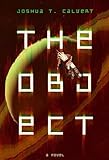
The Object: Hard Science Fiction | $7.99 | Buy on Amazon |
| 5 |

|
Children of Time | $7.36 | Buy on Amazon |
It does not mean that every detail is correct, that the story contains no imagined science, or that every reader and critic agrees on what qualifies. The Science Fiction Encyclopedia’s overview of science fiction describes a long-running range of definitions: some emphasize science itself, while others focus on extrapolation, scientific method, or what speculative changes reveal about people and society. It cautions against expecting one definition to settle the boundaries for everyone.
Historian Gary Westfahl traces the term “hard science fiction” to use beginning in the late 1950s and expanding in later decades. In an accessible abstract of his history, he describes early uses that stressed scientific accuracy and explanation. Westfahl reports that Hal Clement put avoiding scientific errors at the center of hard SF, while allowing different approaches to prediction and imagined environments. That is an important historical position, not a universal test accepted by all readers. Westfahl’s history of the term
#1 Best Overall
How to tell an error from an invented premise
When a scene seems scientifically questionable, first identify what kind of claim the book is making. An imagined technology is not automatically an error, and a plausible-sounding explanation does not make an idea established science. The Science Fiction Encyclopedia’s discussion of science in science fiction distinguishes scientific error, invented premises presented as possible, and pseudoscience as different categories.
- Established science: The story relies on a claim that is well supported by current knowledge. A factual mistake here is an error, though readers should account for the book’s publication date and the relevant field’s state of knowledge.
- Extrapolation: The author extends known science into a plausible but unproven future possibility. It may be carefully reasoned without being a prediction or a fact.
- Invented premise: The story asks readers to accept something not established in reality, then explores what might follow. Judge whether its consequences are consistent within the book, rather than treating the premise itself as verified science.
- Pseudoscience: Scientific language or imagery can be used to lend authority to claims without sound scientific grounding. Technical vocabulary alone is not evidence that a story’s explanation is credible.
One influential general test for science fiction, offered in a chapter abstract for The Cambridge Companion to Science Fiction, is that speculation should be essential to the story and that the author should make a reasonable effort to render it plausible. This is a useful lens, not a rule that defines all hard SF. The Cambridge Companion chapter on defining science fiction
Rank #2
Why a science-forward novel may still bend the facts
Andy Weir’s The Martian shows why accuracy is not an all-or-nothing verdict. TIME’s 2015 discussion, updated in 2023, praises the novel’s scientific and technical detail but identifies its opening storm as a consequential liberty: the windstorm that prompts the crew to leave Mark Watney behind is described as scientifically implausible given Mars’s very thin atmosphere.
Weir explained the narrative choice to TIME: “I needed a way to force the astronauts off the planet, so I allowed myself some leeway.” He added, “Plus, I thought the storm would be pretty cool.” The example does not make every other detail in the book wrong; it shows that a science-focused story can handle many details carefully and still relax one constraint to get its plot underway. TIME’s discussion of the science in The Martian
Rank #3
How to assess a particular book or scene
For a specific claim, separate the book’s premise from the chain of reasoning built on it. Then look at the relevant science and the book’s own rules. This avoids turning one error into a verdict on an entire novel—or treating consistent world-building as proof that its premise is real.
- State the claim precisely. Identify what the scene says happens, rather than judging a broad label such as “the book’s science.”
- Ask whether it is fact, speculation or a premise. Look for signals that the author presents the idea as known science, a possible extrapolation or an assumption the story asks you to accept.
- Check what follows from it. Does the plot respect the consequences of its own premise, or does the explanation change when convenient?
- Consider how much the story depends on it. A central scientific mechanism carries more weight in the reader’s judgment than a minor technical detail.
- Account for the author’s purpose and the book’s date. A narrative shortcut may explain why a detail was changed, but does not make that detail scientifically accurate. Older books may also reflect what was understood when they were written.
These are comparison questions, not a validated scoring system. They help clarify what a reader means by “accurate” and keep the judgment tied to evidence about a particular claim.
Rank #4
Why readers disagree about what counts as hard SF
Readers may use “hard” to mean close attention to physical science, rigorous technical explanation, a plausible extrapolation, or simply a story where science drives the plot. Those expectations are related, but not identical. A book can be technically detailed yet make a major speculative leap; another can explain less while carefully following the consequences of its premise.
So “What is exactly counted as ‘hard’ sci-fi?” has no single answer that all readers share. Nor is scientific accuracy the only possible measure of a science-fiction story’s success. The label helps describe what a story takes seriously; it cannot settle whether a particular claim is true.
Quick Recap
Best Value
Product prices and availability are accurate as of the date/time indicated and are subject to change. Any price and availability information displayed on Amazon at the time of purchase will apply.

