
Chatbots are most useful when they handle a well-defined task with reliable information behind it: answering routine questions, checking an order, guiding a return, booking an appointment, helping shoppers find products, or routing a lead. The best workflow is not simply an automated reply. It connects the bot to the right business information or system, makes its limits clear, and lets a person take over with the conversation context intact.
Where chatbots help in customer service
Customer-service chatbots can answer repeat questions and guide routine workflows, freeing staff to focus on requests that need judgment or empathy. Their usefulness depends on whether the answer is current and whether the bot can reach the system required to complete the task.


Answer frequent questions
A bot can respond to common questions about pricing, account access, store policies, and other frequently repeated topics using an approved knowledge base. Assign someone to maintain that content as policies and products change. A fluent-sounding response is not proof that its information is correct. Zendesk’s chatbot use-case guide and guide to chatbots discuss knowledge-backed answers and common service workflows.
Handle order, delivery, and return requests
For post-purchase questions, a bot may retrieve order status or shipping updates, check availability, or explain how to start a return or exchange. Reading or changing an order or account requires a connection to the relevant system; access to personal order information also calls for an appropriate identity or authorization check. A bot that only explains a policy should not be presented as one that can initiate a return. See the workflows described by Zendesk, Microsoft, and IBM.
Free tools Windows power users keep installed
One-click scans. No signup required.
Book and manage appointments
Service businesses can use a bot to answer scheduling questions, book or reschedule an appointment, and send routine reminders. For actual booking, it must check a current scheduling system; otherwise, it can collect a preferred time and pass the request to staff without promising that the slot is available. Zendesk and Microsoft’s customer-service overview describe appointment workflows.
Triage, route, and escalate
A bot can ask enough questions to identify the request, send it to the right team, and carry the customer’s explanation into the handoff. This is useful even when the bot cannot resolve the issue itself. Complex, sensitive, or unresolved cases need a clear route to a person; making customers repeat information can undermine the handoff. Salesforce’s conversational AI overview identifies context maintenance and smooth human handoffs as implementation challenges.
Collect feedback
A short feedback question can capture a customer’s experience at a relevant point in a service conversation and help reveal recurring problems. Keep the prompt brief and make clear what the response is for. Zendesk and Salesforce include feedback collection among chatbot use cases.
Rank #2
Where chatbots help in sales
Guide product discovery and comparison
A bot can ask what a shopper needs, recommend relevant products, compare options, and check availability. Recommendations and stock answers are only as dependable as the catalog and inventory information the bot can access. IBM’s e-commerce chatbot overview describes product guidance, while Zendesk’s use-case guide covers product discovery.
The Tool Desk
Outbyte Driver Updater FREEFix the driver behind crashes, sound loss and screen glitchesFind Drivers →Outbyte PC Repair FREEClear out junk files and repair common Windows errorsFree Scan →Answer questions during checkout
Conversational help can address last-minute questions about a product or purchase. A business may also choose to remind shoppers about an unfinished cart, but that feature should be assessed against its own results rather than assumed to improve conversion. IBM discusses checkout assistance in its e-commerce chatbot guide.
Qualify and route leads
A bot can ask a prospect about their need or intended use, then route the conversation to an appropriate sales team or offer a way to schedule a demo. Ask only for information relevant to the next step and explain what will happen with it. Zendesk’s chatbot guide and IBM’s e-commerce overview describe lead qualification and routing.
Rank #3
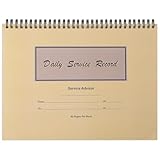
- Record Book: the package includes 1 daily service record book with 80 sheets, offering ample space to meet daily logging needs; It's a practical tool for tracking appointments, managing tasks, and enhancing customer service efficiency
- Ideal Size: measuring 8.5 x 11 inches, this activity log notepad balances portability and capacity; With 80 pages, it's ideal for daily use in the automotive industry, serving as a reliable service record management tool for consistent tracking
- Nice Quality: crafted from quality paper, the activity log book features reliable coil binding for easy page turning and tear-out; Its structured layout provides ample space for detailed entries, supporting effective schedule planning
- Friendly Design: designed for convenience, the daily log book's coil binding allows effortless sheet removal whenever needed; The intuitive layout ensures quick access to logging sections, making daily activity recording simple and efficient
- Versatile Usage: the service log book is a helper for the automotive industry or individuals to record scheduled maintenance, the shop can use it to register the maintenance needs of different customers, individuals can use it to keep track of flat rate hours
Support conversations across channels
Chat, messaging, email, social channels, and voice or interactive voice response (IVR) can all be part of a conversational service experience. Which channels are available—and whether a conversation can move between them without losing context—depends on the implementation. Salesforce’s overview of conversational AI discusses channel coverage and continuity.
Scripted bots and conversational AI suit different work
| Approach | Good fit | Main trade-off | What it needs |
|---|---|---|---|
| Scripted, menu-led bot | Bounded flows such as FAQs, order status, and store policies | Predictable choices can make a constrained task easy to navigate, but the bot may handle nuanced or open-ended wording poorly. | Clear menus, approved answers, and connections to systems if the flow must retrieve or change information. |
| AI-powered conversational bot | Questions expressed in varied language, recommendations, and conversations that require interpreting what the user means | Can handle more varied phrasing, but interpretation does not guarantee a correct answer or justify acting without reliable data. | Trustworthy information sources, suitable system connections, and an escalation path for uncertainty or complexity. |
IBM notes that menu-led bots are suited to constrained questions but typically struggle with nuanced open-ended language. Conversational AI can interpret varied wording and make recommendations, but still depends on reliable source data. The choice is about the shape of the task, not a claim that one type can safely handle every conversation. See IBM’s e-commerce chatbot overview and Salesforce’s conversational AI overview.
Information, integrations, and permissions determine what a bot can do
A chatbot that gives information is not automatically an autonomous agent. There is a meaningful difference between explaining a return policy and initiating a return, or describing appointment options and booking a specific slot. The latter actions require an integration to the relevant system and permission to make the change. The same distinction applies to updating an address, retrieving a private order, or checking live inventory.
- For answers: connect the bot to approved, maintained product, policy, and help content.
- For account or order tasks: connect it to the relevant account or order system and apply an appropriate identity or authorization check.
- For inventory and appointments: use current catalog, stock, or scheduling data rather than static text when reporting availability.
- For actions: define which changes the bot is allowed to make, and make the next step clear to the customer.
- For handoffs: pass the request and relevant conversation context to the human team that will handle it.
These distinctions follow the capability and integration considerations in Zendesk’s chatbot guide and IBM’s guide to AI customer-service chatbots.
How to decide whether a chatbot workflow is a good fit
- Define one task and its outcome. Specify what the customer wants to accomplish—for example, get an order update, book an appointment, or reach the right sales team. Separate a request for information from a request that changes a record.
- Check whether the task is bounded. Repeated questions with stable answers are often suitable for a scripted flow. Requests with varied phrasing may benefit from conversational AI, while cases requiring judgment, empathy, or complex resolution should have a human route.
- Identify the authoritative information and systems. Decide which knowledge base, order, account, inventory, scheduling, or CRM data the bot needs. Confirm that staff can update the source and that the bot has only the access necessary for the workflow.
- Design the failure and handoff path. Decide how the bot will respond when it lacks an answer, cannot verify a user’s identity, or cannot complete the task. Route the case to an appropriate person and carry forward useful context.
- Choose the channels and languages customers use. Confirm that the intended service covers the relevant channels and that conversation continuity works as expected when the implementation spans more than one channel.
- Set privacy and governance rules. Determine what information is collected, where it goes, who can access it, and what controls apply. Avoid collecting details that are unnecessary for the task.
- Test a staged workflow before launch. Try routine cases, ambiguous phrasing, missing information, failed integrations, and escalation. Salesforce recommends defining goals, building workflows in stages, testing before launch, and addressing integration, privacy, context, and accuracy challenges in its conversational AI guidance.
- Measure outcomes against a baseline. Track task completion, answer accuracy, escalation and failure rates, customer feedback, and—where relevant—qualified leads. Compare the results with the equivalent process before deployment; vendor-wide outcomes are not guarantees for a particular business.
What the available figures do—and do not—show
Vendor-published figures can describe a survey, forecast, or named deployment, but they do not predict what a chatbot will achieve in another organization.
- Consumer expectations: Zendesk’s July 6, 2026 chatbot guide attributes to its 2026 CX Trends Report the findings that 74% of consumers expect customer service to be available 24/7 due to AI and 86% say fast responses and accurate resolutions influence whether they purchase from a brand. These are Zendesk-reported survey findings, not universal measurements. See Zendesk’s 2026 guide.
- Unresolved issues: The same Zendesk guide attributes to the 2026 CX Trends Report the finding that 85% of CX leaders say customers will drop brands over unresolved issues, even on first contact. It is a vendor-reported survey result, not a guarantee of customer behavior in every business.
- Named deployment: IBM’s November 7, 2025 guide reports that Camping World’s virtual assistant, Arvee, was associated with a 40% increase in customer engagement across platforms. This is a vendor-editorial account of one deployment, not a typical or independently established chatbot result. See IBM’s 2025 guide.
- Forecast: IBM’s 2025 guide cites a Gartner forecast that 80% of common customer-service issues would be autonomously resolved by 2029. This is a forecast, not an observed current result. See IBM’s account of the forecast.
Frequently Asked Questions
What are the most common customer-service chatbot use cases?
Common uses include answering repeat questions, retrieving order and shipping updates, guiding returns, managing appointments, routing requests to staff, and collecting feedback. Whether the bot can complete an action depends on its system connections and permissions.
Recommended Free Tools
Best Value
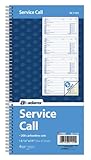
- Record all incoming calls needing service
- 2-part carbonless
- Spiral bound on left
- Part one is perforated to give to service person, part two remains in book for records
- White, canary paper sequence
Can a chatbot process a return or change an order?
It can when the implementation connects to the relevant order or account system and has appropriate permissions. A bot that only provides policy information can explain the process, but should not claim to have submitted or changed anything.
Are scripted bots or AI chatbots better for customer service?
Scripted bots are a practical fit for bounded tasks with predictable choices. Conversational AI can interpret more varied wording, but depends on reliable information and needs a way to escalate uncertain or complex requests. Match the approach to the task rather than assuming either can handle every case.
What can a sales chatbot do?
It can help a shopper find or compare products, answer questions during checkout, check availability when connected to current data, or collect relevant lead details and route a prospect to sales. A cart reminder is an optional workflow, not proof of improved sales.
What should happen when a chatbot cannot solve a request?
It should make a clear route to a person available, transfer the issue to the appropriate team, and preserve the relevant conversation context so the customer does not have to start over.
How should a business measure a chatbot?
Measure task completion, answer accuracy, escalations, failures, customer feedback, and qualified lead outcomes where applicable. Compare those measures with a baseline for the same workflow; a vendor’s survey, forecast, or single deployment does not establish results for another business.
Quick Recap
Product prices and availability are accurate as of the date/time indicated and are subject to change. Any price and availability information displayed on Amazon at the time of purchase will apply.

