
The main difference is focus: Sigma sells autofocus lenses for Sony E-mount, while Voigtländer’s dedicated E-mount lenses are manual focus. Voigtländer lenses can still exchange data with compatible cameras for features such as EXIF recording and focus magnification, but that communication does not make them autofocus lenses. Image quality is a model-by-model question; the available manufacturer information does not establish a universal winner.
How do Sigma and Voigtländer E-mount lenses differ?
Sigma’s Sony E-mount range includes autofocus lenses. Sigma says its autofocus-drive control is optimized for high-speed autofocus, but that statement does not establish identical performance across all lenses or camera bodies. Sigma’s E-mount lineup includes full-frame and APS-C options.
Voigtländer E-mount lenses, made by Cosina, are dedicated manual-focus designs. They mount directly on Sony E-mount cameras without an adapter, and the overview describes them as designed especially for full-frame Sony E-mount. Check the exact model and your camera’s compatibility before buying. Cosina’s Voigtländer E-mount overview explains the system features.
Are Voigtländer E-mount lenses autofocus?
No. Their electronic contacts support camera communication, not automatic focusing. Cosina says the contacts let the camera record lens-use data in image EXIF metadata. The overview also describes focus magnification activated through focus-ring operation and a built-in distance encoder. Five-axis in-body stabilization support depends on whether the camera body can use subject-distance information.
#1 Best Overall

- World’s first high-speed standard zoom lens for APS-C cameras with the focal length range of 17-70mm 4.1x zoom ratio
- Outstanding optical performance with 16 elements in 12 groups featuring two GM (Glass Molded Aspherical) lens -elements and one hybrid aspherical lens element
- Upgraded VC effective in combination with Sony APS-C mirrorless cameras, leveraging AI for video shooting
- Close focusing capability with MOD of just 7.5” at 17mm / 15.4" at 70mm
- Moisture-Resistant Construction and Fluorine Coating
These features can make manual focusing more convenient and preserve useful lens data, but the photographer still turns the focus ring. Body support and behavior can vary, so check the compatibility information for the particular camera and lens.
When does Sigma autofocus make more sense?
Choose a Sigma E-mount model if autofocus is central to your work—for example, when you want the camera to acquire focus rather than set it manually. Sigma describes its AF-drive control as optimized for high-speed autofocus; actual speed, subject recognition, and tracking depend on the specific lens and camera combination. The claim should not be read as a guarantee of equal results across the range.
Rank #2

- Supreme lightweight portability that makes telephoto shooting fun
- Uncompromising image quality with 15 elements in 10 groups that lets you focus on creativity
- Up-close shooting performance (31.5" / 1:9.4 Wide & 59.1" / 1:5.1 Tele)
- Moisture-Resistant Construction
Two standard zooms show different options within Sigma’s own lineup:
- 24-70mm F2.8 DG DN II | Art: Sigma lists a constant F2.8 aperture and Sony E-mount availability. The company describes high sharpness across the image from maximum aperture and a design intended to reduce focus breathing. Those are Sigma’s product claims, not a comparative test against Voigtländer.
- 28-70mm F2.8 DG DN | Contemporary: Sigma positions this Sony E-mount zoom as a balance of optical performance and portability, and says its optical design is based on the 24-70mm Art lens. Sigma lists its weight as 470 g on the product specification page.
Both are zooms; a prime lens such as the Voigtländer APO-LANTHAR 50mm F2 is not a direct functional substitute. Compare the focal range and shooting needs as well as the focusing method.
Rank #3
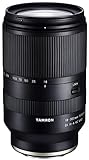
- World’s first 16.6x all-in-one zoom lens for APS-C mirrorless cameras
- Best-in-class, extremely fast and precise AF provided by VXD linear motor focus mechanism
- Maintains high resolving power from the center to the corners throughout the range
- Compact and portable design at 4.9 X 2.9 inches and a weight of just 21.9 ounces
- Moisture-Resistant Construction and Fluorine Coating
What do Voigtländer’s optical examples tell you?
The Voigtländer APO-LANTHAR 50mm F2 Aspherical is a full-frame Sony E-mount prime with manual focus, electronic contacts, and a built-in distance encoder. Cosina describes its apochromatic design as intended to reduce axial chromatic aberration. That describes an optical design priority; it does not demonstrate that the lens is sharper or better overall than a Sigma zoom. Cosina’s APO-LANTHAR 50mm F2 product page gives the model details.
Which has better image quality?
There is no supported brand-wide answer. Sigma says the 24-70mm F2.8 DG DN II | Art delivers high sharpness across the image from maximum aperture, while Cosina describes the APO-LANTHAR 50mm F2’s aberration-control aim. These claims concern different lenses and different aspects of optical design. They do not form a controlled comparison.
Rank #4

- Wide zoom range (82 - 315mm 35mm equivalent) ideal for sports or nature;Aperture blades : 7
- Internal focusing for smooth, quiet operation - perfect for video capture.Direct manual focus with non-rotating focus ring during AF: ideal for precise, comfortable manual focus adjustments
- Optical Steady Shot image stabilization for stable video capture and low light performance
- Minimum Focus Distance - 3.28 ft, Maximum Magnification ratio - 0.23x
- Provides a wide focal range of up to 315mm (35mm equivalent) ideal for sports or nature shooting
A fair comparison needs exact models and comparable evidence—ideally testing on the same camera body under the same conditions, with focal length, aperture, framing, and processing accounted for. Consider more than resolution: performance across the frame and at different apertures, chromatic aberration, distortion, flare, vignetting, bokeh, and focus breathing can all matter. No standardized head-to-head test between equivalent Sigma and Voigtländer models is established by the cited manufacturer sources.
Independent reader supportYour contribution helps us test, update, and keep practical guides available for everyone.How to choose between specific models
Start with what and how you photograph, then compare the candidate lenses rather than treating either brand as one uniform option.
What’s actually slowing this PC down?
Pick the symptom - the matching free tool is one click away.
Quick Recap
Best Value
- Wide zoom range (82 - 315mm 35mm equivalent) ideal for sports or nature;Aperture blades : 7
- Internal focusing for smooth, quiet operation - perfect for video capture.Direct manual focus with non-rotating focus ring during AF: ideal for precise, comfortable manual focus adjustments
- Optical Steady Shot image stabilization for stable video capture and low light performance
- Minimum Focus Distance - 3.28 ft, Maximum Magnification ratio - 0.23x
- Angle of view (on APS-C) 28.2° - 7.8°
- Set the focus requirement. If you need autofocus, select an autofocus-capable Sigma model. If you prefer to focus manually and accept the hands-on process, consider a Voigtländer E-mount lens.
- Match the coverage. Compare focal length and prime-versus-zoom flexibility. A 50mm prime and a standard zoom do not cover the same shooting situations.
- Compare aperture and handling. Check maximum aperture alongside weight, dimensions, close-focus distance, filter size, and the feel of focus and aperture controls. These vary by model.
- Check camera-system behavior. Confirm the mount version and compatibility with your exact body, including stabilization support and lens-correction behavior. A compatible mount alone does not establish that every body-dependent feature works identically.
- Assess image quality with relevant evidence. Look for tests of the exact models under comparable conditions; do not infer an overall winner from a manufacturer’s claim about one optical property.
- Verify local terms before purchase. Check current price, availability, and warranty for the exact model in your region.
Sources and model details
- Sigma Sony E-mount lenses — lineup context and autofocus-drive statement.
- Sigma 24-70mm F2.8 DG DN II | Art — mount availability and Sigma’s autofocus and optical-design claims.
- Sigma 28-70mm F2.8 DG DN | Contemporary — product positioning and listed Sony E-mount specification, including weight.
- Voigtländer E-mount lenses — manual focus, electronic contacts, and body-dependent features.
- Voigtländer APO-LANTHAR 50mm F2 Aspherical — model details and Cosina’s description of its apochromatic design.
Product prices and availability are accurate as of the date/time indicated and are subject to change. Any price and availability information displayed on Amazon at the time of purchase will apply.

