
For most QNAP NAS owners, the safest starting point is to avoid exposing NAS management or file services directly to the internet. Remove router port-forwarding rules for the NAS, disable UPnP port forwarding, and use either QVPN or myQNAPcloud Link for remote access. Then restrict accounts, enable login protections, and keep the NAS and its apps updated.
Why direct internet exposure is risky
Port forwarding and DMZ rules can make NAS services reachable from outside your home or office, but they also expose those services to internet-based attacks. QNAP describes direct DMZ or UPnP forwarding as fast, while warning that it is vulnerable to cyberattacks and has no defense against zero-day vulnerabilities. For typical home and small-office use, avoid publishing the NAS directly.
| # | Preview | Product | Price | |
|---|---|---|---|---|
| 1 |

|
QNAP TS-216G-US 2-Bay 2.5GbE Desktop NAS | $299.00 | Buy on Amazon |
| 2 |
|
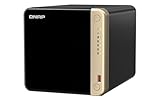
QNAP TS-464-8G-US 4 Bay Desktop NAS | $509.00 | Buy on Amazon |
| 3 |
|
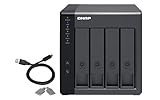
QNAP TR-004 4 Bay USB Type-C Direct Attached Storage (DAS) with hardware RAID (Diskless) | $219.00 | Buy on Amazon |
| 4 |
|
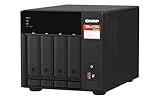
QNAP TS-473A-8G-US 4 Bay Desktop NAS | $879.00 | Buy on Amazon |
| 5 |

|
QNAP TS-264-8G-US 2 Bay Desktop NAS | $489.00 | Buy on Amazon |
Remote access does not have to mean opening a path straight to the NAS. QNAP offers QVPN for VPN-based access and myQNAPcloud Link, which relays access through myQNAPcloud servers without exposing the NAS directly. Both still require sound account security and ongoing maintenance.
Choose a remote-access method
| Method | Best fit | Trade-off |
|---|---|---|
| QVPN server on the NAS | Frequent file access and users comfortable configuring networks | Requires more setup. QNAP lists support for multiple VPN protocols, QuFirewall compatibility, login-failure notifications, and autoblocking. See QNAP’s security comparison. |
| myQNAPcloud Link | Simpler setup, occasional access, or a network without an obtainable WAN IP | Can be slower, and performance may be affected during peak use. QNAP says Link access goes through myQNAPcloud servers without exposing the NAS directly: QNAP’s remote-access FAQ. |
| SD-WAN or site-to-site VPN equipment | Remote users who need LAN-like access | Requires additional equipment and setup. See QNAP’s security comparison. |
| Direct DMZ or UPnP port forwarding | QNAP lists speed as an advantage | QNAP warns that it is vulnerable to cyberattacks and lacks defense against zero-day vulnerabilities; it is not a good default for a personal or small-office NAS. See QNAP’s security comparison. |
Remove router rules that expose the NAS
-
Sign in to your router and inspect its Virtual Server, NAT, DMZ, and Port Forwarding settings. Disable rules that publish NAS management or file services to the internet.
Quick wins for a faster PC:
Repair Windows errors before they cause bigger problemsFix Now →Fix the driver behind crashes, sound loss and screen glitchesFind Drivers →Clear out junk files and repair common Windows errorsFree Scan →Special offer. See more information about Outbyte and uninstall instructions. Please review EULA and Privacy policy.#1 Best Overall
QNAP TS-216G-US 2-Bay 2.5GbE Desktop NAS- ARM Cortex-A55 quad-core 2.0GHz processor with 4 GB DDR4 RAM
- Built-in NPU for AI Acceleration to boost performance for high-speed face and object recognition.
- 2.5GbE (2.5G/1G/100M) ports accelerates file sharing across teams and devices or streamline large file transfers
- Budget-friendly Home NAS for file storage and multimedia streaming
- Centrally store and organize personal or family photos, music, and videos
-
Check the NAS and router rather than assuming default ports are unchanged. QNAP’s best-practice FAQ identifies 8080 and 443 as default NAS management-service ports and recommends disabling router forwards for them. Your settings may differ. See QNAP’s security best-practice FAQ.
-
In myQNAPcloud, turn off Auto Router Configuration or its UPnP port-forwarding option. Review the router again afterward to confirm no NAS forwarding rules remain. Menu names can vary with firmware and router model.
Configure the remote-access option you chose
Use QVPN for network-level access
Choose QVPN if you want to connect through a VPN and are comfortable configuring the NAS, VPN client, and any required network settings. A VPN reduces the need to expose individual NAS services, but it does not make an unpatched or poorly configured NAS invulnerable. Follow the instructions for your specific QTS or QuTS hero release and the VPN protocol you select.
Rank #2
- Quad-core Intel N5105/N5095 4-core/4-thread burst up to 2.9 GHz with 8GB DDR4 RAM
- Dual 2.5GbE (2.5G/1G/100M) ports accelerates file sharing across teams and devices or streamline large file transfers
- Dual M.2 PCIe Gen3x2 NVMe SSD slots enable cache acceleration or SSD storage pools for improved performance
- Multiple USB 3.2 Gen 2 ports (type-A) with up to 10Gb/s transfer speeds, allowing compatibility with newer, faster USB drives/expansion enclosures for transferring large media files
- Centrally store and organize personal or family photos, music, and videos
Use myQNAPcloud Link for simpler access
-
Enable myQNAPcloud Link for the NAS. QNAP describes the service as remote access through myQNAPcloud servers without exposing the NAS directly. See QNAP’s FAQ on access without port forwarding.
Do these 3 things before closing this tab:
1Fix the driver behind crashes, sound loss and screen glitches2Repair Windows errors before they cause bigger problems3Scan for outdated or missing drivers - takes under a minuteSpecial offer. See more information about Outbyte and uninstall instructions. Please review EULA and Privacy policy. -
Keep published services disabled unless you have a specific need for them. A Link connection should not be treated as a reason to publish extra NAS services.
-
Set Device Access Controls to Private or Customized. QNAP defines Private as access limited to the associated myQNAPcloud account, while Customized permits specified accounts. Avoid Public access, which allows anybody. See QNAP’s security best-practice FAQ.
Rank #3
QNAP TR-004 4 Bay USB Type-C Direct Attached Storage (DAS) with hardware RAID (Diskless)- Direct-attached storage device via USB Type-C for Windows, macOS and Linux
- Use the TR-004 as external storage for NAS backup
- Expand the capacity of your QNAP NAS
- 4 x 3.5-inch SATA 3Gb/s (Diskless)
- Hardware RAID supports RAID 0, 1, 5, JBOD, and individual disks
-
Older QNAP guidance also describes registering the device and enabling My DDNS. Interface details may differ in current firmware, so use documentation for the installed release rather than relying on an old menu path.
Harden NAS accounts and services
-
When supported, disable the default
adminaccount and create a separate administrator account. Use strong, unique passwords and remove accounts you do not recognize or no longer need.What’s actually slowing this PC down?
Pick the symptom - the matching free tool is one click away.
Special offer. See more information about Outbyte and uninstall instructions. Please review EULA and Privacy policy. -
Enable IP and account access protection to limit repeated or suspicious login attempts.
Rank #4
QNAP TS-473A-8G-US 4 Bay Desktop NAS- Quad-core AMD Ryzen V1000 series V1500B 2.2 GHz processor and 8GB DDR4 RAM (up to 64GB)
- Dual M.2 PCIe Gen 3 NVMe SSD slots enable cache acceleration or SSD storage pools for improved performance.
- Dual 2.5GbE (2.5G/1G/100M) ports accelerates file sharing across teams and devices or gaming storage applications
- Multiple USB 3.2 Gen 2 ports (type-A & type-C) with up to 10Gb/s transfer speeds, allowing compatibility with newer, faster USB drives/expansion enclosures for transferring large media files
- Backup Google Workspace & Microsoft 365 accounts and files to NAS with Boxafe
-
Enable 2-Step Verification or passwordless sign-in where available. QNAP recommends these secure login methods as an additional layer of data security. See QNAP’s security guidance.
-
Turn off Telnet and SSH if you do not use them, and remove applications you do not need. Fewer enabled services and accounts mean fewer opportunities for unwanted access.
Keep firmware, apps, and recovery copies current
Install current QTS or QuTS hero firmware and update NAS applications. Enable automatic updates where appropriate, and check QNAP security advisories for issues affecting your model. In an advisory released June 17, 2026, QNAP listed affected releases including QTS 5.2.7 and QuTS hero h5.2.8, with fixes including QTS 5.2.9.3499 and QuTS hero h5.2.9. Those versions are examples from that advisory, not a universal statement of the newest release for every device. Check your model’s support page and its firmware update screen. See QNAP security advisories.
The Tool Desk
Outbyte PC Repair FREEClear out junk files and repair common Windows errorsFree Scan →Outbyte Driver Updater FREEFix the driver behind crashes, sound loss and screen glitchesFind Drivers →Best Value
- Intel Quad-core CPU burst up to 2.9 GHz with 8GB RAM
- Dual 2.5GbE (2.5G/1G/100M) ports accelerates file sharing across teams and devices or streamline large file transfers
- Dual M.2 PCIe Gen3x2 NVMe SSD slots enable cache acceleration or SSD storage pools for improved performance
- Multiple USB 3.2 Gen 2 ports (type-A) with up to 10Gb/s transfer speeds, allowing compatibility with newer, faster USB drives/expansion enclosures for transferring large media files
- Centrally store and organize personal or family photos, music, and videos
QNAP recommends scheduled snapshots, but snapshots are not a substitute for a separate backup: a RAID failure or an attacker with sufficient privileges can also affect snapshots. Keep an independent backup of important data. See QNAP’s security guidance.
Review the setup after changes
-
Confirm the router has no active DMZ or port-forwarding rule that exposes NAS management or file services.
-
Confirm UPnP port forwarding is disabled and the NAS has only the remote-access route you intend to use.
-
For Link, verify the access setting is Private or Customized and that published services remain disabled.
Special offer. See more information about Outbyte and uninstall instructions. Please review EULA and Privacy policy. -
Check that account protections are enabled, unused services are off, and firmware and apps are current.
Quick Recap
Bestseller No. 1Bestseller No. 3Bestseller No. 4Bestseller No. 5
Product prices and availability are accurate as of the date/time indicated and are subject to change. Any price and availability information displayed on Amazon at the time of purchase will apply.

