
What’s actually slowing this PC down?
Pick the symptom - the matching free tool is one click away.
Look for a safety program tied to the hazards of the actual role, with preparation before exposure, ways for workers to raise concerns, checks that people can do safety-critical tasks, and follow-through when problems are found. A polished policy or a completed online course alone does not show how well those things work in practice.
Use the same questions to compare employers, and ask for examples rather than relying only on general assurances. The legal duties that apply depend on the jurisdiction, industry, worksite, hazards, and assigned tasks; the U.S. OSHA material below is a practical reference, not a compliance audit.
Start with the hazards of the actual job
Engineering roles can involve very different exposures: site work, machinery, electrical systems, hazardous chemicals, confined spaces, or other hazards. A useful employer can explain which hazards are relevant to your role and how they are assessed before work begins. A generic statement such as “safety is our priority” is not a substitute for that explanation.
Ask how the employer identifies hazards tied to the site, equipment, materials, and task, and what controls workers are expected to use. Listen for specifics about the work you would do, not just a list of general safety topics. OSHA’s recommended program practices treat hazard identification and assessment, hazard prevention and control, training, worker participation, management leadership, and program evaluation as connected elements of a safety system: OSHA Recommended Practices for Safety and Health Programs.
Recommended Free Tools
#1 Best Overall
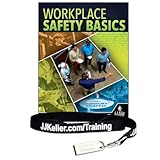
- Covers OSHA’s General Duty Clause – Helps employers and employees meet safety responsibilities under Section 5(a)(1) of the OSH Act of 1970.
- Broad Safety Topic Coverage – Provides a high-level overview of essential workplace safety topics including PPE, hazard communication, fire safety, electrical safety, and more.
- Ideal for Safety Orientation – Perfect for onboarding and refresher training to reduce incidents, injuries, and turnover while boosting morale and productivity.
- Comprehensive Digital Resources – USB includes training videos, customizable PowerPoint, trainer guide PDF, quizzes, certificates, learning activities, images, and a training log.
- Complete Physical Kit – Includes 1 Trainer Tools USB, 10 English employee handbooks, 1 Spanish handbook, and 1 English awareness poster.
Check when training happens and what it covers
Ask what training is required before you enter a site, handle a material, or perform a task, and how it changes when hazards or procedures change. Training should be relevant to the role and workplace; access to instructions and an opportunity to ask questions matter, too.
Hazard communication is one specific example. OSHA’s Hazard Communication Standard requires covered employers to maintain a written program describing how labels, safety data sheets, and employee information and training will be handled. Training must address the hazardous chemicals employees may encounter and the protective measures relevant to their work. Where employees of another employer may be exposed, the program must also cover methods for sharing relevant hazard and precaution information. See OSHA’s Hazard Communication Standard. This is an example for covered chemical hazards, not a complete list of duties for every engineering job.
Find out how the employer checks understanding
A course assignment or attendance record shows that training was logged; by itself, it does not establish that someone can perform a safety-critical task safely. Ask how the employer checks knowledge and practical ability. Depending on the task, that might mean a demonstration, exercise, questions, observation, or another suitable assessment.
Rank #2
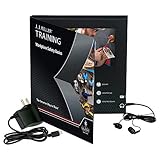
- The Video Training Book is a portable training format that allows you to train anytime, anywhere.
- 7" LCD in 8" x 9" x .5" hard cover "book" wrapped in a soft-touch matte coated paper.
- Ideal for training one employee at a time. No internet connection or classroom needed!
- 50 minute training program in English.
- Includes Video Program, (5) Employee Handbooks (English), Training Log, Quiz Answer Key, Earbud Set, AC Adapter.
OSHA’s construction confined-space rule offers a specific example, not a universal rule for engineering work: for employees covered by that standard, training must provide the understanding, knowledge, and skills needed for safe duties, be delivered in a language and vocabulary they understand, and take place before their first assignment under the standard. The rule also requires covered training at no cost to the employee. Details are in 29 CFR 1926.1207.
For safety-critical work, you can also ask what happens if a person’s assessment reveals a gap. OSHA’s process-safety construction guidance recommends clear, measurable training objectives and periodic evaluation of whether workers understand and apply skills and routines; identified gaps can prompt revision, retraining, or more frequent refreshers. See OSHA Process Safety Management: Training.
Look for a real way to raise concerns
Workers should have a practical way to report hazards and near misses, contribute to safety discussions, and learn what happened after an issue was raised. Ask who receives reports, how urgent hazards are handled, and how employees hear about corrective actions. OSHA’s recommended program practices include worker participation as a core element, alongside leadership, hazard control, training, and evaluation.
Rank #3
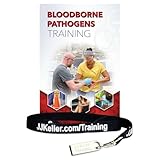
- Complete Bloodborne Pathogens Safety Training – Educates employees on how to identify risks and follow safe practices when working around bloodborne pathogens.
- OSHA 29 CFR 1910.1030 Compliant – Helps employers meet federal training requirements and maintain a safe, compliant workplace.
- Trainer Toolkit Included on USB – Comes with PowerPoint, Trainer Guide, quizzes, certificates, handouts, and Spanish-language support for effective delivery.
- Ideal for High-Risk Job Roles – Designed for healthcare workers, first responders, custodial staff, and others with potential exposure to bodily fluids.
- Covers Precautionary Measures and Incident Response – Includes universal precautions, PPE use, safe cleaning methods, and exposure control planning.
A useful answer describes a process workers can actually use and gives a clear account of how information gets back to them. If you are already employed, notice whether workers can speak up without unnecessary friction and whether concerns receive a response.
Ask how shared worksites and contractors coordinate
When several employers share a site, safety depends on clear communication about site hazards, controls, emergency procedures, and responsibilities. Ask who provides that information, when it is provided, and how changes are communicated to contractors and other affected teams.
OSHA’s Hazard Communication Standard specifically addresses coordination where employees of other employers may be exposed to hazardous chemicals, including sharing relevant precautions and labeling information. The exact coordination duties depend on the applicable hazards and rules; the question for an applicant is whether the employer can explain how responsibilities work at the sites where the role will be performed.
Rank #4
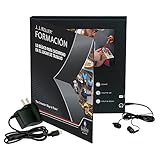
- The Video Training Book is a portable training format that allows you to train anytime, anywhere.
- 7" LCD in 8" x 9" x .5" hard cover "book" wrapped in a soft-touch matte coated paper.
- Ideal for training one employee at a time. No internet connection or classroom needed!
- 50 minute training program in Spanish.
- Includes Video Program, (5) Employee Handbooks (Spanish), Training Log, Quiz Answer Key, Earbud Set, AC Adapter.
Check whether problems lead to action and review
Ask how the employer responds to incidents, near misses, inspection findings, and worker concerns. A useful process does more than record an issue: it assigns corrective action and checks whether the change addressed the problem. Ask for a concrete example of a change made after a report or event, without requesting confidential details.
OSHA’s program-evaluation guidance recommends an initial and at least annual evaluation of a safety and health program, while noting that scope and frequency vary with applicable standards, program maturity and complexity, and workplace hazards. It identifies examples such as required training completion, reported hazards and near misses, and timely corrective actions. See OSHA Program Evaluation and Improvement.
Questions to ask in an interview or at work
- What are the main hazards for this role, and how are they assessed before work starts?
- What training will I complete before doing this task or entering this site?
- How do you check that someone can perform a safety-critical task safely?
- How do employees report hazards or near misses, and how are they told about corrective actions?
- How do you communicate site hazards and emergency procedures when contractors or other employers share the worksite?
- Can you give an example of a change made after an incident, near miss, or worker report?
Compare employers on the same evidence
Use these dimensions as a practical comparison guide, not as an OSHA scoring rubric. You can take notes on each employer’s answers and distinguish specific examples from broad assurances.
Best Value
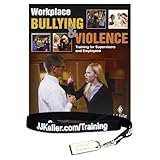
- Train Supervisors & Employees Together – Provides consistent, effective training to help prevent workplace bullying and violence across all levels of your organization.
- Supports Cal/OSHA Compliance – Can be used by California employers to help meet workplace violence training requirements when paired with site-specific information.
- Comprehensive Coverage – Covers definitions, impacts, warning signs, de-escalation techniques, and how to respond to bullying, violence, and domestic threats in the workplace.
- Engaging, Role-Specific Content – Includes separate training tracks for supervisors and employees, plus real-world scenarios to reinforce learning and encourage proactive responses.
- Complete Training Kit on USB – Includes bonus videos, customizable PowerPoint, trainer guide, quizzes, certificates, policy templates, 5 supervisor and 5 employee handbooks, and awareness poster for easy implementation.
| Dimension | What to look for |
|---|---|
| Hazard fit | Does the employer address the actual work, site, equipment, and materials? |
| Timing and access | Does preparation happen before relevant exposure or assignment, with instructions accessible and questions welcomed? |
| Competence | Does the employer check practical understanding and safe performance where the task requires it? |
| Worker voice | Can employees raise concerns and find out how they are handled? |
| Controls | Can the employer explain the controls used to prevent exposure and how workers use them? |
| Learning | Do findings, near misses, and incidents lead to corrective action and a review of whether it worked? |
| Coordination | Are responsibilities and hazard communications clear across teams, sites, and contractors? |
Keep OSHA guidance in context
OSHA’s recommended practices describe a useful way to organize safety management; they do not mean that every employer must use one identical written program in every circumstance. OSHA’s general-industry compliance resource says a comprehensive safety and health program is not a universal OSHA requirement, while describing such programs as an effective way to comply with standards and prevent injuries and illness. See OSHA’s Safety and Health Program Quick Start Guide.
The examples above are U.S. federal OSHA sources. They do not settle state-plan or non-U.S. obligations, and they do not cover every engineering discipline or hazard. Identify the actual work and applicable jurisdiction, then check the current rules for that situation. An employer should be able to explain its own procedures and the training relevant to the work.
Quick Recap
Product prices and availability are accurate as of the date/time indicated and are subject to change. Any price and availability information displayed on Amazon at the time of purchase will apply.

