
Choose Home Assistant if you want a guided setup path and the option of a ready-to-use hub; choose openHAB if you prefer a platform that runs across many operating systems and like its Things, Channels, Items, and Bindings configuration model. Neither is the universal winner. Check the exact devices and functions you rely on, how much host maintenance you are willing to do, and how you plan to connect remotely.
What is the practical difference between Home Assistant and openHAB?
Both are self-hosted platforms for bringing smart-home devices and automations together. Home Assistant’s official FAQ describes a largely interface-led route for ordinary setup, with more advanced configuration options available. openHAB’s documentation organizes integrations around concepts including Things, Channels, Items, and Bindings, and supports both UI and text configuration. Those are different workflows, not proof that one platform is easier for every user.
The useful comparison is not a headline count of integrations or community size. The official sources reviewed do not establish a dated, apples-to-apples comparison of those measures. Instead, compare the specific model of each device you own and the functions you need from it.
Which one will work with my devices?
Start with the devices that matter most: heating, lights, locks, sensors, cameras, and any equipment you expect to control during an internet outage. Look up each exact model in the current Home Assistant integration directory and the openHAB add-on and binding listings. Confirm the functions you need, not just whether a product or protocol name appears.
#1 Best Overall

- Home Assistant provides a professional and reliable platform for home automation, designed to run continuously 24/7.
- Powered by a 64-bit Quad-Core Cortex-A53 processor, delivering smooth and efficient performance for smart home automations.
- Includes 4GB SDRAM for reliable multitasking and 64GB eMMC
- Features a Mali-450 MP2 GPU for responsive visual interfaces, housed in a compact 85 × 85 × 15mm (3.35" × 3.35" × 0.59") design that fits easily in any space.
- Typical power consumption is under 10W, with fanless operation for quiet performance suitable for any room in your home.
- Check local versus cloud control. A device may be supported while some functions still rely on the manufacturer’s cloud. Home Assistant distinguishes local integrations from cloud-dependent devices, and openHAB says it communicates directly with local devices whenever possible.
- Check the specific feature set. For example, verify whether the integration exposes the sensor readings, controls, or status updates you actually want; general protocol support alone does not guarantee every feature.
- Check what happens when a service is unavailable. If local operation is important, verify whether the device and the required function keep working without internet or vendor-cloud access.
There is no sound basis here for choosing by aggregate integration totals: openHAB’s project homepage displays an undated “More than 3000 supported things!” claim, which is not a dated comparison with Home Assistant’s catalog. Treat both catalogs as evolving and verify your own inventory.
Can either platform keep working if the internet goes down?
Both platforms support local operation, but the result depends on how each device works. Home Assistant says locally communicating devices and automations can continue during an internet outage; devices that need a vendor cloud cannot provide cloud-dependent functions offline. The project explains this in its offline FAQ.
openHAB’s homepage says the platform does not require cloud service to work, keeps data at home, and talks directly to local devices whenever possible. That describes the project’s stated architecture, not an independent security audit. Cloud-based integrations and device services can still depend on internet access.
For either platform, map out the outage case you care about: a local light switch may still work while a remote app feature does not; a vendor-cloud device may lose functions even though the hub and its automations remain online locally. Home Assistant names Zigbee, Z-Wave, Matter, Thread, and ESPHome among local-protocol options, but a protocol label by itself does not establish that every device feature is local.
Rank #2
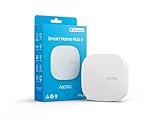
- Powered by SmartThings: Connect, monitor, and automate your home through the SmartThings app. Build a reliable, unified smart home using Samsung's proven ecosystem
- Matter + Zigbee Smart Home Hub: Supports the newest Matter standard plus Zigbee for lighting, sensors, plugs, switches, thermostats, and more - thousands of compatible devices. PLEASE NOTE: Z-Wave not supported
- Easy Setup with Wi-Fi or Ethernet: Get started in minutes using Wi-Fi or a wired Ethernet connection for apartments, houses, and expanding smart home systems - Z-Wave not supported
- Automations That Work for You: Create custom routines for security, lighting, comfort, and energy savings. Many local automations continue working even if your internet goes offline
- Wide Device Compatibility: Connect compatible smart devices from Aeotec and many other brands to build a unified system for lighting, voice control, energy management, and climate settings
Do you need a dedicated hub?
No. Home Assistant Green is an optional convenience, not a requirement. Home Assistant’s hardware FAQ recommends Green for most people seeking a plug-and-play hub, with Home Assistant preinstalled. It also lists a Raspberry Pi, mini PC, NUC, or virtual machine as alternatives when you have suitable hardware.
openHAB can run on a range of hardware and popular operating systems. Its installation guide recommends a dedicated Raspberry Pi 4 or newer with openHABian as a quick setup route, and currently documents a 64-bit Java 21 JVM prerequisite. Requirements can change, so use the current guide for the version you intend to install.
| Setup consideration | Home Assistant | openHAB |
|---|---|---|
| Low-maintenance starting point | Home Assistant Green, with the software preinstalled; optional hardware rather than a requirement. (Home Assistant hardware FAQ) | openHABian is the streamlined setup route; the installation guide recommends a dedicated Raspberry Pi 4 or newer for a quick setup. (openHAB installation guide) |
| Reuse hardware | The hardware FAQ lists Raspberry Pi, mini PC, NUC, and virtual machine options. | Runs on popular operating systems and a broad range of hardware; consult the installation guide for the current Java prerequisite. |
| Host upkeep | Home Assistant OS is the recommended installation type for most. Container installation expects you to provide and maintain the Linux environment and does not include the OS apps feature. (Home Assistant FAQ) | You manage the host and installation route you choose; openHAB is written in Java and the current guide documents Java 21 on a 64-bit JVM. |
For openHAB, the general documentation cautions that Raspberry Pi 3 and older devices with 1 GB RAM or less may struggle when also running memory-intensive databases or visualization programs; it describes 2 GB as desirable for that workload. That is a workload-specific caution, not a universal minimum.
Home Assistant also lists optional accessories: Connect ZBT-2 for Zigbee, Thread, and Matter, and Voice Preview Edition as a local voice device. Confirm the radio and device compatibility you need before choosing accessories.
What’s actually slowing this PC down?
Pick the symptom - the matching free tool is one click away.
Rank #3
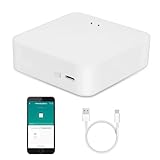
- MULTI-MODE GATEWAY: Smart home bridge supports Zigbee, Bluetooth Mesh dual-protocols, and supports WIFI control at the same time. Whether your device supports Wi-Fi or ZigBee or Bluetooth, you can control them together through the smart gateway on the Smart Life App. It is more stable and safer than using wifi system.
- APP CONTROL: Smart Bluetooth Zigbee hub work with smart life/Tuya App, Support Adding devices, device reset, third-party control and group control. You can manage and remotely control the device through the Smart Life App. You can manage and remotely control your lights, fingerbot and other smart devices via the app, even when you're not home.
- VOICE CONTROL: Smart Zigbee gateway Bluetooth hub compatible with Amazon Alexa/Google Assistant Home/Siri, you can control Smart LED and smart home devices by voice. All smart devices can be controlled with just one command, freeing hands.
- CREAT A SMART SCENE: Sub-devices of the gateway act as trigger conditions for Interacting with devices such as ZigBee, Bluetooth, Wi-Fi, for device linkage. Featured as one powerful network bridge for whole house linkage in a real sense for all smart home devices.
- MULTI-DEVICE COMPATIBILITY: Wireless gateway, Compatible with various smart home devices, you can add and control 128 smart devices at the same time, Zigbee hub is like a brain, stably manages multiple devices. Build a fully intelligent home ecosystem. 24 months warranty included
Which configuration and maintenance style fits you?
Home Assistant: a guided default with different installation choices
Home Assistant’s official FAQ says Home Assistant OS is recommended for most users. Its interface-led ordinary setup may suit someone who wants to manage devices and automations without making every configuration choice in text files. Home Assistant Container can suit a user who already maintains a Linux environment, but that user takes responsibility for the host and does not get the OS apps feature.
openHAB: an explicit model with UI and text configuration
openHAB’s Things, Channels, Items, and Bindings model gives its configuration a distinct vocabulary. Its documentation covers both UI and text-based configuration, so it is not limited to a single workflow. It may suit someone who prefers to understand and manage those relationships explicitly, provided they are comfortable maintaining the chosen host.
For either system, factor in the time you are willing to spend learning the platform and maintaining updates, backups, and the underlying computer. The available official documentation does not support a universal ease-of-use ranking.
Independent reader supportYour contribution helps us test, update, and keep practical guides available for everyone.How do remote access and privacy differ?
Remote access is optional in both ecosystems, but the setup choices differ. Home Assistant Cloud is an optional subscription; the Home Assistant FAQ describes it as an easy remote-access route and says it also supports selected Apple Home, Google Home, and Amazon Alexa integrations. Home Assistant’s remote-access documentation also covers VPN, reverse proxy, and port forwarding. It warns that opening a port alone is not secure and discusses encryption and proxy configuration.
Quick wins for a faster PC:
Fix the driver behind crashes, sound loss and screen glitchesFind Drivers →Repair Windows errors before they cause bigger problemsFix Now →Rank #4

- [Multi-Protocol Hub with Matter Bridge] The M3 is a versatile hub supporting Aqara Zigbee and Thread devices. It integrates third-party devices into the Aqara Home app. Supports advanced Matter bridge functionality, enabling Aqara-exclusive scenes and signals to sync with Matter ecosystems such as Home Assistant for seamless integration. Supports up to 127 Aqara Zigbee devices (** Not third-party Zigbee devices) and 127 Thread devices (Repeaters are needed).
- [Edge Compatibilities and Local Automations] The M3 serves as an Edge Hub, prioritizing local control and automation. Upon integration, it supersedes existing Aqara hubs, shifting the automations among them to local operation (Some cloud-based notifications still require internet). Upgrade-friendly, it supports migrating Zigbee devices from older Aqara hubs.
- [Smart IR Blaster with Feedback and Learning] The 360°IR blaster not only sends commands but also provides accurate status updates by detecting traditional remote use. It connects IR air conditioning units to Matter, functioning as an AC thermostat when paired with an Aqara Temperature and Humidity Sensor. (Note: Only one AC device can be exposed to Matter. Functionality may vary based on the Matter integration app. For Apple Home exposure, use Matter integration instead of HomeKit.)
- [Optimal Wired and Wireless Connectivity] Offering both wired and wireless solutions, the smart home hub M3 provides dual-band Wi-Fi (2.4/5 GHz) with advanced WPA3 security, and a Power over Ethernet (PoE) port. The addition of a USB-C port allows for mini-UPS and power bank connections, delivering unparalleled stability. (2A USB power adapter is not included. ) . Note: To ensure a stable connection, place the Hub M3 between 6 to 19 feet from the router.
- [Privacy-Focused with Encrypted Storage, Easy Setup and Versatile Placement] The M3 prioritizes privacy by excluding microphone or camera components. It boasts 8GB end-to-end encrypted local storage, for device lists, configuration parameters, and automation configuration data. Additionally, it includes a mount and screws for flexible placement on flat surfaces, walls, or ceilings. Magic Pair technology ensures effortless detection by the Aqara Home app upon power-up.
openHAB’s homepage describes two routes: its cloud connector with the free myopenHAB.org service, or hosting your own service. For either platform, compare the convenience of a managed option with account or subscription dependence, or the network-security work involved in self-managed access. Review current service terms and security guidance before exposing a home system to the internet.
Home Assistant’s FAQ says the software is free and open source, while hardware and optional Home Assistant Cloud are paid choices. That distinction matters if you are comparing platform software with the cost of a ready-made host or a remote-access service.
How to make the choice
- List the must-have devices and functions. Check exact models and features in both platforms’ current catalogs, especially anything safety-critical or used daily.
- Mark local-control requirements. Identify which lights, sensors, locks, or automations must remain useful without internet or a vendor cloud, then confirm how each device behaves.
- Choose your host path. Decide whether you want Home Assistant Green, an existing computer or virtual machine, or an openHABian installation on supported hardware. Account for operating-system and Java requirements where relevant.
- Choose the workflow you will maintain. Consider whether an interface-led setup or openHAB’s Things/Channels/Items/Bindings model matches how you prefer to configure and troubleshoot.
- Decide how remote access should work. Compare optional managed services with VPN or self-hosted approaches, including the security work and account or service dependencies.
If one platform supports a crucial device feature locally and the other does not, that is usually a more meaningful deciding factor than general claims about popularity or integration totals. If both meet the device requirements, choose by the host and configuration approach you are more willing to operate over time.
Quick Recap
Product prices and availability are accurate as of the date/time indicated and are subject to change. Any price and availability information displayed on Amazon at the time of purchase will apply.

