
The Tool Desk
Outbyte PC Repair FREERepair Windows errors before they cause bigger problemsFix Now →Outbyte Driver Updater FREEScan for outdated or missing drivers - takes under a minuteDriver Scan →Before enrolling, ask to see the program’s current license or registration, learn who will care for your child and how supervision works, and read the written policies for sleep, feeding, illness, emergencies, and fees. Use the questions below during a tour of an ongoing child-care program or center. If you mean a shorter parent-and-child class, adapt the questions to the parts that apply, especially supervision, health practices, staff qualifications, and the enrollment terms.
Check authorization, inspection records, and access
Licensing rules depend on where you live, the child’s age, and the type of program. Ask for the license or registration that covers the specific location and age group, then check the state or territory authority’s current inspection and complaint information. The CDC explains that state licensing includes health and safety requirements for centers and family child-care homes; states typically update rules every three to five years, but that does not mean every jurisdiction updates on that schedule. CDC: Child Care.
- “Are you currently licensed or registered for this location and age group? May I see the license or registration?”
- “Where can I check your latest inspection reports, complaints, corrective actions, or violations?”
- “Can I visit the actual room and outdoor areas my child will use? Can enrolled families visit during operating hours, and how are visitors screened?”
- “Are you accredited? If so, by whom, and what does that accreditation cover?”
Accreditation can provide additional information, but it does not replace checking local licensing and inspection records. The American Academy of Pediatrics (AAP) also recommends asking about licensing, outstanding violations, and visiting access. AAP: Choosing a Child Care Center.
Find out who will care for your child and how supervision works
Ask about the room your child would actually join, not only the center’s general staffing plan. Staffing and group size can change during opening, closing, breaks, absences, or when rooms are combined.
#1 Best Overall

- Toddler Montessori Learning Toys: This educational talking flash card features 224 colorful illustrations and sounds. It includes animals, vehicles, food, fruits, and vegetables etc. Kids can expand their vocabulary and enhance cognitive skills while playing
- Speech Therapy and Sensory Toys: Talking flashcards are a valuable tool for children. The sound-image combo helps them learn and interact in a Montessori style, making it ideal for speech therapy
- Easy to Use: Simply turn on the switch, insert a card into the reader, and hear content in a standard American accent. The reader makes real animal sounds and has a repeat button. Adjust volume with a 5-level control. It’s user-friendly for young children
- Rechargeable and Durable: The talking flash cards has a rechargeable battery and USB cable, lasting up to 4 hours on a single charge. It features an auto-off function to save power. Screen-free, it helps reduce screen time and protects toddlers’ eyesight
- Good for 1-5 Years: It is an educational device for preschoolers and can also be a travel partner for long drives or road trips. If you are looking for fun and educational device for your kids, this toddler learning flash cards is a good choice
- “Who is likely to be my child’s main caregiver, and how long will my child stay with this caregiver or in this room?”
- “What training and experience do caregivers have with infants or toddlers? Are staff current in required first aid and CPR?”
- “How do you cover breaks, opening and closing, absences, and staff turnover? Are children ever combined with another room?”
- “How many children and adults are in this room at different times of day? How do you supervise children by sight and sound, including when they sleep?”
NAEYC’s infant guidance emphasizes continuity and a primary caregiver; its toddler guidance recommends a main teacher and staff with toddler-specific experience. NAEYC: Your Child’s Classroom: How Infants Learn and NAEYC: Your Child’s Classroom: How Toddlers Learn. Ask for the program’s actual group size and staffing at different times. Do not treat sample ratios on an older general guidance page as current law: requirements vary by jurisdiction, age, and program type.
Review health, safety, and daily-care policies
Ask to read the policies, not just hear a summary. Then ask how staff carry them out in the room. For infants, focus on safe sleep and feeding; for toddlers, ask about illness, meals, allergies, toileting, and behavior guidance. For either age, clarify hygiene, medication, emergencies, and how families receive updates.
Rank #2

- Meet learning friends Turtle, Tiger and Monkey who will introduce more than 100 age-appropriate words chosen by learning experts
- Word categories include: pets, animals, food, mealtime, colors, activities, opposites, outside and more
- Touching the words on the pages plays the words, sound effects and fun facts; hear the Learning Friends theme song and My Favorite Word by pressing the light-up star button
- Words, songs and instructions can be heard in both English and Spanish for a full bilingual experience
- Intended for ages 18+ months; requires 2 AA batteries; batteries included for demo purposes only; new batteries recommended for regular use. Product Dimensions: 9.4" wide x 9.2" height x 1.9" depth
For an infant
- “What is your written safe-sleep policy, and may I see where and how babies sleep?”
- “How are bottles and expressed milk or formula labeled, stored, prepared, and fed? How do you follow each family’s feeding instructions?”
- “How do you handle diapering, handwashing, cleaning, food preparation, medication, illness, and emergencies?”
- “How do you share sleep, feeding, and diaper updates with families?”
For a toddler
- “What is your illness and exclusion policy for children and staff? How are families told about exposures or outbreaks?”
- “How do you handle meals, snacks, allergies, toileting, medication, and behavior guidance?”
- “How often are toys and surfaces cleaned, and how do you supervise indoor and outdoor play?”
Look for clear written procedures and staff who can explain them. NAEYC identifies posted health procedures, cleanable environments, separate food-preparation and diaper-changing areas, and routines informed by families as useful indicators. The AAP recommends asking about written policies covering health, illness, medication, nutrition, discipline, transportation, media, and outdoor play. Federal licensing guidance also addresses areas such as background checks, training, sanitation, emergency planning, building safety, health, and monitoring; verify current requirements with your state or territory rather than assuming one national checklist applies to every program. ChildCare.gov: Licensing and Regulations.
Ask what a typical day looks like for your child’s age
Babies and toddlers need routines that respond to their cues and developmental stage, not a preschool-style schedule applied to everyone. Ask how the day balances care, rest, exploration, and active play.
Rank #3
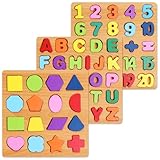
- Make Learning Fun: Who says learning can’t be fun hasn’t tried the Nashrio wooden alphabet puzzle! Our puzzle board allows children to learn the ABC and numbers more effectively and easily through fun playing and interactive teaching!
- Alphabet and Number Puzzle: The matching letter game for kids includes both the alphabet letters and numbers for easy learning! The puzzle uses colorful pieces, matching illustrations and shapes that allow kids to match the letter/number with the corresponding image, stimulating their dexterity and logical thinking!
- Wooden Design for Safe Playing: Our number and alphabet matching game is crafted with high-quality wood and safe, non-toxic dyes. The wooden pieces are round and smooth, with splinter-free edges and long-lasting colors for fun and safe playtime.
- Interactive Learning Board: This number and alphabet board is actually a number and alphabet sorter game designed for kids to match the shape and color. Thanks to this simple and ingenious design, our puzzle allows kids to self-correct, improving logic, memory, dexterity, concentration and hand-eye coordination.
- Amazing Gift Idea: Our abc puzzles for kids ages 3-5 make wonderful gifts for curious kids, boys and girls who want to explore their abilities! The puzzle is a perfect gift for a birthday, anniversary, Christmas, and other special occasions.
- “What does a typical day look like, and how do you adjust it when an infant is tired or a toddler needs more time?”
- “How much time do babies get for floor play and exploration rather than time in seats or devices?”
- “What open-ended objects, books, sensory materials, and outdoor opportunities are available?”
- “How do you make meals, diaper changes, dressing, and toileting opportunities for responsive interaction and growing independence?”
- “How do you adapt activities for different ages, abilities, languages, and developmental stages?”
NAEYC’s age-specific guidance describes responsive routines, safe materials, books, individual attention, choices, flexible schedules, and active and quiet time. Infant guidance and toddler guidance. Notice whether staff respond to children and involve them in everyday routines, rather than relying on rigid schedules or long periods in restrictive devices.
Clarify communication, family preferences, and behavior guidance
A good fit includes a workable way to exchange information about your child’s day and resolve concerns. Ask how the program will learn your family’s routines, preferences, and transition practices.
Rank #4

- Matching Color Busy Book: Your toddlers will adore mastering 12 colors with our interactive busy book. They'll use the tough hook-and-loop fastener to match over 48 charming cartoon stickers. Each piece features a clear image with its word, naturally fostering vocabulary development and pre-reading skills. This all-in-one learning tool turns fun into a foundational educational experience.
- Build Essential Skills: Watch your child's mind grow! This engaging activity is far more than a sorting toy—it's a montessori-inspired learning tool. By grasping and matching colors, your child refines fine motor skills and hand-eye coordination, sharpens problem-solving and logical thinking, and boosts concentration, patience, and cognitive development.
- Spark Joyful Connections & Teamwork: "Wow, you found the red tomato! Great job, sweetie!" This busy book is designed for meaningful shared play. Parents and kids can enjoy quality time matching vibrant pieces, mastering colors and vocabulary together. It's more than a toy and also a fun-filled opportunity to build essential cognitive and social skills as a team.
- Premium & Child-Safe: We never compromise on safety or fun. This busy book features extra-thick, tear-resistant cardboard that easily withstand enthusiastic play. Non-toxic and meets all US safety standards (ASTM F963). Rounded safety corners and smooth edges to avoid any potential injury, it’s the ultimate secure learning tool for little preschooler.
- Perfect Xmas Gifts for Kids: Are you searching for a hit holiday gift? This color sorting busy book is a thoughtful and educational present for toddlers 2-4 years. An ideal gift choice for Christmas, birthday, and holiday surprises with the charming and colorful illustrations. Imagine their eyes lighting up with joy!
- “How often and through what channel will I hear about my child’s day?”
- “Who should I contact with a concern, and how are concerns resolved?”
- “How do you include family preferences, home languages, cultural routines, and transition rituals?”
- “Can we arrange a gradual transition or brief visit before the first full day?”
- “How do you handle discipline and behavior, and can I read the written policy?”
Ask whether you can visit during operating hours and whether staff are approachable when you raise a concern. NAEYC and the AAP both emphasize family communication, preferences, and access to caregivers.
Independent reader supportYour contribution helps us test, update, and keep practical guides available for everyone.Get the full logistics and cost in writing
Ask for the enrollment agreement and fee schedule before signing. Prices and contract terms are specific to each program, so obtain the details directly rather than relying on a verbal estimate.
Best Value

- Safe and high-quality toddler toys : We insist on using high quality wood raw materials to provide safe and fun toys for toddlers. The toddler learning toys with a moderate geometric size and smooth edges, can be grasped well by babies while protecting the baby's delicate skin. We also use the water-based paint, the color more vivid, non-toxic, odorless and anti-fade, for your baby safe and happy childhood.
- Montessori toys for toddlers : Wooden sorting and stacking puzzle contains 20 pieces including five colors: red, orange, yellow, green and blue, and five shapes: pentagon, square, rectangle, triangle and circle.
- Design for baby : Customized preschool sensory learning toys for toddlers 1-3, suitable for kid’s wooden block size, let kids grasp better, recognize the shape in perception, a good sensory toys set. Whatever as sorting toys, stacking toys, travel toys, shape sorter toys or color sorting toys, it all would be a good choice. In addition, it can also be a good helper to play the baby's imagination, through the combination of different shapes of different patterns. Just play what baby want.
- Ideal gifts for kids : These toddler puzzles are well packaged, if you're struggling to find a birthday gift for one year old boys and girls, give it a chance. Easter gifts, Christmas gifts, Halloween gifts, holiday gifts or daily toys gifts, the Montessori toys will be a good choice.
- Service Guarantee : Customer satisfaction is our greatest motivation, we are committed to providing quality toddler toys for kids, to provide customers with the best service.
- “What are the regular hours, closure calendar, late-pickup rules, and vacation or holiday arrangements?”
- “What is the full fee schedule, payment method, deposit, notice period, and refund policy? Are there extra charges?”
- “Which diapers, wipes, food, bottles, bedding, clothing, or other supplies do families provide?”
- “What are the illness-related absence and return rules?”
- “What pickup authorization and transportation rules apply?”
The AAP recommends clarifying hours, fees and payment, extra services and costs, transportation, and written policies before choosing a center.
Compare programs using the same questions
Write down concrete answers for every program you visit. A polished tour alone cannot establish what daily practice is like; where allowed, observe ordinary routines and follow up in writing about unanswered policy or contract questions.
| What to compare | Look for |
|---|---|
| Authorization and transparency | Current license or registration, accessible inspection record, candid answers, and a clear visiting policy |
| Relationships and staffing | Caregiver continuity, relevant training, actual group size, staffing at different times, and absence coverage |
| Health and safety | Written policies and staff able to explain sleep, feeding, hygiene, illness, medication, and emergency routines |
| Infant or toddler fit | Responsive routines, exploration and play, an age-appropriate schedule, and active supervision |
| Family partnership | Regular updates, respect for family preferences, approachable staff, and a clear process for concerns |
| Practical fit | Hours, location, closures, total cost, supply expectations, and contract terms |
Vague answers about licensing, supervision, sleep, illness, staff coverage, or fees are a reason to ask follow-up questions before enrolling; one unclear answer by itself does not establish that a program is unsafe.
Quick Recap
Product prices and availability are accurate as of the date/time indicated and are subject to change. Any price and availability information displayed on Amazon at the time of purchase will apply.

