
What’s actually slowing this PC down?
Pick the symptom - the matching free tool is one click away.
U.S. K–12 schools can fund solar panels with a mix of grants, eligible clean-energy tax-credit payments, district funds, borrowing, leases, or a power purchase agreement (PPA). The right mix depends on the school’s eligibility, location, utility rules, procurement requirements, and whether it wants to own the system or buy the electricity it produces. Treat grants and incentives as potential contributions—not money to count on—until eligibility, current availability, and award timing are confirmed.
What funding options can a school use?
Schools can either pay for and own a solar project or arrange for another party to finance and own it. Grants and eligible incentives can reduce project costs, but they do not replace the need to evaluate the full project budget and contract.


| Funding path | How it works | What to compare |
|---|---|---|
| Grants and incentives | Eligible awards or incentives can reduce the amount the school needs to fund itself. Federal opportunities may be competitive or limited to a particular application period; state and utility offerings vary. DOE’s Renew America’s Schools overview and its guidance on financing efficient and healthy retrofits describe these kinds of funding. | Eligibility, application timing, allowable costs, matching funds, award conditions, and whether funding can be combined with other sources. |
| District funds | The school or district pays from available operating or capital funds and retains project ownership and the resulting savings. DOE notes that budget constraints and competing priorities can limit this option. DOE’s internal-financing guidance discusses this approach. | Available capital, the competing uses for it, project control, and how the investment fits other school needs. |
| Debt or bonds | The district borrows or issues bonds to cover project costs. DOE recommends considering loans, bonds, and relevant state or revolving-loan options. DOE’s debt-financing guidance provides an overview. | Interest and issuance costs, borrowing authority, repayment source and term, and effects on other capital plans. |
| Lease or lease-purchase | A lessor finances the equipment in exchange for regular payments; the arrangement may require little or no upfront capital. Payments can be structured around expected energy savings, but the legal and tax treatment needs review. See DOE’s leasing-arrangements guidance. | Who owns the system during and after the term, maintenance duties, payment schedule, buyout terms, and any third-party tax benefit. |
| PPA or other third-party ownership | A provider develops or owns the solar system, and the school buys electricity at an agreed rate for a defined period. DOE identifies PPAs as a common renewable-energy financing route for schools. See its overview of renewable-energy integration in schools. | Electricity price and escalation, contract term, system performance, maintenance, roof work, renewable-energy attributes, and exit or renewal provisions. |
These approaches are not necessarily exclusive. A school may, for example, use an award to reduce the amount it needs to borrow, subject to the relevant funding rules and contract terms. Compare proposals on upfront cash, total cost over the contract life, ownership and control, savings retained by the school, maintenance obligations, and procurement and legal complexity—not just the first-year payment.
Can a school use grants or federal incentives?
Federal grants: check the current application window
The U.S. Department of Energy (DOE) describes Renew America’s Schools as a $500 million program for energy improvements at K–12 public schools. DOE’s program page reports that $372.5 million had been invested to date, supporting energy-management capacity at more than two dozen local educational agencies and improvements at approximately 410 facilities in 36 states. The page also reports direct benefits to approximately 197,000 students and 14,000 teachers. These are program figures reported by DOE, not a statement that the funds remain available to new applicants. See the program overview.
Free tools Windows power users keep installed
One-click scans. No signup required.
#1 Best Overall
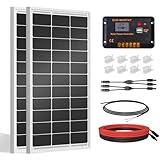
- [Wide Application]: Daily Output 800wh/day under 4 hours full sunshine condition. Perfect for RV, Caravan, Marine, Camper, Electric scooter, Golf Carts, Power wheels, Trolling motor, Tool trailer, Backup power supply for cabin shed home etc.
- [Excellent Performance]: ECO-WORTHY solar panels use high-performance monocrystalline solar cells, which can provide up to 21.5% higher efficiency sufficient light conditions.size:35.2*23.1.37in
- [Durable]: Corrosion-resistant aluminum alloy frame, so that the panel can be used for decades, and can withstand strong wind (2400Pa) and snow load (5400Pa), with a long service life. Ip65 rated junction box provides complete protection.:
- [Complete and Easy]: The back of the pre-drilled and plug-and-play cables allow quick installation, the kit can be connected in series (24V) or parallel (12V) if you need. What you will get: 2 pcs 100W mono solar panel + 2 set of Z mounting brackets + 30A solar controller + 1 pair of 16.4ft 10 awg solar cables + 1 pair of 2-in-1 connectors + 1 pair of 4.92ft tray cable.
- [Support]: 1 year with 24/7 tech support, if any problems or questions about the product,please do not hesitate to let us know through Amazon or call ECO-WORHTY hotline for solution.
In an announcement dated December 17, 2024, DOE said it anticipated $90 million for the 2025 Renew America’s Schools Prize round. The announcement focused on local educational agencies qualifying as disadvantaged and/or rural and included renewable-energy technologies among eligible improvements. That dated announcement does not establish that an application window is open in 2026. Schools should verify the current program page, eligibility rules, deadlines, and allowable costs before including a grant in a project budget. Read DOE’s 2024 announcement.
Elective pay: a possible payment for eligible entities
Elective pay, also called direct pay, can allow certain entities that do not owe federal income taxes to receive a payment equal to the value of qualifying clean-energy tax credits. DOE lists state and local governments, their agencies and instrumentalities—including school districts—and qualifying tax-exempt organizations, including schools, among entities that may be eligible. Eligibility for elective pay alone is not enough: the project must also qualify for the underlying credit, and some incentives involve an application and allocation. Review current IRS procedures, deadlines, project requirements, and interactions with other funding before counting on a payment. See DOE’s elective-pay overview.
Rank #2

- 【Efficient Performance】This Starter Kit can generate an average of 500Wh of electricity per day (varies with sunlight). The solar panel boasts a 22.5% cell efficiency, 1.3% higher than other counterparts. Each panel dispatched from our facility undergoes 100% EL testing, ensuring that your panel is completely free from any hidden cracks.
- 【Market-Leading Service Plan】Enjoy worry-free usage with our market-leading service plan, providing 10 years of coverage for solar panel material and workmanship, along with a 2-year plan for the charge controller. Additionally, benefit from a 25-year service plan for the power output of the panel.
- 【Exceptional Safety】Certified by UL 61730, CSA C22.2#61730, IEC 61730/IEC 61215, our solar panel withstands 2400Pa wind and 5400Pa snow loads. Featuring IP65-rated J-box and IP67-rated solar connectors, rest assured, it can tackle any weather challenge.
- 【Remote Monitoring】The Wanderer PWM Charge Controller features an RS232 Bluetooth port. By adding a Renogy BT-1 Bluetooth Module, you can remotely monitor your solar system on the Renogy DC Home app. Keep track of voltage and current at any time, and receive timely warnings for over-voltage, under-voltage, and over-discharge.
- 【Excellent Compatibility】The solar kit with the Wanderer 30A PWM Charge Controller, supports expansion up to 400W with additional solar panels and is compatible with AGM, Gel, Flooded, and Lithium batteries.
A school should have its finance and tax advisers check how a potential payment fits its project financing and funding sources. Do not assume that every district, installation, or solar-related cost qualifies.
How should a school compare a lease, PPA, and direct purchase?
Ownership changes who supplies the capital and who is responsible for different parts of the project. A direct purchase using district funds or borrowing gives the school ownership; a lease or PPA assigns some financing and ownership responsibilities to another party. The contract determines the details, so compare complete proposals rather than relying on the financing label.
Rank #3
- Cost over the full term: Compare upfront costs and all scheduled payments, including any price escalators, fees, and financing costs.
- Energy and savings assumptions: Check what the proposal assumes about system output, electricity prices, export compensation, and the share of savings the school retains.
- Operations and building work: Identify who monitors and maintains the equipment, handles repairs and insurance, and pays for roof work or system removal if the roof needs replacement.
- Ownership and contract end: For a lease, determine the ownership and buyout options at the end of the term. For a PPA, review renewal, extension, and exit provisions.
- Environmental attributes: Establish who owns renewable-energy certificates or other renewable-energy attributes and what claims the school may make about the electricity.
- Funding and public procurement: Check whether the proposed contract can be combined with grants or elective-pay proceeds and whether it meets district procurement, borrowing, and legal requirements.
DOE describes PPAs and other renewable-energy arrangements as options for schools, but it does not guarantee savings or endorse a particular provider. Have the district compare offers on consistent assumptions and have counsel review the actual terms.
Independent reader supportYour contribution helps us test, update, and keep practical guides available for everyone.What should a school do before choosing a funding plan?
- Set the project scope. Decide whether the goal is lower electricity costs, resilience, emissions reduction, or a combination. Define whether the project includes batteries, and assess roof condition, available space, and the school’s preferred ownership model.
- Confirm utility rules. Ask the utility about interconnection requirements, applicable tariffs, net-metering or export compensation, and any local incentives that could affect project economics.
- Verify funding eligibility and timing. Check current federal, state, and utility opportunities against the school’s status, project design, allowable costs, deadlines, and matching requirements. Do not put a possible award into the committed budget before confirming it.
- Request comparable proposals. Ask qualified providers for direct-purchase, lease, and PPA options where appropriate. Require each proposal to show full-term costs, price escalation, operations and maintenance, roof responsibilities, insurance, system performance assumptions, and end-of-term provisions.
- Review the plan across district functions. Have finance, procurement, legal, and tax advisers examine borrowing authority, contract characterization, elective-pay requirements, and whether proposed funding sources can be combined.
State and utility incentives depend on location, and the applicable details also depend on school type, project schedule, and design. The cited DOE guidance describes financing categories but does not provide a location-specific incentive inventory or verify current grant windows; a district needs to check its own state and utility sources as part of project planning.
Quick Recap
Best Value

- Portable Generator with 60W Solar Panel Included: with a big battery pack, ZeroKor 300W solar powered generator are powerful enough to charge smartphones,tablets,laptops,headphones or other outdoor small camping supplies(Tips:Using electrical appliances over 300W may damage the portable solar generator, especially some devices that are prone to heat or built-in air compressor such as coffee maker,Hair dryer, water pump etc )
- Multiple Charging outlets for camping gear with SOS Flashlight: with 2* 300W Max wall AC outlets, 1* DC port (9V-12.6V/10A max ), 3* 5V/3A Max USB ports, 1*quick charge USB port (5V/3A 9V/2A Max), Flashlight with reading mode and SOS mode for your outdoor Adventures, our portable solar power station offers a versatile charging solution,allowing you to charge your outdoor smart devices directly from a wall AC outlet
- Multiple Charging Optional, Solar Panel Charger 60W Included: ZeroKor portable power bank generator can be recharged by Home AC outlet, DC5521 13V-23V Solar Panel (Portable Power Station built-in MPPT), 12V Carport. Take the portable solar power bank generator with you on-the-go and never worry about power shortage,the portable AC outlet design makes it more suitable for Tent camping OFF-Grid
- Built in BMS(Battery Management System) : ZeroKor portable power station features short circuit protection, over-current protection, over-voltage protection, overload protection and overheating protection. The built-in cooling fan system will automatically start and stop according to the portable battery pack internal temperature during use. Acting as a portable solar power bank, it accommodates multiple devices simultaneously, making it perfect for indoor and outdoor use
- HIGH CONVERSION EFFICIENCY: ZeroKor solar panels 60W monocrystalline solar cell have a high conversion efficiency of 20.5%, and its performance is better than that of polycrystalline solar panels under the condition of insufficient light
Product prices and availability are accurate as of the date/time indicated and are subject to change. Any price and availability information displayed on Amazon at the time of purchase will apply.

