
Crashes, No Sound, or Screen Glitches?
Random freezes, missing sound and display glitches usually trace back to one bad driver. Find and replace yours safely.Free scan · under a minutePC Slower Than It Used to Be?
A free scan shows the junk files, broken settings and background clutter dragging Windows down - then fixes them in one click.Free scan · Windows 10 & 11For many households, a front-load washer is the better fit for efficiency, gentle fabric care and water extraction; a top-load washer may be preferable if you want to load from above, and traditional agitator models can cost less and have shorter cycles. The comparison depends on which top-loader you mean: high-efficiency (HE) impeller models differ from traditional agitator machines. Compare the specific washers you are considering for capacity, dimensions, cycle performance, noise and maintenance—not just the loading style.
How front-load and top-load washers compare
A front-loader tumbles clothes in a horizontal drum. A top-loader is accessed from above and may use either a central agitator or an HE impeller. That distinction matters: an agitator is a post that moves clothes through water, while an impeller uses a low-profile plate or cone to move the load.

| Factor | Front-load | Top-load agitator | HE top-load impeller |
|---|---|---|---|
| Efficiency | ENERGY STAR says certified front-load washers use about 50% less energy and water than top-load agitator washers, and about 25% more efficiently than top-load impeller washers. ENERGY STAR, current guidance accessed October 4, 2026. | Less efficient than certified front-load washers in ENERGY STAR’s comparison. | Closer to front-load efficiency than agitator models; ENERGY STAR says certified front-loaders are about 25% more efficient in energy and water. |
| Typical normal/heavy cycle range | 65–120 minutes | 35–105 minutes | 35–105 minutes |
| Category price range in Consumer Reports’ May 2026 guide | $730–$2,200 | $450–$1,500 | $500–$1,200 |
| Maximum capacity in categories tested by that guide | 5.8 cubic feet | 5.4 cubic feet | 5.5 cubic feet |
The cycle ranges, price ranges and capacities above come from Consumer Reports’ category guide, updated May 26, 2026; they are not promises about an individual model or live prices. Consumer Reports’ washing-machine buying guide.
Are front-load washers more efficient?
ENERGY STAR’s comparison is specifically between certified front-load washers and top-load agitator washers: front-loaders use about 50% less energy and water. Against top-load impeller washers, the stated advantage is about 25% in energy and water efficiency, so treating all top-load machines as equally inefficient is misleading.
#1 Best Overall
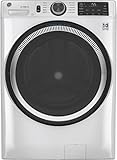
- Large 4.8 Cu. Ft. Capacity : Wash more in fewer loads—perfect for families and busy households with heavy laundry demands.
- UltraFresh Vent System with OdorBlock: Helps eliminate excess moisture after each wash cycle, keeping your washer interior fresh between uses.
- Built-In WiFi with SmartHQ App Integration: Remotely control your washer from your phone—start, stop, monitor, and receive alerts anytime, anywhere.
- Quick Wash Cycle (20 Minutes): Perfect for lightly soiled clothes, this cycle delivers a fast and efficient clean when time is limited.
- Time Saver Mode (35 Minutes): Enjoy a full, deep clean in just 35 minutes—ideal for mixed loads on busy days.
ENERGY STAR also publishes a comparison of 14 gallons per load for full-sized certified washers versus 20 gallons for a standard machine. This is a program-level comparison, not a guarantee for every washer, load or household. Local utility rates, water-heating costs and how often you wash affect what efficiency means for your bills.
For a specific model, check its ENERGY STAR certification and EnergyGuide label. ENERGY STAR explains that the Integrated Modified Energy Factor (IMEF) accounts for washer-cycle and standby energy, water-heating energy and dryer energy; the Integrated Water Factor (IWF) compares water consumption. Consider the labeled figures alongside the machine’s capacity and the loads you actually wash.
Do front-load washers take longer?
They can. Consumer Reports’ May 2026 buying guide lists normal/heavy cycle ranges of 65–120 minutes for front-loaders, compared with 35–105 minutes for both top-load agitators and HE top-loaders. These are category ranges; cycle choice and model make a difference. A quick cycle may not be comparable to a normal cycle, so check the settings you expect to use most.
If laundry turnaround is important, compare the duration of the same cycle type on the individual models. A shorter cycle can be convenient, but cycle time alone does not tell you how well a washer cleans or how much water and energy it uses.
Recommended Free Tools
How do cleaning, fabric care and drying differ?
Consumer Reports describes front-loaders as generally gentler on fabrics. Their spin cycle also extracts water effectively, which can leave less moisture for the dryer and potentially reduce drying time. These are category tendencies, not guarantees: cleaning results, fabric treatment and extraction depend on the model, settings and load.
When available, use independent testing to compare the exact models. Think about the clothes and items you wash most, including bulky bedding, and compare both cleaning performance and spin extraction rather than assuming the loading style settles the question.
Rank #3

- CHOOSE YOUR CYCLE—Our phenomenal BLACK+DECKER washing machine has 16 cycles you can choose: My Cycle, Quick Wash, Delicates, Wool, Baby Wear, Sanitary, Cold Wash, Tub Clean, Normal/Cotton, Permanent Press, Heavy Duty, Bulky/Large, Sports Wear, Spin Only, Drain Only and Rinse & Spin.
- IMPRESSIVE CAPACITY—With an interior stainless steel tub that is 2.7 cu. ft., this front loader washing machine (23.4” x 23.1” x 33.5”) is your solution to fresh laundry week after week. Simply load clothing, select your cycle and let this compact washer (160.9 lbs.) do all the work for you.
- ADDITIONAL CYCLE FEATURES—Additional highlights of this fantastic clothes washer is auto unbalance detection, a 1300 RPM max spin speed, easy-to-read LED control panel along with Add a Garment & Extra Rinse selections.
- SAFETY FIRST—With a Child Lock and Door Lock safety features, you can rest assured you are using a washing machine that values the well-being of others. The transparent front loading lid allows you to see your laundry cleaned in real time, spin by spin.
- QUALITY GUARANTEED—This phenomenal front load washer offers the highest quality.
What are the maintenance trade-offs?
A front-loader’s door gasket can retain moisture, making mold, mildew and odors a known maintenance concern. Consumer Reports identifies this as a general consideration, not an outcome that every front-loader will experience. Follow the selected washer’s owner’s manual for cleaning and care; model-specific instructions should take priority over generic routines.
Also compare the manual’s regular maintenance tasks for any washer you are considering. A care routine you can follow consistently matters more than a broad assumption that one loading style never needs attention.
The Tool Desk
Outbyte PC Repair FREEClear out junk files and repair common Windows errorsFree Scan →Outbyte Driver Updater FREEFix the driver behind crashes, sound loss and screen glitchesFind Drivers →Which type should you choose?
Choose a front-loader if
- Lower water and energy use is a priority, especially compared with a top-load agitator.
- You value gentler fabric handling and effective spin extraction.
- The door, loading height and required clearance work in your laundry space.
Choose a top-load agitator if
- You prefer loading from above and want a traditional top-load design.
- A lower upfront price or shorter cycle options matter to you. Consumer Reports’ May 2026 category ranges put agitator models below front-loaders, but actual prices vary.
- You are comfortable with its trade-offs in efficiency compared with certified front-load washers.
Consider an HE top-load impeller if
- You want top access but do not want to treat an agitator model as the only top-load option.
- You want to compare a top-loader with a smaller efficiency gap from front-loaders; ENERGY STAR’s stated difference is about 25%, not the 50% comparison against agitators.
- You are willing to compare the actual model’s cycle times, capacity, cleaning performance and price.
How to choose a washer that fits your home
- Measure the space. Check the washer’s installed dimensions, the front-loader door swing and clearance, and room for hoses and access. Consider whether bending to load a front-loader or reaching into a top-loader is comfortable for everyone who will use it.
- Match capacity to your laundry. Think about how often you wash, typical load size and whether you need to fit bulky bedding. A larger advertised capacity is useful only if the machine fits and suits your usual loads.
- Compare efficiency labels. Check ENERGY STAR status and EnergyGuide figures for each model. Interpret category comparisons using the correct comparator—agitator or impeller—and consider your local utility costs.
- Check the cycles you will actually use. Compare normal-cycle duration, quick-cycle options and other relevant settings on the models themselves. Category averages cannot predict an individual washer’s timing.
- Review performance and care. Compare independent model testing where available, including cleaning and spin extraction. Read the owner’s manual for maintenance requirements and compare noise ratings if the laundry area is near living or sleeping spaces.
Consumer Reports’ 2026 account of washers sold in the prior year, attributing the figures to OpenBrand, reported shares of 28.8% front-load, 46.3% top-load agitator and 24.9% top-load impeller among full-sized washers. Those sales shares describe that period; they do not establish which type is best for an individual home. Consumer Reports’ front-load washer overview, updated June 14, 2026.
Quick Recap
Product prices and availability are accurate as of the date/time indicated and are subject to change. Any price and availability information displayed on Amazon at the time of purchase will apply.

