
The Tool Desk
Outbyte Driver Updater FREEFix the driver behind crashes, sound loss and screen glitchesFind Drivers →Outbyte PC Repair FREEClear out junk files and repair common Windows errorsFree Scan →Announce yourself, explain what is happening, and ask whether the person wants help and how they would like you to assist. Do not grab or steer them. If they want guidance, offer your arm, describe the route and hazards, and stay with them until they reach a safe place or you arrange a clear handoff. Follow emergency personnel and local authorities; the right response depends on the hazard and location.
Approach, explain, and ask first
- Introduce yourself. Say your name and where you are. Speak directly to the person, not through a companion.
- Describe the situation. Use calm, concrete language to explain what is happening and what action is being taken.
- Ask what help is wanted. For example: “Hi, I’m Sam. There’s an alarm and we need to leave this area. Would you like help? How would you like me to guide you?” This is an example, not a prescribed script.
Federal first-responder guidance says to announce your presence, describe what you are doing, and ask the person how best to assist. Michigan DHHS likewise advises asking before helping and respecting the person’s answer. A person with vision loss may be able to act independently and may not want assistance. (Federal first-responder manual; Michigan DHHS evacuation guidelines)
If guidance is wanted, let the person lead how it works
Offer your arm or elbow and let the person decide whether to take it. Do not seize their arm, clothing, cane, or guide dog. Walk at their pace and give specific, timely directions rather than vague prompts such as “over there.”
- Describe turns and the route ahead.
- Warn about stairs, doorways, narrow passages, ramps, debris, changes in level, and changes in surface.
- Use ordinary language, including words such as “see” and “look.” There is no need to shout because someone has vision loss.
If guiding the person to a seat, explain what you are doing and, if appropriate, offer to place their hand on the back of the chair so they can orient themselves. Communicate before touching them. (Federal first-responder manual; Michigan DHHS evacuation guidelines)
Recommended Free Tools
#1 Best Overall

- [Energizer Power]: Energizer Vision HD Extra Performance Metal Flashlight With Digital Focus Works With 6 Energizer Max AA Batteries (Batteries Included) – So You Have the Power and Light You Need Right Out of the Box
- [SUPER BRIGHT LED TECHNOLOGY]: Fill any room with light with up to 15X the power of LED, reaching up to 230 meters (almost 700 feet) with up to 1300 lumens of bright light
- [WATER-RESISTANT & VIRTUALLY INDESTRUCTIBLE]: Durable, aircraft-grade aluminum body with IPX4 water-resistant construction withstands splashing and drops. Perfect for hurricane supplies, camping accessories, survival kits, emergency, power outage, etc.
- [VERSATILE MODES]: Switches between 3 light modes: high, low, and strobe light -so you have the right amount of light for every situation.
- [MAXVIZ TECHNOLOGY]: Unique MAXVIZ technology replicates daylight color and definition. Better than regular LED bulbs - this technology provides ideal lighting for your needs.
Continue to a safe place after leaving the hazard
Exiting a building or immediate danger may not complete the assistance. Tell the person where you are taking them, continue to an identified safe place, and do not leave them in an unfamiliar or hazardous location. The federal first-responder manual cautions against leaving a person with impaired vision after exiting. If you cannot stay, coordinate a clear handoff to emergency personnel or another responsible helper rather than leaving without explanation. (Federal first-responder manual)
At a shelter, make communication and support needs clear
Tell shelter staff what assistance the person requests and ask what support is available. Do not assume a public shelter can provide personal health care or help with daily living; the Red Cross notes these services may not be available. Ask how the person prefers to receive emergency updates. If they want, read printed directions or notices aloud; FEMA planning guidance identifies large-print information and reading assistance as possible needs. (Red Cross preparedness guidance; FEMA planning guidance; Red Cross shelter information)
Rank #2

- MULTI-MODE OPERATION: This emergency flashlight features 4 lighting modes including High, Low, Strobe, and Red Strobe with a powerful beam reaching up to 170m (555 feet) ahead, making it ideal for camping essentials
- EMERGENCY FEATURES: Built-in emergency whistle and rear beacon light for enhanced visibility and safety during critical situations, making it a valuable addition to survival gear and supplies
- WATER RESISTANT: IPX4 water-resistant construction of this bright flashlight makes it reliable for outdoor use in various weather conditions, complementing your hurricane preparedness items
- PORTABLE DESIGN: This small flashlight includes a convenient carabiner clip for easy attachment to bags or equipment while on the go
- POWERFUL ILLUMINATION: This emergency flashlight with batteries is up to 15 times brighter than standard LED technology flashlights, powered by 3 AAA batteries with 1 hour and 15 minutes runtime on high or 25 hours on low
Include a service animal in the plan. The Red Cross says service animals are welcome in its shelters and advises speaking with a shelter worker if the animal needs food or supplies. Confirm arrangements with staff and follow current incident-specific directions, because shelter operations can vary. (Red Cross shelter information; FEMA planning guidance)
Independent reader supportYour contribution helps us test, update, and keep practical guides available for everyone.Before an emergency, record preferences and plan accessible communication
People preparing for emergencies can make a plan, identify a personal support network, arrange help accessing TV or radio information if needed, and take a disaster supplies kit when evacuating. HHS ASPR also recommends support teams, backup phone charging, redundant ways to communicate, and giving helpers specific instructions. A person can record preferences such as which arm to offer and how they want obstacles described, so helpers do not have to guess. (Red Cross emergency preparedness; HHS ASPR guidance)
Quick Recap
Best Value
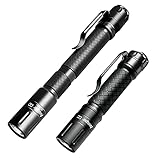
- 【3 Modes】No more cycling through endless modes! Only featuring 3 useful lighting modes (High / Low / Strobe), which effectively reduces the trouble of switching 5 modes.Fully press the switch button to turn on and off, and half press to cycle through lighting modes.
- 【Size 3.4 x 0.6inch】 It provides a maximum brightness of 180 lumens. Only 1 AAA 1.5V battery is needed (not included). Only weighs about 0.7 ounces. Do not use batteries higher than 1.5V as they will damage the circuitry.
- 【Size 5.2 x 0.6inch】 It provides a maximum brightness of 250 lumens. It takes 2 AAA 1.5V batteries (not included) . Only weighs about 0.9 ounces. Do not use batteries higher than 1.5V as they will damage the circuitry.
- 【Tactical Tail Switch】The tactical tail switch is more convenient to operate with one hand. It is very suitable for reading, illuminating narrow space, climbing or exploring.
- 【Removable Clip】The removable pocket clip is convenient for you to clip it on belt, bag, shirt or pants pocket when carrying.It can also be removed and installed reversely, then clamped on the cap as a cap lamp(for the short one only).
Rank #4

- 1. Emergency Army Green Hand Crank Torch, Built-In Rechargeable battery, conveniently generates power for more than 10 minutes’ lighting by 1 minute’s crank (basing one speed of two round per second).
- 2. Solar panel as a back-up powering method absorbs all kinds of light, such as strong and medium sunlight, lamp light and more.
- 3. Ergonomic and rugged design is comfortable and secure to grip in hand. Perfect for daily, emergency and outdoor lighting.
- 4. The built-in durable carabiner securely clips to your backpack, ideal for outdoor activities.Portable Size for out door use:124x45x32mm/86g.
- 5. What you get: Brand New Simpeak Hand Crank and Solar Flashlight, user manual, unprecedented 2-year worry-free and 24 hours customer service.
Rank #3

- Super Bright LED Flashlight for Everyday & Emergency Use – Equipped with an upgraded high-performance LED, the S2000 delivers powerful illumination designed to light up dark environments with ease. Compact yet powerful, it fits perfectly in your hand, backpack, survival kit, or car glove compartment, making it a reliable lighting tool for daily use and emergencies.
- Extended Battery Life with AA Power Convenience – Powered by 4 standard AA batteries (not included), this flashlight provides long-lasting performance with up to 30 hours on Low Mode and up to 6 hours on High Mode. A dependable choice for emergencies, camping trips, power outages, and outdoor adventures where reliable lighting matters most.
- Simple 3 Mode Operation – No Complicated Cycling – Designed for ease of use, the S2000 features only 3 essential lighting modes: High, Low, and Strobe. No unnecessary mode cycling—switch quickly between lighting needs for home use, outdoor activities, repairs, or emergency situations.
- Adjustable Zoom & Durable Tactical Construction – Easily switch between a wide flood beam and a focused spotlight by simply twisting the head. Built with aircraft-grade aluminum alloy, the flashlight is impact-resistant, durable, and IP67 waterproof, making it suitable for rain, snow, and harsh outdoor environments.
- Built for Home, Outdoor & Emergency Preparedness – Designed as a dependable everyday carry flashlight, the S2000 is ideal for camping, hiking, walking the dog, car emergencies, power outages, and household use. A practical and essential tool for any emergency preparedness kit.
Product prices and availability are accurate as of the date/time indicated and are subject to change. Any price and availability information displayed on Amazon at the time of purchase will apply.

