
To configure iSCSI storage, first present a LUN from the storage target to the intended host initiators, then connect each hypervisor to the target and verify the device and paths before using the LUN. On ESXi, that usually means a software iSCSI adapter and a VMFS datastore; on Proxmox VE, the common pattern is an iSCSI portal and target with LVM layered over the LUN for VM volumes.
Before connecting either hypervisor
iSCSI carries block storage from an initiator (the hypervisor host) to a target (the storage system), which exports one or more LUNs. Creating a portal or discovering a target is not enough: the target must authorize the host and map the intended LUN to it.
- Record the target portal address, target IQN, and LUN mapping.
- On the storage system, permit each intended host initiator, typically by its iSCSI IQN or an allowed IP address. Configure CHAP if required.
- Plan a dedicated iSCSI network and, if using multiple paths, ensure each path has a usable, physically distinct uplink.
- Use consistent MTU settings end to end if jumbo frames are enabled.
- Confirm the storage target supports iSCSI LUN presentation and check compatibility for the exact ESXi and Proxmox VE releases in use.
The official setup guidance covers host configuration and LUN presentation, not a product-specific compatibility endorsement. Choose a target based on its iSCSI support, access controls, authentication options, and ability to provide the intended independent paths.
Configure iSCSI storage on VMware ESXi
The ESXi workflow below follows Broadcom guidance for ESXi 7.x and 8.x. Interface labels can vary slightly by release.
#1 Best Overall
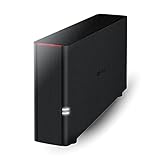
- Value NAS with RAID for centralized storage and backup for all your devices. Check out the LS 700 for enhanced features, cloud capabilities, macOS 26, and up to 7x faster performance than the LS 200.
- Connect the LinkStation to your router and enjoy shared network storage for your devices. The NAS is compatible with Windows and macOS*, and Buffalo's US-based support is on-hand 24/7 for installation walkthroughs. *Only for macOS 15 (Sequoia) and earlier. For macOS 26, check out our LS 700 series.
- Subscription-Free Personal Cloud – Store, back up, and manage all your videos, music, and photos and access them anytime without paying any monthly fees.
- Storage Purpose-Built for Data Security – A NAS designed to keep your data safe, the LS200 features a closed system to reduce vulnerabilities from 3rd party apps and SSL encryption for secure file transfers.
- Back Up Multiple Computers & Devices – NAS Navigator management utility and PC backup software included. NAS Navigator 2 for macOS 15 and earlier. You can set up automated backups of data on your computers.
1. Prepare the ESXi iSCSI network
- Create a dedicated iSCSI network on a vSwitch or distributed vSwitch.
- Add one or more VMkernel adapters with static addresses in the intended iSCSI subnet.
- Set MTU consistently on the VMkernel interface, switching path, and storage target if using jumbo frames.
2. Add the software iSCSI adapter and target portal
- In the ESXi host’s Storage Adapters view, add the software iSCSI adapter if you are using software iSCSI.
- Open the adapter’s target discovery settings and add the storage target portal. Use the portal address supplied by the storage administrator.
- Rescan the adapter so ESXi discovers available targets and LUNs.
For multiple VMkernel ports sharing the same subnet, Broadcom says port binding is required. In an ESXi 8.x multi-NIC design, assign a unique active physical adapter to each iSCSI VMkernel port group and set the other adapters to unused for that port group; then add the eligible port groups under Network Port Binding. Port binding is topology-sensitive, so do not apply it as a generic step to every iSCSI design.
3. Rescan, verify paths, and create the datastore
- Rescan the iSCSI adapter and storage adapters.
- Confirm that the expected LUN appears in the device list and verify that the number of paths matches the physical redundancy you designed.
- Only after confirming the device and paths, create or mount the VMFS datastore on the LUN.
For a cluster, configure each ESXi host that needs the datastore with the required iSCSI VMkernel interfaces and the same discovery portals, then rescan each host. On ESXi 8.0, an adapter can appear online before VMFS volumes are enumerated; if paths exist but the datastore does not appear, run a VMFS-only rescan.
Rank #2

- 【Advanced Home Data & Media Hub】For advanced home users who need phone backup, file storage, and centralized data management. Centralize family photos, 4K videos, movies, computer backups, and personal files in one place while running multiple apps for home entertainment and everyday data management. Suitable for households with growing digital libraries and multiple NAS use cases.
- 【Built for Creators, Media Servers & Advanced Apps】Powered by the Intel N100 Quad-Core CPU, 8GB DDR5 RAM, 2.5GbE networking, and dual M.2 NVMe slots, DXP2800 handles large files and heavier workloads with ease. Run Docker, virtual machines, and media server applications compatible with Plex—ideal for content creators, tech enthusiasts, and advanced home users managing 4K videos, RAW photos, personal media libraries, and multiple NAS apps.
- 【Up to 80TB for Growing Digital Libraries】 Supports up to 80TB of storage using two HDD bays and two M.2 NVMe SSD slots for family photos, movies, RAW photos, 4K videos, work files, and device backups. AI photo management supports recognition of people, objects, scenes, and locations, album organization, and duplicate photo detection. HDDs and SSDs are not included.
- 【AI-powered Home Surveillance】Turn DXP2800 into a centralized home surveillance hub by connecting compatible network cameras and storing recordings locally on your NAS. AI-powered features include Face Recognition, People Detection, and Pet Detection, helping advanced home users review important events more efficiently while managing home surveillance and personal data in one place.
- 【One data Center Across Your Devices】Keep files from desktops, laptops, phones, tablets, and other devices together instead of scattered across cloud accounts and external drives. Access, back up, organize, and share data across Windows, macOS, Android, iOS, web browsers, and compatible smart TVs—ideal for creators and advanced home users working across multiple devices.
Configure iSCSI storage on Proxmox VE
Proxmox VE’s Open-iSCSI backend requires the open-iscsi package, which the Administration Guide says is not installed by default. The storage entry identifies a portal and target IQN; it does not itself provide an allocation or deletion interface for LUN data.
1. Install the initiator package and identify the target
Install open-iscsi on the Proxmox VE host and obtain the portal address and target IQN from the storage system. The Proxmox pvesm reference documents this command form for adding an iSCSI storage entry:
Rank #3

- Entry-level NAS Personal Storage:UGREEN NAS DH2300 is your first and best NAS made easy. It is designed for beginners who want a simple, private way to store videos, photos and personal files, which is intuitive for users moving from cloud storage or external drives and move away from scattered date across devices. This entry-level NAS 2-bay perfect for personal entertainment, photo storage, and easy data backup (doesn't support Docker or virtual machines).
- Set Your Devices Free, Expand Your Digital World: This unified storage hub supports massive capacity up to 64TB.*Storage drives not included. Stop Deleting, Start Storing. You can store 22 million 3MB images, or 2 million 30MB songs, or 43K 1.5GB movies or 67 million 1MB documents! UGREEN NAS is a better way to free up storage across all your devices such as phones, computers, tablets and also does automatic backups across devices regardless of the operating system—Window, iOS, Android or macOS.
- The Smarter Long-term Way to Store: Unlike cloud storage with recurring monthly fees, a UGREEN NAS enclosure requires only a one-time purchase for long-term use. For example, you only need to pay $459.98 for a NAS, while for cloud storage, you need to pay $719.88 per year, $2,159.64 for 3 years, $3,599.40 for 5 years. You will save $6,738.82 over 10 years with UGREEN NAS! *NAS cost based on DH2300 + 12TB HDD; cloud cost based on 12TB plan (e.g. $59.99/month).
- Blazing Speed, Minimal Power: Equipped with a high-performance processor, 1GbE port, and 4GB RAM on Board, this NAS handles multiple tasks with ease. File transfers reach up to 125MB/s—a 1GB file takes only 8 seconds. Don't let slow clouds hold you back; they often need over 100 seconds for the same task. The difference is clear.
- Let AI Better Organize Your Memories: UGREEN NAS uses AI to tag faces, locations, texts, and objects—so you can effortlessly find any photo by searching for who or what's in it in seconds. It also automatically finds and deletes similar or duplicate photo, backs up live photos and allows you to share them with your friends or family with just one tap. Everything stays effortlessly organized, powered by intelligent tagging and recognition.
pvesm add iscsi <STORAGE_ID> --portal <HOST[:PORT]> --target <TARGET>
It also documents pvesm scan iscsi <HOST[:PORT]> to list possible targets at a portal. These command forms come from the Proxmox 7.4 reference; confirm exact behavior against the documentation for the release installed.
2. Choose the storage layer for VM disks
When using LVM on an iSCSI LUN, keep the base iSCSI entry from directly allocating VM volumes, then configure the LVM storage plugin to manage volumes on the LUN. A representative entry from the Proxmox VE Administration Guide is:
Rank #4
- Value NAS with RAID for centralized storage and backup for all your devices. Check out the LS 700 for enhanced features, cloud capabilities, macOS 26, and up to 7x faster performance than the LS 200.
- Connect the LinkStation to your router and enjoy shared network storage for your devices. The NAS is compatible with Windows and macOS*, and Buffalo's US-based support is on-hand 24/7 for installation walkthroughs. *Only for macOS 15 (Sequoia) and earlier. For macOS 26, check out our LS 700 series.
- Subscription-Free Personal Cloud – Store, back up, and manage all your videos, music, and photos and access them anytime without paying any monthly fees.
- Storage Purpose-Built for Data Security – A NAS designed to keep your data safe, the LS200 features a closed system to reduce vulnerabilities from 3rd party apps and SSL encryption for secure file transfers.
- Back Up Multiple Computers & Devices – NAS Navigator management utility and PC backup software included. NAS Navigator 2 for macOS 15 and earlier. You can set up automated backups of data on your computers.
iscsi: mynas
    portal 10.10.10.1
    target iqn.2006-01.openfiler.com:tsn.dcb5aaaddd
    content none
The portal and IQN shown are illustrative values from the guide; substitute the values assigned by your own storage system. With this layered design, the iSCSI entry identifies the block target and LVM manages VM volumes on the LUN. LUN creation and removal remain target-side tasks: as the Proxmox VE Administration Guide puts it, “The iSCSI protocol does not define an interface to allocate or delete data.”
Proxmox also documents an iscsidirect user-mode backend requiring libiscsi-bin. It supports VM images but cannot use LVM on top of the LUN, so use it only when that limitation fits your storage design and verify current-release details in the installed version’s documentation.
Quick wins for a faster PC:
Repair Windows errors before they cause bigger problemsFix Now →Scan for outdated or missing drivers - takes under a minuteDriver Scan →Clear out junk files and repair common Windows errorsFree Scan →Quick Recap
Best Value

- Your Personal Streaming Server - Build your own Netflix-style media library and stream 4K movies, shows and photos to any device without monthly fees
- Create Your Own Cloud - Store your entire photo, video and music collection; access from anywhere with fast 282 MB/s transfer speeds
- Creator-Grade Backup Solution - Protect your irreplaceable content with automated backups to cloud services, external drives and remote NAS
- Multi-Layered Data Protection - Combine RAID redundancy, automated backups and snapshot technology to prevent data loss from any cause
- Smart Home Surveillance - Support up to 30 IP cameras with AI detection, instant alerts and secure remote monitoring
Troubleshoot missing devices, LUNs, or paths
- No ESXi devices or paths: check that an iSCSI VMkernel port is configured and, where required by the topology, assigned through Network Port Binding.
- The target is reachable but no LUN appears: verify the portal and target IQN, host IQN or IP permissions in the storage ACL, multi-host access settings where needed, CHAP credentials, and target-side LUN mapping. Correct the target or host configuration before rescanning again.
- Fewer paths appear than expected: confirm that each iSCSI VMkernel adapter has a usable, distinct physical uplink and that the vSwitch teaming policy supports the port-binding design. Compare the discovered paths with the physical path plan before proceeding.
- ESXi 8 reports the adapter online but no datastore: check whether the device and paths are enumerated. If they are, run a VMFS-only rescan to discover the volume.
- Proxmox sees the LUN but VM-volume management is unclear: distinguish the raw iSCSI portal/target entry from the LVM layer built on the LUN. Use the storage target to create or remove LUNs.
Sources and release notes
- Broadcom: Configuring iSCSI Software Initiator in ESXi — network, software adapter, discovery, rescanning, and VMFS workflow.
- Broadcom: iSCSI port binding configuration — multi-NIC and binding considerations.
- Broadcom: Troubleshooting iSCSI connectivity — connectivity and path checks.
- Proxmox VE Administration Guide: Open-iSCSI initiator — package requirement, portal/target configuration, and LVM layering.
- Proxmox 7.4
pvesmreference — command forms and storage configuration details for that release.
Product prices and availability are accurate as of the date/time indicated and are subject to change. Any price and availability information displayed on Amazon at the time of purchase will apply.

