
What’s actually slowing this PC down?
Pick the symptom - the matching free tool is one click away.
The Intel Optane SSD 900P was a premium, unusually responsive NVMe drive when it launched in 2017, especially in small, random reads. Intel’s published specifications and contemporary reviews support that historical reputation—not a claim that it is the fastest SSD you can buy in 2026. Today it is discontinued, and buying one makes sense mainly when its low-latency performance or unusually high rated endurance suits a specific workload and the used drive is in good condition at the right price.
What the Optane SSD 900P is
The 900P is an NVMe storage drive using Intel and Micron 3D XPoint media over a PCIe 3.0 x4 interface. It is not a standard M.2 2280 stick. Intel’s 2017 product brief lists two physical formats: HHHL (half-height, half-length) PCIe add-in cards in 280GB and 480GB capacities, plus a 15mm-high, 280GB U.2 model. Check the exact model and connector before buying; the specifications are in Intel’s 900P product brief.

Intel now marks the 900P discontinued. Its 280GB specification page lists a Q4 2017 launch, a five-year warranty, and a rated lifetime write limit of 5.11 petabytes. Intel’s 480GB specifications list 8.76 petabytes of lifetime writes and the same five-year warranty period. Those are original product ratings, not an estimate of how much life remains in a used drive or confirmation that its warranty still applies. See Intel’s 280GB specifications and discontinued status and Intel’s 480GB specifications.
How fast is the 900P?
Intel’s 2017 product brief rates the drive for up to 2,500 MB/s sequential reads and 2,000 MB/s sequential writes. Its stated ceilings for random 4KB operations are up to 550,000 read IOPS and 500,000 write IOPS, with read and write latency under 10 microseconds. These are manufacturer ratings, not guaranteed results in every PC or workload.
#1 Best Overall
In its November 13, 2017 review, PCWorld measured 2,287 MB/s reading and 1,702 MB/s writing in AS SSD on a 480GB PCIe-card sample. The review highlighted unusually strong small-file reads, while noting that the 900P was not the fastest drive in every sequential measure. The measured results and reviewer’s assessment are in PCWorld’s 900P review.
The “fastest, most responsive” framing belongs to that launch-era context. Tom’s Hardware called the drive the fastest consumer SSD it had tested at the time; that is a historical assessment, not a 2026 market ranking. Peak IOPS alone does not determine how fast a drive feels: responsiveness depends on whether a workload can benefit from low-latency random access. Large sequential transfers, capacity, and price per gigabyte can point to a different SSD.
Rank #2

- Full product Specifications: Click to view
- Storage Capacity: 280 GB
- Encryption standard: 256-bit
- Maximum read transfer rate: 2.44 GB/s
- Maximum write transfer rate: 1.95 GB/s
What the 280GB and 480GB versions change
The main difference is capacity and rated lifetime writes, not a substantial performance jump. Tom’s Hardware’s December 4, 2017 update covering the 480GB model described it as adding capacity without materially higher performance than the 280GB drive. Intel’s current specifications give the following endurance ratings:
| Model | Rated lifetime writes | Physical formats listed by Intel |
|---|---|---|
| 280GB | 5.11 PB | HHHL PCIe add-in card or 15mm U.2 drive |
| 480GB | 8.76 PB | HHHL PCIe add-in card |
These write totals are Intel ratings; they do not establish a used unit’s remaining health. The 480GB figure corresponds to 8,760 TB of warrantied writes under the 10-drive-writes-per-day rating discussed in Tom’s Hardware’s 2017 review. Warranty coverage is subject to the product’s terms and endurance limits, and an original five-year period does not mean a used drive is still covered.
Rank #3
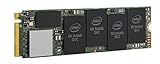
- 1B Storage Capacity
- M2. 2280 Form Factor
- PCIe NVMe 3.0 x4 Interface
- 1800 MB/s Sequential Read Speeds. 1800 Sequential Write Speeds. Intel QLC 3D NAND
Who benefits from Optane’s performance?
The 900P is most compelling when low-latency access and sustained writes matter more than capacity per dollar. PCWorld’s reviewer suggested video and audio content creation or editing workloads that thread multiple writes as potential beneficiaries; that is a review assessment, not a promise that every creator will see a noticeable improvement. StorageReview reported 3,160 transactions per second for its 480GB sample in a particular SQL Server test involving a configured virtual machine, database, and workload. That result should not be treated as a prediction of ordinary desktop performance.
- Potential fit: a workload that can exploit fast random access or substantial sustained writing, and where the price and capacity are acceptable.
- Often a poor fit: a general-purpose upgrade where a less expensive NVMe SSD already feels sufficiently responsive, or a build that prioritizes capacity per dollar or high sequential throughput.
In 2017, launch prices were $389 for 280GB and $599 for 480GB, according to Tom’s Hardware’s review. These are historical launch figures, not current prices or a guide to what a used unit should cost.
Rank #4
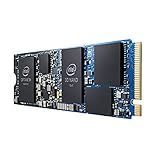
- INTEL OPTANE H10 32GB + 512GB SSD M.2
- Compatible devices: Desktop
- Memory storage capacity: 512.0
- Package Dimensions: 1.8 L x 13.4H x10.6W(centimeters)
Will an Optane 900P work in your PC?
Compatibility depends on the exact format and the host system. The HHHL version needs a suitable PCIe slot and enough room in the case; the U.2 version needs a supported U.2 connection and appropriate cabling. A PCIe x4 interface is part of Intel’s drive specification, but the cited reviews do not provide a motherboard-by-motherboard compatibility list. If you intend to boot from it, the system firmware and operating system must support NVMe boot.
For U.2 installations, an adapter or cable may be needed, but compatibility depends on both the particular 900P model and the host. Tom’s Hardware’s review describes a U.2 cable and M.2-to-U.2 adapter configuration; that does not guarantee every adapter and motherboard combination will work.
Recommended Free Tools
Best Value

- PCIe 4.0 Performance: Delivers up to 7,100 MB/s read and 6,000 MB/s write speeds for quicker game load times, bootups, and smooth multitasking
- Spacious 1TB SSD: Provides space for AAA games, apps, and media with standard Gen4 NVMe performance for casual gamers and home users
- Broad Compatibility: Works seamlessly with laptops, desktops, and select gaming consoles including ROG Ally X, Lenovo Legion Go, and AYANEO Kun. Also backward compatible with PCIe Gen3 systems for flexible upgrades
- Better Productivity: Up to 2x faster than previous Gen3 generation. Improve performance for real world tasks like booting Windows, starting applications like Adobe Photoshop and Illustrator, and working in applications like Microsoft Excel and PowerPoint
- Trusted Micron Quality: Built with advanced G8 NAND and thermal control for reliable Gen4 performance trusted by gamers and home users
What to check before buying a used 900P
Because Intel lists the drive as discontinued, evaluate the actual unit and seller rather than relying on the drive’s launch reputation.
- Confirm the model and format. Match the part number and listing photos to the required capacity and HHHL or U.2 connector. Do not assume a 900P is an M.2 drive.
- Check the host connection and boot support. Verify the slot, U.2 port and cabling, physical clearance, and NVMe boot support if it will be a system drive.
- Request drive-health information. Check SMART health data and total writes where available. Intel’s original endurance rating does not reveal the remaining life of the specific used unit.
- Inspect what is included. Confirm whether a required U.2 cable or adapter comes with the drive, and verify that it suits the intended host.
- Compare the actual price and return terms. Weigh capacity, condition, seller reliability, and return options against a current-capacity alternative. No current stock, seller, or fair used price is established here.
Verdict: is the Intel Optane SSD 900P still worth buying?
It can be worth considering for a compatible system and a workload that benefits from low-latency random access or sustained writes—provided the specific used drive checks out and its price reflects its limited capacity and discontinued status. For most buyers seeking a fast everyday SSD, PCWorld’s 2017 review already cautioned that a cheaper NVMe drive could deliver a similar subjective experience. Choose based on workload, health, fit, capacity, and current asking price rather than a historical “fastest” label.
Quick Recap
Product prices and availability are accurate as of the date/time indicated and are subject to change. Any price and availability information displayed on Amazon at the time of purchase will apply.

