
To move downloaded games and other system data to another Nintendo 3DS-family console, use Nintendo’s System Transfer process—not an SD-card copy by itself. First check that both consoles meet the requirements, then choose the transfer option that fits your cards, equipment, and available time.
How do I transfer games and data to a Nintendo 3DS?
Nintendo’s North American instructions offer PC-based copying, a full wireless transfer, and a low-capacity wireless transfer. Which steps apply depends on the exact source and target models and their storage cards, so use Nintendo’s model-specific instructions rather than assuming one procedure works for every 3DS-family system.

For standard Nintendo 3DS, 3DS XL, and 2DS systems, Nintendo’s procedure starts on each console at System Settings → Other Settings → System Transfer; follow the on-screen prompts to send from the source and receive on the target. See Nintendo’s System Transfer instructions for the branch matching your consoles.
Check these requirements before starting
- Have both consoles available and connected to the internet. Nintendo’s US guidance also calls for current system updates and matching region settings.
- The target console must not already have a Nintendo Network ID (NNID) linked to it.
- Identify the exact model of both consoles and the type and capacity of each card. Nintendo’s transfer options and card instructions vary by model.
- Make sure the target storage has enough free space if you intend to move downloaded content during the transfer.
Nintendo’s North American guidance does not support system transfers between consoles from different regions. If your consoles are from different regions, do not proceed on the assumption that a transfer will work; consult the applicable regional support information.
What’s actually slowing this PC down?
Pick the symptom - the matching free tool is one click away.
#1 Best Overall
Choose a transfer method
| Method | What happens to downloaded content | Storage and equipment | Time and trade-off |
|---|---|---|---|
| PC-based card copying | Copy the card contents as part of the applicable Nintendo transfer procedure. | A computer with an SD-card slot or reader; a microSD adapter if needed. Certain New Nintendo 3DS models require a size #0 crosshead screwdriver to access the card. Ensure the destination card has enough capacity. | Requires handling the cards and copying their contents. Follow the model-specific Nintendo branch. |
| Full wireless transfer | Moves current content over local wireless communication. | The target microSD card must have enough space for the source downloads. | Nintendo says it can take more than four hours, depending on the amount of data. Keep both systems powered during the process. |
| Low-capacity wireless transfer | Downloaded games and applications are not moved to the target during the initial transfer; Nintendo says they can be redownloaded afterward, with saves restored according to its guide. | Useful when the target storage cannot hold all the source downloads. | Requires downloading content again afterward where it remains available for the account and title. |
The four-hour estimate is Nintendo’s guidance, not a guaranteed duration for every transfer. Compare the available storage and equipment first, then select the corresponding option in Nintendo’s instructions.
How to use System Transfer
- On both consoles, open System Settings → Other Settings → System Transfer for the standard 3DS/3DS XL/2DS path. For other model combinations, use the matching model-specific path in Nintendo’s System Transfer guide.
- Choose the send option on the source console and the receive option on the target, then follow the displayed prompts. Select the wireless or PC-based choice that matches the storage capacity and equipment you checked.
- If the selected method instructs you to copy card contents on a computer, copy the whole folders as directed. Do not cherry-pick files inside the Nintendo 3DS folder.
- Keep the original card and its contents unchanged until you have completed the transfer and verified the target console. Nintendo cautions: “Do not swap between multiple SD Cards, or swap your SD Card between multiple systems.” See its SD and microSD card instructions.
What happens to saves and downloaded games?
Downloaded-game save data is stored on the SD card, while save data for a physical Game Card is stored on that cartridge. Copying the console’s SD card does not move a cartridge save; keep the Game Card with its save data.
Rank #2

- Cards include security feature for protection of copyrighted data
- This is NOT a micro SD card
- SD cards are fully compatible with all SD-compliant devices
- Speed performance rating: Class 4 (based on SD 2.0 Specification)
- Writeable label for easy identification and organization
Nintendo’s instructions treat downloaded software as part of a system-transfer process, not as a standalone, one-title-at-a-time move between consoles. Use the System Transfer path rather than trying to authorize downloaded content on a second system by copying card files alone.
Nintendo ended sales of Nintendo 3DS software and downloadable content through the eShop on March 27, 2023. Do not assume that every title will be available to redownload for every account; check the specific title and account situation before choosing a method that depends on downloading content later. See Nintendo’s eShop closure information.
Quick wins for a faster PC:
Scan for outdated or missing drivers - takes under a minuteDriver Scan →Clear out junk files and repair common Windows errorsFree Scan →Quick Recap
Best Value
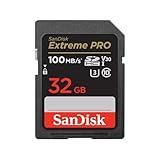
- Shot speeds up to 90MB/s, transfer speeds up to 100MB/s (Up to 100MB/s read speed. Write speed up to 90MB/s. Based on internal testing; performance may be lower depending upon host device. 1MB=1,000,000 bytes. X = 150KB/sec.)
- Perfect for shooting 4K UHD video and sequential burst mode photography (Full HD (1920x1080) and 4K UHD (3840 x 2160) video support may vary based upon host device, file attributes and other factors. See HD page on SanDisk site.)
- UHS Speed Class 3 (U3) and Video Speed Class 30 (V30) (UHS Speed Class 3 designates a performance option designed to support 4K UHD video recording with enabled UHS host devices. UHS Video Speed Class 30 (V30), sustained video capture rate of 30MB/s, designates a performance option designed to support real-time video recording with UHS enabled host devices. See the SD Association’s official website.)
- Built for and tested in harsh conditions: Temperature-proof, waterproof, shockproof, and X-ray-proof (Card only. See product packaging or official SanDisk website for more information regarding proof.)
Rank #4

- SDSDUNR-064G-GN3IN Overseas Retail
Rank #3
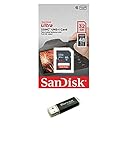
- 32GB SD SDHC Flash Memory Card FOR NINTENDO 3DS N3DS 2DS XL DS DSI & Wii Media Kit. (Not compatible with New 3DS)
- Also compatible with Nikon SLR Coolpix Digital Camera, Kodak Easyshare, Canon Powershot, Canon EOS
- Speed performance rating: Class 10
- Bonus SD/TF USB Card Reader to facilitate easy transfer between devices
- High quality and reliability backed by a 5-year limited manufacturer warranty
If the transfer cannot start
- Recheck internet access, system updates, matching region settings, and whether the target has an NNID linked.
- Confirm you selected instructions for the exact source and target models; do not apply a New Nintendo 3DS card-removal step to another model.
- For a wireless option that includes downloads, check target-card capacity. If it is insufficient, review whether the low-capacity option is available for your model pairing.
- Nintendo says a system transfer cannot be attempted again for seven days after a transfer. This is Nintendo Support guidance; check the on-screen message and current support instructions if you encounter a retry restriction.
Product prices and availability are accurate as of the date/time indicated and are subject to change. Any price and availability information displayed on Amazon at the time of purchase will apply.

