
Recommended Free Tools
Neither an implanted nor a noninvasive brain-computer interface (BCI) is automatically better. The right comparison is between specific systems and the task a person needs help with: what each has demonstrated for people in similar circumstances, what using it involves, and whether its risks, training, access, and long-term support are acceptable. This is a clinical and research decision, not a consumer-headset buying choice.
Start with the function the BCI needs to provide
A BCI decodes a user’s intention or mental state and maps it to an action or communication channel. Depending on the system, that could mean answering yes-or-no questions, composing word-based messages, controlling a cursor or robotic arm, or operating another device. Those are different tasks, and evidence for one does not establish that a system can do another.
Ask what outcome the proposed system has demonstrated for people with a similar condition and for the specific task at hand. A laboratory demonstration is not, by itself, proof that the system will work reliably in everyday settings. There is no universal head-to-head performance figure that ranks all implanted BCIs against all noninvasive ones; results depend on the device, users, task, and way performance is measured.
What “implanted” and “noninvasive” describe
The labels are a starting point, not a complete description of a BCI. Noninvasive systems often use scalp electroencephalography (EEG); magnetoencephalography (MEG) and functional near-infrared spectroscopy (fNIRS) are other approaches. Implanted and intermediate systems differ in where sensors sit and how signals are recorded. A terminology framework by Leuthardt, Moran, and Mullen (2021) separates noninvasive, embedded, and intracranial devices.
#1 Best Overall

- Spacious Design: Measuring 21.1" wide and 14.1" deep, our lap desk comfortably fits most laptops up to 15.6". Extra room for accessories ensures convenience.
- Enhanced Functionality: Packed with handy features, including a 5x9" precision tracking mouse pad and a built-in phone slot for seamless work or video calls. Plus, enjoy ergonomic support with the integrated cushioned wrist rest.
- Cool Comfort: Enjoy a stable surface with our lap desk's dual bolster cushion, designed for comfort and airflow, keeping your lap cool during extended use.
- Durable Surface: Work with confidence on our lap desk's solid surface, featuring a sleek black carbon color, ensuring optimal air circulation to prevent your laptop from overheating.
- On-the-Go Convenience: With an integrated handle and lightweight design (2.8 lbs), our lap desk is portable for travel or moving around the house, offering flexibility in any space.
| Approach | Where signals are recorded | What to weigh |
|---|---|---|
| Noninvasive, such as scalp EEG | At the scalp; MEG and fNIRS use different measurement methods. | Avoids surgical placement and can be temporary. Signal characteristics vary by method, and movement can introduce artifacts in mobile use. |
| Embedded | Under the scalp or within the skull without entering the intracranial space, as described in the 2021 terminology framework. | Placement and procedure still matter; “minimally invasive” alone does not establish that a system is low risk. |
| Intracranial, including cortical-surface or brain-tissue approaches | On the brain’s surface, such as electrocorticography (ECoG), or within brain tissue. | Signals recorded closer to their source can support detailed-control demonstrations, but the required procedure and clinical risks depend on the exact approach. |
| Endovascular | Electrodes are placed in a blood vessel. | This is a distinct anatomical approach; ask the clinical team about the specific vascular procedure and its risks. |
This overview is not a ranking. Placement names alone do not tell you what a device can do or establish its risk profile; those depend on the particular system and procedure.
Compare the practical tradeoffs for the specific system
Signal and control needs
Decide how much speed, accuracy, feedback, and control complexity the task requires, and how disruptive errors would be. Noninvasive and implanted systems record different kinds of signals. Recording closer to neural tissue has enabled high-detail demonstrations, including robotic control and speech decoding, but that does not mean every implant will outperform every noninvasive system for a given task. Invasive systems also face technical challenges, including long-term signal quality and power requirements.
Rank #2

- 5-in-1 Connectivity: Equipped with a 4K HDMI port, a 5 Gbps USB-C data port, two 5 Gbps USB-A ports, and a USB C 100W PD-IN port. Note: The USB C 100W PD-IN port supports only charging and does not support data transfer devices such as headphones or speakers.
- Powerful Pass-Through Charging: Supports up to 85W pass-through charging so you can power up your laptop while you use the hub. Note: Pass-through charging requires a charger (not included). Note: To achieve full power for iPad, we recommend using a 45W wall charger.
- Transfer Files in Seconds: Move files to and from your laptop at speeds of up to 5 Gbps via the USB-C and USB-A data ports. Note: The USB C 5Gbps Data port does not support video output.
- HD Display: Connect to the HDMI port to stream or mirror content to an external monitor in resolutions of up to 4K@30Hz. Note: The USB-C ports do not support video output.
- What You Get: Anker 332 USB-C Hub (5-in-1), welcome guide, our worry-free 18-month warranty, and friendly customer service.
Procedure and anatomical risk
For a noninvasive system, ask how sensors are attached and what daily setup entails. For an embedded, endovascular, surface, or tissue-penetrating system, ask what operation or vascular procedure is required and which risks apply to that exact location. Do not infer risk from the word “implant” alone—or assume a procedure is low risk because it is called minimally invasive.
Training and everyday use
Find out how much preparation, calibration, practice, and caregiver involvement the system requires, and whether it has been used in the kinds of environments where the person needs it. Noninvasive equipment avoids surgical placement, but that does not make every system easy to use or suitable for every person. A research demonstration does not establish the training burden or reliability of routine use.
Rank #3
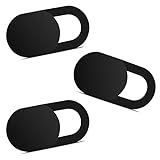
- Note: Not suitable for MacBooks released after 2023 or devices with a protruding front camera; Not applicable to full-screen or notch-style tempered glass screen protectors; Do not use on the rear camera of the phone.
- 💻 Why Do You Need a Webcam Cover Slide? — Safeguard your privacy by covering your webcam with our reliable webcam cover when not in use. Don't let anyone secretly watch you. Stay protected!
- ✅ Thin & Stylish — Enhance your laptop's functionality and aesthetics with our 0.027" ultra-thin webcam covers. Seamlessly close your laptop while adding a touch of sophistication.
- ✅ Fits Most Devices — Compatible with laptops, phones, tablets, desktops! Keep your privacy intact on Ap/ple, Mac/Book, iPh/one, iP/ad, H/P, L/novo, De/ll, Ac/er, As/us, Sa/msung devices.
- ✅ 365 Days Protection — Our upgraded 3.0 adhesive ensures a strong hold that won't damage your equipment. Experience reliable, long-term privacy protection day in and day out.
Maintenance and continuity
Ask who provides clinical follow-up, repairs, upgrades, and—if needed—device removal, and what happens when a study ends. In its December 17, 2024 technology assessment, the U.S. Government Accountability Office (GAO) reported cases in which trial participants’ devices were removed when funding or medical support was unavailable after the trial. That finding makes continued support a practical part of the decision, not an afterthought.
Data, coverage, and cost
Ask what brain-signal data are collected, who can access them, how they are used, and how long they are retained. GAO’s December 2024 assessment identified uncertainty around control of brain data and Medicare and private-insurance coverage. Coverage and payment depend on the specific system and circumstances; check them directly rather than assuming a device or follow-up care will be paid for.
Rank #4

- Anti-Slip Surface - Transform your laptop into a mobile workstation with the AboveTEK portable laptop lap desk. The anti-slip surface provides a strong grip for laptops up to 15.6 inches(Diagonal), while the double rubber strip on the bottom ensures a stable display or typing experience on your lap, couch, or bed.
- Retractable Mouse Pad - Retractable laptop mouse pad extends on both directions for the left/right handed with elevation along the edges for stopping mouse from falling off. The size of laptop tray is 14" X 9.7" and the size of mouse pad is 7.4" X 6.1".
- Effective Heat Shield - The effective heat shield made of sturdy and thick material protects your laptop from overheating. Prioritizes your comfort and safety, an ideal lap pad or board for working anywhere.
- EASY to Carry and Store - With an ergonomic and simplistic design, the lap desk is portable to store in a backpack. Only 15" in size, 2.2 lb of weight and with slim 0.6 inch thickness, it is ready to be easily carried around.
- Widely Applicable - The smooth platform accommodates laptops and tablets up to 15.6 inches(Diagonal), making it a versatile accessory and one of the best gifts for mom, dad, students and professionals. Perfect for use as a laptop bed tray or tablet holder anywhere at home, library, or park.
Check evidence, regulatory status, and access
The FDA’s final guidance, issued May 20, 2021, addresses nonclinical testing and study design for feasibility and pivotal studies of implanted BCIs intended to restore lost motor or sensory capabilities in patients with paralysis or amputation. It is guidance for investigational-device development and clinical studies, not blanket authorization for every BCI.
GAO’s December 17, 2024 assessment said BCIs had helped people with severe disabilities in clinical trials, while those systems were not yet on the market at the time of its report. This is a dated finding, not a claim about every system’s status today. Before considering a named device, confirm its current status, intended use, location, and whether access is through a clinical study or another route. Ask about the study population, duration, outcomes, and adverse events—not just a headline demonstration.
Quick Recap
Best Value

- Spacious Design: Measuring 21.1" wide and 12" deep, our lap desk comfortably fits most laptops up to 15.6". Extra room for accessories ensures convenience.
- Enhanced Functionality: Packed with handy features, including a 5x9" precision tracking mouse pad and a built-in phone slot for seamless work or video calls. Plus, enjoy laptop support with the integrated device ledge.
- Cool Comfort: Enjoy a stable surface with our lap desk's dual bolster cushion, designed for comfort and airflow, keeping your lap cool during extended use.
- Durable Surface: Work with confidence on our lap desk's solid surface, featuring a blush pink color, ensuring optimal air circulation to prevent your laptop from overheating.
- On-the-Go Convenience: With an integrated handle and lightweight design (2.14 lbs), our lap desk is portable for travel or moving around the house, offering flexibility in any space.
Questions to take to the clinical team
- What exact task is this system intended to help with, and what outcome has it demonstrated in people with a similar condition?
- Where are its sensors placed, what procedure is required, and what risks apply to that location and device?
- What training, caregiver support, setup, and daily maintenance will be needed?
- Is access through a clinical study? If so, what happens to the device and support when the study ends?
- Who provides follow-up, repairs, upgrades, and removal if needed?
- What data are collected and who can access them? What coverage or payment decisions need to be checked?
Product prices and availability are accurate as of the date/time indicated and are subject to change. Any price and availability information displayed on Amazon at the time of purchase will apply.

