
Do these 3 things before closing this tab:
1Repair Windows errors before they cause bigger problems2Fix the driver behind crashes, sound loss and screen glitches3Clear out junk files and repair common Windows errorsiTechGuides is reader-supported. When you buy through links on our site, we may earn an affiliate commission. As an Amazon Associate I earn from qualifying purchases. Learn more
Neither a DSLR nor a mirrorless camera is automatically better for live streaming. Choose by the exact model and connection you plan to use: some cameras support a direct USB webcam or USB Streaming workflow, while others need HDMI output and a capture device. Before buying, verify compatibility, resolution, autofocus, audio, power, and heat limits for the camera and computer setup you intend to use.
DSLR vs. mirrorless: what matters for streaming
The camera category alone does not tell you whether a model will work well as a computer camera. A compatible DSLR can stream through webcam utility software or HDMI capture; a compatible mirrorless camera may offer those routes or native USB Streaming. Features and limits vary by body, software, cable, computer, and streaming application. Check the manufacturer’s supported-model list and manual for the exact camera before purchasing accessories.
| What to compare | Why it matters | What to verify |
|---|---|---|
| Connection support | USB webcam utilities, native USB Streaming, and HDMI output are different workflows. | Confirm the exact camera model, operating system, cable, software, and application are supported. |
| Video resolution | Output depends on the camera and the complete connection path, not simply whether the camera is mirrorless. | Check the supported resolution and frame rate for the chosen method and application. |
| Autofocus | Movement, demonstrations, or changing distance from the camera make continuous focus more important. | Look for face detection and continuous autofocus where available; actual results vary by model and lens. |
| Audio | A video connection does not guarantee that camera audio reaches the computer. | Check whether the method carries camera audio; otherwise plan a separate microphone connected to the computer. |
| Power and heat | Long sessions can drain a battery, and some cameras may become hot enough to shut down. | Review the manual’s power and temperature guidance for the intended session length. |
| Setup complexity | HDMI capture usually adds a capture device, cables, and software configuration. | Include only the accessories your selected connection method actually requires. |
For one model-specific example, Sony Support’s 2026 comparison lists 1024 × 576 for Imaging Edge Webcam and says compatible USB Streaming can support 4K, 1080p, or 720p depending on the camera. That is not a general DSLR-versus-mirrorless rule. Check Sony’s comparison and model qualifications.
Quick wins for a faster PC:
Fix the driver behind crashes, sound loss and screen glitchesFind Drivers →Clear out junk files and repair common Windows errorsFree Scan →Scan for outdated or missing drivers - takes under a minuteDriver Scan →Choose a connection method
USB webcam utility
A manufacturer utility can let a supported camera appear as a computer camera over USB. Nikon Webcam Utility supports selected Nikon Z-series mirrorless and DSLR bodies; Sony Imaging Edge Webcam also has model and computer requirements. Check the current compatibility information before relying on either utility, since supported models and software requirements can change.
#1 Best Overall
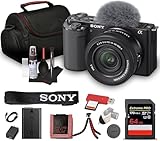
- Sony USA Authorized. Items Include: 1 x Sony ZV-E10 Mirrorless Camera with 16-50mm Lens (Black), 1 x SecureDigital 64GB Memory Card, 1 x Soft Bag, 1 x Memory Card Reader, 1 x Micro HDMI Cable, 1 x 12 inch Flexible Tripod, 1 x Hand Strap, 1 x Memory Card Wallet, 1 x Cleaning Kit
- The Sony ZV-E10 paired with the 16-50mm II Power Zoom Lens (SELP16502) delivers a thoughtfully engineered setup ideal for streamlined content production. Its vari-angle touchscreen, ergonomic layout, and intuitive controls allow creators to shift between filming angles with ease. This balanced combination supports everyday shooting, personal projects, and polished video storytelling across multiple environments.
- Equipped with a large APS-C sensor, this camera captures refined detail, smooth tonal transitions, and impressive low-light performance. Paired with the updated 16-50mm II lens, it produces natural color reproduction suited for lifestyle content, product demonstrations, or scenic travel frames. Its strong dynamic range offers dependable results whether shooting indoors or outdoors under shifting light conditions.
- With 4K video capability and versatile creative features, the ZV-E10 encourages polished results without complex configuration. Color profiles, slow-motion options, and convenient shooting assists make it flexible enough for tutorials, reviews, travel vlogs, and artistic projects. Its directional microphone improves vocal clarity, supporting content that feels natural, balanced, and ready to share.
- Real-time tracking and eye autofocus technology maintain precise focus on subjects even during motion, enhancing consistency for solo creators. Sudden shifts, expressive gestures, and quick scene changes are handled smoothly, keeping footage sharp without constant manual adjustments. This dependable focus system allows users to work confidently across active recording sessions and varied shooting setups.
Nikon states that Webcam Utility does not send camera audio over USB and recommends connecting an external microphone to the computer’s microphone input. Sony’s documentation likewise says Imaging Edge Webcam does not handle camera audio. This route can be relatively simple, but plan video and audio as separate connections when necessary. See Nikon Webcam Utility compatibility and setup details.
Native USB Streaming
Some Sony cameras offer a native USB Streaming mode. Sony says compatible setups may provide camera-microphone audio and support up to 4K, though the available format depends on the body, cable, and application. The camera can receive power over USB in supported configurations, but Sony notes that a sufficiently charged battery may still need to be installed. Do not assume that a regular USB connection provides this feature on every camera.
Rank #2

- Improved Dual Pixel CMOS AF and eye detection AF 24.1 Megapixel CMOS (APS-C) sensor with is 100–6400 (H: 12800)
- Built-in Wi-Fi and NFC technology working temperature range: 32-104°F/0-40°C
- 9-Point AF system and AI Servo AF
- Optical Viewfinder with approx 95% viewing coverage
- Use the EOS Utility Webcam Beta Software (Mac and Windows) to turn your compatible Canon camera into a high-quality webcam
- Confirm that the exact camera model supports USB Streaming and check Sony’s instructions for its operating system, cable, and application requirements.
- Set the camera to movie mode and enable USB Streaming using the model’s menu instructions.
- Connect the camera directly by USB and select it as the video source in the streaming or conferencing application.
- Choose a resolution and frame rate offered by that camera and application, then test focus, audio, and power before the live session.
Sony’s USB Streaming guidance explains model-specific setup and limitations.
Free tools Windows power users keep installed
One-click scans. No signup required.
HDMI capture device
With HDMI, the camera sends video to a compatible HDMI-to-USB capture device, which connects to a computer running streaming software. This method adds hardware and compatibility checks: confirm that the camera’s HDMI output, capture device, computer, and software work together. Nikon lists devices such as Elgato Cam Link, Magewell USB Capture, AJA U-TAP HDMI, and AVerMedia ExtremeCap UVC-BU110 for select cameras; those names are not a guarantee that every pairing will work.
Rank #3
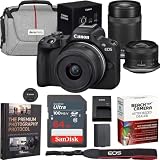
- CANON USA AUTHORIZED - INCLUDES FULL USA WARRANTY | Capture the Moment Just as You Imagine It - The Canon EOS R50 mirrorless camera makes photography fun, simple, and convenient with intuitive photo functions that capture beautiful images automatically, just as you imagine them. A host of video functions such as 6K oversampled 4K 30p capture and Dual Pixel CMOS AF II makes the EOS R50 a great camera for movie recording and vlogging as well.
- The 24.2 Megapixel APS-C size CMOS Image sensor and DIGIC X image processor ensure high image quality in a compact and lightweight form factor. Experience the fun of RF mount content creation with the small and lightweight EOS R series mirrorless camera, the Canon EOS R50 - small, lightweight, versatile and designed to fit into your life without taking up your whole camera bag.
- 24.2 Megapixel CMOS (APS-C) sensor | 4K uncropped movie at up to 30 fps oversampled from 6K | Dual Pixel CMOS AF II | Movie for Close-up Demo Mode | 12 fps Electronic First Curtain and 15 fps Electronic Shutter Continuous shooting | Advanced A+ Assist with expanded array of auto-compatible scenes | Longer than 30min video recording | UVC/UAC compatibility for webcam and streaming
- CAMERA INCLUDES: Canon EOS R50 Mirrorless Camera Body (Black) 5811C022 | Canon RF-S 18-45mm F4.5-6.3 IS STM Lens | Canon RF-S 55-210mm F5-7.1 IS STM Lens | Battery Charger LC-E17 | Battery Pack LP-E17 | Battery Pack Cover | Camera Cover R-F-5 | Neck Strap EM-200DB | Lens Cap E-49 | Lens Cap E-55 | Lens Dust Cap RF | Shoe Cover | Canon USA Authorized Warranty
- This photography bundle includes a Deco Gear deluxe travel case, Sandisk Ultra SDHC Memory Card 64GB 100MB/s(R) Gray, cleaning cloth, and Deco Essentials The Premium Photography Protocol: A Masterclass in High-End Operations Guidebook Digital Ebook
- Check the camera manual and capture-device compatibility information for the exact pairing.
- Connect the camera’s HDMI output to the capture device, then connect the device to the computer.
- In the streaming application, select the capture device as the video source and select the intended audio source separately.
- Inspect the preview. If camera menus or status information appear in the image, disable HDMI information display if the camera provides that setting.
- Test the full setup for the length of a typical session, including focus, audio, external power, and temperature.
Sony notes that HDMI capture devices and their software are third-party products. Review Sony’s HDMI streaming setup guidance; Nikon’s compatible-device notes are available with its Webcam Utility information.
Set focus, audio, power, and temperature deliberately
Focus
For a presenter who stays in one place, focus may be straightforward; movement or product demonstrations make continuous autofocus more useful. Sony recommends face-detection autofocus and continuous AF where available in its HDMI setup guidance. If focus causes problems, Sony suggests changing to HD recording format where available. These are model-dependent options, not guaranteed settings on every camera.
Rank #4

- Enjoy interchangeable lens video shooting with the first EOS V series camera body.
- Built for creators with a redesigned user interface including a Vertical Video tripod mount and Front Record button.
- Slow and Fast mode – this allows creative control of the video frame rate and playback speed.
- 24.2 MP APS-C CMOS Image Sensor with DIGIC X Image Processor with up to 4K Crop 59.94p, 4K 29.97p full-width and Full-HD full-width 119.8p recording.
- Impressive Dual Pixel CMOS AF II tracking with Register People Priority and Auto, People, Animal, and Vehicle Subject Detection.
Audio
Test the audio path independently of the picture. Nikon Webcam Utility and Sony Imaging Edge Webcam do not carry camera audio in the documented USB utility workflows, so connect a microphone to the computer or use another supported audio route. Compatible Sony USB Streaming may carry the camera’s built-in microphone audio. With HDMI, select the intended audio device in the computer’s streaming software and confirm that the camera-and-capture combination supports it.
Power and heat
For a long session, use the power arrangement recommended for the exact camera. Nikon advises starting with a charged battery or a compatible AC adapter; Sony describes USB power for supported setups and notes that a sufficiently charged battery may still be required. Continuous video can also raise internal temperature. Sony warns that high-quality, continuous streaming may cause automatic shutdown until the camera cools. Review the model’s manual, avoid direct sun, and test the intended settings and session length before relying on the camera for an event.
Best Value
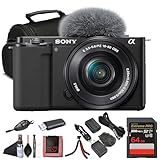
- Sony USA Authorized. ZV-E10 mirrorless (black) with 16–50mm lens, 64GB card, soft bag, micro HDMI cable, and flexible tripod.
- All-in-One Vlogging Kit – The Sony ZV-E10 comes bundled with the compact 16-50mm f/3.5-5.6 OSS power zoom lens, giving creators a versatile focal range for wide selfies, close-ups, and everyday shots. With Optical SteadyShot built into the lens and the camera’s advanced stabilization, handheld content stays smooth and steady. This ready-to-use package provides everything you need to start shooting right out of the box.
- High-Resolution Imaging and Video – Powered by a 24.2 MP APS-C Exmor CMOS sensor and advanced processing, the ZV-E10 delivers crisp still photos with beautiful depth and natural colors. Oversampled 4K video ensures detailed, cinematic quality, while Full HD recording supports up to 120 fps for smooth slow-motion footage. Whether capturing travel vlogs, product demos, or cinematic scenes, this kit delivers professional-looking results.
- Pro Video Features Made Simple – The ZV-E10 records oversampled 4K video at up to 30p and offers advanced gamma options such as HLG and S-Log for creators who want flexibility in post-production. A vari-angle touchscreen simplifies vlogging, selfies, and creative angles, while the built-in three-capsule mic captures clear voice audio. Included windscreen and microphone input allow for even higher sound quality when recording on the go.
- Lightweight, Connected, and Flexible – Weighing just over 340 g with the lens attached, the ZV-E10 is compact and portable, designed for creators who are always on the move. Built-in Wi-Fi and Bluetooth make sharing content to your phone easy via Sony’s Imaging Edge app, while USB-C streaming support turns the camera into a high-quality webcam. Ideal for travel, live streaming, or daily vlogging, this kit fits into any creative workflow.
Plan the setup around the room, not a shopping list
A lens changes framing and background appearance, while a stable mount and consistent lighting can make a stream easier to manage. A tripod or desk clamp, light, wider or faster lens, external microphone, AC adapter, or compatible power connector may help in a particular room or workflow, but none is universally required. Start with the connection path and limitations of the camera you own; add only what solves a real problem in your frame, sound, or session duration.
Common problems and fixes
- The camera does not appear in the application: Confirm the exact model is supported by the utility or native USB Streaming mode, install the required software, check the cable and USB connection, and verify that the application supports the selected camera workflow.
- The picture works but there is no sound: This is expected in the documented Nikon Webcam Utility and Sony Imaging Edge Webcam USB utility workflows. Select a separate microphone connected to the computer, or verify that the chosen native USB Streaming or HDMI setup supports the audio route you want.
- Camera menus appear in the stream: For HDMI, turn off the camera’s HDMI information display if that setting is available.
- Focus hunts or the subject goes soft: Try face detection and continuous autofocus if supported, improve subject lighting, and check the camera’s distance and lens focus behavior. Sony also suggests HD recording format where available for its HDMI setup.
- The camera stops after running for a while: Check battery or external-power arrangements and the camera’s temperature guidance. Heat can trigger automatic shutdown; let the camera cool and test in a cooler location without direct sun.
- The image is lower resolution than expected: Check the limits of the camera, selected utility or USB mode, capture device, cable/interface, and application. Resolution claims for one manufacturer’s workflow do not apply to all camera models.
Or let it run in the cloud
If your goal is a continuous YouTube channel built from uploaded recordings rather than a live camera feed, StreamNeo is a different kind of setup. Upload a recording or build a playlist, add your YouTube stream key once, and go live; StreamNeo loops the uploaded videos from the cloud. Your computer does not have to stay on at home. It accepts uploads as made up to 4K 60fps at one price per slot, automatically recovers if YouTube drops the stream, and the first day is free with no card. Monthly billing is $9.99 per month. It streams to YouTube only and does not stream from a camera. Start your free first day with StreamNeo.
Quick Recap
Product prices and availability are accurate as of the date/time indicated and are subject to change. Any price and availability information displayed on Amazon at the time of purchase will apply.

