
iTechGuides is reader-supported. When you buy through links on our site, we may earn an affiliate commission. As an Amazon Associate I earn from qualifying purchases. Learn more
OBS Studio is usually easier for a first-time creator who wants a graphical way to loop nature visuals and audio. Its scenes and sources are arranged on screen, and its streaming setup is handled through visible controls. FFmpeg is the better fit if you already know the command line and want a scriptable media pipeline. Neither choice, by itself, makes a 24/7 stream outage-proof.
OBS vs. FFmpeg at a glance
| Decision | OBS Studio | FFmpeg |
|---|---|---|
| Getting started | Graphical setup for the streaming service or server, stream key, output, scenes, and sources. Generally more approachable for newcomers. | Command-line setup for inputs, processing, codecs, and output. More demanding if you are unfamiliar with its syntax. |
| Building a nature scene | Arrange media and image sources visually in scenes, then preview the result. | Describe inputs, filters, and output mappings in commands. |
| Repeatable automation | Works through its application workflow; the cited overview does not establish a complete unattended orchestration system. | Commands can be placed in scripts for repeatable pipelines, but you are responsible for writing and maintaining them. |
| Reconnect behavior | Includes an automatic reconnect setting. | The official command and format references do not establish that a bare FFmpeg process supervises and restarts itself. |
| Best suited to | Creators who want visible controls and straightforward scene editing. | Operators who are comfortable with CLI tools and want a custom, scripted pipeline. |
This ease-of-use judgment follows the documented interfaces and workflows; it is not a measured usability test. OBS offers a lower-friction visual workflow, while FFmpeg exposes detailed command-based control.
Choose based on how you want to operate the channel
Choose OBS if you want to see and arrange the stream
For a typical prerecorded nature stream, create a scene, add the nature video or image and its audio as sources, and check the composition in the preview. You can make visual adjustments without composing an entire command. OBS also provides an automatic reconnect option, though reconnect alone does not ensure continuous service.
Choose FFmpeg if command-line control is the point
FFmpeg lets you specify media inputs, encoding, filters, and output in a command or script. That can make a pipeline repeatable, but you need to understand the options and take responsibility for errors, restarts, and monitoring. If you do not already work comfortably with CLI tools, that extra setup is likely to make FFmpeg harder than OBS for this use case.
#1 Best Overall

- Includes Raspberry Pi 4 4GB Model B with 1.5GHz 64-bit quad-core CPU (4GB RAM)
- Includes Pre-Loaded 32GB EVO+ Micro SD Card (Class 10), USB MicroSD Card Reader
- CanaKit Premium High-Gloss Raspberry Pi 4 Case with Integrated Fan Mount, CanaKit Low Noise Bearing System Fan
- CanaKit 3.5A USB-C Raspberry Pi 4 Power Supply (US Plug) with Noise Filter, Set of Heat Sinks, Display Cable - 6 foot (Supports up to 4K60p)
- CanaKit USB-C PiSwitch (On/Off Power Switch for Raspberry Pi 4)
Set up either encoder for YouTube Live
YouTube’s encoder guidance, checked October 3, 2026, supports RTMP and RTMPS and recommends RTMPS: “We recommend streaming to YouTube Live with RTMPS, a secure extension to the popular RTMP streaming video protocol.” The remaining settings are YouTube ingest requirements, not a reason to prefer one encoder over the other. YouTube may change its guidance, so check the current page before configuring a stream: YouTube Live encoder settings.
Use YouTube’s current encoder recommendations
- Video codec: H.264, H.265/HEVC, or AV1.
- Audio codec: AAC or MP3.
- Rate control: CBR.
- Frame rate: YouTube’s guidance lists rates up to 60 fps.
- Keyframes: Use the recommended two-second interval; do not exceed four seconds.
- Bitrate: Choose it according to codec, resolution, and frame rate. YouTube recommends 10 Mbps for 1080p at 30 fps with AV1 or H.265, compared with 14 Mbps for H.264. At 720p and 30 fps, its recommendations are 6 Mbps for AV1 or H.265 and 8 Mbps for H.264. These are YouTube recommendations, not universal minimums; your sustained upload and actual content matter.
For a mostly static nature scene, test the actual video loop, audio, and transitions at the intended settings. Do not assume a connection can sustain a bitrate just because it reaches that speed briefly.
Rank #2
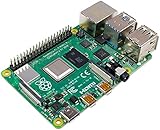
- Broadcom BCM2711, quad-core Cortex-A72 (ARM v8) 64-bit SoC @ 1. 5GHz
- 2. 4 GHz and 5. 0 GHz IEEE 802. 11b/g/n/ac wireless LAN, Bluetooth 5. 0, BLE
- 2 × USB 3. 0 ports, 2 x USB 2. 0 Ports
- 2 × micro HDMI ports supproting up to 4Kp60 video resolution
- Micro SD card slot for loading operating system and data storage
Connect the encoder to the stream
- In YouTube Studio, create or select the live stream and locate its server URL and stream key.
- In OBS, configure the streaming service or custom server and enter the server URL and key. In FFmpeg, specify the ingest destination and key in the output configuration required by your chosen workflow.
- Treat the stream key like a password. Do not publish it, include it in screenshots, or share it in a public command or script.
- Start the encoder. For a scheduled-stream workflow, wait for YouTube’s preview, check stream health, and click Go live when ready.
YouTube’s setup instructions are available at Set up your encoder for live streaming.
PC Slower Than It Used to Be?
A free scan shows the junk files, broken settings and background clutter dragging Windows down - then fixes them in one click.Free scan · Windows 10 & 11Crashes, No Sound, or Screen Glitches?
Random freezes, missing sound and display glitches usually trace back to one bad driver. Find and replace yours safely.Free scan · under a minuteWhat 24/7 operation adds
A successful test stream proves that the chosen configuration can reach YouTube; it does not prove that the whole setup will run unattended indefinitely. Continuous operation also depends on the host staying powered and connected, the media continuing to play, and failures being noticed and handled. OBS’s automatic reconnect can help after a connection interruption, but it is not a substitute for monitoring or process supervision. A command-line FFmpeg workflow likewise needs an operator-designed plan for detecting and recovering from failures.
Rank #3
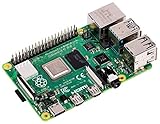
- Broadcom BCM2711, Quad core Cortex-A72 (ARM v8) 64-bit SoC @ 1.5GHz
- 1GB, 2GB, 4GB or 8GB LPDDR4-3200 SDRAM (depending on model)
- 2.4 GHz and 5.0 GHz IEEE 802.11ac wireless, Bluetooth 5.0, BLE Gigabit Ethernet
- 2 USB 3.0 ports; 2 USB 2.0 ports.
- Raspberry Pi standard 40 pin GPIO header (fully backwards compatible with previous boards)
Test representative content and monitor health
YouTube recommends testing with audio and movement similar to the intended stream and monitoring stream health and messages. For a nature channel, that means checking the actual loop, the continuity of ambient audio, and any transition between files—not merely confirming that a test image appears.
Plan archives separately from the live loop
YouTube says streams under 12 hours are automatically archived. A 24/7 broadcast exceeds that duration, so do not assume that one uninterrupted all-day stream will produce one complete archived video. If you need a recording, plan how you will preserve it separately.
Rank #4

- Vilros Complete Starter Kit for Pi 4 Includes Raspberry Pi 4 Model B Board and all the accessories you need to get started.
- 9-PART KIT WILL HAVE YOU READY TO GET UP AND RUNNING: Kit Includes 1. Raspberry Pi 4 Model B Board 2. Case With Easy to connect Built-in fan 3. 64GB Micro SD card Preloaded with RP OS 4. Vilros Pi 4 Compatible Power Supply with Inline on/off switch (power supply color may vary white/black) 5. Micro HDMI to Standard HDMI cable (5ft) 6. Micro SD to USB adapter to reflash card if desired 7. Neoprene Storage Bag to store all parts when not in use 8. Set of 4 Heatsinks 9. Vilros QuickStart Guide instruction booklet for Pi 4
- PASSIVE & ACTIVE COOLING: The included case is well-vented and the kit also includes a set of heatsinks with thermal stickers for easy application and a pre-installed fan to keep the board cool in any use.
- CONVENIENT ACCESSORIES: The power supply features an inline on/off switch neoprene bag that holds and protects all the parts when not in use and the QuickStart guide is updated and written for Raspberry Pi 4.
- IMPORTANT: Kit does NOT include Keyboard, Mouse or Monitor
Or let it run in the cloud
If the aim is to keep prerecorded nature media live on YouTube without leaving an encoder running at home, StreamNeo runs the loop in the cloud. Upload the recording or build a playlist, add your YouTube stream key once, and go live. Nothing has to stay powered on at home; it streams what you uploaded at its original quality, up to 4K 60fps, for one flat price per slot. It can automatically recover if YouTube drops the stream. The first day is free with no card. Monthly billing is $9.99 per month.
Try StreamNeo’s free first day at https://app.streamneo.com/register.
Quick Recap
Best Value

- Includes Raspberry Pi 4 4GB Model B with 1.5GHz 64-bit quad-core CPU (4GB RAM)
- CanaKit 3.5A USB-C Power Supply with Noise Filter (UL Listed) specially designed for the Raspberry Pi 4 (5-foot cable)
- CanaKit USB-C PiSwitch (On/Off Power Switch)
- Set of 3 Aluminum Heat Sinks for the Raspberry Pi 4
Common problems and what to check
- YouTube receives no signal: Confirm that the server URL and stream key are correct, the key belongs to the selected stream, and the encoder is sending to YouTube’s ingest destination.
- Stream health warns about bitrate or connection: Check the selected codec and resolution against YouTube’s recommendations, then test whether your upload can sustain the chosen bitrate.
- Video appears but audio is missing or uneven: Check the audio source, codec, and playback loop in the encoder preview, then run a representative test before going live.
- The stream stops after a disconnect: Check OBS’s automatic reconnect setting if using OBS, and investigate power, network, source playback, and any process supervision. Reconnect behavior cannot compensate for a host that has shut down.
- The archive is incomplete or absent: Do not treat a broadcast longer than 12 hours as one automatically archived video; use a separate recording plan if a complete copy matters.
Product prices and availability are accurate as of the date/time indicated and are subject to change. Any price and availability information displayed on Amazon at the time of purchase will apply.

