
Retbleed is a speculative-execution vulnerability disclosed on July 12, 2022. The right mitigation depends on the processor microarchitecture and the software stack running on it: operating-system updates, CPU firmware or microcode, and, for virtualized systems, hypervisor updates may all matter. Start by identifying the exact CPU and checking its vendor’s affected-product guidance; a processor brand alone does not establish whether a system is vulnerable.
What is Retbleed?
Retbleed abuses the way some processors predict return addresses and execute instructions speculatively. An attacker with less privilege may be able to influence that speculative execution and infer information from protected data. It is a processor behavior mitigated through system software and, where applicable, firmware—not a conventional application bug that can be fixed by updating one app.
Intel classifies its return-stack-buffer-underflow issue in advisory INTEL-SA-00702 as an information-disclosure vulnerability with a CVSS score of 4.7, rated Medium. Intel uses CVE-2022-29901. AMD identifies RETbleed as CVE-2022-29900 and also references CVE-2022-23816. The different identifiers reflect vendor advisories and should not be treated as proof that every Intel or AMD processor is affected.
How can you tell whether your system is affected?
Exposure is microarchitecture-specific. Intel’s detailed guidance focuses on some Skylake-generation processors that lack enhanced IBRS and exhibit RSBA behavior. AMD’s bulletin lists affected Ryzen mobile families and first- and second-generation EPYC products. Xen’s advisory describes AMD Zen2 and earlier as potentially vulnerable in the Xen context; it says Zen3 and later are not believed vulnerable for that case. These descriptions are not substitutes for checking the applicable vendor’s complete affected-product information.
Windows Errors? Fix Them Before They Spread
Repair common Windows errors and clear accumulated junk for a smoother, more stable PC - no reinstall needed.Free scan · no reinstallCrashes, No Sound, or Screen Glitches?
Random freezes, missing sound and display glitches usually trace back to one bad driver. Find and replace yours safely.Free scan · under a minute#1 Best Overall

- [Brand Overview] Thermalright is a Taiwan brand with more than 20 years of development. It has a certain popularity in the domestic and foreign markets and has a pivotal influence in the player market. We have been focusing on the research and development of computer accessories. R & D product lines include: CPU air-cooled radiator, case fan, thermal silicone pad, thermal silicone grease, CPU fan controller, anti falling off mounting bracket, support mounting bracket and other commodities
- [Product specification] Thermalright PA120 SE; CPU Cooler dimensions: 125(L)x135(W)x155(H)mm (4.92x5.31x6.1 inch); heat sink material: aluminum, CPU cooler is equipped with metal fasteners of Intel & AMD platform to achieve better installation, double tower cooling is stronger((Note:Please check your case and motherboard for compatibility with this size cooler.)
- 【2 PWM Fans】TL-C12C; Standard size PWM fan:120x120x25mm (4.72x4.72x0.98 inches); fan speed (RPM):1550rpm±10%; power port: 4pin; Voltage:12V; Air flow:66.17CFM(MAX); Noise Level≤25.6dB(A), leave room for memory-chip(RAM), so that installation of ice cooler cpu is unrestricted
- 【AGHP technique】6×6mm heat pipes apply AGHP technique, Solve the Inverse gravity effect caused by vertical / horizontal orientation, 6 pure copper sintered heat pipes & PWM fan & Pure copper base&Full electroplating reflow welding process, When CPU cooler works, match with pwm fans, aim to extreme CPU cooling performance
- 【Compatibility】The CPU cooler Socket supports: Intel:115X/1200/1700/17XX AMD:AM4;AM5; For different CPU socket platforms, corresponding mounting plate or fastener parts are provided(Note: Toinstall the AMD platform, you need to use the original motherboard's built-in backplanefor installation, which is not included with this product)
- Identify the exact processor. Record the CPU model and generation from the system’s firmware setup, operating-system system information, or management tools.
- Check the CPU vendor’s affected-product guidance. Use Intel’s or AMD’s product-specific information rather than inferring exposure from the brand or a broad family name.
- Identify every software layer. Note the operating system and kernel, hypervisor, firmware/BIOS, and whether the machine runs virtual machines.
- Verify mitigation status after updates. Consult the operating-system or hypervisor vendor’s current security guidance for the installed versions and processor. A general statement that a system is patched does not establish that every layer is covered.
Which mitigation applies to each platform?
| Platform or vendor | Guidance in the cited advisories | What to check |
|---|---|---|
| Intel on Linux | Intel recommends IBRS rather than retpoline on affected processors. Its technical guidance documents spectre_v2=retpoline retbleed=stuff for applicable Skylake systems and notes that microcode may add processor enumeration. |
Confirm that the processor is in scope and check the distribution kernel and firmware guidance before changing kernel boot parameters. |
| AMD systems | AMD provides software guidance for the relevant CPU families and distinguishes RETbleed from broader Branch Type Confusion behavior. | Follow AMD’s guidance for the exact CPU family and install current operating-system updates. |
| Xen hypervisor | Xen Security Advisory XSA-407 says applying the appropriate patch resolves the issue. Its guidance discusses IBPB at entry, STIBP on Zen2, and disabling SMT on Zen1 where required by the threat model. | Use the Xen advisory and your Xen vendor’s instructions to determine the required patch and configuration for the processor and deployment. |
| VMware vSphere | VMware says its July 2022 vSphere patches implemented hypervisor-specific mitigation with no visible performance cost. | Install the applicable supported vSphere updates. Guest operating systems still control their own in-guest mitigation policy. |
| Windows and OEM firmware | Microsoft says available protections may require both firmware/microcode and software updates and recommends deploying them. Intel says Windows used IBRS by default for the Intel issue described in its advisory. | Apply supported Windows and OEM firmware updates. Do not assume an OS update alone supplies processor microcode or firmware protection. |
How should you patch a Linux system?
- Identify the CPU and Linux distribution. Confirm the processor model and the distribution’s supported kernel and firmware update channels.
- Install the supported kernel and firmware updates. Use the distribution’s security guidance for the system’s CPU. Firmware or microcode may be delivered separately from the kernel.
- Check the distribution’s Retbleed mitigation status. Confirm which mitigation it enables for the installed kernel and processor. Intel’s documented
spectre_v2=retpoline retbleed=stuffoption applies to specified Skylake systems; it is not a generic setting for every Linux machine. - Change boot parameters only when the vendor directs you to. Kernel parameters affect boot-time behavior and may vary by distribution and kernel. Follow the distribution’s documented procedure, preserve a known-good boot entry if available, and reboot as directed.
- Verify after reboot. Check the distribution’s documented status interface or security guidance for the running kernel and CPU. If the mitigation is reported unavailable or the system’s status is unclear, consult the distribution or hardware vendor rather than guessing at a parameter.
What should Windows and OEM administrators do?
Deploy the supported Windows updates and the system manufacturer’s firmware or microcode updates where required. Microsoft’s guidance cautions that all available protections may depend on both software and firmware updates. Because Intel says Windows used IBRS by default for the issue covered by its advisory, administrators should use Microsoft’s and the OEM’s current applicability and status guidance rather than applying Linux-specific kernel parameters or assuming that the same mitigation configuration is needed on Windows.
What changes on Xen or VMware hosts?
Xen
Apply the appropriate Xen security patch and follow XSA-407 for processor-specific configuration. The advisory’s mitigations include IBPB at entry, STIBP on Zen2, and disabling simultaneous multithreading (SMT) on Zen1 where the threat model requires it. Those measures are not interchangeable universal settings: use the advisory’s conditions for the relevant CPU and deployment.
Rank #2

- CONTACT FRAME FOR INTEL LGA1851 | LGA1700: Optimized contact pressure distribution for longer CPU life and better heat dissipation
- ARCTIC's P12 PRO FAN: More power at any speed - more powerful and quieter than the P12, especially at low speeds. Higher maximum speed for optimal cooling performance under high load
- NATIVE OFFSET MOUNTING FOR INTEL AND AMD: Shifting the cold plate center towards the CPU hotspot ensures more efficient heat transfer
- INTEGRATED VRM FAN: PWM-controlled fan that lowers the temperature of the voltage converters and thus ensures reliable performance
- INTEGRATED CABLE MANAGEMENT: The PWM cables of the radiator fans are integrated in the sheathing of the hoses so that only a single visible cable is connected to the motherboard
VMware vSphere
VMware reported that its July 2022 vSphere patches added hypervisor-specific mitigation without visible performance cost. Keep the hypervisor on a supported patched release, and assess guest operating systems separately: VMware notes that guests retain control of their own in-guest mitigation policy.
Independent reader supportYour contribution helps us test, update, and keep practical guides available for everyone.Will Retbleed mitigation slow down a server or VM?
There is no single portable performance-loss figure. The effect depends on the processor microarchitecture, operating-system and kernel version, virtualization layer, and workload sensitivity. VMware reports that Linux kernel 5.19’s IBRS default can cost more than retpoline when RSBA is detected; impact varies by workload and physical CPU. VMware also reports no new Windows guest overhead for this mitigation because Windows already used IBRS by default.
Free tools Windows power users keep installed
One-click scans. No signup required.
Rank #3
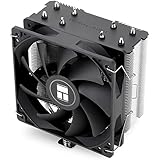
- [Brand Overview] Thermalright is a Taiwan brand with more than 20 years of development. It has a certain popularity in the domestic and foreign markets and has a pivotal influence in the player market. We have been focusing on the research and development of computer accessories. R & D product lines include: CPU air-cooled radiator, case fan, thermal silicone pad, thermal silicone grease, CPU fan controller, anti falling off mounting bracket, support mounting bracket and other commodities
- [Product specification]AX120R SE; CPU Cooler dimensions: 125(L)x71(W)x148(H)mm (4.92x2.8x 5.83 inch); Product weight:0.645kg(1.42lb); heat sink material: aluminum, CPU cooler is equipped with metal fasteners of Intel & AMD platform to achieve better installation
- 【PWM Fans】TL-C12C; Standard size PWM fan:120x120x25mm (4.72x4.72x0.98 inches); fan speed (RPM):1550rpm±10%; power port: 4pin; Voltage:12V; Air flow:66.17CFM(MAX); Noise Level≤25.6dB(A), the fan pairs efficient cool with low-noise-level, providing you an environment with both efficient cool and true quietness
- 【AGHP technique】4×6mm heat pipes apply AGHP technique, Solve the Inverse gravity effect caused by vertical / horizontal orientation. Up to 20000 hours of industrial service life, S-FDB bearings ensure long service life of air-cooler radiators. UL class a safety insulation low-grade, industrial strength PBT + PC material to create high-quality products for you. The height is 148mm, Suitable for medium-sized computer case
- 【Compatibility】The CPU cooler Socket supports: Intel:1150/1151/1155/1156/1200/1700/17XX/1851,AMD:AM4 /AM5; For different CPU socket platforms, corresponding mounting plate or fastener parts are provided
For capacity planning, compare the same workload on the same hardware and software stack before and after the applicable mitigation, where operationally practical. Record the CPU, kernel, hypervisor, and mitigation state so the result is meaningful; do not apply a percentage observed on another machine as a forecast for yours.
Quick Recap
Best Value
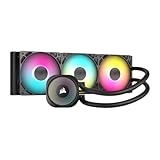
- Simple, High-Performance All-in-One CPU Cooling: Renowned CORSAIR engineering delivers strong, low-noise cooling that helps your CPU reach its full potential
- Efficient, Low-Noise Pump: Keeps your coolant circulating at a high flow rate while generating a whisper-quiet 20 dBA
- Convex Cold Plate with Pre-Applied Thermal Paste: The slightly convex shape ensures maximum contact with your CPU’s integrated heat spreader, with thermal paste applied in an optimised pattern to speed up installation
- RS120 ARGB Fans: RS ARGB fans create strong airflow and high static pressure, with easy ARGB control via a compatible motherboard. CORSAIR AirGuide technology and Magnetic Dome bearings ensure great cooling performance and low noise
- Easy Daisy-Chained Connections: Reduce the wiring in your system by daisy-chaining your RS ARGB fans and connecting them to just one 4-pin PWM fan header and one +5V ARGB header
Rank #4
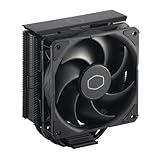
- Cool for R7 | i7: Four heat pipes and a copper base ensure optimal cooling performance for AMD R7 and Intel i7.
- Quiet Cooling Fan: SickleFlow 120 Edge with Dynamic PWM control (690–2,500 RPM), designed for low noise and peak cooling performance.
- Simplify Brackets: Redesigned brackets simplify installation on AM5 and LGA 1851|1700 platforms.
- Versatile Compatibility: 152mm tall design offers performance with wide chassis compatibility.
- Easy Installation: Easy to install with included thermal paste for hassle-free setup and optimal cooling performance.
How should you prioritize remediation?
- Establish scope. Match the precise CPU model to the relevant Intel or AMD affected-product guidance.
- Inventory layers. Include the OS/kernel, firmware and microcode, hypervisor, and guest systems rather than treating the host patch as the entire fix.
- Apply supported updates. Use the operating-system distribution, Microsoft, OEM, and hypervisor vendor channels that apply to the deployment.
- Verify each layer. Confirm the running kernel and hypervisor versions and use their documented mitigation-status checks.
- Assess operational impact. Monitor workload performance and use the result for that CPU and workload, not as a universal Retbleed benchmark.
Product prices and availability are accurate as of the date/time indicated and are subject to change. Any price and availability information displayed on Amazon at the time of purchase will apply.

