
The Tool Desk
Outbyte PC Repair FREEClear out junk files and repair common Windows errorsFree Scan →Outbyte Driver Updater FREEScan for outdated or missing drivers - takes under a minuteDriver Scan →The best window for a houseplant is the one that delivers the light its particular needs—at the plant’s actual position, for enough hours. Compass direction helps narrow the choice, but distance from the glass, shade and seasonal changes matter too. A light meter can compare spots; it cannot declare one universally right for every plant.
There is no evidence here that most gifted plants die because of a bad window rather than neglect, or that a specific window-testing device was built or tested. But light is essential: University of Minnesota Extension explains that without adequate light, plants cannot manufacture carbohydrates, their energy reserves are depleted and they can die.
Start with the plant’s light needs, not the window label
Before choosing a spot, find out whether the plant needs low, medium or high light, and whether it prefers direct sun or bright indirect light. Then assess the conditions where its leaves will actually sit. Minnesota Extension advises matching a plant to the natural light quality and hours available in the intended location.
As a broad starting point, Minnesota Extension associates low-light plants with north-facing windows or fairly dark corners; medium-light plants with east-facing windows or spots near a west window out of direct sun; and high-light plants with bright south- or southwest-facing windows. These are guides, not guarantees: an overhang, tree, nearby building, curtain or distance from the glass can change the light substantially.
What’s actually slowing this PC down?
Pick the symptom - the matching free tool is one click away.
#1 Best Overall
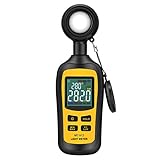
- Measures luminosity from 0 to 200,000 Lux and ambient temperature
- High accuracy of ±3% rdg ± 8 dgts (10,000 Lux)
- 4 digital color LCD screen, MIN/Max readings, data hold, auto power off, and low battery indication
- Wide range of application, use lux light meter for set design, factory, office or home use
- lightweight and compact, 2 years long period warranty
Examples by broad light category
- Low light: pothos, snake plant, ZZ plant, cast iron plant, Chinese evergreen, parlor palm and peace lily are among Minnesota Extension’s examples. Low light does not mean no light; expect slower growth, and remember that a plant growing slowly may need less frequent watering.
- Medium light: examples include ferns, rubber plant, fiddle-leaf fig, spider plant, begonia, jade, hoya, peperomia and monstera.
- High light: examples include cacti and succulents, citrus, culinary herbs, hibiscus, gardenia, jasmine, kalanchoe, geraniums and orchids.
These groupings are broad. A plant’s species and desired growth can change the best placement, so use a plant-specific care recommendation when available.
Compare the actual spots in your home
When two windows seem plausible, compare the conditions at the proposed plant location rather than relying on direction alone. Check the following factors:
Rank #2
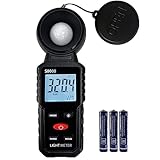
- 【Widely used】S8608 is a digital illuminometer, used for measuring visible brightness, large screen display, wide measuring range, up to 200000LUX, automatic conversion range. Can be widely used in such as schools, hospitals, factories, airports, families and other occasions of brightness measurement.
- Measurement visible brightness, measurement range is wide
- lluminance unit switch,Unit of illuminance:LUX、FC
- Measurement time: S
- MAX/ MIN,Data HOLD,Backlight function
- Intensity and directness: Is the light direct sun, filtered sun or bright indirect light?
- Duration: For how many hours does useful light reach the plant? Needs differ; Penn State Extension, for example, says jade grows best with four or more hours of direct sun daily.
- Distance and obstructions: Is the plant close to the glass, or set back in the room? Do an overhang, trees, buildings, curtains or glazing block light?
- Season: The sun’s angle and strength change over the year, so a spot that works in winter may receive more intense sun in spring or summer.
- Plant response: Watch for stretching, pale leaves, scorching, leaf drop or poor flowering, while remembering that these signs are not proof of a light problem on their own.
For jade specifically, Penn State Extension recommends a south-facing window for best appearance and four or more hours of direct sun each day; if that is unavailable, it says full-spectrum artificial light may be considered. For the orchids covered in Penn State’s orchid guidance, east- or west-facing windows can work, while a north window probably will not provide enough light. That advice should not be generalized to every orchid species.
Indoor herbs also need a sunny position: Penn State’s guidance points to a south-facing window or artificial fluorescent lighting. With inadequate light, herbs may grow thin and spindly, with smaller leaves and less aroma.
Rank #3

- High Precision & Fast Response: This high-precision illuminance meter delivers lightning-fast readings 2 times per second, ensuring you get accurate light intensity data—perfect for creating the ideal growing environment for your plants.
- FC/LUX Conversion: FC or LUX? The Power is in Your Hands! Effortlessly toggle between FC and LUX to measure light intensity in the unit that suits your gardening needs—precision made simple.
- PEAK Data Recording: Instantly lock in and display the highest light pulse value with a single press of the PEAK button—perfect for measuring lightning, laser beams, and other brief high-intensity sources.
- Low Battery Alert: Stay powered, stay prepared! A handy + - symbol appears when the battery runs low, so you’ll always know when it’s time to swap out the 9V battery and keep your light measurements going strong.
- Versatile Usage: Ready for any setting! Whether indoors or outdoors, this meter is perfect for homes, offices, factories, or measuring sunlight intensity to create the perfect environment for your plants to thrive.
Use a light meter to compare, not to make the decision for you
A handheld light meter can help compare spots and track changes. Penn State Extension describes meters that display foot-candles and lux, and notes that 100 foot-candles is a common low-light baseline. Recommendations vary, however, and the reading is a guideline—not a universal pass/fail threshold for every plant. Read the plant as well as the meter.
It also helps to know what a measurement means. Minnesota Extension distinguishes plant-usable photon output (PPF) from the light reaching a surface such as a leaf (PPFD). Foot-candles and lumens are also used; lumens describe brightness as perceived by the human eye rather than plant-useful wavelengths. Watts measure a bulb’s energy use, not the intensity of light reaching a plant.
Rank #4

- 180° Rotating Probe and 2.25" Backlit LCD: TopTes TS-710 Light meter with 180-degree rotating sensor ensures precise light measurements from multiple angles. The fast-responding sensor samples every 0.5 seconds, providing continuous measurement data. The backlit 2.25-inch LCD screen allows easy reading even in low-light conditions
- LUX/FC Measurement Units: TopTes TS-710 Luxmeter with Wide range: 0.1 to 200,000 lux and 0.1 to 20,000 foot candles, 3%rdg+5dgt accuracy. Optimize your plant's growth with our light meter for plants to find the suitable lighting area
- Versatile Applications: TS-710 lumen meter measures various visible light sources like LED grow room lighting, fluorescent lamps, metal halides, high-pressure sodium lamps, and incandescent bulbs. Ideal for homes, schools, offices, workshops, stages, farms, and factories. With the light meter foot candles, you can easily diagnose and fix issues such as dim car headlights or uneven LED bulbs in your home
- Multi-Functional Design: TS-710 foot candle light meter measures ambient ℃/℉ temperature and humidity, with the temperature sensor adapting to new environments over time. Features MAX/MIN value recording and data-hold for extensive data logging. Auto shut-off after 10 minutes of inactivity. Low-battery indicator for timely battery replacement
- Package Contents: A TS-710 digital light meter with sensor cover, a soft case, three AAA batteries, and a user manual
Minnesota Extension publishes these broad categories. They are reference ranges, not universal plant thresholds; in particular, the listed wattage figures should not be used to judge natural window light.
| Category | PPF (µmol m⁻² s⁻¹) | Foot-candles | Watts listed by Minnesota Extension |
|---|---|---|---|
| Low | 50–150 | 50–250 | 10–15 |
| Medium | 150–250 | 250–1,000 | 15–20 |
| High | 250–450 | More than 1,000 | More than 20 |
These are the categories published on Minnesota Extension’s indoor-lighting page, reviewed in 2026. The extension cautions that distance affects light intensity, and explains that watts measure energy used by a bulb rather than actual intensity.
Best Value

- Lighting accuracy: plus or minus 3% plus or minus 10 dgts (10000 LUX)
- EXTRA LARGE RANGE Our digital illuminance meter has a wide measuring range of up to 200,000 LUX. The highly sensitive illuminance sensor ensures accurate and fast response with a sampling frequency of up to 2 times per second.
- User-friendly design: Easily switch between the two main units of illumination intensity - LUX and FC - as needed. The LCD display ensures clear vision, the backlight ensures the readability of the meter even in dark environments.
- Multifunctional: With our meter, you can not only measure the current brightness, but also the maximum and minimum values. With the data hold function, you can freeze the reading on the display, which can be useful when you need to record the measurement.
- ENERGY EFFICIENT The meter has an automatic shut-off function which helps to save battery when not in use. A low battery indicator lets you know when it's time to change the battery so that the meter is always ready to use.
Interpret plant symptoms cautiously
Too little light may contribute to pale or yellow leaves, leggy stems, leaf drop or poor flowering. Too much direct sun can scorch or bleach leaves. A symptom is a reason to investigate, not a diagnosis: consider the plant’s care and conditions as a whole, and use meter readings as supporting information rather than proof.
Adjust for the seasons, or add supplemental light
Spring sun can be stronger than winter sun, and the changing sun angle alters exposure. If moving a plant closer to a south- or west-facing window in spring, Minnesota Extension recommends making the move gradually over one to two weeks. Pale patches or crispy leaf edges can indicate that the transition is too fast.
If no window provides enough light, supplemental lighting is an option. Minnesota Extension advises considering the light’s PPFD at the plant, the source’s distance, spectrum and daily duration. Its page lists 12–14 hours for foliage houseplants and 14–16 hours for flowering houseplants, while noting that needs vary by plant. Follow plant-specific guidance rather than treating those durations as a universal schedule.
The practical way to choose is to match a plant’s needs to the light at its intended spot, compare candidate locations with a meter if useful, and watch how the plant responds as conditions change.
Do these 3 things before closing this tab:
1Repair Windows errors before they cause bigger problems2Scan for outdated or missing drivers - takes under a minute3Clear out junk files and repair common Windows errorsQuick Recap
Product prices and availability are accurate as of the date/time indicated and are subject to change. Any price and availability information displayed on Amazon at the time of purchase will apply.

