
Free tools Windows power users keep installed
One-click scans. No signup required.
How do you migrate a Java EE application to WebSphere Liberty? Start with evidence, not a rewrite: inventory the deployed application, scan its binaries and source, choose a Liberty, Java SE, and enterprise-API target deliberately, remediate only the findings that apply, then validate the running result. Runtime migration, specification upgrades, Java upgrades, and container modernization are related decisions, but they do not have to happen in one step.
1. Establish what the application actually uses
Collect the deployable archives, deployment descriptors, external configuration, current application-server version, Java SE version, and environment-specific settings. Record modules such as web applications, EJBs, persistence units, messaging clients, web services, authentication integrations, and vendor extensions.
Run a binary assessment first
IBM recommends the Migration Toolkit for Application Binaries as an initial evaluation. Its scanner can produce:
- technology evaluation reports;
- an application inventory;
- detailed migration analysis; and
- Liberty configuration output.
For estate-level work, IBM also describes Transformation Advisor and collection options that help gather application information across multiple servers.
What’s actually slowing this PC down?
Pick the symptom - the matching free tool is one click away.
#1 Best Overall
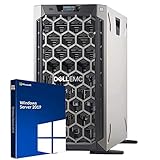
- 3.5 Inch Hot Plug Hard Drive PowerEdge T340 Tower Server Chassis
- Microsoft Windows Server 2019 Standard Operating System
- Processors: Intel Xeon E-2124 Quad-Core 3.3GHz 8MB CPU, Up To 4.3GHz Turbo
- Memory: 32GB (2 x 16GB) DDR4 PC4-21300 2666MHz Unbuffered Memory
- Hard Drive: 8TB (4 x 2TB) 7.2K RPM 6Gb/s SATA 3.5 Inch HDDs in RAID
Know what a scan cannot prove
An archive scan identifies technologies and known migration rules; it does not prove that business workflows, integration contracts, security behavior, data access, or environment-specific assumptions will work on Liberty. Treat the reports as a map for investigation, not as a runtime certification.
2. Choose the target deliberately
Define three separate target inputs: the Liberty release, the Java SE version, and the Java EE or Jakarta EE level. Verify support against the exact Liberty release you intend to deploy because supported levels are release-sensitive.
| Possible target scope | What the documented support covers | When it may fit |
|---|---|---|
| Java EE 7 or Java EE 8 | Full profiles are described as supported. | Useful when the application is already compatible and the priority is a lower-risk runtime move. |
| Jakarta EE 9.1 or Jakarta EE 10 | Full profiles are described as supported. | Appropriate when the application and its dependencies can handle the namespace and behavioral changes. |
| Java EE 6 | Web profile is described as supported; full profile is not stated as supported in the cited guidance. | Relevant only to applications that fit the web-profile boundary and the selected Liberty release. |
You do not necessarily need to upgrade every specification at once. IBM notes that technologies such as JPA and JAX-RS may not require migration to the newest enterprise level. Select the specifications the application actually uses, then test the resulting combination.
3. Resolve compatibility findings
Prioritize unsupported and removed technologies
Review findings for technologies that Liberty does not include, deprecated interfaces, proprietary APIs, and changed behavior. IBM gives JAX-RPC and Entity EJB beans as examples of optional Java EE technologies not included in Liberty and notes that some superseded proprietary WebSphere APIs were removed. A finding is an assessment prompt, not proof that your application uses the technology; confirm it in the code and deployed configuration.
Use source analysis for code changes
The Eclipse-based WebSphere Application Server Migration Toolkit analyzes Java, JSP, XML, XMI, and properties files. It supplies issue explanations and, where possible, quick fixes. Review each proposed edit before applying it, preserve normal code-review controls, and add regression tests for behavior affected by the change.
4. Keep Java SE work distinct from Jakarta work
Check Java SE dependencies
Java SE 11 removed Java EE and CORBA APIs that had previously shipped in the JDK. An application that compiled or ran because those classes were bundled with an older JDK may need explicit dependencies or code changes. This is a Java-platform compatibility issue, even if the enterprise API level remains unchanged.
Rank #2

- Dell PowerEdge R730xd 24B SFF 2U Server
- 2x Intel Xeon E5-2690 v4 2.6Ghz 14-Core (28-cores Total)
- 128GB DDR4 RAM – 4x 1.2TB 10K SAS 2.5” 12Gb/s
- Dell H730P mini 2GB 12Gb/s RAID
- 2x 750W PSU - 2x 10Gb SFP+ 2x 1Gb (RJ45) NIC
Plan the javax-to-jakarta transition
Jakarta EE 9 and later use the jakarta namespace instead of javax. IBM describes Eclipse Transformer as a way to transform source code or binary archives for this namespace change. Transformation changes names; it does not establish that every library, integration, or runtime behavior is compatible. Check third-party dependencies and validate the transformed application on the target Liberty runtime.
5. Generate Liberty configuration, then review it
The binary scanner can generate a Liberty server.xml feature list from detected technologies. When an application is associated with a traditional WebSphere configuration, it can also derive Liberty configuration from that information.
Quick wins for a faster PC:
Fix the driver behind crashes, sound loss and screen glitchesFind Drivers →Clear out junk files and repair common Windows errorsFree Scan →IBM reports the best results for generated Liberty configuration when the newest Liberty release is used. Treat the output as a starting point: inspect feature choices, ports, data sources, security settings, variables, file paths, credentials references, and environment-specific values before deployment. Generated configuration cannot replace an operator’s review of how the application is meant to run.
6. Deploy to a representative environment and test
After remediation and configuration review, deploy the application to an environment that resembles production. IBM’s migration guidance explicitly calls for testing deployed applications and updating them as needed.
Exercise application behavior
- critical user journeys and scheduled jobs;
- database transactions, connection pools, and schema access;
- messaging and web-service integrations;
- authentication, authorization, certificates, and single sign-on;
- file storage, external services, and environment variables; and
- startup, shutdown, logging, health checks, backup, and recovery procedures.
Test the failure paths
Include timeouts, unavailable dependencies, expired credentials, malformed messages, partial failures, and restart scenarios. A successful deployment only shows that the server started; it does not show that the application behaves correctly under operational conditions.
7. Decide whether to modernize operations now or later
Moving from traditional WebSphere to Liberty is runtime modernization. Container orchestration and delivery changes are a separate operational workstream. If the destination includes OpenShift or another container platform, plan image builds, deployment automation, observability, secrets, scaling, and support ownership alongside the application work.
Rank #3

- The Dell PowerEdge T320 is a powerful one socket tower workstation that caters to small and medium businesses, branch offices, and remote sites. It’s easy to manage and service, even for those who might not have technical IT skills. Various productivity applications, data coordination and sharing are easily handled with the T320.
- If you are looking for a solution to your virtual workload for your small to medium business you’ve come to the right place. The PowerEdge T320 can be configured to fit a multitude of business needs. Configure your own or choose from one of our preconfigured options above.
IBM identifies OpenShift deployment artifacts in its Transformation Advisor guidance, but OpenShift is not established as a requirement for every Liberty migration. A staged approach can move the runtime first while retaining existing deployment practices, then introduce containers and DevOps or GitOps processes after the application is stable.
Independent reader supportYour contribution helps us test, update, and keep practical guides available for everyone.How to choose among migration paths
| Decision axis | Path A | Path B | Path C |
|---|---|---|---|
| Specification scope | Remain at a supported Java EE level | Upgrade to a newer Java EE level | Plan a Jakarta EE transition |
| Compatibility burden | Usually limits namespace change, but legacy APIs still require review | Requires testing of the selected specification changes | Adds javax-to-jakarta and dependency analysis |
| Assessment method | Binary scan plus targeted source review | Binary scan plus source remediation for upgraded APIs | Binary scan, source analysis, transformation where suitable, and dependency validation |
| Operations | Keep current delivery practices initially | Combine runtime and delivery changes if capacity allows | Adopt containers and new delivery practices as a separate workstream |
| Risk control | Best when representative tests are strong and scope is narrow | Needs broader regression coverage | Needs especially careful third-party and integration testing |
Common failure modes and recovery actions
The scanner reports no issues, but the application fails
Recheck runtime-only behavior, external configuration, integrations, security providers, and assumptions that are not visible in the archive. Add an integration test for the failing path rather than treating the scan result as a guarantee.
Generated configuration starts Liberty but not the application
Compare the generated features and settings with the application’s actual modules and traditional WebSphere configuration. Correct missing features, variables, data sources, credentials references, and environment values, then redeploy.
A legacy API is identified
Confirm whether the application invokes it. If it does, replace the API, isolate the dependent component, or keep the application on a target that still supports the required technology while a remediation plan is completed.
Do these 3 things before closing this tab:
1Repair Windows errors before they cause bigger problems2Scan for outdated or missing drivers - takes under a minute3Clear out junk files and repair common Windows errorsJakarta transformation compiles but integration tests fail
Inspect libraries that still expose javax types, service-provider configuration, serialized data, and client contracts. Namespace conversion alone cannot make incompatible dependencies interoperable.
Runtime migration and container migration become entangled
Split the work into acceptance gates: first prove application behavior on Liberty, then prove image builds, deployment, observability, secrets, scaling, and rollback on the chosen platform.
Quick Recap
Production-readiness checklist
- Application archives, configuration, modules, server version, and Java SE level are inventoried.
- Binary-scanner reports have been reviewed rather than accepted mechanically.
- The Liberty, Java SE, and Java EE or Jakarta EE targets are documented and release-checked.
- Unsupported, removed, proprietary, and deprecated APIs have owners and remediation decisions.
- Java SE dependencies and any
javax-to-jakartawork are tracked separately. - Generated
server.xmlcontent has been reviewed and environment values supplied securely. - Representative functional, integration, security, data, messaging, and operational tests pass.
- Rollback, monitoring, support, and deployment procedures are documented.
- Any container or delivery-platform migration has its own acceptance criteria.
Product prices and availability are accurate as of the date/time indicated and are subject to change. Any price and availability information displayed on Amazon at the time of purchase will apply.

