
Crashes, No Sound, or Screen Glitches?
Random freezes, missing sound and display glitches usually trace back to one bad driver. Find and replace yours safely.Free scan · under a minuteWindows Errors? Fix Them Before They Spread
Repair common Windows errors and clear accumulated junk for a smoother, more stable PC - no reinstall needed.Free scan · no reinstallArm chips power everything from small embedded devices to cloud servers, but “Arm” does not name one chip or guarantee one level of performance. It describes a processor architecture and an ecosystem: Arm defines the instruction-set architecture and licenses processor designs, while partners build finished chips and cloud systems for different workloads.
What does “Arm chip” mean?
It helps to separate three layers that are often blurred together:



- Arm architecture: The rules that define how a processor behaves and provide a basis for software compatibility. Arm describes its architecture as a contract between hardware and software; implementations can still differ in design and performance. See Arm’s CPU architecture overview.
- Processor IP: Designs that can be licensed and incorporated into a chip. Arm’s Cortex and Neoverse families are examples of this layer.
- Finished silicon and systems: Partners use Arm architecture or processor IP to create chips, boards, and cloud platforms. A cloud instance is a service built on a provider’s hardware—not a single generic “Arm server.”
So, when someone says a system is “Arm-based,” the useful follow-up is: which processor design or chip is it using, and what operating system, software, and workload is it intended to run?
What are Arm processors used for in servers and the cloud?
Arm’s Neoverse processor IP and infrastructure platforms target servers, cloud data centers, AI, networking, and 5G. Cloud providers and their partners use Arm-based hardware in offerings with distinct product names:
What’s actually slowing this PC down?
Pick the symptom - the matching free tool is one click away.
#1 Best Overall
| Provider or platform | Arm-based offering named by Arm | What it represents |
|---|---|---|
| AWS | Graviton | AWS Arm-based cloud platform |
| Google Cloud | Axion | Google Cloud Arm-based platform |
| Microsoft Azure | Cobalt | Azure Arm-based platform |
| Oracle Cloud Infrastructure | Ampere | OCI Arm-based platform |
These names refer to provider-specific platforms, not interchangeable chips with identical capabilities. Instance availability, hardware details, and supported services can vary by provider and region, so check the provider’s current documentation when choosing a deployment. Arm’s examples appear in its cloud migration initiative announcement.
What Neoverse Compute Subsystems do
Arm’s Neoverse Compute Subsystems (CSS) are pre-validated infrastructure platforms intended to help partners develop differentiated silicon. Arm says CSS can reduce risk and bring CPU designs to market up to one year sooner. That is Arm’s claim about partner chip development time; it is not a promise that moving an application to the cloud will take a year less. Details are on the Neoverse CSS product page.
Rank #2
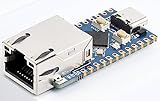
- 【RP2040-ETH Module】 Based On RP2040, Onboard Ethernet Port,Dual-core Arm Cortex M0+ processor, flexible clock running up to 133 MHz 264KB of SRAM, and 4MB of onboard Flash memory.
- Onboard CH9120 with integrated TCP/IP protocol stack. 14 × multi-function GPIO pins, compatible with some Pico HATs.
- Castellated module allows soldering direct to carrier boards. Drag-and-drop programming using mass storage over USB. 8 × Programmable I/O (PIO) state machines for custom peripheral support. Controllable via network.
- Support multiple communication modes: Supports TCP Server / TCP Client / UDP Server / UDP
- Support C/C++, MicroPython, Arduino: Comprehensive SDK, Dev Resources, Tutorials To Help You Easily Get Started
How to evaluate a cloud migration
Arm offers a Cloud Migration Program with expert guidance and technical resources for deployments on named Arm-based platforms. The right choice still depends on the application. Compare:
- Whether the application, operating system, libraries, and development tools support the target platform.
- Performance on the workloads that matter to you, not just vendor-selected examples.
- Price-performance and energy use under comparable conditions.
- Security requirements and the provider’s available features.
- Instance availability in the regions where the service must run.
- Engineering effort, testing needs, and operational changes involved in migration.
Arm’s performance and efficiency statements are based on representative workloads. Treat them as a reason to test, not as a substitute for measuring your own application.
Quick wins for a faster PC:
Fix the driver behind crashes, sound loss and screen glitchesFind Drivers →Clear out junk files and repair common Windows errorsFree Scan →Scan for outdated or missing drivers - takes under a minuteDriver Scan →What are Arm chips used for in IoT and edge devices?
IoT is not one processor category. A battery-powered sensor, a timing-sensitive industrial controller, a smart camera, and a Linux edge gateway have different compute, memory, power, and software needs. Arm’s IoT portfolio spans processor IP and system components for those different roles.
| Arm family or component | Typical role | Useful fit to consider |
|---|---|---|
| Cortex-M | Microcontroller-class processor IP | Small, energy-conscious embedded devices such as sensors with limited memory and compute |
| Cortex-R | Processor IP for real-time systems | Systems where timing requirements are central |
| Cortex-A | Application-processor IP | More capable devices with greater performance and memory needs, such as vision or speech workloads |
| Neoverse | Infrastructure-focused processor IP and platforms | Servers, data centers, networking, and related infrastructure rather than a typical small IoT endpoint |
The family name is a starting point, not a complete specification. For an IoT design, assess compute and memory needs, the power budget, real-time behavior, operating-system or RTOS support, connectivity and I/O, accelerator requirements, security over the product’s lifecycle, and the development ecosystem. Arm’s CPU architecture page outlines its processor profiles, while its Edge AI resources discuss device-side workloads.
Optional system components: Corstone and Ethos
Arm also offers Corstone subsystem products and Ethos neural-processing units (NPUs). These are system-design options, not requirements for every IoT device. An NPU can accelerate inference alongside a CPU; whether that is worthwhile depends on the device’s workload and constraints. Arm describes its IoT technology at Arm IoT Technology.
How endpoint, edge, and cloud fit together
A useful system model is that an endpoint senses or acts locally, a nearby edge computer can aggregate data or run a richer application, and a cloud server can coordinate or process larger workloads. Arm’s examples include Cortex-M microcontrollers in industrial sensors, Cortex-A boards, and Neoverse servers. A Raspberry Pi 5 is one Arm-based Linux device that can help demonstrate edge development; it is not a Cortex-M microcontroller or a Neoverse data-center server.
Do these 3 things before closing this tab:
1Fix the driver behind crashes, sound loss and screen glitches2Clear out junk files and repair common Windows errors3Scan for outdated or missing drivers - takes under a minuteWhat Arm adoption figures do—and do not—show
Arm’s architecture page says more than 350 billion devices contain Arm-based chips. The page does not state a publication year or provide a dated methodology alongside that cumulative company figure; it is not a count of current devices in use. Arm also published a forecast on April 1, 2025: Mohamed Awad, Arm’s Executive Vice President of Cloud AI, said that “close to 50 percent of the compute shipped to top hyperscalers in 2025 will be Arm-based.” That was a forward-looking Arm forecast, not an independently verified final tally of 2025 shipments. The statement is in Arm’s announcement.
Quick Recap
Product prices and availability are accurate as of the date/time indicated and are subject to change. Any price and availability information displayed on Amazon at the time of purchase will apply.

