
Recommended Free Tools
WoWLAN works only when the wireless adapter, its driver and firmware, the computer’s sleep state, and the access point all support waking over Wi-Fi. Start by checking whether the adapter reports a magic-packet wake trigger, then test ordinary sleep from another device on the same local network. If the adapter lacks WoWLAN support or the computer cuts its power during sleep, changing a software setting will not fix it.
What WoWLAN does—and what it does not
Wake-on-Wireless-LAN (WoWLAN) lets a Wi-Fi adapter wake a sleeping computer when it detects a supported event, often a magic packet. The adapter must retain enough power and firmware functionality to listen for that event; in many configurations it must also remain associated with the access point. The computer’s main processor can be asleep, so ordinary network traffic is generally ignored unless it matches a configured wake trigger. Linux Wireless documents WoWLAN triggers and the low-power requirements.
Depending on the adapter and driver, triggers can include a magic packet, a configured packet pattern, a network disconnection, or security and reauthentication events. These options are not interchangeable: enabling broad triggers can cause unwanted wakes, and a device may support only some of them.
WoWLAN is not the same as wired Wake-on-LAN (WoL), remote desktop, Modern Standby, or out-of-band management such as Intel AMT/vPro. A router’s ability to send a wired WoL packet does not prove that it can preserve a Wi-Fi connection or wake a sleeping wireless client.
#1 Best Overall

- 【Two-band advantage】 The wireless transmission rate of 2.4GHz frequency band and 5GHz frequency band can reach 150 Mbps and 433 Mbps each. The frequency band with 2.4GHz has high compatibility and a long transmission distance. The frequency band with 5GHz has less interference and a low delay. The dual frequency selection can effectively prevent wireless interference and surf the Internet smoothly.
- 【WLAN and Bluetooth 2 in 1】 Dual antenna, strong signal, support WiFi: Windows 7/8/10/11, XP/Vista/Mac OS (10/11 without driver)Others need to install driver files. Supports Bluetooth function: Win7/8/10/11, not compatible with Vista/XP/Mac OS. (The blue LED light flashes when using) usb wlan stick for pc.
- 【AP Mode】 A computer's Wi-Fi transmitter to a network that sets the computer's network set to AP mode can be converted into a Wi-Fi signal so that phones, tablets, and laptops can be connected wirelessly to the Internet. (wlan adapter pc)
- 【Bluetooth-Transmitter】 Bluetooth 4.2 does not allow your PC Bluetooth wirelessly with Bluetooth devices (such as smartphones, iPad, tablets, speakers, keyboards, mice, printers, projectors, etc.) for data transfer, editing or printers. (wlan usb)
Start with the sleep state and a local test
Test in increasing order of difficulty. A successful wake from ordinary sleep does not establish that wake from hibernate or a full shutdown will work: those states can power down the wireless adapter or use a different platform wake path. WoWLAN is primarily a low-power suspend feature; other states require specific support from the adapter, firmware, and computer platform. Linux Wireless, Intel’s wake guidance, and Microsoft’s Modern Standby wake-source documentation describe platform-dependent behavior.
- Confirm the computer is connected to the intended Wi-Fi network, then test ordinary sleep or suspend.
- Once that works, test after a longer sleep period to see whether the connection or wake capability is lost over time.
- Test hibernate only if the computer or adapter documentation says wake is supported from that state.
- Test full shutdown only when the hardware explicitly supports wireless wake from power-off.
For the first wake test, send from a device on the same local network—not cellular, a VPN, a guest network, or another routed subnet. This keeps routing, firewall, and Internet-forwarding problems from obscuring whether the computer can wake at all.
Check whether the adapter supports WoWLAN
Linux: inspect the physical wireless device
Run iw dev to list wireless interfaces and iw phy to list physical radios. Then use the physical radio name shown by iw phy in the WoWLAN command; it may be phy0, but that name is not universal.
iw dev
iw phy
sudo iw phy phy0 wowlan show
Replace phy0 if your output shows a different name. The output distinguishes triggers the driver and hardware support from triggers currently configured. Seeing an interface in iw dev alone does not demonstrate WoWLAN support. The Linux Wireless WoWLAN guide describes this configuration path.
Rank #2

- [Wifi 6 High-speed Transmission] - With WiFi 6 Technology and up to 900Mbps Speed (600 Mbps on 5 GHz band and 286 Mbps on 2.4 GHz band), the wifi adapter works well for 4K videos and games at ultra-high speed and low latency.
- [High-Speed Dual-Band Connectivity] - Operating on the WiFi 6 (802.11ax) standard, the AX900 USB WiFi adapter achieves maximum speeds of 600Mbps (5GHz) and 286Mbps (2.4GHz). Note: A WiFi 6 router is required to reach the combined AX900 speed rating.
- [Receive & Transmit Two-in-One] - By installing this wireless network card, a desktop computer can connect to a Wi-Fi network for internet access. Once connected, the computer can then use the same card to transmit a Wi-Fi signal and share its internet connection with other devices.
- [Stay Safe Online] - Keep your connection secure with advanced WPA and WPA2 encryption. For the strongest and most reliable signal, we recommend placing the WiFi Adapter for Desktop PC within 30 feet of your router.
- [Built-in Drivers for Quick Installation] - This wireless WiFi adapter is compatible with Windows 7, 10, and 11 (x86/x64 architectures). Drivers are pre-loaded on the device—simply plug it in, run the built-in setup file to install in just one click. Note: Not compatible with macOS, Linux, or Windows 8/8.1/XP.
If no suitable wake trigger is reported, investigate the adapter, driver, firmware, and computer platform before changing network profiles. For Intel wireless devices, the Linux compatibility table lists kernel requirements by product. Its listed minimum kernel versions establish driver availability, not guaranteed WoWLAN behavior for every model, firmware version, or laptop.
Windows: look for adapter-specific controls
Open Device Manager → Network adapters → your wireless adapter → Properties. On the Advanced tab, look for options such as Wake on Magic Packet, Wake on Pattern Match, or Wake on WLAN. The names and available choices vary by adapter, driver package, computer manufacturer, and Windows sleep architecture. Intel’s wireless adapter settings guidance describes adapter-specific controls; it should not be read as a list of universal Windows settings.
If the adapter exposes no wake options, confirm the exact adapter and driver with the computer manufacturer or wireless-chip vendor. A missing option is not proof by itself that every kind of platform-managed wake is impossible, particularly on Modern Standby systems, but it means traditional Device Manager instructions may not apply. Microsoft explains Modern Standby’s platform-managed model and its separate wake-source model.
Configure WoWLAN on Linux
Run a direct magic-packet test
Use the physical device name identified earlier. If the driver reports magic-packet support, enable that trigger before suspending:
Rank #3
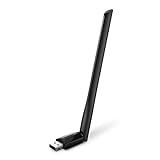
- 𝐋𝐨𝐧𝐠 𝐑𝐚𝐧𝐠𝐞 𝐀𝐝𝐚𝐩𝐭𝐞𝐫 – This compact USB Wi-Fi adapter provides long-range and lag-free connections wherever you are. Upgrade your PCs or laptops to 802.11ac standards which are three times faster than wireless N speeds.
- 𝐒𝐦𝐨𝐨𝐭𝐡 𝐋𝐚𝐠 𝐅𝐫𝐞𝐞 𝐂𝐨𝐧𝐧𝐞𝐜𝐭𝐢𝐨𝐧𝐬 – Get Wi-Fi speeds up to 200 Mbps on the 2.4 GHz band and up to 433 Mbps on the 5 GHz band for upgraded web surfing, gaming, and streaming. Performance varies by conditions, distance to devices, and obstacles such as walls.
- 𝐃𝐮𝐚𝐥-𝐛𝐚𝐧𝐝 𝟐.𝟒 𝐆𝐇𝐳 𝐚𝐧𝐝 𝟓 𝐆𝐇𝐳 𝐁𝐚𝐧𝐝𝐬 – Dual-bands provide flexible connectivity, giving your devices access to the latest routers for faster speeds and extended range. Wireless Security - WEP, WPA/WPA2, WPA-PSK/WPA2-PSK
- 𝟓𝐝𝐁𝐢 𝐇𝐢𝐠𝐡 𝐆𝐚𝐢𝐧 𝐀𝐧𝐭𝐞𝐧𝐧𝐚 – The high gain antenna of the Archer T2U Plus greatly enhances the reception and transmission of WiFi signal strengths.
- 𝐀𝐝𝐣𝐮𝐬𝐭𝐚𝐛𝐥𝐞, 𝐌𝐮𝐥𝐭𝐢-𝐃𝐢𝐫𝐞𝐜𝐭𝐢𝐨𝐧𝐚𝐥 𝐀𝐧𝐭𝐞𝐧𝐧𝐚: Rotate the multi-directional antenna to face your router to improve your experience and performance
sudo iw phy phy0 wowlan enable magic-packet
systemctl suspend
If the trigger name is rejected, check the syntax supported by the installed iw version and driver:
iw phy phy0 wowlan helpAfter waking, inspect the state again with sudo iw phy phy0 wowlan show. A direct iw command is useful as a diagnostic because it tests the kernel and driver without relying on a NetworkManager connection profile. It may not persist across a reboot, reconnection, or later suspend on every distribution.
Set a NetworkManager profile for magic-packet wake
NetworkManager exposes the 802-11-wireless.wake-on-wlan property on a connection profile. Its documented values include default, ignore, magic, any, disconnect, gtk-rekey-failure, eap-identity-request, 4way-handshake, rfkill-release, and tcp. Availability depends on the device and driver; these are not a promise that every trigger is supported. The NetworkManager wireless settings reference documents the property and values.
- Find the profile that connects to the target SSID:
nmcli connection show - Check its current wake setting, then set the profile to magic-packet wake:
nmcli connection show "PROFILE NAME" | grep wake-on-wlan sudo nmcli connection modify "PROFILE NAME" 802-11-wireless.wake-on-wlan magic - Reconnect that profile and verify the saved setting:
sudo nmcli connection down "PROFILE NAME" sudo nmcli connection up "PROFILE NAME" nmcli -f 802-11-wireless.wake-on-wlan connection show "PROFILE NAME" sudo iw phy phy0 wowlan show - Suspend the computer and send a magic packet from another device on the same LAN.
Replace PROFILE NAME with the profile actually used for the target Wi-Fi network. Editing an unused profile can succeed without changing the active connection. Ubuntu Core also documents a NetworkManager-backed WoWLAN procedure; its snap-specific commands should not be assumed to apply unchanged to Ubuntu Desktop or other distributions.
Rank #4

- 𝐏𝐥𝐞𝐚𝐬𝐞 𝐮𝐬𝐞 𝐔𝐒𝐁 𝟑.𝟎 𝐩𝐨𝐫𝐭 𝐭𝐨 𝐞𝐧𝐬𝐮𝐫𝐞 𝐨𝐩𝐭𝐢𝐦𝐚𝐥 𝐩𝐞𝐫𝐟𝐨𝐫𝐦𝐚𝐧𝐜𝐞.
- 𝐋𝐢𝐠𝐡𝐭𝐧𝐢𝐧𝐠-𝐅𝐚𝐬𝐭 𝐖𝐢𝐅𝐢 𝟔 𝐀𝐝𝐚𝐩𝐭𝐞𝐫 -Experience faster speeds with less network congestion compared to previous generation Wi-Fi 5. AX1800 wireless speeds to meet all your gaming, downloading, and streaming needs
- 𝐃𝐮𝐚𝐥 𝐁𝐚𝐧𝐝 𝐖𝐢𝐅𝐢 𝐀𝐝𝐚𝐩𝐭𝐞𝐫 - 2.4GHz and 5GHz bands for flexible connectivity (up to 1201 Mbps on 5GHz and up to 574 Mbps on 2.4GHz)
- 𝐎𝐧𝐥𝐲 𝐖𝐢𝐧𝐝𝐨𝐰𝐬 𝟏𝟏/𝟏𝟎 𝐂𝐨𝐦𝐩𝐚𝐭𝐢𝐛𝐥𝐞 - The Archer TX20U Plus is only compatible with Windows 11 and 10 on desktops and laptops. Not compatible with Linux or Mac.** For best performance: keep firmware updated by checking the Tether App.
- 𝐔𝐩𝐠𝐫𝐚𝐝𝐞 𝐘𝐨𝐮𝐫 𝐂𝐨𝐦𝐩𝐮𝐭𝐞𝐫'𝐬 𝐖𝐢-𝐅𝐢 - All USB WiFi adapters are designed to add or upgrade your computer’s Wi-Fi. Actual speeds cannot exceed the connecting router’s maximum speed. For optimal performance, pair the Archer TX20U Plus with a WiFi 6 or above router.
Configure WoWLAN on Windows
Windows controls are driver- and platform-specific. Start with the latest wireless driver available for the computer model or adapter, then use the controls that its manufacturer actually exposes.
- In Device Manager → Network adapters → wireless adapter → Properties → Advanced, enable the available wake option for magic packets. Enable pattern matching only if you need it and the adapter supports it.
- If a Power Management tab is available, enable Allow the computer to turn off this device to save power and Allow this device to wake the computer. If a magic-packet-only checkbox is offered, use it for a focused test.
- Check BIOS/UEFI for relevant options such as wireless wake, wake on LAN, wake on PME, or power on by PCI-E. Names and relevance vary by computer. Settings such as ErP, EuP, or deep sleep can remove standby power from devices, so consult the computer’s documentation before changing them.
- Test from ordinary Sleep before trying hibernate or shutdown.
If the Power Management tab is missing or unavailable, check whether the computer uses Modern Standby. It has a different wake-source model, so traditional Device Manager power controls may be unavailable or irrelevant. Intel’s wake guidance also notes that system, driver, firmware, and network settings can affect wake behavior; its particular labels and steps are not universal Wi-Fi instructions.
Send the packet to the correct device on the LAN
A magic packet contains the target adapter’s hardware address in its payload. The sender may also ask for an IP address or hostname to choose a device or destination, but that does not make the IP address the target hardware address. Use the MAC address of the wireless adapter that connects to the access point—not automatically the wired adapter’s MAC.
Operating systems can use a private or randomized Wi-Fi MAC for a particular network. Do not assume the address printed on a label or shown for Ethernet is the address retained for the sleeping Wi-Fi connection. Check the active Wi-Fi adapter’s address while connected and use the address associated with that connection.
What’s actually slowing this PC down?
Pick the symptom - the matching free tool is one click away.
Best Value

- 𝐅𝐚𝐬𝐭, 𝐅𝐥𝐞𝐱𝐢𝐛𝐥𝐞 𝐖𝐢-𝐅𝐢 𝟔 - Delivers smooth dual-band connectivity, with 5 GHz for streaming and gaming and 2.4 GHz for longer-range browsing, downloads, and everyday use. Performance varies by conditions, distance to devices, & obstacles such as walls.
- 𝐈𝐧𝐬𝐭𝐚𝐧𝐭 𝐔𝐩𝐠𝐫𝐚𝐝𝐞 𝐟𝐨𝐫 𝐎𝐮𝐭𝐝𝐚𝐭𝐞𝐝 𝐖𝐢-𝐅𝐢- Whether your current Wi-Fi card is outdated or malfunctioning, this powerful USB adapter is a cost-effective way to revive and modernize your device for the digital age. Enhance your productivity and entertainment experience instantly.
- 𝐆𝐫𝐞𝐚𝐭𝐞𝐫 𝐂𝐨𝐯𝐞𝐫𝐚𝐠𝐞 𝐚𝐧𝐝 𝐂𝐨𝐧𝐧𝐞𝐜𝐭𝐢𝐨𝐧 𝐒𝐭𝐚𝐛𝐢𝐥𝐢𝐭𝐲 - Equipped with 2× high-gain dual-band antennas and advanced beamforming technology, the TX30U Plus ensures stronger signal reception and wider Wi-Fi coverage. Even in complex layouts or through walls, it delivers reliable and consistent connectivity—ideal for homes, apartments, and office environments. Perfect for streaming, gaming, and video conferencing across rooms or floors.
- 𝐎𝐮𝐫 𝐂𝐲𝐛𝐞𝐫𝐬𝐞𝐜𝐮𝐫𝐢𝐭𝐲 𝐂𝐨𝐦𝐦𝐢𝐭𝐦𝐞𝐧𝐭 - TP-Link is a signatory of the U.S. Cybersecurity and Infrastructure Security Agency’s (CISA) Secure-by-Design pledge. This device is designed, built, and maintained, with advanced security as a core requirement.
- 𝐄𝐚𝐬𝐲 𝐭𝐨 𝐔𝐬𝐞 – 1. Easy Installation - Installs quickly with our preloaded internal driver for seamless connectivity. 2. Adjust and Pack with Ease - Optimizes signal with adjustable antennas and folds compactly for easy storage.
- Send from the main home LAN for the first test; avoid guest Wi-Fi and client-isolated networks.
- Use a magic-packet sender that can target the wireless MAC. A desktop utility, phone app, router interface, NAS package, or command-line sender can do this; the sender must have a network path to the target.
- Do not troubleshoot Internet forwarding or VLAN routing until a local same-subnet test succeeds.
Intel’s wake guidance recommends same-subnet testing; routing, broadcast handling, and client isolation can prevent a packet from reaching a sleeping station.
Independent reader supportYour contribution helps us test, update, and keep practical guides available for everyone.Check the access point, firmware, and power path
The operating system can configure a trigger, but it cannot make an access point retain a station that it has disconnected or make a radio detect packets after its power has been cut. Check these conditions after a local test fails:
- Association: The computer must connect to the intended SSID before sleep. Check whether the access point drops inactive stations or the client roams between mesh nodes or bands.
- Isolation: Disable guest-network isolation, AP/client isolation, or wireless isolation for the test, if your network policy allows it. Test on the main LAN.
- Packet delivery: A router may suppress broadcast forwarding or lack a way to send to a sleeping Wi-Fi station. Its wired WoL feature does not establish Wi-Fi wake support.
- Radio and platform power: Check that airplane mode, an RF-kill switch, lid-close behavior, or firmware settings do not disable the radio or remove standby power. PCIe wake may also depend on platform firmware and device wake signaling.
- Security and rekeying: Some adapters cannot maintain all encrypted-session operations while suspended. Linux Wireless notes that WPA/RSN multicast and broadcast behavior, including key rekeying, can complicate WoWLAN. This does not establish that WPA3—or any single security mode—universally prevents wake.
- Sleep transitions: The adapter may support wake from suspend but not from hibernate or shutdown, or a Modern Standby system may use platform-managed wake sources instead.
These failures can sit below the operating-system checkbox—in the adapter firmware, BIOS/UEFI, motherboard wake signaling, dock, or access point. Linux Wireless’ WoWLAN documentation describes platform wake dependencies, while Microsoft’s Modern Standby wake-source documentation covers Windows’ distinct model.
Troubleshoot by symptom
| Symptom | Likely cause | What to check next |
|---|---|---|
| The adapter reports no WoWLAN trigger | The chipset, driver, firmware, or OEM platform does not expose the needed trigger; it may expose a different trigger instead. | Confirm the physical radio name and run iw phy PHYNAME wowlan show. On Intel Linux adapters, compare the product and kernel with Intel’s compatibility table. Do not expect profile settings to add unsupported hardware capability. |
| The computer wakes immediately | A broad any or pattern trigger, a disconnect event, another wake-capable device, an unstable connection, or a driver/firmware fault. |
Test with only magic-packet wake enabled, inspect the operating system’s wake-event logs, temporarily disconnect USB peripherals, and test with a stable nearby access point. If necessary, compare a test with Wi-Fi disconnected to see whether the wireless adapter is implicated. |
| A packet is sent, but the computer stays asleep | Wrong MAC, unsupported wake trigger, wrong sleep state, lost Wi-Fi association, network isolation, or missing platform power/wake support. | Confirm the wireless MAC and same-subnet path, then verify the computer was in ordinary sleep, joined the intended SSID beforehand, and has magic-packet wake enabled. Check adapter support, access-point isolation, and firmware wake settings. |
| Wake works briefly, then stops | The access point may disassociate the client, the adapter may lose encrypted-session state, the driver may stop maintaining the connection, or the platform may transition to another sleep state. | Compare short and long sleep tests; check access-point station state, mesh roaming, driver/firmware updates, and security rekey behavior. There is no universal timeout. |
| Wake works from one sender but not another | The senders may differ in broadcast versus unicast behavior, network segment, firewall, MAC handling, or whether they can transmit when the target has no current ARP entry. | Use a second sender on the same LAN, verify its target MAC and packet mode, and keep VPN or mobile-network routing out of the initial test. |
| Wake works locally but not remotely | The Internet or routed path adds NAT, firewall, VLAN, broadcast, and routing constraints; a phone on cellular is not on the target LAN. | Keep a sender inside the LAN and reach that sender through a VPN or other secure remote-access method. Do not assume direct Internet forwarding of a wake packet will work. |
| Wake works after setup but fails after reconnect | A one-time Linux iw configuration may not persist, or NetworkManager may be applying a different connection profile. |
Set the wake property on the profile used for the target SSID, reconnect it, and verify the active configuration with nmcli and iw. |
| Wake works from sleep but not hibernate or shutdown | The adapter or platform supports only the tested sleep state, or loses standby power in deeper states. | Check the exact computer, adapter, and firmware documentation for that state. Do not infer hibernate or power-off support from a successful suspend test. |
Protect the network when enabling wake
WoWLAN deliberately leaves a wake-capable path active while the computer sleeps. Where available, restrict triggers to magic packets rather than broad pattern or “any” wake, keep wireless drivers and firmware current, and disable the feature if you do not need it. Intel has published a security notice concerning WoWLAN on certain legacy wireless adapters; its scope is specific and does not establish that all WoWLAN implementations have the same issue.
Outdated Drivers Are Slowing You Down
One free scan finds every outdated or missing driver and matches the right update for your exact hardware.Free scan · exact hardware matchWindows Errors? Fix Them Before They Spread
Repair common Windows errors and clear accumulated junk for a smoother, more stable PC - no reinstall needed.Free scan · no reinstallAvoid exposing wake services or broadcast forwarding directly to the public Internet unless you understand the network design and risks. For remote wake, use a trusted device already on the LAN, reached through a VPN, rather than assuming the sleeping computer itself can be contacted over the Internet.
When another wake method is a better fit
| Approach | Best fit | Main limitation |
|---|---|---|
| WoWLAN magic packet | No cable is practical, and the adapter and platform explicitly support wireless wake from the required sleep state. | Depends on the adapter, driver, firmware, access point, Wi-Fi security behavior, and sleep state all working together. |
| Wired WoL | Ethernet is available and a more predictable wake path is preferred. | Requires a supported, powered wired interface; a USB-C dock or USB Ethernet adapter may lose standby power or lack wake signaling. |
| LAN-side wake proxy | Remote or routed wake is needed and an always-on router, NAS, small computer, or server can send the packet inside the LAN. | Adds a device to maintain and cannot overcome missing WoWLAN capability on the target. |
| VPN to a LAN-side sender | You need secure remote access to an always-on device that can issue the wake packet. | A VPN installed only on the sleeping target cannot wake that target. |
| Out-of-band management | A business-critical system needs remote power control independent of its sleeping operating system and Wi-Fi link. | Requires compatible hardware and firmware, secure configuration, and administration; it is usually excessive for a home laptop. |
If the adapter reports no suitable trigger, the platform removes its power, or the access point will not maintain the sleeping station, switch to wired WoL where practical. For remote or cross-network wake, use an always-on LAN-side sender and a secure route to it. For dependable power control from full shutdown, use a platform designed for out-of-band management rather than relying on a sleeping Wi-Fi adapter.
Quick Recap
Product prices and availability are accurate as of the date/time indicated and are subject to change. Any price and availability information displayed on Amazon at the time of purchase will apply.

