
Quick wins for a faster PC:
Repair Windows errors before they cause bigger problemsFix Now →Scan for outdated or missing drivers - takes under a minuteDriver Scan →iTechGuides is reader-supported. When you buy through links on our site, we may earn an affiliate commission. As an Amazon Associate I earn from qualifying purchases. Learn more
Intel still frames Nova Lake as an end-of-2026 client product, but that is not the same as broad retail availability in the fourth quarter. Intel has not published a final date, socket, chipset, SKU list, specifications, pricing, or benchmarks. Recent reporting points to a possible staggered rollout, with some products potentially appearing around CES 2027 and a higher-core-count flagship later.
For buyers, the practical rule is simple: purchase based on tested products and real prices if you need a PC in 2026; if you can wait, postpone a new motherboard decision until Intel and board makers publish compatibility details.
| # | Preview | Product | Price | |
|---|---|---|---|---|
| 1 |

|
Intel Processor 9400 CORE I5 (1151) 2.90 GHZ Box - BX80684I59400-9th GER | $99.00 | Buy on Amazon |
| 2 |
|
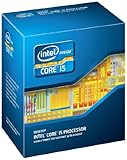
Intel I5-2500 Processor 3.3GHz BX80623I52500 | $24.95 | Buy on Amazon |
| 3 |

|
Intel Processor Processors BX80662G3920 | $60.00 | Buy on Amazon |
| 4 |
|
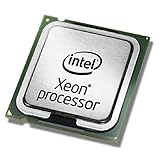
Intel BX80660E52640V4 Processor Grey | $14.99 | Buy on Amazon |
What Nova Lake is—and what it is not
Nova Lake is the codename for Intel’s next major client CPU family after Panther Lake and the Arrow Lake generation. It is expected to be a new architecture rather than a routine frequency refresh. Intel executive Robert Hallock said the associated new core is intended to debut on desktop first, but he did not provide a product number, final architecture name, or launch date. Tom’s Hardware reported the interview on August 16, 2026.
Names circulating in leaks need careful separation:
#1 Best Overall
- Core i5 lga 1151 intel bx80684i59400 hexa core i5-9400 2.90Ghz 9mb cache processor with 9ger graph
- Processor-based frequency: 2.90 GHz
- Attention: This Processor only works with 300 series motherboard
- Nova Lake: the family codename.
- NVL-S: a rumored desktop designation.
- NVL-HX, NVL-X and other mobile labels: reported variants, not confirmed product names.
- Core Ultra 400: rumored branding, not an announced series.
- Coyote Cove and Arctic Wolf: rumored names for future performance and efficiency cores.
The 123-page AnandTech discussion thread begun November 3, 2024 collects many of these claims, but its tables are user-submitted speculation rather than Intel documentation. Read the thread.
Does “H2 2026” mean a retail launch?
Not necessarily. A roadmap window can cover announcement, partner sampling, OEM systems, or limited shipments. Broad availability means boxed or tray processors can be bought from multiple retailers at sustainable prices, with final firmware and independent reviews.
| Claim or event | Current status |
|---|---|
| Nova Lake is an end-of-2026 roadmap product | Repeated company roadmap position, as reported by Tom’s Hardware |
| Normal Q4 2026 retail supply | Not confirmed |
| Initial products around CES 2027 | Reported as a possibility; unconfirmed |
| Every desktop and mobile SKU launches together | Unlikely; current reporting suggests a staggered cadence |
Tom’s Hardware’s June 16, 2026 report described a possible CES 2027 first rollout followed by additional desktop products and a rumored 52-core flagship later in 2027. Its July roadmap analysis lists Nova Lake as an unconfirmed end-of-2026 item and considers a 2027 shift plausible. See that analysis.
Do these 3 things before closing this tab:
1Repair Windows errors before they cause bigger problems2Scan for outdated or missing drivers - takes under a minute3Clear out junk files and repair common Windows errorsWhat Intel has actually confirmed
| Item | Evidence level | What would verify it |
|---|---|---|
| Nova Lake remains on Intel’s client roadmap | Medium-high: roadmap statements reported by Tom’s Hardware | Official product announcement |
| The new core debuts on desktop first | High: Robert Hallock interview | Launch materials naming the products |
| Intel wants a faster, more aggressive enthusiast cadence | Reported strategic direction | Published schedule and products |
| CES 2027 first SKUs | Medium: industry report | Intel CES announcement |
| Z990 chipset | Medium: motherboard sightings | Intel chipset documentation |
| LGA1954 socket | Low-medium: leak | Intel socket specifications |
| 52-core flagship | Low-medium: rumor | SKU announcement and retail review |
| Large cache, exact core counts, power and memory limits | Low: leaks and forum material | Product brief, ARK entry and reviews |
Intel has also acknowledged the need to rebuild enthusiast confidence after Arrow Lake’s reception. Tom’s Hardware’s June 2 coverage places the Arrow Lake refresh in that effort, but it does not establish Nova Lake specifications.
Rank #2
- Maximize speed for demanding applications with Intel Turbo Boost technology, which accelerates processor clock speed up to 20% to match your workload. So you'll move faster when multitasking and get more accomplished in less time.
- With the Intel Core i5 processor, you can multitask up to 28% faster, so you can do more things at once and be more productive than ever.
- Get a 32% improvement in artificial intelligence for game characters and realistic physics for game worlds.
Rumored specifications: useful clues, not a product sheet
The following claims come from the preliminary tables and discussion in the AnandTech thread. They may combine engineering samples, different market segments or separate leaks.
| Area | Circulating claim | Confidence and qualification |
|---|---|---|
| Desktop cores | Up to 16 performance cores plus 32 efficiency cores; one thread naming assumption describes a 48-core/48-thread configuration | Low; physical cores and threads are being conflated in some tables |
| Another top part | Up to 52 physical cores has been rumored | Low-medium; could be a later or limited configuration, not the launch baseline |
| Cache | Large last-level cache, sometimes described with “bLLC,” “V-cache-like” or figures such as 144 MB | Low; these terms are not interchangeable with stacked cache or conventional L3 |
| Memory | DDR5-8000-class support, with DDR5-8800 mentioned as a target | Low; controller quality, board layout and training determine real support |
| Power classes | 125 W and 150 W categories | Low; no official TDP or power-limit table exists |
| Process and tiles | Forum discussion mentions Intel 18A, Intel 3, TSMC N2, N3E and other allocations | Unverified; do not assume every tile uses the same node |
| Mobile designs | Different NVL-HX, NVL-X and integrated-GPU arrangements | Low; desktop and mobile timing may differ |
Core count alone cannot predict performance. Hybrid scheduling, cache placement, memory latency, clocks, power limits and application behavior can matter more than the headline total. A large cache rumor also does not prove that Nova Lake uses AMD-style 3D V-Cache; it could refer to conventional shared cache, a package-level cache or another hierarchy.
What “52 cores” would—and would not—tell you
A rumored 52-core part may count physical performance and efficiency cores, may represent a maximum die configuration, or may be a later flagship rather than the first retail desktop SKU. It does not establish 52 threads, a launch date, gaming performance or wide retail supply. The June Computex report that mentioned it explicitly treated the sequence as unconfirmed.
Socket, chipset and motherboard compatibility
LGA1954 has circulated as a possible new socket, and Tom’s Hardware reported seeing at least two motherboards labeled Z990 at Computex, including one that appeared close to production. Those observations are not an Intel compatibility announcement.
Rank #3
- Processor Type: Intel Celeron G3920
- Number of Cores: dual-core/ 2 threads
- Cache: 2 MB
If Nova Lake uses a new socket and chipset, existing LGA1851 boards are unlikely to support it. BIOS support cannot overcome a different pin layout, power-delivery design, memory controller or chipset interface. Do not buy an expensive current board on the assumption that it will run Nova Lake; wait for Intel and the board manufacturer to publish a supported-CPU list.
How a staggered launch could affect buyers
| Scenario | What buyers would see | Implication |
|---|---|---|
| Late-2026 limited launch | A few desktop SKUs or review samples appear in Q4, with constrained supply | Roadmap timing is met, but prices and availability may be poor |
| CES 2027 first meaningful launch | Consumer buying begins in January 2027 after an end-of-2026 announcement or sampling phase | Waiting means crossing into 2027 for a practical purchase |
| Split rollout | Mainstream or lower-core parts arrive first; the highest-core model follows later | The most impressive rumored specification may not be the first product you can buy |
Should you wait for Nova Lake?
Waiting is sensible when
- You are planning a high-end system but do not need it immediately.
- You want to compare Intel’s next architecture with AMD’s Zen 6 desktop offerings using independent tests.
- You are already planning a new motherboard and can postpone that purchase.
- Long-term platform life, power behavior and launch stability matter more than owning a system this month.
Buying now is sensible when
- You need a working computer before the actual Nova Lake retail date is clear.
- A current Intel or AMD system has tested performance that meets your workload.
- A sale materially improves the value of a known platform.
- You want to avoid launch shortages, immature BIOS versions and early-adopter pricing.
Use these criteria instead of rumor numbers
- Check real retail availability, not an announcement date.
- Compare CPU-limited gaming performance, including 1% lows.
- Measure productivity throughput in your applications.
- Account for sustained power draw, cooling and noise.
- Check memory compatibility and training behavior.
- Include motherboard cost, BIOS maturity and vendor support.
- Evaluate socket longevity and upgrade options.
- Consider integrated graphics if you need display output or troubleshooting capability.
- Recalculate value after street pricing settles.
Advice by buyer type
Immediate gaming build
Buy a currently reviewed Intel or AMD platform if the system is needed now. Nova Lake’s rumored cache and core totals are not a substitute for measured gaming results.
High-end productivity workstation
Wait if your schedule allows, but compare completed Nova Lake reviews against current CPUs at your actual applications and power limits rather than assuming more cores will scale linearly.
Budget builder
Uncertain launch timing and potentially expensive new boards make a discounted, established platform easier to price accurately. Revisit Nova Lake after mainstream SKUs and board costs are known.
Rank #4
- Type: 10-core Broadwell EP
- Base clock: 2.40 GHz
- Turbo clock: 3.40 GHz
Existing LGA1851 owner
Do not assume a firmware update will provide an upgrade path. Treat Nova Lake as a possible new-platform purchase until Intel publishes socket compatibility.
Laptop buyer
Desktop-first statements do not establish mobile availability. Mobile variants, system designs and release dates can follow a separate schedule.
What to verify before buying
- Intel’s launch announcement and official product brief.
- Intel ARK entries with finalized specifications: Intel ARK.
- Intel processor pages: Intel Products.
- Motherboard compatibility pages and BIOS releases from vendors.
- Independent reviews using final retail firmware.
- Listings from multiple U.S. retailers and system builders.
- Street pricing after initial supply normalizes.
For alternatives that can be bought now, compare current Intel products with AMD’s desktop lineup at AMD Ryzen Processors. Board support should be checked directly with vendors such as ASUS, MSI and Gigabyte.
The Bottom Line
Bottom line: Nova Lake remains an end-of-2026 roadmap target, not a confirmed Q4 retail product. Desktop is expected to lead the new-core rollout, while the socket, chipset, core counts, cache, power limits and pricing remain unsettled. If you need a PC in 2026, buy a tested platform at a price you can verify. If you can wait, delay the motherboard purchase until Intel confirms the first retail SKUs and board compatibility.

