
What’s actually slowing this PC down?
Pick the symptom - the matching free tool is one click away.
iTechGuides is reader-supported. When you buy through links on our site, we may earn an affiliate commission. As an Amazon Associate I earn from qualifying purchases. Learn more
Android 4.1, Jelly Bean, is the first Jelly Bean release, announced on June 27, 2012, with API level 16 and improvements such as Project Butter, expandable notifications, resizable widgets, Google Now, and enhanced Android Beam. In 2026, Android 4.1 is obsolete for secure everyday use but can still serve offline and single-purpose roles.
Android 4.1 followed Android 4.0 Ice Cream Sandwich and was later joined by Android 4.2 and Android 4.3. Those three releases share the Jelly Bean name, but they do not have the same features or API level.

Key takeaways
- Android 4.1 was announced on June 27, 2012, and is identified by API level 16 and the platform constant
JELLY_BEAN. - Project Butter combined 16-millisecond vsync timing, triple buffering, touch-input synchronization, and other latency work to make compatible devices feel smoother; it did not guarantee 60 frames per second on every device.
- Jelly Bean is a family name for Android 4.1, 4.2, and 4.3, so Quick Settings, lock-screen widgets, Bluetooth Low Energy, and OpenGL ES 3.0 should not be presented as Android 4.1 features.
- Google Play services stopped receiving Jelly Bean updates beyond version 21.30.99, with the final release scheduled for the end of August 2021.
- Android 4.1 may still be useful for offline music, video, reading, alarms, retro software, or kiosk tasks, but it is unsuitable for banking, password storage, work accounts, payments, and other sensitive everyday activities.
What is Android 4.1, Jelly Bean?
Android 4.1 is the first release in the Jelly Bean family. Android 4.1 has the internal version identifier JELLY_BEAN, API level 16, and followed Android 4.0 Ice Cream Sandwich. The official Android Jelly Bean feature documentation describes the release’s user-facing and developer changes.
Crashes, No Sound, or Screen Glitches?
Random freezes, missing sound and display glitches usually trace back to one bad driver. Find and replace yours safely.Free scan · under a minuteWindows Errors? Fix Them Before They Spread
Repair common Windows errors and clear accumulated junk for a smoother, more stable PC - no reinstall needed.Free scan · no reinstall“Jelly Bean” is not one single Android version. The name covers Android 4.1, Android 4.2, and Android 4.3:
#1 Best Overall

- 1. 【Ultra-Compact Design】Measuring just 3.54 x 1.97 inches, this mini phone is the world's smallest mobile phone, fitting perfectly in your palm for effortless portability. 【❌WiFi ONLY! No SIM Support】
- 2. 【High-Performance Quad-Core Processor】Powered by an efficient quad-core processor and Android 9.0, this phone delivers smooth operation. It's compatible with popular apps like Facebook, YouTube, Instagram, WhatsApp, TikTok, and Twitter via the Google Play Store. Note: Always use the included charging cable to prevent battery or internal damage from high-voltage fast chargers.
- 3. 【Dual-Camera with Facial Recognition】Capture every moment crisply with a 3MP front camera and 5MP rear camera, ideal for landscapes, dynamic scenes, and selfies. Built-in facial recognition ensures enhanced privacy and security, making it easy to protect your data.
- 4. 【Adorable Gift-Ready Option】With its playful, lightweight design and kid-friendly features, this mini phone comes in Black, Blue, and Pink—perfect as a Christmas or New Year gift. It's not only captivating for children's small hands but also serves as a practical backup for travel and business trips.
- 5. 【Expandable Storage】 Use the second slot for a MicroSD card (not included) to expand your storage. Easily store your favorite music, photos, and emergency files, making it a reliable secondary phone for business trips and international roaming.【If you have any questions about the product, please feel free to contact us at any time.】
| Version | Jelly Bean relationship | API level | Correct description |
|---|---|---|---|
| Android 4.1 | First Jelly Bean release | 16 | The specific release covered by this article |
| Android 4.2 | Later Jelly Bean release | 17 | A separate update with additional platform and user-interface changes |
| Android 4.3 | Later Jelly Bean release | 18 | Another separate Jelly Bean update with further platform changes |
The API-level distinction is also reflected in Google’s announcement about Google Play services support for API levels 16, 17, and 18. A device showing “Jelly Bean” therefore needs its complete Android version checked before its features or compatibility can be assessed.
When was Android 4.1 released?
Google announced Android 4.1 at Google I/O on June 27, 2012. Google’s launch announcement said over-the-air updates for the Galaxy Nexus, Motorola Xoom, and Nexus S would begin rolling out in mid-July 2012. The Nexus 7 was introduced as an early Jelly Bean device, as described in Google’s Google I/O launch coverage.
| Milestone | Android 4.1 detail |
|---|---|
| Announcement | June 27, 2012, at Google I/O |
| Initial over-the-air rollout | Planned for mid-July 2012 on selected Nexus devices |
| Early Jelly Bean hardware | Nexus 7 |
| Availability for other devices | Dependent on the manufacturer, carrier, region, model variant, and software build |
The announcement date was not a universal availability date. A Galaxy Nexus in one market could receive an update before a carrier-branded or imported variant, and some phones and tablets never received an official Android 4.1 build.
What was Project Butter?
Project Butter was Android 4.1’s collection of graphics, animation, input, and scheduling improvements intended to make the interface feel smoother and more responsive. Android’s framework drawing and animation were synchronized to a 16-millisecond vsync interval, Android 4.1 added triple buffering in the graphics pipeline, and touch input was synchronized with display timing.
Android 4.1 also attempted to anticipate finger movement at the next screen refresh and could apply a CPU input boost after inactivity. These changes reduced perceived delay and improved frame pacing on suitable hardware. The technical details are documented in the Project Butter platform documentation.
Project Butter did not guarantee a constant 60-frame-per-second experience on every Android 4.1 device. Actual smoothness depended on the processor and graphics hardware, display refresh rate, drivers, thermal throttling, background processes, and the individual application. “Faster” or “smoother” was a launch-era design goal, not a modern benchmark result.
What new features did Android 4.1 add for users?
Google Now
Google Now presented contextual information such as travel details, weather, appointments, sports, and other information based on signals available to Google at the time, including search history, location, and calendar data. Google Now was a historical product and is not the same product as the modern Google Assistant. Google’s Android 4.1 launch material described the feature in its original product context.
How did expandable notifications work?
Android 4.1 notifications could expand and collapse, display more text or images, expose actions directly in the notification shade, and use priority settings. The framework supported large-text, inbox-style, and large-image presentations, with up to three documented notification actions. Users could also long-press a notification to inspect its source and disable future notifications from that application.
Expandable notifications were a platform capability, not a guarantee that every app used every style. An app had to implement the relevant notification behavior, and the exact gesture and appearance could vary with the manufacturer’s software skin and launcher. The Android 4.1 notification documentation lists the supported styles and actions.
How did resizable widgets work?
Android 4.1 widgets could resize according to available home-screen space, the size selected by the user, the widget provider’s supported minimum and maximum dimensions, and orientation-specific layouts. Widget resizing required cooperation from the app developer, so older widgets could resize poorly or not support resizing at all.
What changed in Google Search and voice features?
Android 4.1 expanded Google Search and voice interaction with richer contextual information and Knowledge Graph-related results. Those historical voice-search features should not be confused with the later “OK Google” hotword experience associated with newer Android and Google products.
The Tool Desk
Outbyte Driver Updater FREEScan for outdated or missing drivers - takes under a minuteDriver Scan →Outbyte PC Repair FREERepair Windows errors before they cause bigger problemsFix Now →What was improved in Android Beam?
Android Beam in Android 4.1 could use NFC to initiate sharing and Bluetooth to transfer payloads such as images and videos. Both devices needed compatible NFC hardware, NFC had to be enabled, and the sending and receiving apps had to support the relevant Beam or share behavior. Android Beam was therefore not available on every Jelly Bean device, and modern Android devices may not support the same implementation. Google’s Android 4.1 announcement describes the original feature.
What accessibility and internationalization changes arrived?
Android 4.1 added or expanded APIs for bidirectional text in TextView and EditText, accessibility-service gesture handling, accessibility focus traversal, and media codec access. These were important platform changes for developers building applications with broader language and accessibility support.
What changed for Android 4.1 developers?
Android 4.1 corresponds to API level 16. Developers could compile and test against API level 16, and code could identify the release with android.os.Build.VERSION_CODES.JELLY_BEAN. The historical Jelly Bean preparation guidance explains the original development target.
| Developer area | Android 4.1 change | Important modern qualification |
|---|---|---|
| Notifications | BigTextStyle, BigInboxStyle, BigPictureStyle, actions, priority, and dismissal or update callbacks |
These APIs describe the 2012 platform; current notification behavior is governed by newer Android releases and services. |
| Cloud messaging | Google Cloud Messaging, or GCM, delivered short data messages to Android applications | GCM was later superseded by Firebase Cloud Messaging and should not be chosen for a new integration. |
| Google Play updates | Smart app updates could deliver changed portions rather than an entire APK | This was a historical Google Play distribution feature, not a promise about current Play behavior. |
| Paid applications | Google Play documentation described device-specific encryption for paid-application assets | This is a historical platform and distribution detail, not a guarantee about current Play asset handling. |
| Media and accessibility | New or expanded APIs included media codec access, accessibility gestures, and bidirectional text support | Applications still need to account for the wider range of Android versions they support. |
Android 4.1 also improved the bundled browser and WebView with better HTML5 video interaction, rendering and scrolling performance, HTML5/CSS3/Canvas animation, text input, and an updated V8 JavaScript engine. Android 4.1 supported the HTML5 Media Capture capture attribute. Those improvements were significant in 2012, but they do not make the old browser or WebView reliable on today’s websites; the official Jelly Bean documentation describes the historical scope.
Which features belong to Android 4.2 or 4.3 instead?
Quick Settings, lock-screen widgets, Daydream, restricted profiles, Bluetooth Low Energy support, OpenGL ES 3.0, and some multi-user tablet refinements should not be listed as Android 4.1 features without a later-version label.
Rank #3

- EXPAND YOUR STORAGE. Easily move files off your device, freeing up valuable space so you can store your favorite photos, movies, music, games, and more.
- Say goodbye to emailing photos between devices. Once they’re on your SanDisk Phone Drive, read speeds up to 100MB/s let you transfer files fast. (1 MB/s = 1 million bytes per second. Based on internal testing; performance may vary depending upon host device, usage conditions, drive capacity, and other factors. USB Type-C port with USB 3.2 Gen 1 support required.)
- AUTOMATIC BACKUP. Automatically back up your latest photos, videos, music, documents, and contacts with the SanDisk Memory Zone app. (Download and installation required. Set up automatic backup within app settings. See official SanDisk website for Memory Zone details.)
- DATA RECOVERY. Recover deleted files with the included RescuePRO Deluxe software.(Registration and download required; terms and conditions apply. See RescuePRO page on SanDisk site.)
- CONVENIENT DESIGN. Attach your drive to your keyring to help keep it secure so you can have storage wherever you are, whenever you need it.
| Feature or claim | Android 4.1? | How to label it accurately |
|---|---|---|
| Project Butter | Yes | Android 4.1 |
| Expandable notifications and notification actions | Yes | Android 4.1 |
| Resizable widgets | Yes | Android 4.1, subject to widget support |
| Quick Settings | No | Later Jelly Bean feature; do not attribute it to 4.1 |
| Lock-screen widgets | No | Later Jelly Bean feature; do not attribute it to 4.1 |
| Daydream | No | Later Jelly Bean feature |
| Restricted profiles | No | Later Jelly Bean feature |
| Bluetooth Low Energy support | No | Later Jelly Bean feature |
| OpenGL ES 3.0 | No | Later Jelly Bean feature |
A device’s manufacturer skin could also change the appearance or availability of features. Hardware capabilities, screen size, carrier software, and Google-app licensing meant that two devices running a Jelly Bean release did not necessarily provide an identical experience.
How do I check whether a phone or tablet has Android 4.1?
Open Settings, look for About phone, About tablet, or a similarly named device-information section, and read Android version. Record the complete value, such as 4.1.1 or 4.1.2, rather than relying only on the word “Jelly Bean.”
Also record the device model, build number, carrier, and region. Menu labels varied by manufacturer and software skin, so the path is not universal. For technical identification, an application can inspect:
android.os.Build.VERSION.RELEASE
android.os.Build.VERSION.SDK_INT
For Android 4.1, SDK_INT is expected to equal 16. The Android 4.1 compatibility definition provides the platform-level reference.
Can a device update to Android 4.1?
A device can receive Android 4.1 only if its exact model, region, carrier configuration, hardware, and software state were supported by the manufacturer or carrier. The existence of Android 4.1 for a device family does not mean every model variant received the update.
Check the manufacturer’s official support page for the exact model and regional code. Do not assume that an imported device, carrier-branded variant, or tablet with a similar product name uses the same firmware. A missing update can mean that the device was never eligible, distribution ended, the update server no longer offers the historical package, the device is already on its final supported build, the update requires an intermediate version, or modified software is blocking the official updater.
How do I install an official Android 4.1 update safely?
- Back up photographs, contacts, messages, and application data.
- Charge the device and connect it to reliable Wi-Fi.
- Open Settings and look for System update, Software update, or About phone/tablet → System updates.
- Check for updates and read the displayed version and build information.
- Install an update only when the update is offered for that exact model and region.
- Allow the device to reboot and finish without interrupting the installation.
- Afterward, return to the device-information screen and verify the Android version and build number.
There was no universal Android 4.1 firmware package for all Android devices. An update file for a different model, carrier, or region can cause installation failure or leave the device unusable. Generic firmware downloads are not a safe substitute for model-specific manufacturer instructions.
Do these 3 things before closing this tab:
1Repair Windows errors before they cause bigger problems2Fix the driver behind crashes, sound loss and screen glitches3Clear out junk files and repair common Windows errorsWhat should I do if no update appears?
If the official updater finds nothing, first confirm the full model number and region, then check the manufacturer’s archived support information. Do not flash a random package simply because the device name looks similar.
Rank #4
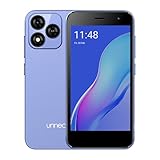
- Compatibility: Compatible with T-Mobile, Metro, Boost, Mint, Ultra, Ting, and Consumer Cellular. If your carrier is not listed, please confirm compatibility with your preferred carrier. This device is 4G/LTE only and does not support band 71 or 5G. This device is not compatible with networks like AT&T, Cricket, Verizon, or Tracfone and does not include a SIM card.
- All of the Essentials: The Unnecto Bolt One has a 5" screen, 5MP main camera and 2MP front facing camera.
- Connect Everywhere: Bluetooth 4.2, Wi-Fi, GPS, and USB Type C ensure that you can connect however you need.
- Software: Android 14 Go runs in parallel with the 2GB of RAM and 1.3 GHz Quad core processor.
- Customizable Storage: with 32GB of internal storage and an additional 512GB of expandable storage with a microSD card, the Bolt One offers the flexibility to expand your device's capacity, providing additional space for photos, videos, and files.
Unofficial flashing requires knowing the model number, regional code, bootloader state, recovery method, backup plan, and rollback procedure. A failed installation can erase data or cause a boot loop. If an update fails, keep the device connected to power, avoid repeatedly interrupting the installation, and use the manufacturer’s official recovery or PC-update tool if one exists. Have the exact stock firmware for the model and region available, and understand that a factory reset may be required.
Bootloader unlocking and custom recovery installation are advanced procedures. They can erase user data and create problems with the camera, radio, NFC, sensors, Google applications, or hardware-specific drivers.
What still works on Android 4.1 in 2026?
Android 4.1 can still work as an offline or single-purpose device, but “works” depends on the installed application, hardware, account services, network, certificates, and remote server. The Google Play Store opening is not proof that current apps, secure sign-in, or modern websites will work.
Recommended Free Tools
| Use case | Likely status | Why |
|---|---|---|
| Local music and video | Often usable | Playback can work without current online services, subject to file formats and storage. |
| Camera, alarm, calculator, calendar | Often usable | These functions can operate locally. |
| Offline reading or navigation data | Potentially usable | Previously downloaded content may remain available. |
| Retro gaming or kiosk use | Potentially usable | Older locally installed software may still run. |
| Current Google Play services features | Unreliable or unavailable | Google ended further Jelly Bean Play services updates after the documented cutoff. |
| Modern websites | Often unreliable | Old browsers, certificates, cryptographic libraries, and web standards support may fail. |
| Banking, payments, authentication, and work apps | Poor fit and unsafe | These services commonly require newer APIs, security components, certificates, or supported account flows. |
| Modern streaming apps | Often unavailable | App, DRM, operating-system, and server requirements may no longer match the device. |
According to Google’s July 2021 Google Play services notice, Google Play services stopped updating API levels 16, 17, and 18 beyond version 21.30.99, with the final release scheduled for the end of August 2021. That cutoff applies to Google Play services, not every application or every vendor component. Individual app developers set their own minimum Android versions, and web compatibility can change independently when a server changes its security requirements.
Manual APK installation does not solve those dependencies. An application may require newer Android APIs, a newer WebView, current Google Play services, updated cryptography, or a functioning modern backend. Sideloading also adds malware and provenance risks, so an APK should not be treated as safe merely because it installs.
Independent reader supportYour contribution helps us test, update, and keep practical guides available for everyone.Is Android 4.1 safe for banking and sensitive accounts?
No. Android 4.1 should not be used for banking, password management, work accounts, medical or financial records, two-factor authentication, sensitive personal data, or regular browsing on untrusted networks.
Three separate compatibility and security issues matter:
- Operating-system security: Android 4.1 is an obsolete platform and does not receive modern Android security maintenance.
- Google Play services support: Google Play services updates for Jelly Bean ended at the documented 2021 cutoff.
- Application support: Individual applications may require newer Android versions, while their servers and certificates may change even if an old app remains installed.
Performance is not security. A device can feel responsive after Project Butter improvements and still lack current protections. The exact last security patch cannot be stated generically because Android vendors supplied different builds and patch histories for different devices.
Best Value
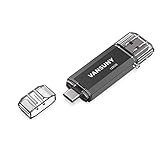
- 【Important】: Default format of the usb flash drive 128gb is exFAT as this is the format recognized by the smartphones and tablets. These 128gb thumb drives are only compatible with C-Port enabled mobile phones & computers only. While formatting the usb flash drive dual type c usb 3.0 OTG keep a check on the drive format
- 【Easy to Use】: Directly plug the 2-in-1 USB flash drive and play, no need to install any software. The jump drive is easy to be recognized by computer, laptop, notebook, PC, car audio, speaker, smart TV, vidoe projector etc
- 【Fast Speed】: High-speed USB 3.0 flash drive for fast data transfer, backwards compatible with USB 2.0 easy to complete the storage and transport functions. USB 3.0 and Class A chip help you transfer a 4G movie from the thumb drive to your smartphone in about 40 seconds, and reverse transfer in 2 mins to save memory for your smartphone with Type C port.Save your time
- 【Good Compatibility】: Dual connectors USB type C + USB 3.0. Support windows 7 / 8 / 10 / XP / 2000 / ME / NT Linux and Mac OS, compatible withUSB 3.0 & USB 2.0 backwards USB1.1. Support videos formats: AVI, M4V, MKV, MOV, M P4, MPG, RM, RMVB, TS, WMV, FLV, 3GP; AUDIOS: FLAC, APE, AAC, AIF, M4A, MP3, WAV
- 【OTG Function】:Support nearly all mobile phones which support OTG function,and very easy to operate
Should I install a custom ROM?
A custom ROM may extend the software life of a particular device, but it is not automatically a security solution. A trustworthy decision requires verifying the ROM’s maintenance status, source, signing and update process, device support, and compatibility with the radio, camera, NFC, sensors, and Google applications.
Risks include bricking the device, data loss, missing hardware functions, incompatible Google apps, bootloader and recovery complications, and failures in banking applications that use modern integrity checks. Custom ROM installation should be treated as an advanced hobbyist or legacy-development project, not the default way to make an Android 4.1 phone safe for personal accounts. A modern Android device, emulator, or isolated test environment is safer for experimentation.
Should you still use or buy an Android 4.1 device?
An Android 4.1 device can make sense when the purpose is narrow, offline, and low-risk. It can be a dedicated music or video player, alarm clock, camera, dashboard, offline reader, retro-software device, child’s toy without sensitive accounts, or legacy Android development test unit.
Quick wins for a faster PC:
Scan for outdated or missing drivers - takes under a minuteDriver Scan →Clear out junk files and repair common Windows errorsFree Scan →An Android 4.1 phone or tablet is a poor choice for daily smartphone use, secure messaging, banking, payments, current social-media apps, modern streaming, work or school accounts, reliable web access, or tasks requiring current accessibility, privacy, and security features.
| Decision | Recommendation |
|---|---|
| Offline playback, alarms, camera, or reading | Reasonable if the hardware works and no sensitive accounts are used |
| Legacy app testing | Usable as an isolated test target, with a modern device or emulator preferred where possible |
| Daily internet-connected phone | Do not recommend |
| Banking, payments, passwords, or work data | Do not use |
| Buying a cheap replacement phone | Choose a newer device with current support instead |
Common Android 4.1 mistakes
- “My device says Jelly Bean, so it must be Android 4.1.” Jelly Bean also includes Android 4.2 and 4.3. Check the complete version and, when relevant, API level.
- “My phone is fast enough, so it is safe.” Project Butter improved responsiveness, not security.
- “Google Now is Google Assistant.” Google Now was the historical contextual-search product associated with Android 4.1; Google Assistant was introduced later.
- “The Play Store still opens, so the device is supported.” The Play Store opening does not prove that current apps, Play services, account sign-in, updates, or HTTPS sites will work.
- “I can install any newer APK manually.” Installation does not guarantee API, WebView, cryptography, Play services, server, or account compatibility.
- “A custom ROM automatically makes the phone secure.” Security depends on the ROM’s actual maintenance, source, signing, hardware support, and update process.
- “Every Jelly Bean device received the same features.” OEM software, carrier changes, hardware, display size, NFC availability, and Google-app licensing varied.
Frequently Asked Questions
Is Android 4.1 the same as Jelly Bean?
Android 4.1 is the first Jelly Bean release, but Jelly Bean is the broader family name that also includes Android 4.2 and Android 4.3. Android 4.1 uses API level 16.
What is the Android 4.1 API level?
Android 4.1 uses API level 16 and the platform identifier JELLY_BEAN. An application can check the corresponding numeric platform value through android.os.Build.VERSION.SDK_INT.
Can Android 4.1 run current apps?
Android 4.1 can run some locally installed legacy apps, but many current apps and Google Play services features are unavailable or unreliable. App requirements, WebView support, certificates, cryptography, and remote servers can all prevent an old app from working.
Free tools Windows power users keep installed
One-click scans. No signup required.
Why does Google Play fail on Jelly Bean?
Google Play services stopped receiving Jelly Bean updates beyond version 21.30.99, with the final release scheduled for the end of August 2021. The Play Store application may still open without proving that current apps, account sign-in, or Google services remain supported.
Can Android 4.1 be used for banking?
Android 4.1 should not be used for banking, payments, password management, work accounts, two-factor authentication, or sensitive personal data because the operating system is obsolete and lacks modern security and application support.
The Bottom Line
Android 4.1, Jelly Bean, was historically important: API level 16 introduced Project Butter, richer notifications, resizable widgets, Google Now, and other platform improvements over Ice Cream Sandwich. In 2026, Android 4.1 is best treated as an offline, hobbyist, or legacy-testing platform—not as a secure everyday phone or tablet.
Quick Recap
Product prices and availability are accurate as of the date/time indicated and are subject to change. Any price and availability information displayed on Amazon at the time of purchase will apply.

