
iTechGuides is reader-supported. When you buy through links on our site, we may earn an affiliate commission. As an Amazon Associate I earn from qualifying purchases. Learn more
The best flash drive for an iPhone depends first on the phone’s connector and USB speed. iPhone 15 and later models use USB-C, while older iPhones use Lightning. Among USB-C iPhones, standard models such as the iPhone 15, 16, and 17 are limited to USB 2 transfer speeds, while Pro models support USB 3 at up to 10Gbps. That means an expensive 1,000MB/s drive cannot make a USB 2 iPhone transfer at USB 3 speed.
For most USB-C iPhone owners, the SanDisk Ultra Dual Drive Go USB Type-C is the easiest all-around choice because it has both USB-C and USB-A connectors and works through Apple’s Files app. Choose the Kingston DataTraveler Max USB-C if transfer speed matters and you have a USB 3-capable iPhone. For an older Lightning iPhone, choose a Lightning-specific drive such as the PNY DUO LINK iOS, or use Apple’s Lightning to USB 3 Camera Adapter with a conventional USB drive.
Important: A flash drive does not expand the iPhone’s internal storage. It is removable external storage for copying, backing up selected files, viewing media, and moving data between devices. It does not turn into extra internal capacity for apps or the iOS system.
Recommended Free Tools
Quick comparison: the six best iPhone flash drives
These are use-case recommendations, not a claim that one drive is universally fastest or best. Advertised speeds are maximum manufacturer figures, and actual iPhone performance depends on the phone, drive capacity, cable, file system, file sizes, heat, and sustained-write behavior.
| Drive | Best for | Phone connector | Computer connector | Capacities | Advertised interface or speed | App? | Main drawback |
|---|---|---|---|---|---|---|---|
| SanDisk Ultra Dual Drive Go USB Type-C | Most USB-C iPhone owners | USB-C | USB-A and USB-C | 32GB–2TB | USB 3.2 Gen 1; up to 400MB/s read on 128GB–2TB models | No for ordinary USB-C use; Files works | Base USB-C iPhones cannot reach the headline speed; write speed varies |
| Kingston DataTraveler Max USB-C | Fastest conventional flash-drive-style option | USB-C | USB-C; adapter may be needed for USB-A | 256GB–1TB | USB 3.2 Gen 2; up to 1,000MB/s read and 900MB/s write | No for ordinary Files transfers | Needs a USB 3.2 Gen 2 host for its maximum performance; not proven for sustained ProRes |
| PNY DUO LINK V3 | High capacity plus USB-C/USB-A flexibility | USB-C | USB-C and USB-A | 256GB–2TB | USB 3.2 Gen 2; up to 1,000MB/s read and 800MB/s write | No on Type-C models; PNY’s app is for Lightning models | Write speed can drop sharply after the cache fills |
| Samsung Type-C USB Flash Drive | Small, simple, rugged USB-C storage | USB-C | USB-C; adapter may be needed for USB-A | 64GB–512GB | Up to 400MB/s read on 128GB–512GB models | No for ordinary Files transfers | No USB-A or Lightning connector; write performance is less clearly specified |
| SanDisk iXpand Luxe / Ultra Dual Drive Luxe | Households using both Lightning and USB-C iPhones | Lightning and USB-C | USB-C and USB-A through the USB-C connector or adapter | 64GB–256GB | Dual-connector USB drive; verify the exact SKU | Usually SANDISK on Lightning; Files on compatible USB-C connections | The SANDISK app does not support this drive on USB 2.0 USB-C iPhones |
| PNY DUO LINK iOS | Older Lightning iPhones at a lower cost | Lightning | USB-A | 64GB–256GB | USB 3.2 Gen 1 | Yes, the DUO LINK app | Older Lightning design, app dependency, and potentially limited availability |
Price and availability: Each product family is sold in several capacities, and US prices and stock change frequently. Check the exact capacity, model number, warranty, and return terms at an authorized US seller before buying rather than relying on a stale price attached to a different SKU.
#1 Best Overall

- USB-C 2-in-1 storage OTG: The Lexar JumpDrive Dual Drive D40E features USB Type-A and Type-C connectors in a slim, portable form factor for easy device compatibility
- Transfer speeds up to 100MB/s: Based on internal testing, performance may vary depending upon the host device, interface, and usage conditions. 1MB=1,000,000 bytes
- Plug and Play: Widely compatible with USB Type-C smartphones, tablets, laptops, Macs, and traditional Type-A devices, no software installation required. The 360° swivel design allows for easy switching between connectors without the hassle of losing a cap
- Durable & Compact: The Lexar D40E USB memory stick features a metal enclosure, withstands temperatures from 0° to 50° C (32°F to 122°F), and is lightweight at 26g with dimensions of 70.4 x 16.9 x 11.7mm
- Security & Warranty: Securely protects files using an advanced security software solution with 256-bit AES encryption. Backed by a Lexar 3-year limited warranty
First, check which iPhone you have
iPhone 15 and later: USB-C
Apple switched the iPhone 15 generation and later iPhones to USB-C. Apple’s USB-C support information covers the connector, but the connector alone does not tell you the data speed.
- Standard iPhone models: Apple lists USB 2 transfer speeds of up to 480Mbps on models such as the iPhone 15, iPhone 16, and iPhone 17.
- Pro models: iPhone 15 Pro, iPhone 16 Pro, and iPhone 17 Pro models support USB 3 at up to 10Gbps, provided the connection uses a suitable USB 3 cable.
See Apple’s specifications for the iPhone 15 Pro, iPhone 16 Pro, iPhone 17, and iPhone 17 Pro for the model-specific distinction.
Free tools Windows power users keep installed
One-click scans. No signup required.
USB 2’s theoretical 480Mbps is about 60MB/s before protocol overhead and other limitations. USB 3 at 10Gbps has a much higher theoretical ceiling, but a phone will still be limited by the slowest part of the connection. A USB-C drive rated at 1,000MB/s is therefore excessive for raw speed on a standard iPhone 15, 16, or 17, although it may still be useful when connected to a fast Mac or PC.
Older iPhones: Lightning
Lightning iPhones need either a drive with a Lightning connector or an adapter. A native Lightning drive is physically convenient but normally depends on the manufacturer’s iOS app. The alternative is Apple’s Lightning to USB 3 Camera Adapter, which can connect a conventional USB drive and, when necessary, an external power supply.
Choose this type
- USB-C iPhone plus USB-A computer: SanDisk Ultra Dual Drive Go or PNY DUO LINK V3.
- USB-C iPhone and speed is the priority: Kingston DataTraveler Max USB-C.
- USB-C iPhone and compact, rugged storage matters: Samsung Type-C USB Flash Drive.
- Lightning iPhone: PNY DUO LINK iOS for a dedicated Lightning drive, or SanDisk iXpand Luxe for dual-device compatibility.
- Lightning and USB-C devices in one household: SanDisk iXpand Luxe, after checking its app and firmware restrictions.
- Direct ProRes recording or repeated large writes: Prefer a tested portable SSD over an ordinary thumb drive.
Do iPhone flash drives need an app?
It depends on the connector and the drive’s design:
- USB-C drives: Standard USB storage often appears directly in Apple’s Files app. You can browse, copy, move, rename, inspect, and—in supported USB-C iPhone workflows—erase the drive without installing a vendor app.
- Lightning-specific drives: Usually require the manufacturer’s app to authenticate the accessory and manage photo or file transfers.
- SanDisk drives: The old iXpand Drive app is no longer a current solution. SanDisk ended support and removed it from the App Store on April 30, 2025. SanDisk now directs users to the SANDISK app, which requires iOS 15 or later.
- PNY DUO LINK V3: PNY says its Type-C models do not require the DUO LINK app. The app is required for PNY devices with Lightning connectors.
An app can add automatic photo copying, selected-file backup, contact backup, drive-specific security, or direct-capture features, depending on the product. Those features should not be confused with a complete iPhone backup. A drive app generally copies particular categories of data; it does not replace an iCloud or computer backup of the entire device.
The six best flash drives for iPhone
1. SanDisk Ultra Dual Drive Go USB Type-C: best overall for most USB-C iPhones
Best for: iPhone 15, 16, and 17 owners who need to move files between the phone and computers with either USB-C or the older USB-A port.
The SanDisk Ultra Dual Drive Go USB Type-C is the safest default because its swivel body provides both connectors in one small drive. Plug the USB-C end into a compatible iPhone and rotate to USB-A when using an older laptop, desktop, car system, or other host.
Verified specifications
- USB-C and USB-A connectors
- USB 3.2 Gen 1 interface
- 32GB through 2TB capacities on the current product sheet
- Up to 400MB/s read on 128GB–2TB models, up to 300MB/s on 64GB, and up to 150MB/s on 32GB
- Five-year limited warranty
- Approximately 1.75 × 0.48 × 0.34 inches
SanDisk’s headline speed is a maximum read figure, not a promise of equivalent write performance. A standard USB-C iPhone will also limit the drive to USB 2 behavior. For everyday photos, documents, PDFs, ZIP files, and moderate video offloads, that limitation is usually more important than the drive’s PC-rated maximum.
App and Files behavior: On a USB-C iPhone, it is generally the better choice to use Files rather than introduce a vendor-app dependency.
What’s actually slowing this PC down?
Pick the symptom - the matching free tool is one click away.
Who should skip it: Skip it if you own a USB 3-capable Pro iPhone and regularly move very large projects where a faster drive or portable SSD would save meaningful time. It is also not a default recommendation for direct 4K120 ProRes recording because the product page’s read claim does not establish the sustained write rate Apple requires.
Price and availability: Varies by capacity and retailer; verify the exact SKU and US warranty before purchase using the manufacturer’s product and specification sheet.
2. Kingston DataTraveler Max USB-C: fastest conventional flash-drive-style pick
Best for: USB 3-capable iPhone Pro owners and anyone who wants a direct-plug USB-C flash drive for large transfers.
Rank #2
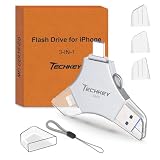
- MFi Certified Multi-function Flash Drive: This flash drive is MFi certified, high quality and excellent performance, allowing you to store your data more securely without worrying about data loss. Made of high quality metal material and advanced chip technology, it has excellent dustproof, drop-proof and anti-magnetic performance. The flash drive has a 256GB capacity, easily free up space on your device
- 256GB 3-in-1 Lightweight and Compact Memory Stick: The flash drive has USB/Lightning/Type C interfaces for USB/Usb C pcie port card compatible with iOS devices with iOS12.1 and above / OTG Android phones / PC with Win7 and above / MAC devices with MAC10.6 and above, convenient for data transfer between different devices. It is also lightweight and compact, easy to carry around and keep your data at your fingertips. Accompanied by a uniquely designed keychain, the product is more convenient for you to carry
- One Click Backup and One Click Sharing: You can easily backup photos, videos, and phonebook to your phone with just one click via the APP, freeing up space on your mobile device without using a data cable or iCloud. You can also share photos/videos/files from the flash drive directly to social media (Facebook, etc.) for easy sharing with family and friends. (Tips: iOS devices need to download the "U-Disk" APP when using flash drive; Android and PC devices do not need to download APP)
- Automatic Storage and On-the-Go Playback: All photos and videos captured by the in-app camera are automatically saved to U-Disk albums in real time and stored in a folder for easy editing and searching. Store your favorite movies and music on the flash drive, you can enjoy the stored movies or music anytime and anywhere when you are traveling or on a business trip
- High Speed Transfer and Data Encryption: This flash drive has high read/write speed, so you can enjoy the convenience of fast backup and save time. The flash drive uses stable APP software, you can choose to turn on Touch ID/Passcode to encrypt the whole flash drive, or you can choose to encrypt specific files to protect your data, so you can enjoy a more convenient and secure file storage experience
The Kingston DataTraveler Max USB-C is the speed-focused pick in this group. Kingston rates it as a USB 3.2 Gen 2 drive with up to 1,000MB/s read and 900MB/s write performance. The series starts at 256GB and goes to 1TB.
Tom’s Hardware independently tested the 256GB model as one of the fastest flash drives it had reviewed. That is useful evidence for the drive’s performance on a compatible computer, but it is not an iPhone benchmark. On a standard USB 2 iPhone, the phone remains the bottleneck. On an iPhone 15 Pro, 16 Pro, or 17 Pro, the drive has a much better chance of exploiting the phone’s USB 3 interface, though real results still depend on the workload and cable.
Important limitations
- The 1,000/900MB/s figures require a compatible USB 3.2 Gen 2 host and are maximum advertised sequential figures.
- They do not prove the drive can sustain Apple’s required write rate throughout a long ProRes recording.
- The drive is longer than a basic thumb drive and may be awkward on some devices.
- Tom’s Hardware noted that the USB-C connector can be too short for some rear motherboard USB-C ports, and that the plastic casing feels less premium.
- A USB-A-only computer requires an appropriate adapter or another connection method.
App and Files behavior: Use the Files app for ordinary external-storage transfers. No manufacturer app should be necessary for the standard USB-C storage workflow.
Who should skip it: Skip it if you have a base iPhone 15, 16, or 17 and will use the drive mostly with the phone. You will pay for performance the phone cannot fully use. Also choose a tested portable SSD instead if sustained writes, thermals, or professional video capture are central requirements.
Price and availability: Varies by capacity and retailer; check the exact US SKU, warranty, and current listing through Kingston’s support page and product information.
The Tool Desk
Outbyte Driver Updater FREEFix the driver behind crashes, sound loss and screen glitchesFind Drivers →Outbyte PC Repair FREERepair Windows errors before they cause bigger problemsFix Now →3. PNY DUO LINK V3: best dual-connector high-capacity option
Best for: Users who want USB-C for an iPhone, USB-A for older computers, and up to 2TB in a thumb-drive-style body.
The PNY DUO LINK V3 combines USB-C and USB-A in a metal swivel housing. PNY lists USB 3.2 Gen 2 performance of up to 1,000MB/s read and 800MB/s write, with capacities from 256GB to 2TB.
Its capacity and connector flexibility make it attractive for short photo and video offloads. PNY also says that the Type-C version does not require the DUO LINK app, so a USB-C iPhone can use the ordinary Files workflow.
The sustained-write warning matters
PCWorld found that the drive performed well during ordinary transfers but that write speed fell dramatically after its secondary cache was exhausted. That makes the V3 suitable for light or short offloads, but a poor choice for repeated hundreds-of-gigabytes writes or demanding continuous recording. A metal shell does not change the behavior of the NAND, controller, cache, or thermal system.
- Strengths: USB-C and USB-A connectors, capacities up to 2TB, short-transfer performance, and no app requirement on Type-C models.
- Weaknesses: Sustained writes can collapse, and the swivel design may leave one connector exposed depending on its position.
- Do not call it: The fastest drive for every workload. Its manufacturer headline is a peak specification, while independent testing exposes an important long-write limitation.
Who should skip it: Skip it for direct ProRes capture, active video editing, or routine transfers of very large datasets. Those uses favor a portable SSD with independently tested sustained performance.
Price and availability: Varies by capacity and retailer; confirm the exact V3 model rather than confusing it with the older Lightning DUO LINK iOS. Use PNY’s OTG support page and product documentation to verify the model and app requirements.
4. Samsung Type-C USB Flash Drive: best compact, rugged USB-C option
Best for: USB-C iPhone owners who want a small, simple drive for travel, keychain carry, and routine file transfers.
The Samsung Type-C USB Flash Drive is a straightforward USB-C-only device. Samsung offers 64GB, 128GB, 256GB, and 512GB versions. The 128GB–512GB models are rated for up to 400MB/s read, while the 64GB model is rated for up to 300MB/s read.
Rank #3

- USB-C 2-in-1 storage OTG: The Lexar JumpDrive Dual Drive D40E features USB Type-A and Type-C connectors in a slim, portable form factor for easy device compatibility
- Transfer speeds up to 100MB/s: Based on internal testing, performance may vary depending upon the host device, interface, and usage conditions. 1MB=1,000,000 bytes
- Plug and Play: Widely compatible with USB Type-C smartphones, tablets, laptops, Macs, and traditional Type-A devices, no software installation required. The 360° swivel design allows for easy switching between connectors without the hassle of losing a cap
- Durable & Compact: The Lexar D40E USB memory stick features a metal enclosure, withstands temperatures from 0° to 50° C (32°F to 122°F), and is lightweight at 26g with dimensions of 70.4 x 16.9 x 11.7mm
- Security & Warranty: Securely protects files using an advanced security software solution with 256-bit AES encryption. Backed by a Lexar 3-year limited warranty
Samsung advertises resistance to water, shock, temperature, magnets, and X-rays under specified laboratory conditions. Treat those as controlled-test claims rather than a guarantee against every drop, immersion, lost cap, or other accident. The five-year limited warranty is a more concrete part of the ownership proposition.
Important limitations
- It has USB-C only, so it cannot directly connect to a Lightning iPhone and may require an adapter for a USB-A computer.
- Samsung emphasizes read performance more clearly than write performance.
- Backward compatibility with USB 2.0 does not give a USB 2 iPhone USB 3 speed.
- Do not select it for ProRes unless testing or documentation confirms the sustained write speed required for your recording mode.
App and Files behavior: For ordinary USB-C use, the simple approach is to connect it and open Files. No vendor app is needed for basic browsing and copying.
Who should skip it: Skip it if you need USB-A and USB-C connectors in one body, Lightning compatibility, or a clearly documented high sustained-write workload.
Price and availability: Varies by capacity and US retailer; confirm the exact model and warranty on Samsung’s US product page.
Do these 3 things before closing this tab:
1Scan for outdated or missing drivers - takes under a minute2Clear out junk files and repair common Windows errors3Fix the driver behind crashes, sound loss and screen glitches5. SanDisk iXpand Luxe / Ultra Dual Drive Luxe: best for both Lightning and USB-C iPhones
Best for: Families, travelers, or upgraders who need one physical drive for both an older Lightning iPhone and a newer USB-C iPhone.
The SanDisk product is sold under both iXpand Luxe and Ultra Dual Drive Luxe naming in current product and support materials. Verify the exact SKU instead of buying based only on the name. The drive has both Lightning and USB-C connectors, and SanDisk lists 64GB, 128GB, and 256GB versions.
The software compatibility is complicated
- On Lightning iPhones, SanDisk says the drive is used through the SANDISK app. SanDisk also says Lightning iPhones are not supported by the native Files app for this product.
- On USB 2.0 USB-C iPhones—including base iPhone 15, 16, and 17 models—SanDisk says the SANDISK app does not support iXpand Luxe. The Files app can be used instead for USB 2.0 USB-C connections.
- SanDisk says firmware updates for this drive may require access to a Lightning iPhone; firmware updates are not supported on iOS USB-C devices.
- The old iXpand Drive app mentioned in many older reviews is discontinued. Install the current SANDISK app only if your exact drive and iPhone combination is supported.
This is the right choice when cross-generation connector convenience outweighs software simplicity. It is not the best universal recommendation for a USB-C-only household: a normal USB-C drive used with Files is less complicated.
Who should skip it: Skip it if you have a base USB-C iPhone and expect the SANDISK app to recognize the drive, or if you want a completely app-free Lightning workflow. Also verify firmware support before handing the drive to someone who owns only a USB-C iPhone.
Windows Errors? Fix Them Before They Spread
Repair common Windows errors and clear accumulated junk for a smoother, more stable PC - no reinstall needed.Free scan · no reinstallOutdated Drivers Are Slowing You Down
One free scan finds every outdated or missing driver and matches the right update for your exact hardware.Free scan · exact hardware matchPrice and availability: Varies by capacity and retailer. Check the exact product name, SKU, app compatibility, and firmware restrictions in SanDisk’s compatibility matrix and product listing.
6. PNY DUO LINK iOS: best dedicated Lightning value alternative
Best for: Owners of older Lightning iPhones who want a direct-connect drive with USB-A for a traditional laptop or desktop.
The PNY DUO LINK iOS has Lightning and USB-A connectors, a USB 3.2 Gen 1 interface, and capacities documented at 64GB, 128GB, and 256GB. It is a different product from the newer USB-C/USB-A DUO LINK V3.
Its appeal is simple: connect the Lightning end to the iPhone, connect the USB-A end to a computer, and move files using PNY’s DUO LINK app. It avoids carrying Apple’s camera adapter, but it also ties the purchase to an older connector and app ecosystem.
Quick wins for a faster PC:
Repair Windows errors before they cause bigger problemsFix Now →Scan for outdated or missing drivers - takes under a minuteDriver Scan →Important limitations
- The Lightning version depends on the DUO LINK app.
- It is less future-proof than a USB-C drive.
- Confirm that the exact capacity is still sold by an authorized US retailer and that the one-year limited warranty applies to your purchase.
- Do not confuse it with the DUO LINK V3, whose Type-C version does not require the PNY app.
Who should skip it: Skip it if you expect to keep using the drive with a future USB-C iPhone, or if you already own a USB-C computer and want the native Files experience.
Rank #4

- [Dual Flash Drive] This 2-in-1 USB flash drive is designed with a Type-C plug and a USB-A plug at each end, working across all your Type-C Android phones, iPhone 15/15 Pro/15 Pro Max, iPhone 16/16Pro/16E, tablets, iPad Pro, Macs and USB-A computers, game consoles, car audios, and more (Not for Lightning iPhone/iPad).
- [Fast Speed] Optimizing the USB 3.0 technology, this USB-C flash drive fast transfers and backs up your high-res photos, videos, music, and heavy files at a read speed of up to 130MB/s and a write speed of up to 35MB/s, 10X faster than USB 2.0 flash drives.
- [Wide Use] This Type-C flash drive supports Windows, Android, Linux, and Mac OS, and is backward compatible with USB 2.0 ports. Plug and play, no need to install any software, working seamlessly with USB-C and USB-A devices.
- [Durable and Reliable] This dual USB 3.0 flash drive adopts superb memory chips thus ensuring extremely reliable performance, plus the premium plastic enclosure offers excellent heat dissipation. The cap protects the connectors from dust and damage, providing extended durability and security.
- [Compact and Portable] Constructed in a mini size of 63.5x17.8x8.4mm/2.5x0.7x0.3inch, this slim USB-C thumb drive can fit into your pocket, letting you enjoy the instant large capacity at any time.
Price and availability: Varies and may be limited by capacity or retailer. Confirm the exact Lightning model and warranty using PNY’s specification sheet before ordering.
Which file system should you use?
For a drive that moves between an iPhone, Mac, and Windows PC, exFAT is usually the best choice. It avoids FAT32’s 4GB individual-file limit while remaining broadly cross-platform.
| Format | Best use | Important limitation |
|---|---|---|
| exFAT | General-purpose iPhone, Mac, and Windows transfers | Not an encrypted file system by itself; use separate encryption if needed |
| APFS | Apple-only workflows | Less convenient for Windows computers |
| APFS encrypted | Supported Apple file access where encryption is needed | Not supported for direct ProRes recording |
| Mac OS Extended/HFS+ | Some Mac-focused legacy workflows | Not the most convenient choice for Windows sharing |
| FAT32 or FAT | Broad compatibility with older equipment | FAT32 cannot store an individual file larger than 4GB |
Apple lists APFS, APFS encrypted, Mac OS Extended/HFS+, exFAT, FAT32, and FAT among the supported external-storage formats, and requires the drive to have one data partition. Multiple partitions are a common reason a drive works on a computer but does not appear on an iPhone.
PC Slower Than It Used to Be?
A free scan shows the junk files, broken settings and background clutter dragging Windows down - then fixes them in one click.Free scan · Windows 10 & 11Outdated Drivers Are Slowing You Down
One free scan finds every outdated or missing driver and matches the right update for your exact hardware.Free scan · exact hardware matchFormatting erases the drive. Copy anything important to another location before formatting. On a USB-C iPhone, Apple’s supported path is Files → Browse → touch and hold the drive under Locations → Erase → choose APFS, exFAT, or MS-DOS (FAT) → Erase. Apple documents this process in its file-transfer and formatting guide.
How to transfer files from an iPhone to a USB-C drive
- Unlock the iPhone.
- Connect the USB-C drive directly to the phone. Avoid a hub during initial testing.
- Open Files and tap Browse.
- Under Locations, tap the external drive’s name.
- To copy an existing file, touch and hold it, tap Copy, open the destination folder on the drive, touch and hold an empty area, and tap Paste.
- To export photos or videos, open Photos, select the items, tap Share, choose Save to Files, select the external drive, and tap Save.
- Open several files from the drive to verify that the transfer completed. Only then delete the originals from the iPhone if freeing space is your goal.
- Disconnect the drive after the copy has finished. Do not pull it out during an active write.
The drive appears as a location in Files; it does not become part of the iPhone’s internal storage. Apple’s external-file transfer guide covers the Browse, Locations, copy, move, and save workflow.
How to use a Lightning flash drive
- Unlock the iPhone before connecting the drive.
- Connect the Lightning drive.
- Install the manufacturer’s current app, not an obsolete app named in an old review.
- Approve the requested Photos, Files, and accessory permissions.
- Use the app’s copy, export, or backup function.
- Open several copied files from the drive to verify them.
- Do not delete the originals until verification is complete.
For SanDisk products, use the current SANDISK app only when SanDisk’s compatibility information supports your drive and iPhone. The former iXpand Drive app is no longer supported, as explained in SanDisk’s end-of-support notice.
How to connect a regular USB drive to a Lightning iPhone
- Connect Apple’s Lightning to USB 3 Camera Adapter to the iPhone.
- Plug the USB drive into the adapter’s USB port.
- Connect a USB power adapter to the adapter’s Lightning power input when the drive requires more power than the iPhone can provide.
- Unlock the iPhone and open Files or the compatible app.
- Copy a small test file before attempting a large transfer.
External power is particularly important with bus-powered hard drives, high-capacity storage, or accessories that draw more current. Apple documents the adapter and power requirement in its external-storage guide.
Quick wins for a faster PC:
Scan for outdated or missing drivers - takes under a minuteDriver Scan →Clear out junk files and repair common Windows errorsFree Scan →Fix the driver behind crashes, sound loss and screen glitchesFind Drivers →Can an iPhone record ProRes directly to a flash drive?
Yes, but only under specific conditions. Apple supports direct external ProRes recording on the iPhone 15 Pro and 15 Pro Max, iPhone 16 Pro and 16 Pro Max, and iPhone 17 Pro and 17 Pro Max.
For direct recording, Apple requires all of the following:
- A USB-C connection
- An exFAT-formatted external drive
- A USB 3 cable rated for at least 10Gbps
- At least 220MB/s sustained write speed for 4K60 ProRes
- At least 440MB/s sustained write speed for 4K120 ProRes
- Maximum external-device power draw of 4.5W
- No password-encrypted drive for direct ProRes recording
These are sustained-write requirements, not read-speed requirements. A package that says “up to 800MB/s” or “up to 1,000MB/s” may describe a short burst before the drive’s cache fills. It does not prove that the drive can maintain 220MB/s or 440MB/s for the entire recording.
If the Camera app reports Slow Recording Speed, check the format, cable rating, sustained-write capability, power draw, encryption status, and iPhone model. For serious ProRes work, a tested portable SSD is usually safer than a conventional thumb drive because it generally offers more thermal headroom, greater capacity options, and better sustained performance potential. Apple’s complete requirements are in its ProRes support document.
Flash drive versus portable SSD
| Choose a flash drive when… | Choose a portable SSD when… |
|---|---|
| You want the smallest direct-plug accessory. | You need sustained write speed for video or large project files. |
| You mostly copy photos, documents, PDFs, and short videos. | You regularly transfer hundreds of gigabytes. |
| You need a built-in USB-C/USB-A or Lightning connector. | You want more thermal headroom and can carry a cable. |
| Convenience is more important than benchmark performance. | You need 1TB–2TB or more for active media projects. |
| You will connect it occasionally and store it safely afterward. | You will use it as an active editing or recording drive. |
A portable SSD is less convenient because it normally needs a cable and may draw more power, but its controller, NAND, enclosure, and cooling are generally better suited to sustained workloads. Tom’s Hardware’s flash-drive comparison also notes the broader speed and capacity advantages of external SSDs over conventional flash drives. Do not buy a thumb drive for professional ProRes merely because its peak sequential number looks similar to an SSD’s.
Capacity: how much storage do you need?
- 64GB: Occasional documents, a small photo transfer, or emergency travel storage.
- 128GB: Basic photo backup and routine travel use.
- 256GB: The best general-purpose capacity for most people moving photos and videos.
- 512GB: Large photo libraries, frequent video offloads, or fewer trips to a computer.
- 1TB–2TB: Large video libraries and project files, although a portable SSD may be a better sustained-performance choice at this size.
Advertised capacity is decimal, so the usable space shown by the iPhone or computer is lower after formatting and reserved space. Kingston explains this difference in its DataTraveler Max support documentation. Capacity also does not compensate for a weak sustained-write design: a 2TB thumb drive can still be a poor tool for continuous recording.
Best Value

- Dual USB-A and USB-C connectors for wide compatibility with USB devices. Cable-free to provide everything you need within a compact design
- Up to 400MB/s read transfer, 360MB/s write speeds. Provide file transfers 4X faster than USB 3.0. The comparison is based on internal testing at a speed of 100 MB/s; actual performance may vary
- The free Lexar App Photo Backup function is available for both iOS and Android to give an easy way to back up and manage media. iCloud content backup is not supported yet
- A durable metal housing offers exceptional durability and protects the USB-A and USB-C connectors
- Available in capacities up to 1TB to carry your entire content library in your pocket
What to check before buying
- Connector: Match Lightning or USB-C to the iPhone. If you need an older computer too, choose USB-A compatibility or budget for an adapter.
- Phone USB speed: Confirm whether your USB-C iPhone is a standard USB 2 model or a Pro USB 3 model.
- Files versus app: Prefer Files on USB-C when you transfer arbitrary documents and want less vendor-app dependence.
- Sustained write speed: Look for independent testing, not just “up to” read or burst numbers, especially for video.
- File system: Use exFAT for iPhone/Mac/Windows sharing unless an Apple-only APFS workflow is more appropriate.
- Partition layout: The drive should have one data partition.
- Physical design: A swivel can protect connectors but may loosen with wear. A tiny drive is easy to lose, and a drive connected directly to a phone can be stressed if the phone is handled while attached.
- Computer fit: Some short or bulky USB-C drives can block adjacent ports or fail to reach recessed ports.
- Seller and warranty: Buy from the manufacturer or an authorized retailer. Unknown marketplace listings increase the risk of counterfeit capacity, incorrect model numbers, and missing warranty support.
Do not infer reliability solely from a high marketplace rating, a metal shell, or a product’s advertised speed. Verify the exact model, warranty, app support, and capacity.
Troubleshooting an iPhone flash drive
The drive does not appear in Files
- Disconnect the drive, unlock the iPhone, and reconnect it. Apple requires accessories to be connected after the phone is unlocked in relevant security situations.
- Remove a thick case that might prevent the connector from fully seating.
- Check Settings → Privacy & Security → Wired Accessories and allow the accessory if necessary. Apple explains this setting in its USB and accessory support article.
- Try the drive without a hub, dock, or unverified adapter.
- Confirm that it has one data partition and a supported format such as APFS, APFS encrypted, HFS+, exFAT, FAT32, or FAT.
- Try a different known-good drive to determine whether the problem is the phone or the accessory.
- With a Lightning adapter, connect power through Apple’s Lightning to USB 3 Camera Adapter.
- For SanDisk iXpand Luxe, check the model/interface compatibility matrix and firmware restrictions.
The drive is visible but empty or files cannot be copied
Test a small file first. Common causes include a full drive, a corrupted or incompatible file system, multiple partitions, missing app permissions, unsupported encryption, insufficient power, a file larger than FAT32’s 4GB limit, or a flash drive whose write cache has filled.
Free tools Windows power users keep installed
One-click scans. No signup required.
Back up the drive on a computer, reformat it as exFAT if you need Mac and Windows compatibility, and test it again. If capacity verification fails or repeated write tests produce errors, replace the drive rather than trusting it with the only copy of important photos.
The drive is much slower than advertised
- A USB 2 iPhone caps the connection regardless of the drive’s rating.
- “Up to” figures usually describe maximum sequential performance on a fast host.
- Small files transfer much more slowly than one large sequential file.
- Sustained writes can fall after the drive’s cache is exhausted.
- Heat can reduce performance.
- A manufacturer app may add processing overhead.
- A USB 3 cable is required to use USB 3 capability on supported Pro iPhone workflows.
PCWorld’s PNY DUO LINK V3 review is a useful example of why short-transfer performance and long-write performance must be treated separately.
The iPhone says the accessory is not supported
Check the connector, app version, iOS requirement, power supply, and exact drive model. Lightning drives often need their own app, while the SanDisk SANDISK app has specific restrictions for iXpand Luxe on USB 2.0 USB-C iPhones. A standard USB-C drive should normally be tested directly through Files before installing any vendor software.
ProRes reports Slow Recording Speed
Verify the compatible Pro iPhone model, exFAT formatting, 10Gbps USB 3 cable, 220MB/s sustained write requirement for 4K60 or 440MB/s for 4K120, maximum 4.5W power draw, and lack of password encryption. If all requirements are met but recording remains unreliable, use a portable SSD with independently tested sustained-write performance.
Recommended Free Tools
Bottom line: which iPhone flash drive should you buy?
- Most USB-C iPhone owners: SanDisk Ultra Dual Drive Go USB Type-C.
- Fastest conventional USB-C flash-drive style: Kingston DataTraveler Max USB-C, especially for USB 3-capable Pro models.
- Best USB-C/USB-A capacity combination: PNY DUO LINK V3, provided your transfers are short and you understand its sustained-write limitation.
- Best compact rugged USB-C option: Samsung Type-C USB Flash Drive.
- Best for both Lightning and USB-C devices: SanDisk iXpand Luxe, with its current SANDISK app, Files, and firmware caveats.
- Best dedicated older-Lightning alternative: PNY DUO LINK iOS.
- Best for direct ProRes recording: A tested portable SSD rather than an ordinary thumb drive.
Frequently Asked Questions
Does a flash drive increase an iPhone’s internal storage?
No. It provides removable external storage for copying, viewing, and transferring selected files. It does not expand the iPhone’s internal capacity or let iOS install apps on the drive as though it were internal storage.
Can I use any USB-C flash drive with an iPhone?
Many standard USB-C drives work through Files, but the drive should use a supported file system, have one data partition, and receive adequate power. The iPhone’s USB speed also matters: standard iPhone 15, 16, and 17 models use USB 2 speeds, while recent Pro models support USB 3 at up to 10Gbps.
Can I record ProRes directly to a USB flash drive?
Compatible iPhone Pro models can record ProRes to external storage, but Apple requires exFAT, a 10Gbps USB 3 cable, at least 220MB/s sustained write for 4K60 or 440MB/s for 4K120, no password encryption, and no more than 4.5W external-device power draw. A tested portable SSD is generally safer than a thumb drive for this workload.
Why does my Lightning flash drive need an app?
Lightning-specific drives commonly use a manufacturer app to manage the accessory and copy photos or files. Use the current app for the exact model. For SanDisk products, the former iXpand Drive app is discontinued; SanDisk now directs users to the SANDISK app, which has model and interface restrictions.
Should I format an iPhone flash drive as exFAT or APFS?
Choose exFAT for a drive shared between iPhone, Mac, and Windows. Choose APFS for an Apple-only workflow. Formatting erases the drive, so copy important data elsewhere first. FAT32 is broadly compatible but cannot store a single file larger than 4GB.
The Bottom Line
For most people, buy the SanDisk Ultra Dual Drive Go USB Type-C in 128GB or 256GB. It is simple to use through Files and includes USB-A for older computers. Choose the Kingston DataTraveler Max USB-C when your iPhone is a USB 3-capable Pro model and speed matters; choose the SanDisk iXpand Luxe only when you genuinely need both Lightning and USB-C compatibility. For direct ProRes recording or repeated very large transfers, skip ordinary thumb drives and use a portable SSD with verified sustained-write performance.
Quick Recap
Product prices and availability are accurate as of the date/time indicated and are subject to change. Any price and availability information displayed on Amazon at the time of purchase will apply.

