
Groundwire is the best overall generic SIP app for Android if you already have a SIP account from a provider, Asterisk, FreePBX, or another PBX. Google Voice is the better choice if you want a simple US phone number without configuring SIP. For open-source calling, choose Linphone; for a managed business deployment, choose Bria Mobile; and for a 3CX, Grandstream, or PortSIP system, use that PBX vendor’s own app.
Those recommendations are not interchangeable. A SIP softphone is usually only a dialer: it needs credentials from a SIP provider or PBX and does not include a phone number or calling minutes. A VoIP service such as Google Voice, TextNow, or Talkatone supplies its own account and number. This guide separates the two categories so you can choose an Android app that fits your actual setup.
Price note: prices and listing details below refer to the US Google Play Store where specified and were checked on August 10, 2026. Prices, taxes, availability, minimum Android versions, and subscription terms can vary by country and change over time.
Quick verdict: the best Android VoIP apps at a glance
| Rank | App | Best for | SIP account required? | Phone number included? | Pricing model | Main limitation |
|---|---|---|---|---|---|---|
| 1 | Groundwire | Best overall generic SIP softphone | Yes | No | One-time purchase; US Play price $9.49 | Costs more upfront than free clients |
| 2 | Zoiper | SIP and IAX compatibility | Yes | No | Free core app; important features and push require payment | Free version is limited |
| 3 | Linphone | Open-source and privacy-conscious calling | Usually | No ordinary PSTN service by default | Free and open source | Push calling for third-party SIP accounts is not automatic |
| 4 | Bria Mobile | Managed business deployments | Yes | No | Subscription; CounterPath lists $0.99 per user/month | Less appealing for casual users |
| 5 | Acrobits Softphone | Lower-cost one-time-purchase SIP client | Yes | No | One-time purchase; US Play price $6.99 | No call transfer or conference calling according to its listing |
| 6 | Sipnetic | Free feature-rich SIP client | Yes | No | Free; verify current paid-feature availability | Less mature ecosystem and documentation |
| 7 | MizuDroid | Advanced configuration and SIP troubleshooting | Yes | No | Free download | Its visible Play update is older than leading alternatives |
| 8 | Google Voice | US personal second number | No | Yes, subject to eligibility | Basic consumer plan is free in the US | Not a generic SIP client |
| 9 | TextNow | Free US or Canada second line | No | Yes, generally in the US and Canada | Free tier plus paid options | Geographically limited and ad-supported options may apply |
| 10 | Talkatone | Simple US/Canada Wi-Fi calling | No | Yes, generally a US/Canada number | Free tier and paid international credits | Does not support 911 emergency calling or texting |
First, decide which kind of VoIP app you need
You already have a SIP account
Choose Groundwire, Zoiper, Linphone, Bria Mobile, Acrobits Softphone, Sipnetic, or MizuDroid. You will normally need:
Quick wins for a faster PC:
Scan for outdated or missing drivers - takes under a minuteDriver Scan →Repair Windows errors before they cause bigger problemsFix Now →Fix the driver behind crashes, sound loss and screen glitchesFind Drivers →#1 Best Overall
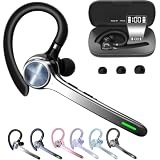
- Smart Digital Display: Easy-to-read digital display shows the remaining power of the charging case for the refill in time.
- High Capacity and Long-Lasting: Equipped with the 500mAh charging case to juice up the bluetooth headset for almost 72 hours of music/talking time. The single headset offer 18-23 hours of talking time.
- Design Ideas Of Mute: Add the individual mute button on the bluetooth earpiece to meet your demand for muting more simply on the cell phone call. (ONLY ALLOW TO MUTE DURING CALL ON PHONE)
- Ear Painless: Maximizing compactness of wireless headset based on ergonomics. Small and light even unobtrusive but still stable, and provide a more comfortable wearing experience.
- Ultra-Powerful Bluetooth Tech: Wireless earpiece features the updated 5.3 Bluetooth technology to quickly and stably connect devices in the 10m range.
- SIP username or extension
- SIP authentication ID, if different from the username
- SIP password
- SIP domain or registrar
- Transport and port details, such as UDP, TCP, or TLS
- An outbound proxy, STUN server, or other settings if your provider requires them
The app does not create the underlying telephone service. Whether you can call mobile and landline numbers depends on your provider or PBX having outbound PSTN routing. A SIP account may only be able to call other extensions or SIP users.
You want a new number without SIP configuration
Use Google Voice, TextNow, or Talkatone if the service is available in your country. These apps supply the account infrastructure and, in their supported markets, a number for calls and messages. They generally cannot be pointed at an arbitrary Asterisk, FreePBX, or third-party SIP account.
You only need app-to-app calling
Signal, WhatsApp, Google Meet, and Discord may be better for calling people who use the same service. They are not generic SIP clients: they normally do not expose a conventional SIP registration screen, PBX extension controls, SIP transfers, or provider-controlled PSTN routing. Google Duo is no longer a separate current recommendation because Google merged its experience into Google Meet; Skype was retired on May 5, 2025, with Microsoft directing users toward Teams Free. See Google’s Duo-to-Meet announcement and Microsoft’s Skype retirement information.
The 10 best VoIP and SIP apps for Android
1. Groundwire — best overall generic SIP app
Groundwire is the strongest general-purpose choice for most people who already have SIP credentials. It combines a broad feature set with push notifications and a one-time purchase rather than a required monthly app subscription.
The current US Google Play listing describes Groundwire as a SIP client and lists a $9.49 purchase price. Its advertised features include multiple SIP functions, push notifications, HD video, transfers, group calls, voicemail, instant messaging, Wi-Fi/mobile-data handover, Opus and G.729 audio, and video up to 720p using H.264 and VP8. The listing shows a July 7, 2026 update. See the Groundwire Google Play listing and Groundwire setup guide.
Groundwire is a particularly good fit for FreePBX and Asterisk users, independent SIP-provider customers, remote workers, and anyone who wants an incoming-call experience that resembles a normal phone. It does not provide a phone number or calling minutes; those come from the SIP service behind it.
Trade-offs: the upfront price is higher than free clients, and its Google Play rating is not proof of universally reliable calling. Push delivery can still be affected by Android notification permissions, battery optimization, manufacturer-specific background restrictions, and PBX configuration. Treat push as something to test on your exact phone and account, not as a guarantee.
2. Zoiper — best for broad SIP and IAX compatibility
Zoiper is the best pick when compatibility with different SIP environments, or IAX support, matters more than getting every feature for free. It is one of the longest-established Android softphones and supports both SIP and IAX.
The Tool Desk
Outbyte PC Repair FREEClear out junk files and repair common Windows errorsFree Scan →Outbyte Driver Updater FREEScan for outdated or missing drivers - takes under a minuteDriver Scan →Its current Android listing advertises calling over Wi-Fi, 3G, 4G/LTE, and 5G, HD audio, and multiple network types. Optional paid features include push calling, video, encryption, transfers, conference calls, recording, voicemail message waiting indication, and multiple accounts. The current listing shows version 2.26.13 and an April 7, 2026 update. Check the Zoiper Google Play listing, Zoiper feature matrix, and Zoiper push documentation.
Zoiper is useful for advanced users whose provider supports IAX, people managing more than one account, and users who want extensive account and codec configuration. However, the free client should not be compared with the fully featured paid version. Push calling is a paid capability and may also require cooperation from the provider or PBX.
Zoiper’s listing warns users not to set it as the default dialer because emergency calling may not work as expected. Keep your ordinary cellular dialer available and confirm emergency-call arrangements with your provider before relying on any SIP app.
3. Linphone — best open-source SIP app
Linphone is the leading choice for users who value open source, standards-based interoperability, and privacy-oriented features. It is free, cross-platform, and supports both voice and video as well as messaging and conferencing.
Free tools Windows power users keep installed
One-click scans. No signup required.
Linphone’s documentation lists Android 9 or newer for the latest version and describes support for SIP over TLS, SRTP, ZRTP, SRTP-DTLS, ICE, STUN, TURN, Opus, multiple accounts, video, messaging, QR provisioning, and conferencing. Linphone’s FAQ identifies the software as GPLv3. See its supported features and standards, FAQ, and documentation.
The important qualification is push calling. Linphone push notifications work reliably for Linphone accounts, but arbitrary third-party SIP accounts do not automatically receive Linphone’s push notifications. With a third-party provider, you may need provider-side or PBX-side support for the relevant push architecture. If the phone must receive calls while asleep, test this before moving your main number to Linphone.
Linphone also does not turn a SIP identity into ordinary SMS or MMS. Its messaging features are internet-based and depend on the account and service architecture. It is best for open-source advocates, self-hosters, developers, and technically capable users who are comfortable trading some convenience for control.
4. Bria Mobile — best for managed business deployments
Bria Mobile is aimed at organizations and administrators rather than casual hobbyists. Its strengths are managed provisioning, business-oriented support, provider presets, and a subscription-backed mobile experience.
Crashes, No Sound, or Screen Glitches?
Random freezes, missing sound and display glitches usually trace back to one bad driver. Find and replace yours safely.Free scan · under a minuteWindows Errors? Fix Them Before They Spread
Repair common Windows errors and clear accumulated junk for a smoother, more stable PC - no reinstall needed.Free scan · no reinstallCounterPath currently lists Bria Mobile at $0.99 per user per month. The company describes it as a SIP-based softphone for Android and iOS. The current Google Play listing advertises HD voice and video, SIP SIMPLE, XMPP, provider presets, push service, IPv4/IPv6, and NAT64 support. Start with CounterPath’s Bria Mobile product page and current Bria user guides.
Bria makes sense when an employer, hosted-PBX provider, or managed service provider controls the configuration. It is less attractive if you simply want an independent free dialer for a personal SIP account. Pay attention to the product name: Bria Mobile, Bria Solo, Bria Teams, and Enterprise deployments have different account and provisioning models. CounterPath’s legacy Bria Android app should not be treated as the current product.
5. Acrobits Softphone — best lower-cost one-time purchase
Acrobits Softphone is the cheaper, simpler sibling to Groundwire. It is a good option when you want a polished SIP client with push and multiple-account support but do not need the full business call-control feature set.
The current US Play listing shows a one-time $6.99 purchase. Acrobits says the purchase includes lifetime support and updates. Advertised features include voice and video, push notifications, multiple SIP accounts, Bluetooth, common codecs, and handover between Wi-Fi and mobile data. The listing specifically says that Acrobits Softphone does not support call transfer or conference calling and shows a July 9, 2026 update. See the Acrobits Softphone listing and Acrobits setup guide.
What’s actually slowing this PC down?
Pick the symptom - the matching free tool is one click away.
Choose it for ordinary inbound and outbound SIP calling, multiple personal accounts, and a one-time purchase. Choose Groundwire instead if attended or blind transfer, conferencing, or more advanced business call handling is important.
As with Groundwire, reliable push requires more than installing the app. Acrobits specifically advises Android users to disable battery optimization when they need dependable push notifications. Follow its Android battery-optimization guide, then test calls with the screen locked and the app closed.
6. Sipnetic — best free feature-rich SIP client
Sipnetic offers an unusually broad feature set for a free generic SIP softphone. Its official site says it works with standards-compliant SIP providers and PBXs but does not provide the underlying VoIP service.
Sipnetic lists multiple accounts, video, messaging, Opus, G.722, G.711, G.729, Speex and GSM codecs, H.264 and VP8 video, STUN, TURN, ICE, TLS, SRTP, ZRTP, QR provisioning, transfers, DTMF, and voicemail message waiting indication. Visit the Sipnetic feature page and its Google Play listing.
Its main weakness is not the feature list but the smaller ecosystem. Documentation, provider presets, push behavior, and the current purchase path may be less predictable than with Groundwire, Zoiper, or Bria. Play listings have indicated that some paid features may no longer be purchasable through Google Play, so verify the current billing arrangement before assuming a premium function is available.
Rank #2
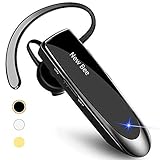
- CVC 6.0 Handsfree Talking: Employs CVC 6.0 technology for clear sound quality during calls, ensuring both you and the person on the other end can hear clearly without distortion
- Long Lasting Battery Life: Requires only 2-3 hours charge time and delivers 22 hours music time, 24 hours talk time, and 60 days standby time, meeting the needs for extended daily use
- Comfortable Wearing Design: Lightweight design at 12 grams does not cause burden to your ears, providing lasting wearing comfort for drivers or businessmen; 360 degree adjustable earbud fits both left or right ear with S/M/L ear tips included for customized fit
- Wide Compatible: Compatible with Bluetooth-enabled devices including iPhone series, Samsung, HTC, LG, SONY, PC, Laptop, iPad, iPod touch, Motorola, and other Android cell phones
- Easy to Carry and Two Device Connection: Connects to 2 devices simultaneously and allows you to hear sound from both; included case helps keep the bluetooth earpiece secure for convenient portability and storage
Sipnetic is a good first free client for technically comfortable users, especially when the provider supplies clear SIP settings. For a business-critical inbound line, test locked-screen and post-reboot behavior on the exact device before committing.
7. MizuDroid — best for advanced SIP experimentation
MizuDroid is the choice for users who need low-level controls rather than the simplest setup. It exposes more configuration options than many consumer-oriented softphones, which can help with unusual providers, number rewriting, DTMF, NAT, or mixed network environments.
The current Google Play listing describes support for IPv4 and IPv6, UDP, TCP and TLS, RFC 2833/RTP-event, SIP INFO and in-band DTMF, voicemail, recording, video, messaging, file transfer, number rewriting, and other advanced SIP functions. It also supports different approaches to keeping incoming calls available. The visible Play listing shows a June 4, 2025 update. See the MizuDroid listing, push-notification documentation, and all-time availability guide.
MizuDroid documents three possible inbound-call approaches: direct push from the provider, Mizu’s SIP push proxy for publicly reachable servers, or a background service when push is unavailable. The advanced settings are useful, but they also create more opportunities for a wrong transport, codec, proxy, or DTMF selection. Because its visible update date is older than those of the leading alternatives, test it carefully before using it for a primary business number.
8. Google Voice — best US personal VoIP number
Google Voice is the easiest option for a US user who wants a second number, voicemail, texting, and internet calling without managing SIP credentials. The basic consumer plan is no-charge and US-only, subject to account and number availability.
Google lists a Google Voice number, domestic calling and texting, voicemail transcription, Android support, and calling through the Voice app. Calls can use Wi-Fi or mobile data. The consumer, standalone paid, and Google Workspace editions have different features and geographic availability, so consult Google’s Voice subscription types and Android calling help.
Google Voice is not a generic SIP client. You cannot normally enter an arbitrary FreePBX or Asterisk extension and use Google Voice as its SIP dialer. It is best for a personal second number, not for PBX interoperability or detailed SIP call control. As with many VoIP numbers, some financial institutions and verification services may reject or restrict the number; do not assume it will work for every identity-verification purpose.
9. TextNow — best free US/Canada second line
TextNow is a low-friction choice for free calling and texting in the US or Canada. Its current Play listing advertises a second phone number, free Wi-Fi calling and texting, voice calls, direct messaging, SMS, picture messaging, and video messaging in its supported markets.
TextNow is a service app, not a SIP client. It cannot replace Groundwire or Zoiper for connecting to a PBX. Service availability, data add-ons, SIM or eSIM options, number retention, advertising, and paid features vary by country, device, and plan. Check the TextNow Google Play listing and TextNow service FAQ before relying on it as a permanent business number.
Choose TextNow when you want a separate consumer line and your contacts are in the US or Canada. Do not choose it because you need SIP registration, PBX extensions, IAX, custom codecs, or provider-controlled routing.
10. Talkatone — best for simple US/Canada Wi-Fi calling
Talkatone is a straightforward consumer second-line service for US and Canada calling and texting. It works over Wi-Fi or cellular data, offers a US/Canada number, and supports calling and texting from Android phones and tablets. International calling is available through purchased credits.
Do these 3 things before closing this tab:
1Clear out junk files and repair common Windows errors2Scan for outdated or missing drivers - takes under a minute3Repair Windows errors before they cause bigger problemsThe critical safety limitation is explicit: Talkatone does not support 911 emergency calling or texting. It must not be treated as a replacement for a regulated cellular phone line or a separate emergency-calling service. See the Talkatone Google Play listing and Talkatone’s official site for current service and pricing details.
Talkatone is appropriate when you want a simple personal or tablet-based US/Canada line. It is not appropriate for arbitrary SIP accounts, PBX administration, business call transfers, or emergency calling.
Best Android apps for specific PBX systems
If your organization already runs a supported PBX, its native app may be better than a generic SIP client. Native apps can integrate provisioning, presence, BLF, chat, call parking, company directories, and the PBX vendor’s push infrastructure. Their trade-off is that they usually work only with that vendor’s system.
3CX: use the current 3CX app
The 3CX Android app is designed for 3CX systems and requires a 3CX extension; it is not a standalone client for arbitrary SIP accounts. 3CX states that connectivity to Version 18 ended on December 17, 2025, so current installations should be on Version 20 or later. The Play listing contains a conflicting reference to Version 18, so use the 3CX Version 18 end-of-connectivity notice and current server documentation as the authority.
Recommended Free Tools
Grandstream UCM: use Grandstream Wave
Grandstream Wave is positioned as a mobile, desktop, and web collaboration app for organizations using a Grandstream UCM IP PBX. It is not the best choice for a random third-party SIP account. Do not install the old Wave Lite app for a new deployment: Grandstream says Wave Lite is no longer available from Google Play or the App Store. See the current Grandstream Wave page and Grandstream support page.
PortSIP PBX: check the server version before choosing the app
PortSIP’s download page says the legacy PortSIP Softphone supports PortSIP PBX 16.x and directs users with PortSIP PBX 22.x to the newer PortSIP ONE app. That makes PortSIP relevant within its own ecosystem but a poor generic recommendation. Check the PortSIP download page for the correct client for your server.
Emerging and technical alternatives
Sheerbit Softphone is an emerging option whose current Play listing describes SIP and WebRTC, multiple accounts, push calling, TLS/SRTP, and no subscription. The listing identifies it as a first release updated June 22, 2026, so there is not yet enough public track record to rank it above established clients. See its Google Play listing.
baresip and baresip+ are worth considering for technically capable users who prefer open-source software or F-Droid distribution. Their trade-off is a more technical user experience and less mainstream documentation. They deserve a hands-on test before being selected as a primary phone for a nontechnical user.
Push calling: the feature that determines whether a SIP app feels like a phone
A SIP app may make and receive calls perfectly while it is open and still miss incoming calls after Android suspends it. Android limits background execution, and newer Android versions also require notification permission for many notifications. Android’s guidance favors push messaging or an appropriate foreground service instead of an unrestricted permanent background connection. Read the documentation for Android background execution limits and notification permission.
| App | How incoming calls work when the app is not open | Important qualification |
|---|---|---|
| Groundwire | Advertised push notifications | Android battery and notification settings can still interfere |
| Zoiper | Optional paid push service | Provider or PBX cooperation may be required |
| Linphone | Push for Linphone accounts | Third-party SIP accounts do not automatically receive Linphone push notifications |
| Bria Mobile | Managed push service | Best suited to a configured business deployment |
| Acrobits Softphone | Advertised push notifications | Disable battery optimization when necessary |
| Sipnetic | Verify the current push implementation | Test the provider and device before relying on it for critical inbound calls |
| MizuDroid | Provider push, Mizu push proxy, or background service | Choice depends on server reachability and configuration |
| Google Voice, TextNow, and Talkatone | Service-managed notifications | No SIP registration is exposed to the user |
For Groundwire and Acrobits, review the Acrobits Android battery-optimization instructions. For Linphone, its FAQ explains the third-party SIP push limitation. MizuDroid documents its push proxy and background alternatives in its availability guide.
Security: TLS and SRTP are useful, but they are not the whole story
When comparing SIP security, separate the layers:
- SIP over TLS encrypts signaling between the app and the relevant SIP server.
- SRTP encrypts the audio or video media stream when negotiated and supported across the call path.
- ZRTP or DTLS-SRTP provide other media-key negotiation mechanisms supported by some clients and services.
- HTTPS provisioning protects account configuration while it is downloaded to the app.
- End-to-end encryption is a stronger claim. It depends on the complete account architecture, media relays, endpoints, and whether the call remains within a compatible encrypted path.
Do not call an app secure merely because it has a TLS checkbox. The SIP provider, PBX, RTP relay, codecs, provisioning server, VPN, and destination all affect what is protected. Linphone documents SIP/TLS, SRTP, ZRTP, SRTP-DTLS, ICE, STUN, and TURN in its standards documentation. Sipnetic also lists TLS, SRTP, and ZRTP; other clients support different subsets.
How to choose between the leading apps
- Already have a SIP account and want the best overall balance: Groundwire.
- Need IAX or extensive protocol compatibility: Zoiper.
- Want open-source software and standards depth: Linphone.
- Your employer or provider manages the account: Bria Mobile.
- Want a cheaper one-time purchase: Acrobits Softphone.
- Want a free client with many features: Sipnetic.
- Need unusually detailed SIP controls: MizuDroid.
- Want a free US number: Google Voice.
- Want a US or Canada second line: TextNow or Talkatone.
- Use 3CX, Grandstream UCM, or PortSIP: start with the matching vendor app, not a generic SIP client.
Other useful criteria include multiple accounts, transfers, conference calling, call parking, DTMF, voicemail message waiting indication, BLF, shared-line appearance, call recording, forwarding, presence, LDAP or CardDAV, QR provisioning, and video. SIP compatibility alone does not mean that every one of these features will work. Server support, subscription tier, provisioning, and vendor-specific implementation matter.
How to set up a generic SIP app on Android
Collect the account information first
Ask your SIP provider or PBX administrator for the SIP username or extension, authentication ID, password, registrar or domain, outbound proxy, transport, port, codec requirements, STUN/TURN information, and whether the service supports push notifications, voicemail indication, video, transfers, or SMS.
Use this setup and test sequence
- Install the app from Google Play or the vendor’s official distribution channel.
- Allow microphone and notification permissions when requested. Allow camera access only if you need video. Contacts and phone-integration permissions are optional depending on the app.
- Open the account screen and add a new SIP account.
- Enter the username, password, and SIP domain. Use the provider’s authentication ID if it differs from the visible extension.
- Start with the provider’s recommended transport. Use TLS when the provider supports it and has supplied the correct port and certificate arrangement.
- Save the account and confirm that it displays registered.
- Make an outbound test call, then test DTMF through voicemail or an automated menu.
- Call the Android device from another number while the app is open.
- Repeat the inbound test with the screen locked and the app closed.
- Disable battery optimization or set the app to unrestricted background use if the app’s push or background model requires it.
- Reboot the phone and test again. A setup that works only until the next reboot is not complete.
- Test Wi-Fi-to-cellular handover if the app advertises that feature.
Groundwire and Acrobits account path
In Groundwire or Acrobits, open Settings → Accounts → +, choose a provider preset or New SIP Account, enter a title, username, password, and SIP domain, then save. Acrobits says a green SIP icon indicates registration and red indicates that the account is not registered. The Acrobits setup instructions show the exact path. Groundwire’s guide also discusses microphone, phone, contacts, camera, notification, full-screen-call, and battery-optimization permissions.
Rank #3

- LED Power Display and 60H Playback: Dual digital LED power display outside of the case is to show the power level for charging case and earbuds. When charging for the case, the LED light will start to flash from 1 to 100. When you put earbuds into the case, then earbuds will start to be charged. 470mAh battery capacity charging case can provide extra 4 times full charging for both earbuds, each earbud can last 6H on single charging. So, you can enjoy 60H music time in total via using in turn
- Wireless Charging and IPX5 Waterproof: The charging case of these bluetooth earbuds support wireless charging and USB C cable charging. These wireless headphones are rating at IPX5 waterproof, the nano-coating on earbuds surface can prevent water and sweat from penetrating, which can use as sport wireless headsets. You can listen to the music while running, working, reading, sleeping, meeting, etc
- One-Step Pairing and Easy Touch Control: TAGRY X08 bluetooth earphones adopts hall switch. After first connection, these wireless earphones will connect with your device once you open the charging case, which is faster and more convenient. During using, you can touch either earbud to control the phone, such as the music switch, volume adjustment, phone calls, voice assistant, etc. No need to adjust through your mobile phones
- Ergonomic Design and Lightweight: TAGRY X08 headphones' structure is the study of thousands of people's ear canal before design. Comes with three different sizes of ear tips, our X08 are fit for most people's ear cannals. These wireless bluetooth headphones are small and light, single earbud is only 0.14oz, earbud size is 1.57*0.78*0.59in, charging case size is 2.56*2.16*1in, It’s more convenient to carry
- Superior Clear Call and Immersive Stereo Sound: These music earphones with 13mm speakers and triple-layer composite diaphragms provide powerful bass, stunning treble and clear mids. These earbuds are designed for sound and music lovers. It can support the mono mode and twin stereo mode, you can share the earbuds with your friends and families. Each earbud has a build-in microphone for phone calls. CVC noise reduction can make others hear your voice very clearly while phone calls
Common problems and how to fix them
The account will not register
- Check the domain spelling and whether it is a DNS name rather than a server IP.
- Confirm the username, authentication ID, and password separately.
- Check the transport and port: UDP, TCP, or TLS.
- Ask whether an outbound proxy is required.
- Check whether the provider limits simultaneous registrations or the account is already active on another device.
- Check whether the PBX has blocked the phone’s IP address or requires a VPN.
- Try the provider’s recommended DNS name and verify that it resolves on the current network.
- Check certificate requirements if using TLS.
Do not start by changing codecs. Codecs generally affect media negotiation after SIP signaling and registration have succeeded.
The account registers but there is no audio
Investigate NAT and RTP rather than the account password. Common causes include a firewall, SIP ALG on the router, an incorrect RTP port range, missing ICE/STUN/TURN support, IPv4/IPv6 incompatibility, a provider media-relay problem, or VPN interference. Linphone’s SIP best-practices guidance recommends SIP/TLS, DNS names instead of hard-coded IP addresses, ICE, and push notifications instead of permanent mobile keep-alives.
Windows Errors? Fix Them Before They Spread
Repair common Windows errors and clear accumulated junk for a smoother, more stable PC - no reinstall needed.Free scan · no reinstallCrashes, No Sound, or Screen Glitches?
Random freezes, missing sound and display glitches usually trace back to one bad driver. Find and replace yours safely.Free scan · under a minuteThere is one-way audio
- Test Wi-Fi and cellular data separately.
- Test with and without the VPN.
- Compare IPv4 and IPv6 networks if your provider supports both.
- Disable SIP ALG on the router if it is interfering.
- Use the provider’s recommended codec list.
- Check ICE, STUN, and TURN settings.
- Note whether the problem occurs only on inbound calls or only after the call is answered.
Before blaming the app, test the same SIP account on a second network. A call that works on cellular but fails on home Wi-Fi usually points to NAT, firewall, or router behavior.
Incoming calls stop when the app is closed
- Enable the app’s notification permission.
- Set its Android battery setting to unrestricted or not optimized where appropriate.
- Disable the manufacturer’s sleeping-app, auto-start, background-data, or data-saver restriction for the app.
- Confirm that the app’s push service is enabled and that your provider or PBX supports its push method.
- Do not force-stop the app. Android may not restart a force-stopped app until you open it again.
- Test after rebooting the phone and after switching between Wi-Fi and mobile data.
Android documentation notes that restricted apps may be prevented from doing background work, receiving boot broadcasts, or launching services. See the Android background-optimization guidance. A permanent SIP connection can also increase battery use, which is why push is generally preferable when the provider and client support it.
DTMF does not work in menus
Ask the provider or PBX whether it expects RFC 2833/RTP events, SIP INFO, or in-band audio. Select the matching mode in the account settings if the app exposes that choice. MizuDroid explicitly lists all three options; other clients may expose fewer settings. DTMF failure is usually a signaling or media-mode mismatch, not a failed SIP registration.
SMS does not work
SIP registration does not automatically include SMS. Messaging may require SIP SIMPLE, provider-specific messaging, an app-specific service, a separate business SMS product, or carrier application-to-person registration. Linphone’s FAQ makes clear that it does not send ordinary SMS or MMS; its messaging is internet-based. Google Voice, TextNow, and Talkatone provide messaging through their own services, not through arbitrary SIP credentials.
Quick wins for a faster PC:
Clear out junk files and repair common Windows errorsFree Scan →Scan for outdated or missing drivers - takes under a minuteDriver Scan →Repair Windows errors before they cause bigger problemsFix Now →Emergency calling warning
Do not assume that a VoIP app can replace your mobile carrier for emergency calls. Generic SIP clients may have no emergency routing at all. A SIP provider may offer emergency calling separately, but that can require a registered address, supported geography, a configured account, and a working data connection. Talkatone explicitly does not support 911 emergency calling or texting, and Zoiper warns that using it as the default dialer can affect emergency calling.
Keep a working cellular line or another verified emergency-calling method available. Confirm emergency support directly with the provider, particularly before using an app for a home phone, business main line, or safety-critical service.
VoIP, SIP, and carrier Wi-Fi calling are different
SIP is a signaling protocol used by softphones, hosted PBXs, Asterisk, FreePBX, and many business phone systems. A generic SIP app registers to a SIP server.
VoIP is the broader category of voice carried over an IP network. Google Voice, TextNow, Talkatone, SIP providers, and app-to-app messengers can all be described as VoIP, even though they do not expose the same technology or interoperability.
What’s actually slowing this PC down?
Pick the symptom - the matching free tool is one click away.
Carrier Wi-Fi calling is a mobile-carrier IMS feature. It uses the carrier’s service layer and phone-number account, not the SIP credentials from your PBX. Google’s Phone app Wi-Fi-calling help describes this carrier-dependent feature separately from calls made through a VoIP application.
Bottom line
For a generic SIP account, start with Groundwire. Choose Zoiper if IAX or broad configuration support is important, Linphone if open source is the priority, Bria Mobile for a managed business rollout, Acrobits Softphone for a cheaper one-time purchase, Sipnetic for a free feature-rich client, and MizuDroid for advanced troubleshooting.
If you need a phone number rather than a SIP dialer, choose Google Voice in the US, or consider TextNow or Talkatone for supported US/Canada use. Test locked-screen incoming calls, DTMF, audio in both directions, battery behavior, and emergency-call arrangements before treating any Android VoIP app as your primary phone.
Frequently Asked Questions
Do SIP apps provide a phone number?
Usually not. Groundwire, Zoiper, Linphone, Bria Mobile, Acrobits Softphone, Sipnetic, and MizuDroid are generally dialers that require a SIP provider or PBX. Google Voice, TextNow, and Talkatone provide numbers through their own services in supported markets.
Recommended Free Tools
Can a SIP app call ordinary mobile and landline numbers?
Only when the SIP provider or PBX supplies outbound PSTN routing. A SIP client by itself does not provide calling minutes or a route to telephone numbers.
Why do incoming SIP calls stop when the Android screen is off?
Android may suspend the app’s background activity, or the app may lack notification permission. Push calling can solve the problem, but it may require a paid feature, provider or PBX support, and Android battery-optimization exceptions. Test the app after locking the screen, force-closing it normally, and rebooting the phone.
Can I use one SIP account on multiple Android phones?
Sometimes, but the provider or PBX may limit simultaneous registrations or route the incoming call unpredictably. Check the provider’s registration policy and test which devices ring. Separate accounts or extensions are usually more reliable for independent users.
Is SIP safer than WhatsApp or Signal?
There is no universal answer. SIP clients may support TLS, SRTP, ZRTP, or DTLS-SRTP, but protection depends on the provider, PBX, media relays, endpoints, and call path. Messaging platforms may provide a different encryption architecture. Check the exact protocols and service design instead of treating the app category as a security guarantee.
Can I make 911 calls with a SIP app?
Do not assume so. Generic SIP apps may not provide emergency calling, and support from a SIP provider can depend on geography, registered address, account configuration, and network availability. Talkatone explicitly does not support 911 emergency calling or texting. Maintain another verified emergency-calling method.
Can I use Groundwire or Zoiper with FreePBX or Asterisk?
Yes, provided the PBX is configured to accept the account and the network permits SIP signaling and RTP media. You need an extension’s SIP credentials and any required transport, proxy, codec, NAT, and VPN settings. Incoming push behavior is a separate issue from registration and may require compatible provider or PBX support.
Which Android SIP app supports IAX?
Zoiper is the clearest choice in this list because its current Android listing explicitly supports SIP and IAX. Confirm the exact IAX version and provider requirements before deployment.
Which apps support video calling?
Groundwire, Zoiper’s paid feature set, Linphone, Bria Mobile, Acrobits Softphone, Sipnetic, and MizuDroid advertise video support. Whether video works depends on codecs, account configuration, server support, bandwidth, NAT traversal, and the other endpoint.
Free tools Windows power users keep installed
One-click scans. No signup required.
Why does SMS fail even though SIP registration works?
SIP registration does not automatically include SMS. SMS may require SIP SIMPLE, provider-specific messaging, a separate business SMS service, or an app-managed service such as Google Voice, TextNow, or Talkatone. Linphone’s internet messaging is not ordinary SMS or MMS.
The Bottom Line
Best overall generic SIP app: Groundwire. Best free/open-source choice: Linphone. Best for IAX: Zoiper. Best managed business client: Bria Mobile. Best US second-number service: Google Voice. Choose the PBX-native app when you use 3CX, Grandstream UCM, or PortSIP, and always test background incoming calls and emergency arrangements before relying on the app as a primary phone.
Quick Recap
Product prices and availability are accurate as of the date/time indicated and are subject to change. Any price and availability information displayed on Amazon at the time of purchase will apply.

