
Quick wins for a faster PC:
Scan for outdated or missing drivers - takes under a minuteDriver Scan →Repair Windows errors before they cause bigger problemsFix Now →Fix the driver behind crashes, sound loss and screen glitchesFind Drivers →Microsoft Edge profiles keep separate favorites, extensions, themes, settings, browsing data, and sign-in details. Removing a profile deletes its local Edge data from the current device, but it does not delete the Microsoft account associated with it.
Before removing a profile that is still syncing, check whether you need any of its favorites, passwords, or other data. The safest method is Edge’s built-in Remove profile command—not deleting a folder manually.
Remove an Edge profile on Windows or macOS
- Open Microsoft Edge.
- Select the Profile icon in the upper-right corner.
- Select Profile settings.
- Under More profiles, locate the profile you want to delete.
- Select the Delete button next to that profile.
- Select Remove profile, then confirm the removal.
You can open the same management page directly by entering edge://settings/profiles in Edge’s address bar.
If you are currently using the profile you want to remove, Edge may switch to another available profile after deletion. Removing the profile affects the local Edge installation on that device.
#1 Best Overall
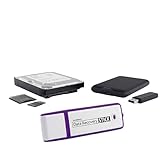
- The Data Recovery Stick requires no technical skills — simply plug it into your Windows computer, click Start, and the software automatically begins scanning and recovering lost files within minutes. Compatible with Windows Vista, 7, 8, 10, & 11, it's designed to be a reliable first step when accidental deletion occurs.
- Recover photos (JPG, BMP, PNG, TIFF), Microsoft Office documents (Word, Excel, PowerPoint, Publisher, Access), Open Office files, MP3 music files, PDFs, RTF documents, AutoCAD files, and HTML web pages. Whether it's personal memories or critical business files, the Data Recovery Stick covers the file types that matter most.
- Works with hard drives, USB drives, SD cards, memory sticks, and other common storage formats that use FAT or NTFS file systems — making it a single solution for hard drive recovery, USB drive recovery, SD card recovery, and more. Note: a media reader is required for micro SD cards and some mass storage devices.
- No Installation Required - The Data Recovery Stick runs entirely from the USB drive with no software installation on your computer — helping prevent new data from overwriting the files you're trying to recover. This also makes it ideal for use across multiple computers or in emergency situations where installation isn't practical.
- Use the Data Recovery Stick on as many computers as often as needed — simply clear the recovered data between uses to free up storage space. Software updates keep the tool compatible with newer systems and devices, backed by 25+ years of data software expertise from Paraben Consumer Software.
What happens when you remove a profile?
Edge profiles are separate browser environments. A profile can have its own:
- Favorites
- Extensions
- Themes
- Browser settings
- History and other browsing information
- Saved sign-in and synchronization settings
Using Remove profile removes that profile and its local browser data from the device. It does not delete the Microsoft account, Microsoft 365 account, or work or school account used to sign in.
Removing a local profile also does not delete the account’s cloud-stored Edge data. Cloud synchronization and cloud-data deletion are separate operations.
Stop syncing before removing a profile
If the profile is signed in and syncing, decide first whether its data should remain available on other devices. Microsoft warns that deleting synced information while signed in can affect other devices connected to the same account. Do not use Clear browsing data casually while sync is enabled.
To stop synchronization first:
- Select Settings and more (…) in Edge.
- Select Settings.
- Open Profiles > Sync.
- Turn off the relevant synchronization options, or return to Profiles and select Sign out.
For a local-only cleanup, turn off sync before clearing browsing data on the current device. This reduces the risk of deleting synced favorites, history, passwords, or other information from another device.
Remove an Edge account or profile on Android and iPhone
The desktop Remove profile workflow is not the mobile procedure documented by Microsoft. In Edge for Android or iOS, Microsoft documents a sign-out and sync option instead:
- Open the Edge app.
- Select More options (…), then Settings.
- Select the profile image.
- Select Sign out and turn off sync.
To clear local mobile browsing data, open More options > Settings > Privacy and security > Clear browsing data. If the account is still syncing, review the sync setting first.
What to do if Edge will not remove the profile
A work or school profile is managed
An organization can configure Edge so that a work or school profile cannot be signed out of or removed. The NonRemovableProfileEnabled policy applies on Windows devices joined to Active Directory or Microsoft Entra ID and certain managed Windows editions.
Rank #2

- Does Not Fix Hardware Issues - Please Test Your PC hardware to be sure everything passes before buying this USB Windows 11 Software Recovery USB.
- Make sure your PC is set to the default UEFI Boot mode, in your BIOS Setup menu. Most all PC made after 2013 come with UEFI set up and enabled by Default
- Does Not Include A KEY CODE, LICENSE OR A COA. Use your Windows KEY to preform the REINSTALLATION option
- Free tech support
To see policies currently applied to Edge, enter edge://policy in the address bar. Microsoft’s profile troubleshooting guidance also identifies BrowserSignin, RestrictSigninToPattern, BrowserAddProfileEnabled, and EdgeAllowedAccountOnly as policies that can restrict profile operations. On a managed computer, contact the administrator rather than trying to remove policy-controlled data manually.
The profile comes back after you delete it
A profile or account shown in Edge’s profile menu may be recreated or made available through operating-system sign-in, enterprise sign-in, or single sign-on. The ImplicitSignInEnabled policy allows Edge to sign a user into a profile based on how the user signed in to the operating system. The BrowserSignin policy can allow, disable, or force browser sign-in.
Check edge://policy. If the profile belongs to a work or school account, ask the administrator whether the associated Windows or organizational account also needs to be removed.
Edge says the profile is locked or cannot be opened
A locked or unavailable profile can result from another Edge process using it, a read-only user-data folder, insufficient Modify permission, synchronization problems, or enterprise restrictions.
Crashes, No Sound, or Screen Glitches?
Random freezes, missing sound and display glitches usually trace back to one bad driver. Find and replace yours safely.Free scan · under a minutePC Slower Than It Used to Be?
A free scan shows the junk files, broken settings and background clutter dragging Windows down - then fixes them in one click.Free scan · Windows 10 & 11Try these checks:
- Press Ctrl + Shift + Esc to open Task Manager on Windows.
- End all remaining msedge.exe processes.
- Restart Edge and try the profile-removal steps again.
- If the problem continues, check the properties and permissions of the Edge user-data folder. Your account must be able to modify it.
The default Windows user-data folder is %LOCALAPPDATA%\Microsoft\Edge\User Data.
On macOS, close Edge completely and check that no Edge process is still running before retrying. If the profile remains locked, permissions, synchronization, or management policies may be responsible.
Do not simply delete the Default folder
Deleting %LOCALAPPDATA%\Microsoft\Edge\User Data\Default is sometimes suggested as a shortcut, but it is not Microsoft’s normal supported method for removing a profile. Default is a folder name, not a reliable indication of which profile you intend to delete. Manually deleting it can remove unsynced data and may affect the wrong profile.
Microsoft’s supported first choice is Profile icon > Profile settings > More profiles > Delete > Remove profile. Microsoft’s troubleshooting guidance mentions renaming a profile folder as a recovery technique after Edge has been closed, not as the standard profile-deletion procedure.
The Tool Desk
Outbyte PC Repair FREERepair Windows errors before they cause bigger problemsFix Now →Outbyte Driver Updater FREEFix the driver behind crashes, sound loss and screen glitchesFind Drivers →Rank #3

- Add USB connectivity to your USB-C port
- Connect Flash drives, keyboards, and other accessories
- Compatible with all surface models with Built-in USB-C port
Sign out, remove, and reset sync are different
| Action | What it does |
|---|---|
| Sign out | Disconnects the profile from browser sign-in and sync. It does not use the profile-removal command. |
| Remove profile | Deletes the selected profile and its local Edge data from the current installation. |
| Clear browsing data | Deletes selected categories of browser data. With sync enabled, some deletions can affect other devices. |
| Reset sync or cloud data | Changes or removes synchronized Edge information stored in Microsoft’s cloud. This is separate from deleting a local profile. |
Microsoft’s current user documentation does not provide a supported command-line syntax for removing one individual Edge profile. Use the Edge interface unless your organization provides a specific management procedure.
Sources
- Microsoft Support: Sign in and create multiple profiles in Microsoft Edge
- Microsoft Support: Sign in to sync Microsoft Edge across devices
- Microsoft Learn: Fix an Edge profile that doesn’t load or is locked
- Microsoft Learn: NonRemovableProfileEnabled policy
- Microsoft Learn: Reset Microsoft Edge data in the cloud
FAQ
Does removing an Edge profile delete the Microsoft account?
No. It removes the profile and its local browser data from the device. The Microsoft, Microsoft 365, work, or school account itself is not deleted.
Will removing an Edge profile delete data on my other devices?
Removing the local profile is not the same as deleting cloud data. Clearing synced data while signed in can affect other devices, so turn off sync or sign out before local cleanup if you want to avoid that risk.
Why can’t I delete an Edge profile?
The profile may be controlled by an organization, locked by a running Edge process, stored in a folder your account cannot modify, or affected by synchronization problems. Check edge://policy and close all msedge.exe processes before trying again.
What’s actually slowing this PC down?
Pick the symptom - the matching free tool is one click away.
Why does the Edge profile return after I remove it?
Operating-system sign-in, enterprise single sign-on, or Edge policies such as ImplicitSignInEnabled and BrowserSignin can recreate or re-enable the profile. Managed devices may require an administrator to remove the associated account.
Can I remove an Edge profile from the command line?
Microsoft’s current user documentation does not provide a supported command-line syntax for removing one profile. Use Edge’s profile settings page instead.
The Bottom Line
On Windows and macOS, open edge://settings/profiles, choose the profile under More profiles, select Delete, and confirm with Remove profile. Turn off sync first if you are cleaning up data locally, and avoid manually deleting the Default folder.
Quick Recap
Product prices and availability are accurate as of the date/time indicated and are subject to change. Any price and availability information displayed on Amazon at the time of purchase will apply.
Do these 3 things before closing this tab:
1Fix the driver behind crashes, sound loss and screen glitches2Repair Windows errors before they cause bigger problems3Scan for outdated or missing drivers - takes under a minute
