
iTechGuides is reader-supported. When you buy through links on our site, we may earn an affiliate commission. As an Amazon Associate I earn from qualifying purchases. Learn more
When planning a global capability center (GCC), treat network architecture, infrastructure commitments, and compliance as core design decisions—not tasks to postpone until after launch. A Network World BrandPost sponsored by Tata Communications identifies three planning mistakes: designing the network as an afterthought, committing to infrastructure before defining the capability roadmap, and treating compliance as a checklist. Each can constrain a center’s ability to support its intended work.
1. Treating network design as an afterthought
A GCC may need to move data across borders, integrate with headquarters and other regions, connect to cloud services, and support changing workloads. A network copied from a domestic branch-office template may not fit those demands. Start by mapping the work the center is expected to perform and the systems, users, data, and locations it must connect.
Plan for the network to span on-site infrastructure, cloud environments, and external connections. Johannes Sautter, Head of Connectivity and Colocation Services at WACKER Chemie AG, told Network World: “And these days, of course, the network is hybrid…the network starts at your site but there is no end.” The practical implication is to define connectivity and operational ownership across that wider environment, rather than treating the office connection as the whole network.
Crashes, No Sound, or Screen Glitches?
Random freezes, missing sound and display glitches usually trace back to one bad driver. Find and replace yours safely.Free scan · under a minuteWindows Errors? Fix Them Before They Spread
Repair common Windows errors and clear accumulated junk for a smoother, more stable PC - no reinstall needed.Free scan · no reinstall
![[Project Management Institute] A Guide to The Project Management Body of Knowledge (PMBOK Guide)–Fifth Edition - Paperback](https://m.media-amazon.com/images/I/41T0YdWvdPL._SL160_.jpg)
The sponsored article reports that India-to-headquarters traffic can cross six to eight network hops and add 30–80 ms of latency even on an optimized route. That is a claim from the article, not an independently verified benchmark, so use it as a prompt to test your own routes—not as a guaranteed latency figure. Measure latency and application performance between the actual sites, cloud regions, and services the GCC will use.
- Map expected data flows, integrations, cloud access, and user locations.
- Identify latency-sensitive applications and test their real end-to-end paths.
- Account for anticipated AI workloads and the data movement they may require.
- Assign responsibility for monitoring, incidents, and third-party connections.
2. Committing to infrastructure before defining the roadmap
Data-center choices, ISP contracts, and hardware can lock a center into delivery timelines, operating costs, or technical constraints. Define the GCC’s business case and capability roadmap first; then make infrastructure decisions against them. Otherwise, procurement may solve for the first office or initial workload while making later capabilities harder to add.
Greg Wade, an independent strategic adviser on GCC strategy and development, put the location issue this way: “What works in Denver doesn’t necessarily work in Delhi,” He also said, “Infrastructure is a strategic enabler right from day one – it shouldn’t be a procurement exercise to get pipes into a particular location.” Use the roadmap to clarify which capabilities are needed at launch, which are expected later, and what dependencies each creates.
#1 Best Overall

- Essential to High Productivity — Take your efficiency to the next level with this work notebook organizer planner. Stay on top of projects, manage your team and make strategic decisions to grow your business with this project organizer notebook
- Juggle Multiple Tasks at Once — No need to feel overwhelmed by all your responsibilities. Break them down piece by piece in this meeting notebook for work. From the finance department to the marketing team, this project organizer planner keeps track of all the moving parts
- Assign Actionable Items — Prioritize your tasks based on their importance and urgency with this planning notebook. Record general notes, list action items and due dates. See what needs to be done today, this week, or next month and stay accountable
- Built to Take on the Go — These project manager notebooks are made of 120gsm double-sided paper with large, easy to read print. The sturdy cover withstands heavy use as you take it from the office to the gym. Know exactly where you left off with the built-in sash and get straight to business no matter where you are
- Reduce Stress with Clear Organization — Don't sweat the small stuff. Focus on high-impact actions that will move the needle. Whether you're head of a team or running your own business, this business notebook organizer provides a helpful boost to your performance and peace of mind
- Set the intended role of the center. Specify its expected services, users, business outcomes, and relationship to headquarters and regional teams.
- Translate the role into capability stages. Separate launch requirements from later plans, such as expanded engineering, cloud operations, or AI-related work.
- Derive infrastructure requirements. For each stage, identify connectivity, compute, data location, integration, security, and delivery dependencies.
- Commit in sequence. Compare infrastructure options against the roadmap, geography, timing, and operating model before signing contracts or buying hardware.
Network World’s sponsored article attributes several adoption and performance figures to BCG and EY, but the underlying studies’ dates, samples, and methods are not established here. Those figures should not be treated as a reliable forecast for an individual GCC; build the business case from the organization’s own goals and workload assumptions.
Do these 3 things before closing this tab:
1Repair Windows errors before they cause bigger problems2Scan for outdated or missing drivers - takes under a minute3Clear out junk files and repair common Windows errors3. Treating compliance as a checklist
Compliance can affect architecture and operations from the outset. Data location, cross-border transfers, local requirements, third-party access, monitoring, and governance may influence where systems run and how teams manage them. Make these questions part of design and operating-model decisions rather than a final sign-off exercise.
For India, the Digital Personal Data Protection Act, 2023 Schedule provides for a penalty of up to ₹250 crore for failure to observe the reasonable-security-safeguards obligation, and up to ₹200 crore for failure to notify the Board or affected data principals of a personal data breach. These are statutory maxima for specified categories of breach, not automatic penalties for any compliance error. See the Act’s Schedule.
Rank #2
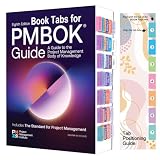
- PMBOK 8TH EDITION COMPATIBLE: Specifically designed to fit the PMBOK Guide Eighth Edition and The Standard for Project Management.
- COLOR-CODED TABS: Each tab is uniquely color-coded and labeled to help you quickly locate key sections, including Introduction, Creating Value, Project Environment, and more.
- LAMINATED AND DURABLE: Tabs are laminated for long-lasting use, resisting wear and tear through repeated page-turning and frequent reference.
- REPOSITIONABLE DESIGN: Tabs can be easily repositioned without damaging pages, and a Tab Positioning Guide is included to ensure accurate placement every time.
- BOOK NOT INCLUDED: These tabs are sold as a standalone accessory and are not bundled with the PMBOK Guide or any other book.
The commencement is phased. A notification dated November 13, 2025 sets some provisions to commence on publication, others after one year, and others after eighteen months. The accompanying Rules notification also phases commencement: Rules 1, 2, and 17–21 on publication; Rule 4 after one year; and Rules 3, 5–16, 22, and 23 after eighteen months. Consult the Act commencement notification and Rules notification to determine which provisions apply to a particular entity and date.
Make governance operational
Translate legal and policy requirements into named owners, access controls, monitoring, incident processes, and vendor responsibilities. The sponsored article quotes Sautter: “We need to have strong governance in every region because the regions really differ,” That is especially relevant when a center depends on systems and service providers operating across jurisdictions. Record who can access data, who investigates incidents, and how responsibilities are coordinated across the GCC, headquarters, and vendors.
Quick wins for a faster PC:
Fix the driver behind crashes, sound loss and screen glitchesFind Drivers →Repair Windows errors before they cause bigger problemsFix Now →Scan for outdated or missing drivers - takes under a minuteDriver Scan →Turn the three risks into one planning sequence
The mistakes are connected: the capability roadmap informs network and infrastructure choices, while data handling and governance shape both. Before major commitments, make sure the planning team can answer these questions:
Quick Recap
Rank #4
Rank #3

- Made in USA - Proudly produced in Ohio by a Veteran-owned business
- All-in-One Client & Case Tracking: Easily record client details, contact info, program/department, supervisor info, and emergency contacts in one organized place. Log every interaction with space for contact type, mood, stress level, purpose of contact, notes, follow-ups, outcomes, and next appointment date.
- Professional & Easy to Use: Clean, structured layout designed for quick documentation—perfect for case managers, social workers, counselors, and support staff.
- Durable & Travel-Ready: Built with a tough Translux cover to protect your notes on the go. This notebook is perfect for office, field visits, or daily carry, in a convenient 8.5” x 11” size.
- Re Order SKU: LOG-100-7CW-PP(CASE-MANAGEMENT-LOG)
- What business capabilities is the GCC expected to deliver at launch and over time?
- Which applications, data flows, regions, and cloud services must the network support?
- What location, transfer, security, monitoring, and third-party access requirements apply?
- Who owns architecture decisions, vendor coordination, and incident response?
- Which assumptions still need validation through workload, route, or legal review?
Product prices and availability are accurate as of the date/time indicated and are subject to change. Any price and availability information displayed on Amazon at the time of purchase will apply.

