
iTechGuides is reader-supported. When you buy through links on our site, we may earn an affiliate commission. As an Amazon Associate I earn from qualifying purchases. Learn more
To clear a Google security warning, identify the exact notice in Google Search Console, clean every affected page or file, fix the weakness that let the problem happen, and then request a security review. A warning can take a few days to a few weeks to clear after review, and Google’s systems may take additional time to update.
Identify which Google warning you have
“Google security warning” can mean a warning in Google Search results, a Chrome interstitial, or a notice in Search Console. Start with the report and wording rather than assuming every warning has the same cause.
| What you find | What it generally means | Where to go next |
|---|---|---|
| A notice in the Security Issues report, or wording such as “This site may be hacked” or “This site may harm your computer” | Google has detected evidence that the site was hacked or may harm visitors or their computers. | Inspect the Security Issues report and follow its cleanup and review process. Google’s Security Issues report guide |
| A notice in the Manual Actions report | Google has manually detected a violation of Search policies. This is a different process from a hacked-site security warning and may affect search ranking or inclusion. | Use the policy-specific remediation and review process in the Manual Actions report. Google’s Manual Actions report guide |
| A warning in Search results or Chrome, but no Search Console notice | Google says an issue may have been detected algorithmically. | Check the site’s Safe Browsing status and continue investigating the pages and files visitors can reach. Google’s guidance on dangerous-site labels |
Clean up a security issue and request review
- Verify the site in Search Console. Open the property for the affected site, then select Security Issues in the report navigation. If the warning appears only in Chrome or Search results, check Safe Browsing status as well.
- Read the issue categories and sample URLs. Google’s report may identify malware or unwanted downloads, links to harmful downloads, phishing or deceptive content, or unclear mobile billing. Inspect the listed URLs with URL Inspection. Some injected links may be hidden from the site owner, so check the sample pages from another account or device if their contents are not visible to you.
- Remove the harmful content and repair the cause. Remove injected content, harmful files or downloads, harmful links, or phishing behavior as applicable. Update or repair the vulnerable component that enabled the compromise. Google recommends restoring affected files from a known-good backup or removing spammy content when appropriate. Scanning hosted binaries can help, but antivirus software does not detect every type of malware. See Google’s Security Issues cleanup guidance and Google’s hacked-site guidance.
- Check the whole site. Review all affected pages and downloads, not only the sample URLs. Make sure the entire website is clean and secure before requesting a review.
- Request a security review. In the Security Issues report, choose the review option and explain what you removed and how you fixed the underlying weakness. Google defines a reconsideration request as a request to review a site after problems identified in a manual action or security issues notification have been fixed. Google’s reconsideration request guidance
- Monitor the status. Watch for Search Console messages and check the warning again after Google completes its review and updates its systems. If Google detected the issue algorithmically, the warning may clear after Google next crawls the site, without a manual review request.
If the notice is a Manual Action
Do not use the Security Issues cleanup flow for a policy violation. Open Search Console → Manual Actions, read the affected policy and pages, correct each violation, and request review from that report. A reconsideration request is for problems identified in a manual action or security notification; it is not a substitute for fixing a compromised site. Manual Actions report · Reconsideration requests
Recommended Free Tools
Why removing a search result is not enough
The Removals tool can temporarily block a page from Google Search, and Refresh Outdated Content can update a result for content that has changed or been removed. Neither tool cleans a hacked website or repairs its security weakness. Use them only if you also have a separate search-result issue to address; for a security warning, clean the site and complete the relevant review process.
#1 Best Overall
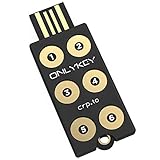
- ✅ PROTECT ONLINE ACCOUNTS – A password manager, two-factor security key, and secure communication token in one, OnlyKey can keep your accounts safe even if your computer or a website is compromised. OnlyKey is open source, verified, and trustworthy.
- ✅ UNIVERSALLY SUPPORTED – Works with all websites including Twitter, Facebook, GitHub, and Google. Onlykey supports multiple methods of two-factor authentication including FIDO2 / U2F, Yubico OTP, TOTP, Challenge-response.
- ✅ PORTABLE PROTECTION – Extremely durable, waterproof, and tamper resistant design allows you to take your OnlyKey with you everywhere.
- ✅ PIN PROTECTED – The PIN used to unlock OnlyKey is entered directly on it. This means that if this device is stolen, data remains secure, after 10 failed attempts to unlock all data is securely erased.
- ✅ EASY LOG IN –No need to remember multiple passwords because by plugging OnlyKey to your computer, it automatically inputs your username and password. It works with Windows, Mac OS, Linux, or Chromebook, just press a button to login securely!
How long does it take for the warning to disappear?
Google says a security review may take a few days to a few weeks. After the review, Safe Browsing, Chrome, and Search Console may need additional time—potentially a few days—to show the updated status. A delay does not by itself mean the cleanup failed. If the site remains flagged, check Search Console for messages or remaining affected URLs and confirm that the underlying weakness was fixed.
Independent reader supportYour contribution helps us test, update, and keep practical guides available for everyone.When to get professional help
If you cannot confidently identify the injected content, secure the site, or prevent reinfection, Google’s Security Issues guidance points site owners to support resources. Consider qualified website incident-response help rather than guessing at a cleanup; incomplete repairs can leave harmful content or the original entry point in place.
Quick Recap
Rank #4

- A FIDO security key with PUF technology provides a unique, hardware-rooted trust anchor that resists tampering and cyber attacks, offering stronger security than conventional designs.
- FIDO2 Certified Protection – Enjoy phishing-resistant security with FIDO2 certification, ensuring top-tier account safety across Windows, macOS, Linux, iOS iOS, Android and more.
- Easy to use & Portable – Designed with a compact USB-C interface, Clife key fits easily on your keychain for secure access anywhere. Simply plug in and authenticate with ease.
- Universal Compatibility – Works seamlessly with hundreds of FIDO2/U2F compliant services, including popular cloud, email, and social platforms.
- Backup recommended – To ensure continuous access, register a backup Clife security key as a spare in case your primary key is lost.
Rank #3

- FIDO2 & Passkey Ready: Business-ready and FIDO2 L1 certified. This key is supported by major management suites and is ideal for both individual and enterprise deployment. Works seamlessly with Gmail, Facebook, GitHub, Dropbox, Coinbase, and more.
- Universal Connectivity (USB-A ): Features a built-in USB-A connector—simply unfold the key and plug it into your compatible PC or laptop for seamless authentication on the go.
- Dedicated Manager App: Use the Thetis Manager App for the initial hardware PIN setup. Setting the PIN on the device first ensures a smooth registration process. Once the PIN is configured, you can begin registering the key across your favorite FIDO2-compatible online services.
- Ultra-Durable & Portable: Featuring a rotating metal cover, this key is water, crush, and tamper-resistant. It fits easily on a keychain and requires no batteries or network connectivity.
- Check FIDO2 compatibility before purchase - Known limitations: ID Austria is not supported (requires FIDO2 Level 2). Windows Hello login only works with Windows Enterprise editions that support Entra ID, and NFC is NOT supported.
Rank #2

- Ultra-Compact FIDO2 Security Key - Plug-and-stay or carry on a keychain. This USB-A hardware security key offers portable, always-on protection for desktop and mobile use. (Item Size: 0.75 X 0.74 IN x 0.25 IN)
- USB-A Hardware Key for All Devices - Works with USB-A ports on PC, Mac, Android, and other laptop/notebook device. Enables secure, cross-platform login with FIDO2.0 passkey support.
- FIDO Certified Security Key - Meets FIDO and FIDO2 standards. Works with Google, Microsoft, GitHub, Dropbox, and more. Please check service compatibility before purchase.
- Passwordless Login with Passkey - Supports passkey login via WebAuthn and CTAP2. Enjoy password-free sign-ins where supported. Not all websites or services currently support passkeys.
- Advanced Multi-Factor Authentication - Offers 200 FIDO2 passkey slots and 50 OATH-TOTP slots. Strong, flexible 2FA/MFA support across various apps and authentication platforms.
Product prices and availability are accurate as of the date/time indicated and are subject to change. Any price and availability information displayed on Amazon at the time of purchase will apply.

