
iTechGuides is reader-supported. When you buy through links on our site, we may earn an affiliate commission. As an Amazon Associate I earn from qualifying purchases. Learn more
A delete-on-read file share needs to do two different jobs: stop a recipient from accessing a file after its allowed use, and remove the stored data and its copies. Expiring or revoking a link handles the first job; it does not prove that the file, older versions, replicas, caches, or backups are gone. Design and describe those outcomes separately.
What “delete-on-read” can—and cannot—mean
“One-time” can describe an access rule: the service accepts a redemption once, then refuses later requests. It does not mean the recipient cannot save, copy, photograph, or otherwise retain content they already received. Nor does it establish that the server-side object has been erased.
Keep these events distinct in the design and in any user-facing status:
Outdated Drivers Are Slowing You Down
One free scan finds every outdated or missing driver and matches the right update for your exact hardware.Free scan · exact hardware matchPC Slower Than It Used to Be?
A free scan shows the junk files, broken settings and background clutter dragging Windows down - then fixes them in one click.Free scan · Windows 10 & 11- Access stopped: the service no longer accepts the link or authorization.
- Object deleted: the storage system has removed the relevant object or version according to its semantics.
- Copies addressed: replicas, caches, snapshots, lifecycle destinations, logs, and backups have been considered and handled under the configured policies.
- Cryptographic erasure: usable key material has been removed so retained ciphertext cannot be decrypted by another available key or backup.
These are separate claims. Use precise statuses such as “link expired,” “access revoked,” or “deletion pending” rather than implying that an expired URL means permanent erasure.
#1 Best Overall

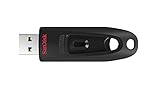
- High-speed USB 3.0 performance of up to 150MB/s(1) [(1) Write to drive up to 15x faster than standard USB 2.0 drives (4MB/s); varies by drive capacity. Up to 150MB/s read speed. USB 3.0 port required. Based on internal testing; performance may be lower depending on host device, usage conditions, and other factors; 1MB=1,000,000 bytes]
- Transfer a full-length movie in less than 30 seconds(2) [(2) Based on 1.2GB MPEG-4 video transfer with USB 3.0 host device. Results may vary based on host device, file attributes and other factors]
- Transfer to drive up to 15 times faster than standard USB 2.0 drives(1)
- Sleek, durable metal casing
- Easy-to-use password protection for your private files(3) [(3)Password protection uses 128-bit AES encryption and is supported by Windows 7, Windows 8, Windows 10, and Mac OS X v10.9 plus; Software download required for Mac, visit the SanDisk SecureAccess support page]
Choose the access model and define its limits
One-time redemption token
An application can require a redemption token and record whether it has already been claimed. This gives the application a place to enforce its own authorization and consumption rules. Scope authorization to the intended tenant and object, and expose only the methods the recipient needs. OWASP’s Secure Cloud Architecture Cheat Sheet and Multi Tenant Security Cheat Sheet discuss scoped access and tenant-aware authorization.
Short-lived signed URL
A signed URL is a bearer credential: anyone who obtains it may be able to use it within its scope until it expires or the service rejects it. Keep its lifetime short, scope it to one object and the required method, and avoid treating secrecy of the URL as the only security control. OWASP’s Cloud Storage guidance covers signed URL scope, expiry, and leakage risks.
Do not put bearer URLs or file contents in operational logs. URLs can leak through logs and intermediaries, extending exposure beyond the intended recipient.
The Tool Desk
Outbyte PC Repair FREERepair Windows errors before they cause bigger problemsFix Now →Outbyte Driver Updater FREEFix the driver behind crashes, sound loss and screen glitchesFind Drivers →Rank #2
- Transfer speeds up to 10x faster than standard USB 2.0 drives (4MB/s); up to 130MB/s read speed; USB 3.0 port required. Based on internal testing; performance may be lower depending upon host device. 1MB=1,000,000 bytes
- Backward compatible with USB 2.0
- Secure file encryption and password protection(2)
Authorization proxy
For sensitive files, an application can authorize each transfer through a proxy rather than hand out a reusable storage URL. This centralizes revocation decisions, but the service must operate the data path and handle its availability and throughput. A proxy cannot prevent a recipient from saving or copying content after delivery.
Model redemption and delivery as a state machine
Write down the allowed transitions before implementing “one-time” behavior. A useful starting model is:
- Created: the share exists, but redemption is not yet available.
- Available: an eligible recipient can request access.
- Redemption claimed: the server has atomically reserved the first redemption.
- Delivery in progress: the authorized transfer is underway.
- Consumed: policy refuses further redemption attempts.
- Expired: the access window has ended.
- Deletion pending / deletion complete: storage cleanup is underway or the configured deletion process has confirmed completion.
The transition from available to redemption claimed must be atomic on the server. Otherwise, two near-simultaneous requests may both see an unclaimed share and both receive access. A claim that a share is truly one-time also depends on what happens after the claim: decide whether a failed or interrupted transfer consumes it, whether a retry is allowed, and how byte-range requests are handled. Test simultaneous requests, retries, range requests, and interrupted downloads against the intended policy.
Rank #3

- USB-C 2-in-1 storage OTG: The Lexar JumpDrive Dual Drive D40E features USB Type-A and Type-C connectors in a slim, portable form factor for easy device compatibility
- Transfer speeds up to 100MB/s: Based on internal testing, performance may vary depending upon the host device, interface, and usage conditions. 1MB=1,000,000 bytes
- Plug and Play: Widely compatible with USB Type-C smartphones, tablets, laptops, Macs, and traditional Type-A devices, no software installation required. The 360° swivel design allows for easy switching between connectors without the hassle of losing a cap
- Durable & Compact: The Lexar D40E USB memory stick features a metal enclosure, withstands temperatures from 0° to 50° C (32°F to 122°F), and is lightweight at 26g with dimensions of 70.4 x 16.9 x 11.7mm
- Security & Warranty: Securely protects files using an advanced security software solution with 256-bit AES encryption. Backed by a Lexar 3-year limited warranty
Handle expiry, revocation, and transfers accurately
Expiry disables a route to the file; it is not a storage deletion operation. The precise behavior during a download depends on the delivery service. For example, AWS CloudFront checks a signed URL’s expiration when a request is made: a transfer started before expiry can finish, while a reconnect or later range request after expiry fails. See AWS’s Use signed URLs documentation.
Quick wins for a faster PC:
Scan for outdated or missing drivers - takes under a minuteDriver Scan →Clear out junk files and repair common Windows errorsFree Scan →Account for that distinction when setting expectations. A recipient may already have received some or all of the file when a link expires or is revoked. Define how the system handles in-flight transfers, reconnects, and partial downloads rather than assuming that changing the link instantly interrupts every delivery.
Inventory every place the data can remain
Before describing a share as deleted, map the copies created by the selected service and configuration. OWASP’s cloud-storage guidance warns that versioning, lifecycle transitions, and replication can leave data accessible after a nominal delete. Include the following in the inventory:
Rank #4

- USB-C 2-in-1 storage OTG: The Lexar JumpDrive Dual Drive D40E features USB Type-A and Type-C connectors in a slim, portable form factor for easy device compatibility
- Transfer speeds up to 100MB/s: Based on internal testing, performance may vary depending upon the host device, interface, and usage conditions. 1MB=1,000,000 bytes
- Plug and Play: Widely compatible with USB Type-C smartphones, tablets, laptops, Macs, and traditional Type-A devices, no software installation required. The 360° swivel design allows for easy switching between connectors without the hassle of losing a cap
- Durable & Compact: The Lexar D40E USB memory stick features a metal enclosure, withstands temperatures from 0° to 50° C (32°F to 122°F), and is lightweight at 26g with dimensions of 70.4 x 16.9 x 11.7mm
- Security & Warranty: Securely protects files using an advanced security software solution with 256-bit AES encryption. Backed by a Lexar 3-year limited warranty
- Current object and historical versions
- Snapshots and lifecycle-transition destinations
- Replicas and cross-region copies
- CDN or other intermediary caches
- Backups and recovery copies
- Logs, metadata stores, and retention policies
- Legal holds or storage locks that block deletion
For each entry, document who or what removes it, when removal occurs, how completion is verified, and whether policy prevents removal. Behavior is provider- and configuration-specific; do not generalize from one storage service to another.
Example: Amazon S3 versioning
In Amazon S3, deletion depends on bucket versioning. In a versioning-enabled bucket, a regular DeleteObject request adds a delete marker; it does not by itself permanently remove prior object versions. Permanently deleting a specific version requires its version ID. The API behavior also differs for unversioned and versioning-suspended buckets. Consult the S3 DeleteObject API and ensure the cleanup process addresses every version that should be removed.
What’s actually slowing this PC down?
Pick the symptom - the matching free tool is one click away.
Retention can make immediate deletion impossible
AWS S3 Object Lock uses a write-once-read-many (WORM) retention model and requires versioning. A protected version may not be deletable until its retention conditions allow it. If Object Lock, a legal hold, or another retention rule applies, the design must honor that constraint; do not promise immediate destruction for a locked object. See AWS’s Locking objects with Object Lock documentation.
Best Value

- USB-C STORAGE ON THE GO: This sleek drive is supported by Samsung NAND flash and is incredibly compact to fit in the palm of your hand; Count on reliable performance and fast transfer speeds while staying compact
- PERFORMANCE WITH SPEED: No need to choose between performance and reliability; Experience a fast, powerful flash drive that transfers 4GB files in just 11 seconds with up to 400MB/s USB 3.2 Gen 1 read speeds and is backward compatible with USB 3.0/2.0
- MODERN MEETS ICONIC: The ultra-sleek USB-C drive looks as good as it performs; Featuring a reversible plug, the Type-C inserts into your devices seamlessly every time; Transfer large files with style and ease
- ALWAYS CONNECTED: USB-C is compatible across devices, including laptops, tablets, phones and cameras, with enough space for 63,730 photos or maximum 12 hours of 4K video; With up to 256GB of storage space, this pocket-sized thumb drive comes in handy wherever you go
- TOUGH & TRUSTED: Files stay secure, no matter the terrain; Samsung's flash memory technology makes the Type-C a trustworthy drive to store your valuable data; It's waterproof, shock-proof, magnet-proof, temperature-proof, and X-ray-proof body, plus it's backed by a 5-year limited warranty
Use encryption and key deletion carefully
Encryption at rest is not the same as immediate deletion. Cryptographic erasure can be part of a design if destroying a key makes retained ciphertext unrecoverable, but that depends on the complete key lifecycle. A per-share or per-object key may help isolate deletion, provided no usable copies remain in key backups, replicas, recovery systems, or another decryption path.
OWASP’s Cryptographic Storage Cheat Sheet notes the difficulty of secure key management and the possibility that old keys are retained to decrypt backups. Align key deletion with recovery policy, and verify which key material is copied or retained. Do not claim cryptographic erasure merely because an application deleted a key record.
Minimize retained data and state what was verified
The simplest data to remove is data never retained. Keep only the file and metadata needed for the share’s purpose, and define retention for both. OWASP recommends minimizing sensitive information held in the first place in its Cryptographic Storage Cheat Sheet.
For each share, separate the access result from the storage-cleanup result. A service can report that redemption is disabled while cleanup is pending; it should report deletion complete only after its configured deletion process has checked the relevant storage paths. Make the scope of that confirmation clear—for example, whether it covers object versions and replicas, and whether backups are subject to a separate retention schedule.
Quick Recap
Evaluate a design against the right questions
| Area | Questions to answer |
|---|---|
| Authorization | Is access granted by an authenticated session, a one-time redemption token, or a bearer URL? Is it limited to the intended tenant, object, and method? |
| Expiry and revocation | When does access stop? What happens to an in-flight transfer, retry, reconnect, or byte-range request? |
| Storage deletion | Does the operation hide an object, remove the current version, or permanently remove every relevant version? |
| Secondary copies | How are replicas, snapshots, caches, lifecycle destinations, logs, and backups handled? |
| Retention constraints | Do legal holds, Object Lock, or backup policies prevent or delay erasure? |
| Key lifecycle | Can keys be independently destroyed, and are usable key copies retained for recovery? |
Product prices and availability are accurate as of the date/time indicated and are subject to change. Any price and availability information displayed on Amazon at the time of purchase will apply.

